Why This Braised Beef Recipe Succeeds
Ever pulled apart a pot of shredded beef only to find it tough and dry? Most recipes fail because they skip the low-slow braise that converts tough collagen into silky gelatin. This method traps steam inside a tightly lidded Dutch oven, so every bite shreds fork-tender and stays juicy.
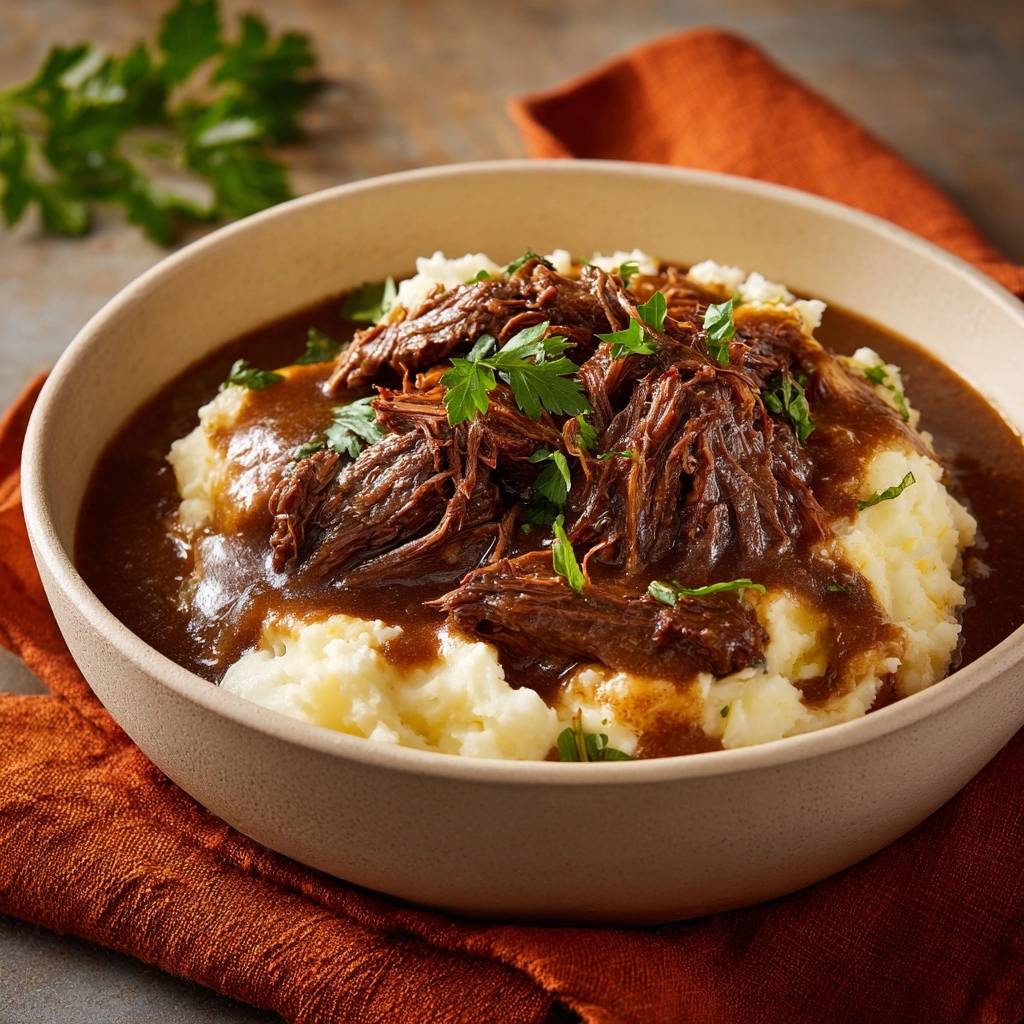
Therefore, you get rich gravy that clings to those moist shreds, all spooned over velvety mashed potatoes. The contrast hits perfect: savory depth against creamy comfort. It’s the kind of plate that warms you from the inside out.
Here’s the expertise kicker. Sear the beef chunks first for that deep Maillard crust. Then braise at exactly 300°F. That temperature breaks down connective tissue without drying out the meat, unlike higher heats that evaporate juices.
Key Ingredients for Shredded Beef Gravy
Start with 2 pounds beef chuck roast, cut into 2-inch chunks. Chuck’s marbling melts during braising, keeping shreds moist. Lean cuts like round dry out fast, so stick to this fatty hero.
Grab 4 cups beef broth, low-sodium if you control salt. It builds the gravy base. In addition, 2 pounds Yukon gold potatoes, peeled and quartered, give superior creaminess. Their waxiness avoids gumminess.
Don’t skip 4 tablespoons unsalted butter and 1/2 cup whole milk, warmed. Warm milk emulsifies smoothly into mash. Finally, 2 tablespoons vegetable oil sears without smoking, plus salt, pepper, and 1/4 cup chopped fresh parsley for finish.
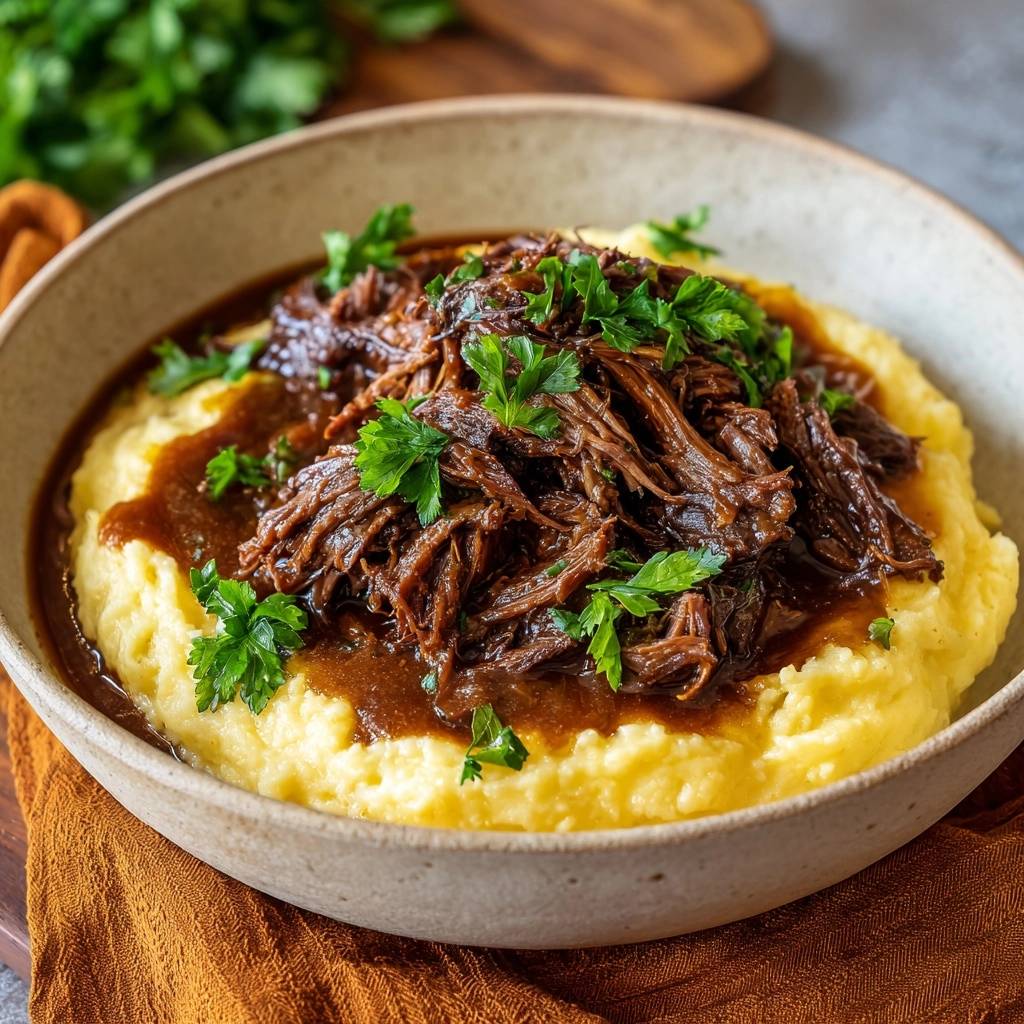
Beef Chuck: Marbling for Tender Shreds
Chuck roast shines because its fat cap and intramuscular marbling break down over hours. This renders into juices that baste the meat. Compare it to brisket, which works too, but chuck shreds easier for gravy.
Potatoes and Dairy for Silky Base
Yukon golds hold shape better than starchy russets, resisting gluey mash. Butter cuts in cold for even distribution, then warm milk binds without curdling. Season generously for balance.
Science of Low-Slow Braising for Juicy Beef
Collagen in chuck turns to gelatin between 160-205°F. At 300°F in the oven, it happens steadily without boiling off moisture. Stovetop often spikes temps, drying meat out.
Therefore, the Dutch oven’s tight lid creates a steam environment. No evaporation means juicy results. Plus, initial searing triggers Maillard reaction for nutty flavor locked into every shred.
Collagen Breakdown Timeline
Plan 2.5 to 3 hours at 300°F. Test by piercing with a fork; it should pull apart with no resistance. Pull early if tender, but under 2 hours leaves toughness.
Searing’s Flavor Foundation
High heat browns proteins and sugars, building fond. Scrape those bits into broth for gravy depth. Skip this, and you miss umami punch.
Essential Tools for Perfect Results
A Dutch oven rules here. Its cast iron retains even heat, and the lid seals steam tight. Enameled versions work too, but avoid thin pots that leak moisture.
In addition, use a potato masher or ricer for lump-free mash. An oven thermometer ensures 300°F accuracy. These prevent uneven cooking and dry fails.
Dutch Oven Heat Retention
Unlike skillets, it circulates heat fully. The lid traps pressure-like steam, mimicking pro braises. Check seal before oven.
Phase 1: Searing Beef Chunks Deeply
Season chunks with salt and pepper. Heat oil in Dutch oven till shimmering; it ripples slightly. Sear in batches, 3-4 minutes per side, for mahogany crust. Crowding steams instead of browns.
Transfer to plate, juices intact. You’ll smell caramelized richness. This builds flavor base.
Phase 2: Braising Shredded Beef Gravy Base
Lower heat to medium-low. Return beef, pour in broth, scrape fond. Bring to simmer, cover tight, then oven at 300°F for 2.5-3 hours.
Steam transforms meat; no stirring needed. Aroma fills your kitchen with promise. Fork-test at 2.5 hours.
Phase 3: Shredding and Thickening Gravy
Shred beef in pot with two forks; it falls apart easy. Simmer uncovered on medium, 10 minutes. Gravy thickens to coat a spoon.
Stir occasionally. Pro tip: if too thin, simmer longer. Taste and adjust salt.
Phase 4: Boiling and Mashing Potatoes
Boil quartered Yukons in salted water, 15 minutes till fork pierces easy. Drain thoroughly; excess water ruins creaminess. Mash hot with butter first.
Therefore, beat in warm milk gradually for silkiness. Season bold. Cold dairy clumps, so warm it up.
Final Assembly and Parsley Garnish
Spoon mash into wide bowls for gravy pooling. Top generously with beef and gravy. Sprinkle parsley for fresh pop.
Serve steaming hot. The heat melds flavors best. Oh man, that first bite is pure comfort.
Avoiding Dry Beef in Shredded Gravy
Dry beef comes from loose lids or short braise. Steam escapes, toughening meat. Always check lid seal pre-oven.
However, over-searing shrinks fibers. Sear just for crust. For mash, cold milk curdles; warm it. Over-mashing turns gluey, so stop at smooth.
Spotting Fork-Tender Beef Early
Fork should glide through, shreds pulling clean. Don’t cut; rest 5 minutes post-oven. If resistant, braise 30 more minutes.
Mash Texture Rescue Tactics
Lumps? Rice through a sieve. Watery? More butter absorbs. Fix by reheating dry.
Make-Ahead Guide for Beef and Mash
Braise beef up to 3 days ahead; store in pot juices airtight in fridge. Freezes well in portions up to 3 months. Thaw overnight, reheat stovetop low with splash broth.
Mash holds 2 days fridge; don’t freeze, it grains. Re-whip with milk. Assemble fresh for best texture.
Freezing Shredded Beef Gravy
Portion in quart bags flat. Thaw fridge, simmer gently. Adds moisture back perfectly.
Pairing Sides with Shredded Beef Gravy
Crisp green beans cut richness with snap. Roasted carrots add sweet earthiness. A simple green salad refreshes the palate.
In addition, crusty bread sopps gravy. Herbal tea balances warmth. These contrasts make the meal shine.
Flavor Twists on Shredded Beef Gravy
Toss thyme sprigs into braise for herbal lift. Smoked paprika in sear adds smokiness. Garlic mash? Mince cloves into potatoes.
Swap broth for mushroom stock for umami twist. Spice lovers, add chili flakes post-shred. Core braise stays juicy.
Common Questions on Shredded Beef Gravy
Can I Use Slow Cooker Instead?
Yes, absolutely. Place seared beef and broth in slow cooker, 8 hours on low. It mimics oven tenderness, but add 1/2 cup extra liquid since lids vent more. No peeking to retain steam. Shred and thicken on saute if electric model. Results stay juicy, perfect for busy days. Fork-tender test same as oven.
How to Fix Too-Thin Gravy?
Simmer uncovered longer, stirring to reduce by third. For quick fix, mix 1 tablespoon cornstarch with 2 tablespoons cold water, stir in, simmer 2 minutes till thickened. Pre-sear option: dredge beef in flour before browning. It naturally thickens gravy without lumps. Taste as you go; beef broth varies in salt.
Best Potato Substitutes?
Russets work but starch more, so mash lighter to avoid gumminess; use less milk. Sweet potatoes twist it sweet, matching beef’s savoriness, peel and quarter same. Adjust butter up for creaminess. Stick close to Yukons for best silk. All boil 15 minutes.
Scaling for Crowd Size?
Double recipe easy: 4 pounds beef, 8 cups broth, same pot if 7-quart. Watch oven rack space; use two Dutch ovens if needed. Potatoes scale direct. Braise time same, but check tenderness. Gravy thickens slower in volume, so reduce 15 extra minutes. Feeds 8 hungry folks perfectly.
Instant Pot Adaptation?
Sear saute mode first. Add broth, pressure high 60 minutes, natural release 20 minutes. Shreds tender without oven. Less evaporation, so thicken more post-shred. Quick weeknight win, same juicy results. Deglaze well for flavor.
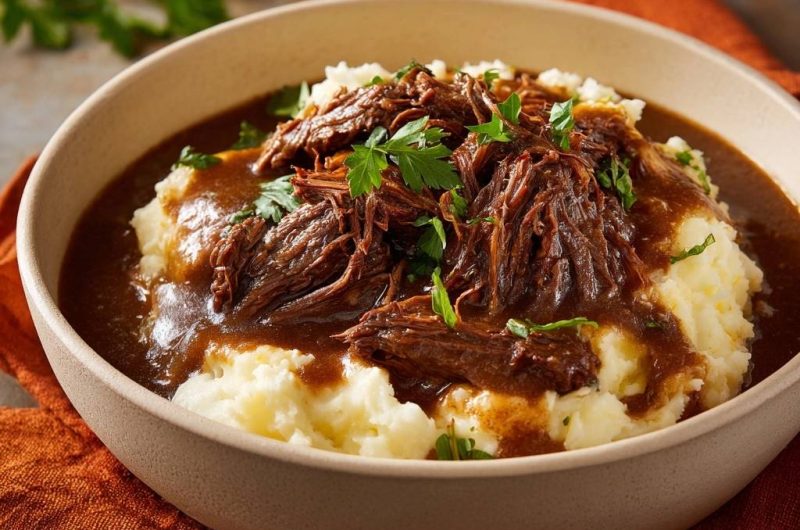
Shredded Beef Gravy over Creamy Mashed Potatoes
Course: Main CourseCuisine: AmericanDifficulty: easy4
servings20
minutes3
hours180
MinutesAmerican
Ingredients
2 pounds beef chuck roast, cut into 2-inch chunks
Salt and black pepper
2 tablespoons vegetable oil
4 cups beef broth
2 pounds Yukon gold potatoes, peeled and quartered
4 tablespoons unsalted butter
1/2 cup whole milk, warmed
1/4 cup chopped fresh parsley
Directions
- Season beef chunks generously with salt and pepper. Heat oil in a large Dutch oven over medium-high heat until shimmering. Sear beef in batches, 3 to 4 minutes per side, until deeply browned. Transfer to a plate.
- Reduce heat to medium-low. Return all beef to pot. Pour in beef broth, scraping up browned bits. Bring to a simmer, then cover tightly. Braise in a 300°F oven for 2.5 to 3 hours, until beef shreds easily with a fork. This low-slow covered braise is the key: it traps steam and juices inside, preventing evaporation for impossibly moist, never-dry results.
- Remove pot from oven. Shred beef directly in the pot using two forks. Simmer uncovered on stovetop over medium heat for 10 minutes to thicken gravy.
- Meanwhile, boil potatoes in salted water until fork-tender, about 15 minutes. Drain well. Mash with butter and warm milk until creamy smooth. Season with salt and pepper.
- Spoon mashed potatoes into bowls. Top with shredded beef and gravy. Garnish with parsley. Serve hot.
Notes
- Low-slow covered braise at 300°F traps steam and juices for impossibly moist beef.