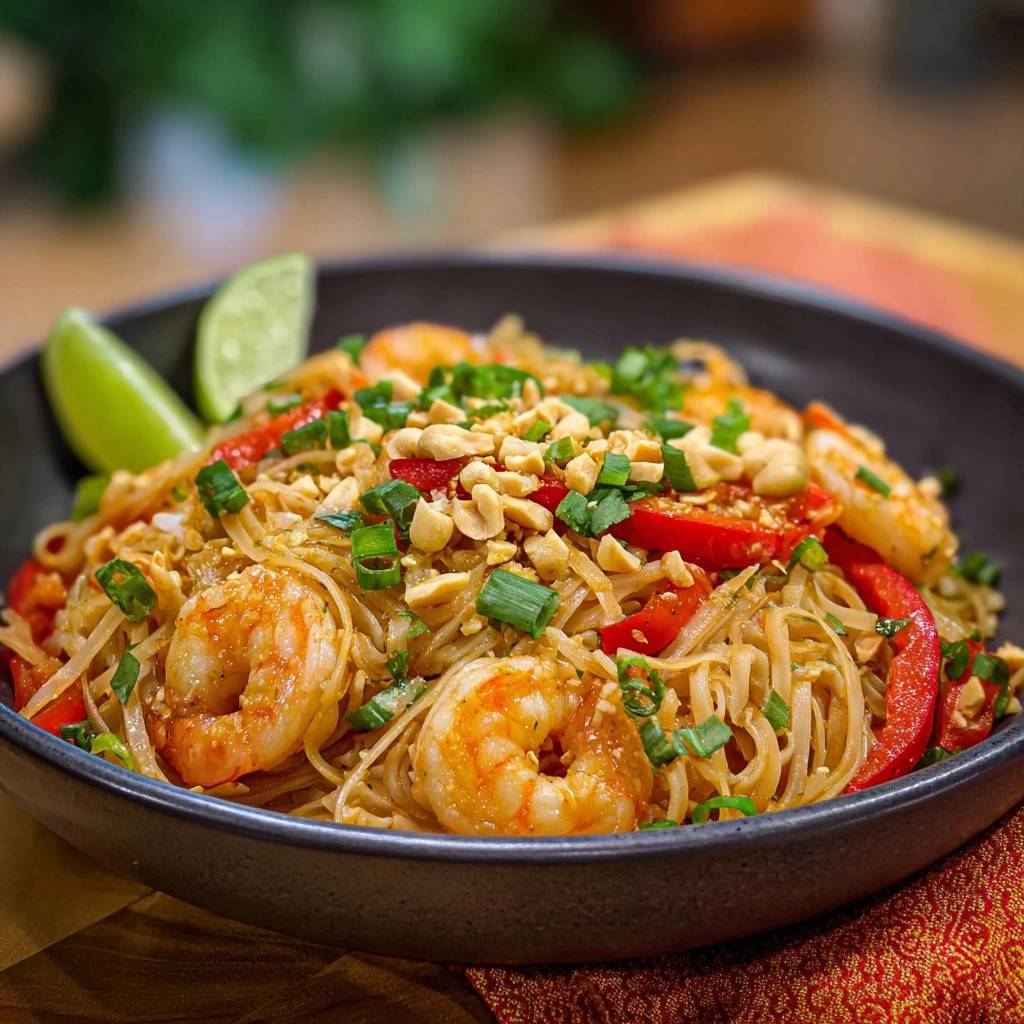
Ever ordered Shrimp Pad Thai at a restaurant only to get a plate of gummy, clumped noodles? You’re not alone. This recipe nails the fix with a simple cold-soak method that delivers chewy, separate strands every time, just like the pros.
Therefore, you get juicy shrimp, crisp red peppers, and a balanced sauce that clings perfectly without sogginess. It’s ready in 25 minutes total: 10 minutes prep, 15 minutes cook, serves 4 at about 550 calories per serving. Perfect for busy weeknights when you crave takeout quality at home.
The secret lies in that room-temperature soak. It hydrates the rice noodles evenly without excess starch release, so they stay firm during the high-heat toss. No more mush, I promise.
Unlocking Chewy Noodles in Shrimp Pad Thai
Why Rice Noodles Turn Gummy
Rice noodles consist of rice flour and water that form a delicate structure. Hot water overhydrates them, breaking down starches into a sticky mess. However, room-temperature soaking hydrates slowly and evenly.
In addition, this prevents the excess moisture that causes clumping. You’ll notice the noodles flex without snapping after 20 minutes, unlike boiled ones that turn to paste. That’s the science behind perfect texture.
Cold Soak Technique Step-by-Step
Start by placing 8 ounces of rice noodles in a large bowl of room-temperature water. Soak for 20 minutes until they’re flexible but firm, like al dente pasta. Drain well, rinse with cold water, and toss with 1 teaspoon vegetable oil.
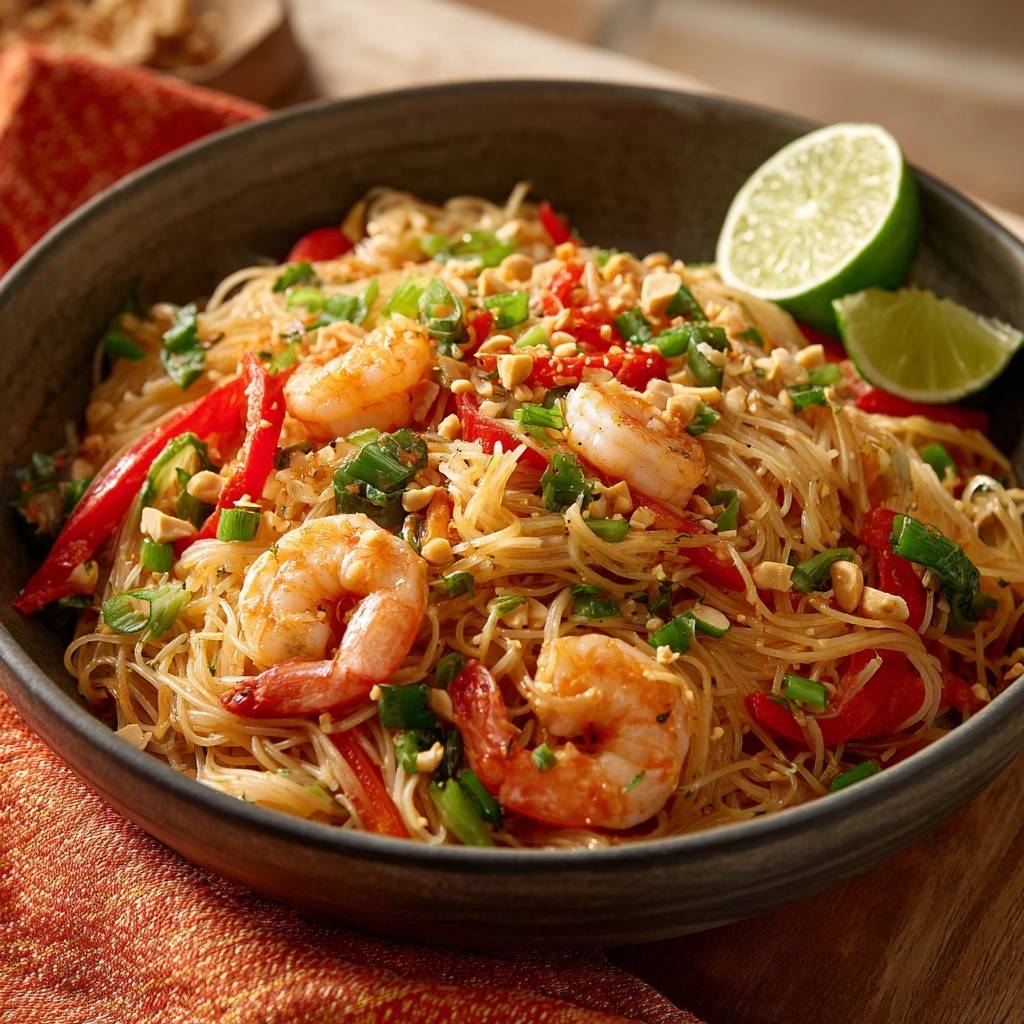
This oil coats each strand, so they won’t stick during stir-fry. Pro tip: Choose Thai-style flat rice noodles (about 1/4-inch wide) for the best chew; Vietnamese ones work too but soak 5 minutes less. Boiling? Skip it, or you’ll get gumminess.
Feel the difference: post-soak noodles hold their shape and absorb sauce beautifully. It’s foolproof.
Essential Ingredients for Authentic Shrimp Pad Thai
Shrimp Selection and Prep Basics
Grab 1 pound of large shrimp (16/20 count per pound) for maximum juiciness. Peel and devein them easily by slicing along the back with a paring knife at a shallow angle. This ensures even cooking without tough veins.
Peeled shrimp release less water, staying plump. No large ones? Prawns sub in fine, but pat dry first. They’re high in protein, low in fat, making this a lean meal.
Vegetables and Crunch Elements
Thinly slice 1 red bell pepper into julienne strips for crisp-tender bites that contrast the chewy noodles. Separate 4 green onions: whites for the base flavor, greens as garnish.
Chop 1/2 cup peanuts for nutty crunch, and 1/4 cup fresh cilantro for brightness. Test cilantro freshness by its vibrant smell; wilted leaves dull the dish. These elements create textural pop in every forkful.
Therefore, the veggies stay snappy with just 2 minutes of stir-frying.
Sauce Components Breakdown
Whisk 3 tablespoons natural peanut butter (not processed) with 3 tablespoons low-sodium soy sauce, 2 tablespoons rice vinegar, 2 tablespoons brown sugar, 1 tablespoon fish sauce, and juice from 1 lime. This creates a creamy, umami-packed sauce.
The peanut butter emulsifies everything smoothly. Soy and fish sauce balance savory depth, vinegar adds tang, sugar mellows it sweetly, and lime brightens. Taste and tweak ratios for harmony; low-sodium keeps salt in check.
Pro tip: Mix at room temp so the peanut butter blends without lumps. It’s glossy perfection.
Mastering the Shrimp Pad Thai Stir-Fry Sequence
Prepping Your Wok for High-Heat Success
A carbon steel wok beats nonstick for superior heat retention, keeping noodles separate. Use vegetable oil with its high smoke point. Heat to medium-high until shimmering, about 1 minute.
This prevents sticking right away. Always cook shrimp in a single layer to avoid steaming. Crowding? Do it in batches.
Cooking Shrimp to Juicy Perfection
Add shrimp in one layer to 1 tablespoon hot oil. Cook 2 minutes per side until pink and opaque. Remove immediately; they’ll finish heating later.
Single layer means they sear, not steam, locking in juices. Overcook to white and rubbery? Watch for the curl and 140°F internal temp. Resting keeps them moist.
Vegetable Stir-Fry and Noodle Integration
Heat remaining oil, add 1 teaspoon minced garlic and white green onions. Stir 30 seconds until fragrant, not browned. Toss in red bell pepper for 2 minutes until crisp-tender.
Push veggies aside, add soaked noodles to the center. Pour sauce over and toss on high heat for 2 minutes. The quick wok action evaporates moisture, so noodles absorb evenly without mush.
Smell that sweet aroma building? That’s success.
Final Toss and Plating Details
Return shrimp for 1 minute toss to heat through. Remove from heat, then top with peanuts, cilantro, green onion tops, and lime wedges. Squeeze lime for zing that wakes flavors.
Portion into 4 bowls. Serve hot for peak texture. It’s restaurant-ready.
Science of Texture in Shrimp Pad Thai
High-Heat Toss vs. Simmer Effects
High-heat wok toss triggers Maillard reaction on shrimp and peppers, building flavor. It evaporates noodle moisture fast, preventing clumping. Simmering steams them soft and sticky.
Dry heat keeps strands separate. Therefore, your Pad Thai stays chewy. Notice the sauce glaze forming? That’s the magic.
Sauce Emulsification Principles
Peanut butter binds oil and water phases into a stable emulsion. Acids from vinegar and lime tenderize shrimp proteins gently. Brown sugar caramelizes at wok temps for subtle depth.
This pH balance yields a glossy, clinging sauce. No separation, just harmony on the plate.
Avoiding Common Shrimp Pad Thai Pitfalls
Fixing Overcooked or Rubbery Shrimp
Check internal temp at 140°F; pull off heat early. For extra insurance, brine shrimp 15 minutes in saltwater first. Thaw frozen ones in cold water, not microwave, to avoid waterlogging.
These steps lock in moisture. Rubbery? You cooked past opaque.
Preventing Sauce-Noodle Clumps
Over-soak makes them waterlogged; stick to 20 minutes. High heat and oil toss are key. Avoid wok crowding, which traps steam.
Clumps still? Rinse again and re-oil. Problem solved.
Balancing Sweet-Salty Flavors
Taste sauce before cooking; adjust with extra lime for tang or vinegar if too sweet. Fish sauce varies by brand, so start low. Add lime at plating to avoid bitterness.
This ensures perfect harmony every time.
Flavor Variations for Shrimp Pad Thai
Protein Swaps and Additions
Swap shrimp for chicken strips (cook 4 minutes) or cubed tofu (2 minutes). Add scrambled egg after veggies. For vegan, use mushroom-based fish sauce alternative.
Adjust times to keep textures right. Still authentic.
Vegetable and Spice Twists
Add bean sprouts or shredded carrots in the last minute for crunch. Sprinkle chili flakes for heat. Stir in coconut milk for creamier sauce.
These nod to Thai roots or American tweaks without overpowering.
Pairing Sides with Shrimp Pad Thai
Crisp Vegetable Complementers
Pair with cucumber salad or pickled carrots for acidity that cuts richness. Fresh spring rolls add lightness without carb overload. Cooling sides balance the warm spice.
They refresh your palate perfectly.
Beverage and Rice Alternatives
Iced green tea refreshes, or try sparkling water with lime. Serve alongside sticky rice or jasmine for extra carbs if needed.
Shrimp Pad Thai Storage and Reheating
Make-Ahead and Make-Ahead and Freezer Strategies
Store leftovers in an airtight container up to 3 days in fridge; keep noodles and sauce separate if possible. Freeze in portions for 1 month using freezer bags. Thaw overnight in fridge, then reheat.
Noodles hold up decently, but best fresh. Don’t refreeze.
Reheating Without Texture Loss
Revive in hot wok with a splash of water for steam; toss 2 minutes. Microwave works but softens noodles; cover loosely. Avoid sogginess.
Troubleshooting Shrimp Pad Thai Issues
Noodles Still Sticky?
Re-oil after draining or shorten soak to 15 minutes. High-heat toss is crucial; low heat steams them. Rinse cold again if needed.
Shrimp Tough?
You overcooked; aim for 140°F internal. Brine beforehand or use smaller sizes. Resting post-cook redistributes juices.
Sauce Too Thick?
Thin with lime-water mix or extra rice vinegar. Whisk vigorously pre-pour. Heat helps it loosen naturally.
Not Enough Umami?
Boost fish sauce by 1 teaspoon, tasting first. Brands differ in potency. Soy sauce amps it too.
Too Sweet?
Counter with more lime juice or vinegar. Balance happens in tasting stages. Adjust pre-cook.
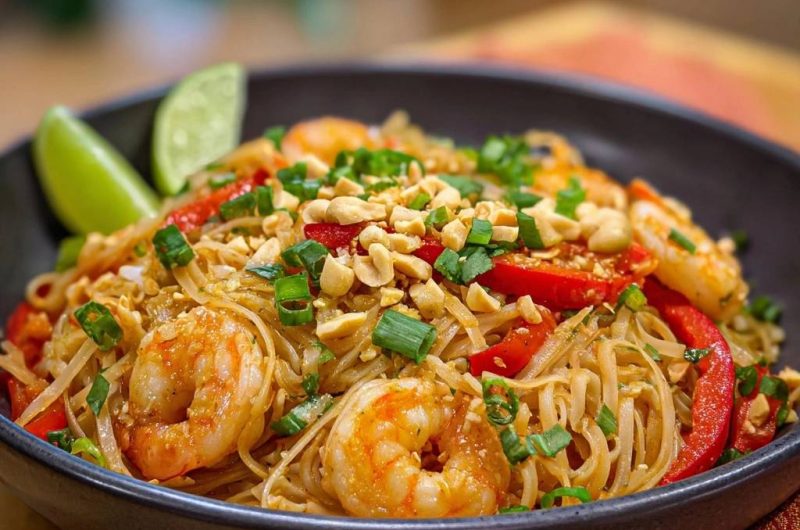
Shrimp Pad Thai
Course: Main CourseCuisine: ThaiDifficulty: easy4
servings25
minutes10
minutes35
MinutesThai
Ingredients
8 ounces rice noodles
1 pound large shrimp, peeled and deveined
1 red bell pepper, thinly sliced
4 green onions, sliced (white and green parts separated)
1/2 cup chopped peanuts
1/4 cup chopped fresh cilantro
2 limes (1 juiced, 1 cut into wedges)
3 tablespoons peanut butter
3 tablespoons soy sauce (low-sodium)
2 tablespoons rice vinegar
2 tablespoons brown sugar
1 tablespoon fish sauce
2 tablespoons vegetable oil
1 teaspoon minced garlic (from 2 cloves)
Directions
- Prepare the noodles to avoid gumminess: Place rice noodles in a large bowl of room-temperature water (not hot). Soak for 20 minutes until flexible but still firm to the touch, like al dente pasta. Drain well, rinse briefly with cold water, then toss with 1 teaspoon oil to prevent sticking. Set aside. This cold soak locks in chewy texture without mush.
- Make the sauce: In a small bowl, whisk peanut butter, soy sauce, rice vinegar, brown sugar, fish sauce, and juice of 1 lime until smooth. Set aside.
- Heat 1 tablespoon oil in a large wok or skillet over medium-high heat. Add shrimp in a single layer. Cook 2 minutes per side until pink and opaque. Remove and set aside.
- Add remaining 1 tablespoon oil to wok. Stir in garlic and white parts of green onions; cook 30 seconds until fragrant. Add sliced red bell pepper; stir-fry 2 minutes until crisp-tender.
- Push veggies to side. Add drained noodles to center. Pour sauce over noodles and toss everything together for 2 minutes over high heat. Noodles will absorb sauce evenly without breaking down, staying separate thanks to the pre-soak and quick high-heat toss.
- Return shrimp to wok. Toss 1 minute to heat through. Remove from heat.
- Serve topped with peanuts, cilantro, green onion tops, and lime wedges. Squeeze lime for extra zing. Perfect texture guaranteed!
Notes
- The cold soak method for noodles locks in chewy texture without mush. Use room-temperature water and high-heat toss for perfect results every time.