Why Silky Parsley Pesto Pasta Transforms Weeknights
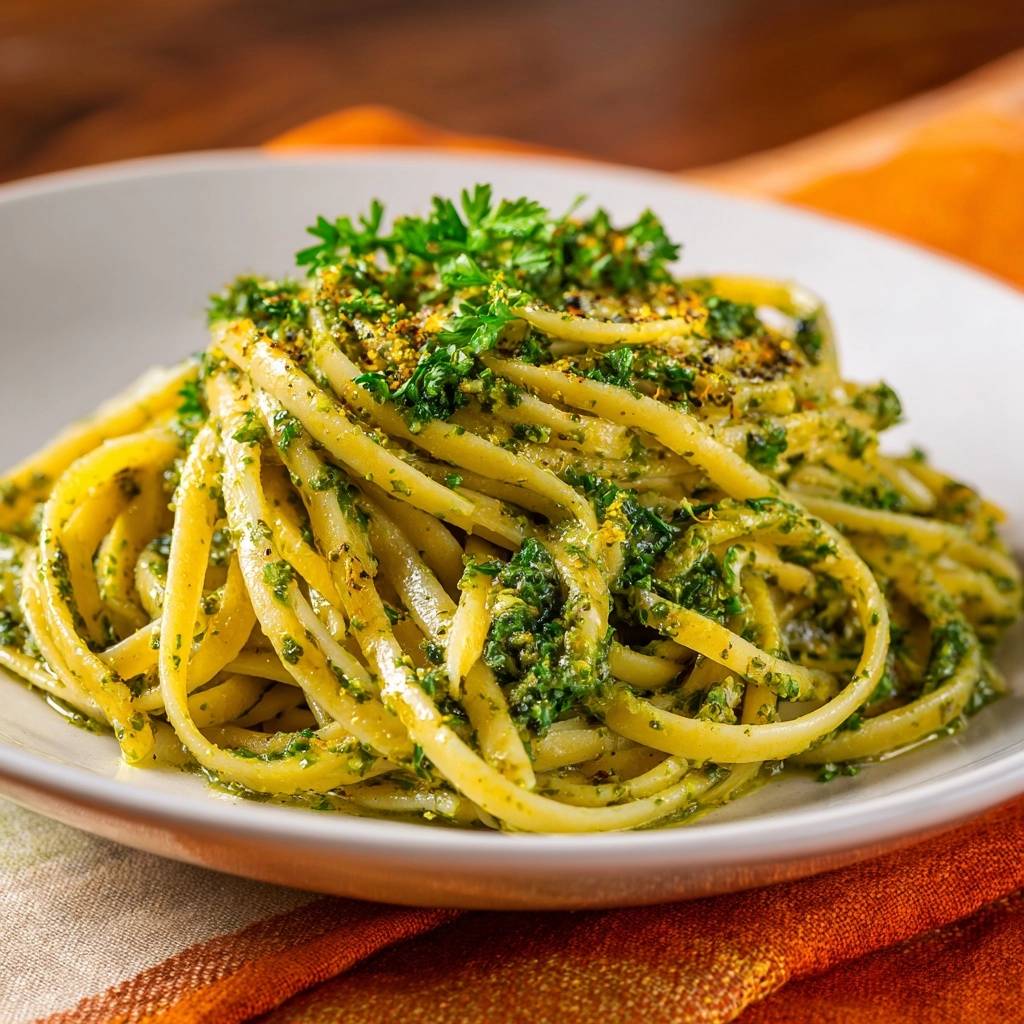
Ever twirl pasta only to find the pesto sliding right off into a sad green puddle at the bottom of your bowl? That frustration ends here with Silky Parsley Pesto Pasta. This 20-minute wonder uses reserved pasta water to create a glossy emulsion that coats every single strand perfectly.
Therefore, you get vibrant, fresh parsley flavor without the usual basil routine or nutty heaviness. In addition, the bright green hue and silky texture make it a weeknight hero that feels fancy but cooks fast.
The secret lies in that vigorous toss over low heat. Pasta starch binds with olive oil, forming a stable sauce that grips tight. You’ll never go back to pooling pesto again.
Core Ingredients for Clinging Parsley Pesto
Start with 12 ounces of spaghetti because it releases the most starch during cooking. That starch is crucial for the emulsion that makes your Silky Parsley Pesto Pasta cling. Spaghetti’s shape also holds the sauce in those perfect ridges.
Next, grab 3 cups of fresh flat-leaf parsley, leaves and tender stems. It packs bright, earthy flavor without bitterness, and fresh bunches yield way more than bagged stuff. Therefore, source vibrant ones from your market’s herb section.
Half a cup of extra-virgin olive oil forms the emulsion base, while 2 peeled garlic cloves, 1 teaspoon salt, and half a teaspoon black pepper season it just right. However, the real star is reserving a quarter cup of pasta water. It acts as the gripper, turning loose pesto into silky perfection.
Parsley Selection for Vibrant Silky Pesto
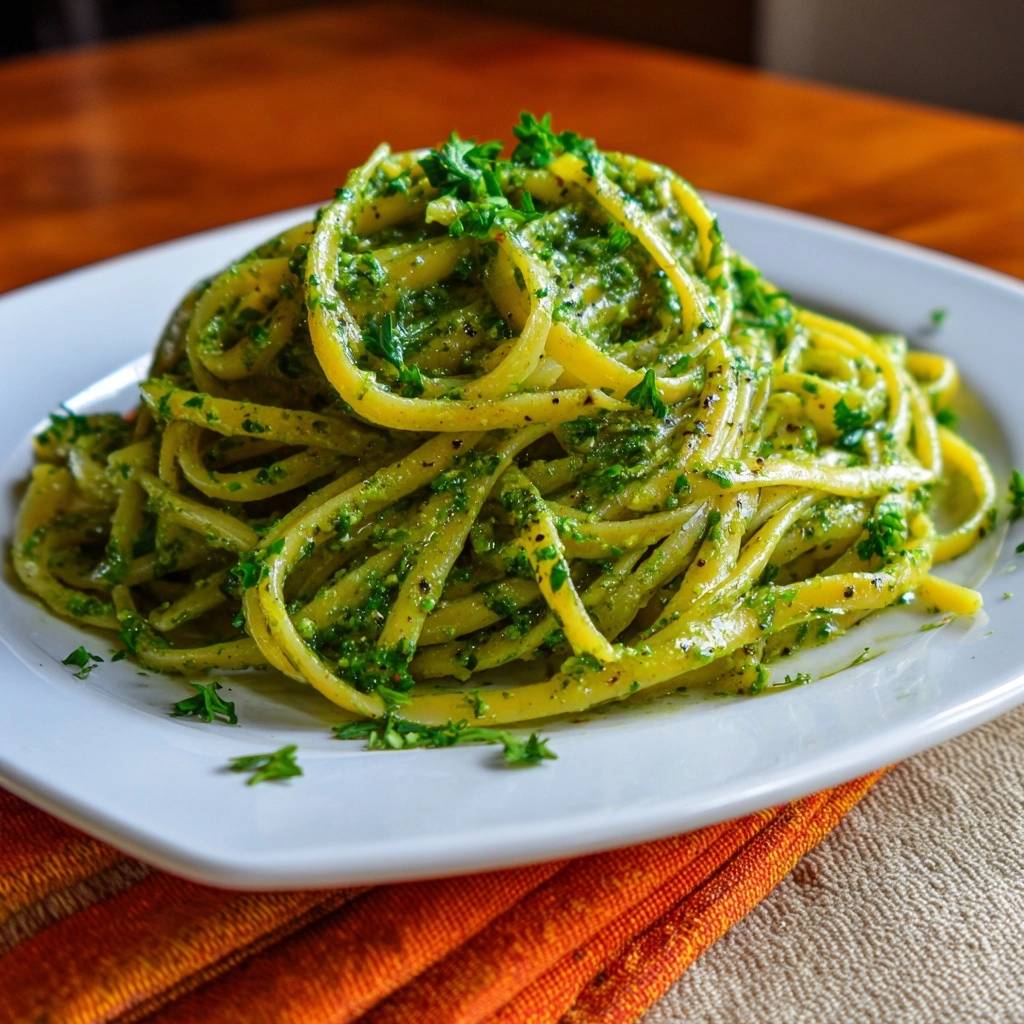
Choose flat-leaf parsley over curly because it blends smoother and tastes less soapy. Tender stems add depth without chewiness, so snip them close.
Freshness shows in crisp, vibrant leaves with no wilting. Store in a damp towel in the fridge to keep those essential oils potent for emulsification. In addition, a big bunch usually gives you the full 3 cups easily.
Pasta Water’s Role in Sauce Adhesion
Pasta water carries starch from al dente spaghetti, and that starch links oil and water molecules for a glossy coat. Cook to al dente, about 10-12 minutes, to max out those reserves.
Exactly a quarter cup prevents pooling while keeping things saucy. Too little, and it’s dry; too much, and it soups up. Therefore, reserve a full cup upfront so you can adjust on the fly.
Emulsification Science in Silky Parsley Pesto Pasta
Here’s the magic: spaghetti starch has amylose and amylopectin that trap olive oil when you toss with hot pasta water. Low heat keeps it stable, avoiding separation.
Unlike drizzling cold pesto, this method creates visual gloss, like a sheen on every noodle. Vigorous tossing for 1-2 minutes seals the deal. In addition, it contrasts traditional pesto by making sauce stick from fork to finish.
Starch-Oil Binding Mechanism Explained
Starch granules burst in hot water, releasing amylose chains that coat oil droplets. Low post-drain heat, around 150-180°F, activates binding without cooking the herbs.
Over-processing parsley releases bitter enzymes, so pulse briefly. Therefore, flecks remain for texture, and the emulsion stays silky.
Equipment Choices for Perfect Silky Pesto
A food processor shines for the 30-second pulse that keeps parsley textured, not pureed. It retains herb oils better than a blender.
Use a large, wide pot for boiling to build starchy water, and the same pot for tossing without splashing. No processor? A mortar and pestle works, but it’ll take elbow grease. In addition, clean blades prevent off-flavors in your emulsion.
Food Processor vs Immersion Blender
Food processors pulse evenly for flecks, avoiding heat buildup that bitters parsley. Immersion blenders puree too smooth and overheat fast.
Stick to 30-second bursts in the processor. Therefore, you preserve fresh oils for that vibrant, clinging Silky Parsley Pesto Pasta.
Step-by-Step: Crafting Silky Parsley Pesto Pasta
This serves 4 in about 20 minutes. Follow these phases closely for foolproof results.
Boil Spaghetti for Maximum Starch
Bring a large pot of water to a boil with 1 tablespoon salt per 4 quarts. Add 12 ounces spaghetti and cook 10-12 minutes until al dente, firm to the bite.
Don’t rinse, as starch clings to the pasta. Reserve 1 cup cooking water before draining. That cloudy liquid is your emulsion gold.
Pulse Parsley Pesto Base Smooth
In a food processor, layer 3 cups parsley first, then half a cup olive oil, 2 garlic cloves, 1 teaspoon salt, and half a teaspoon pepper. Pulse in bursts for 30 seconds total until smooth with flecks.
Taste and adjust seasoning. Avoid over-processing, or it turns bitter and oily. Set aside while pasta finishes.
Toss for Emulsified Clinging Sauce
Return empty pot to low heat. Add drained spaghetti, pesto, and quarter cup reserved water. Toss vigorously 1-2 minutes until glossy and clinging.
The starch binds everything into a silky coat. Add water 1 tablespoon at a time if needed. No pooling guaranteed, serve hot with extra parsley sprigs.
Avoiding Pitfalls in Silky Parsley Pesto Pasta
Overcook pasta, and starch weakens, causing sauce to slide. Puree pesto too long, and bitterness ruins the vibe. Skip the toss, and you get that dreaded pool.
Wrong water amount either dries it out or makes soup. Therefore, watch timings and textures closely. Pro tip: if separated, add a splash more hot water and toss again.
Fixing Bitter or Separated Pesto
Bitter comes from over-processing, which heats and breaks down parsley enzymes. Rescue by stirring in fresh chopped parsley.
Separated sauce fixes with extra pasta water and low-heat toss. In addition, a teaspoon fresh lemon juice can brighten and re-emulsify.
Flavor Variations for Silky Parsley Pesto
Swap half the parsley for basil or mint to twist the herb profile without losing silkiness. Lemon zest adds zing, keeping it bright.
It’s already nut-free and vegan. Spice with chili flakes for heat, or use gluten-free spaghetti, but reserve extra water as it starches less. Therefore, scale oil and water to match.
Herb Swaps Without Losing Silkiness
Cilantro works at a 2:1 parsley ratio for earthiness, or arugula for peppery bite. Keep oil-water balance exact to hold the emulsion.
Taste as you go; flavors evolve post-toss. In addition, these keep the glossy cling intact.
Pairing Sides with Silky Parsley Pesto Pasta
Balance the earthy parsley with a crisp green salad of romaine and cherry tomatoes. Roasted zucchini or tomatoes add warmth without overwhelming.
Grill chicken or tofu for protein. Light whites like Sauvignon Blanc cut through the richness. Plate with a parsley garnish for that vibrant pop.
Prep Ahead Guide for Silky Pesto Pasta
Make pesto up to 2 days ahead; store in a jar with a thin olive oil layer on top in the fridge. It stays vibrant.
Cook pasta fresh, or store cooked strands in water for reheating. Don’t freeze full dish; sauce separates. Thaw pesto, then re-emulsify with fresh pasta water. Batch for 8 by doubling everything precisely.
Troubleshooting Silky Parsley Pesto Pasta Issues
How do I store Silky Parsley Pesto Pasta leftovers?
Store in an airtight container in the fridge for up to 3 days. It doesn’t freeze well because the emulsion breaks; starch gets gummy upon thawing. Reheat gently in a skillet with a splash of water to revive the silkiness.
Why does my sauce pool at the bottom?
Insufficient tossing or weak pasta starch from overcooking causes this. Always cook al dente, reserve starchy water, and toss vigorously 1-2 minutes on low heat. Add water incrementally for perfect gloss every time.
Can I substitute ingredients in Silky Parsley Pesto Pasta?
No basil? Stick to parsley or swap half with cilantro, keeping 3 cups total. Gluten-free pasta works but needs more reserved water since it starches less. Skip garlic if sensitive, but add a pinch more salt for punch.
Why is my pesto bitter?
Over-processing in the food processor releases bitter enzymes from parsley. Pulse only 30 seconds in short bursts to keep flecks and freshness. If bitter, stir in fresh chopped parsley or a squeeze of lemon to balance.
How do I scale this for 2 servings?
Halve everything precisely: 6 ounces spaghetti, 1.5 cups parsley, quarter cup oil, 1 garlic clove, half teaspoon salt, quarter teaspoon pepper, and 2 tablespoons pasta water. Timings stay the same for perfect emulsion.
Is this recipe nut-free and vegan?
Yes, completely nut-free with no nuts or cheese. It’s naturally vegan thanks to olive oil and parsley base. The pasta water toss keeps it silky without any animal products.
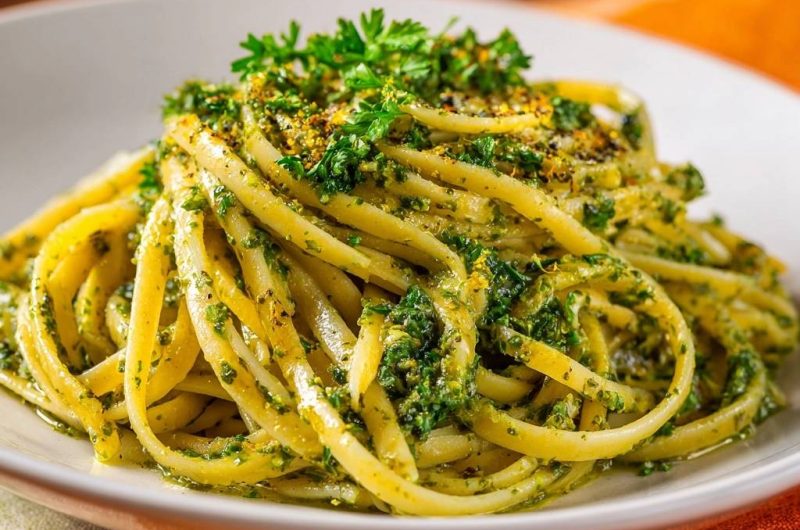
Silky Parsley Pesto Pasta
Course: Main CourseCuisine: ItalianDifficulty: easy4
servings10
minutes12
minutes22
Minutes450
kcalItalian
Ingredients
12 ounces spaghetti
3 cups fresh flat-leaf parsley, leaves and tender stems
1/2 cup extra-virgin olive oil
2 garlic cloves, peeled
1 teaspoon salt
1/2 teaspoon black pepper
1/4 cup reserved pasta cooking water (key for clinging sauce)
Directions
- Bring a large pot of salted water to a boil. Add spaghetti and cook until al dente, about 10-12 minutes.
- While pasta cooks, make the pesto: In a food processor, pulse parsley, olive oil, garlic, salt, and pepper until smooth but with some flecks for texture, about 30 seconds. Do not over-process to avoid bitterness. Set aside.
- Reserve 1 cup pasta cooking water, then drain spaghetti.
- Return empty pot to low heat. Add drained spaghetti, parsley pesto, and 1/4 cup reserved pasta water. Toss vigorously for 1-2 minutes. The hot pasta starch binds with the oil, emulsifying the sauce into a silky coating that clings to every strand, preventing any sliding or pooling. Add more pasta water, 1 tablespoon at a time, if needed for perfect glossy coverage.
- Divide into bowls, garnish with extra parsley if desired, and serve immediately. Enjoy pasta that stays sauced from fork to finish!
Notes
- Do not over-process the pesto to avoid bitterness. Toss vigorously with pasta water for silky, clinging sauce.