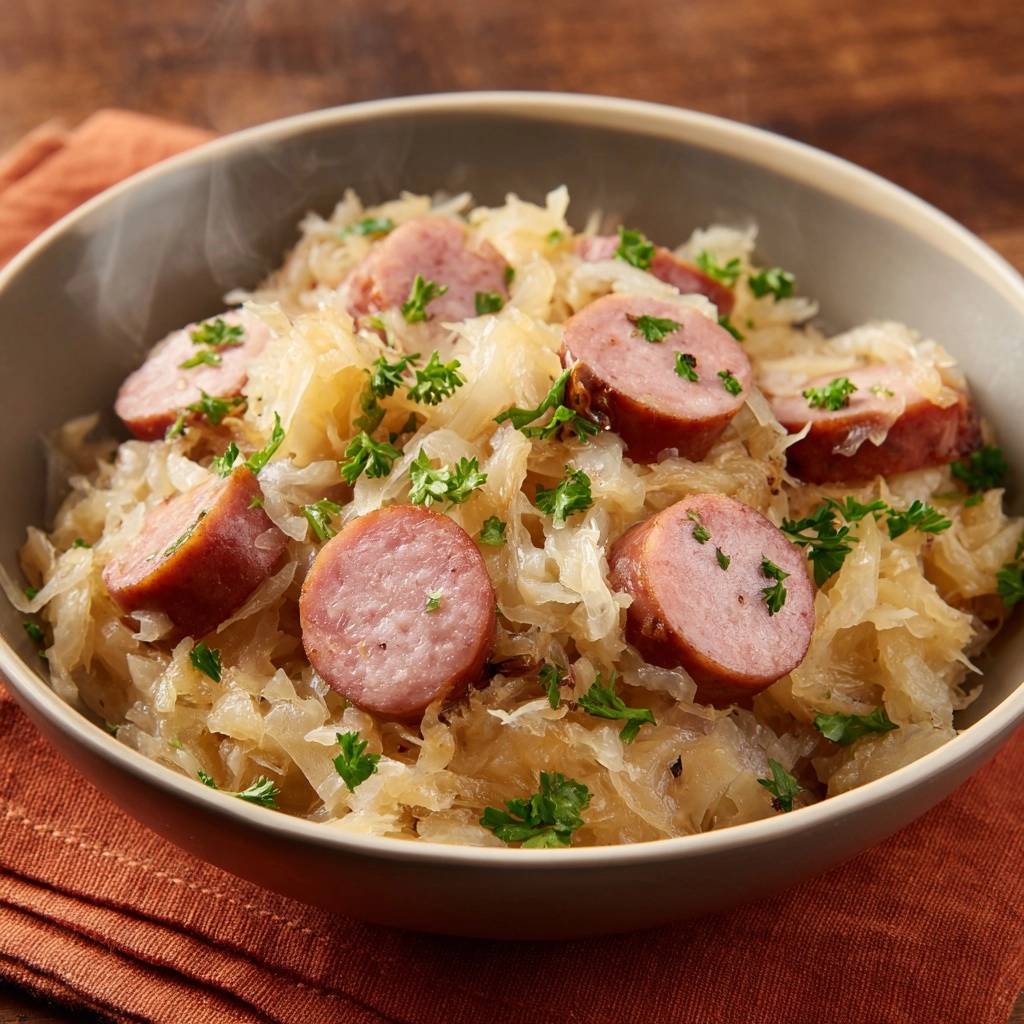
Why Skillet Sauerkraut and Smoked Sausages Transforms Weeknights
Nothing ruins a sauerkraut dinner faster than that watery, mushy mess from the jar. You’ve been there, right? Soggy strands swimming in brine that dilute every bit of tang. But this skillet version changes everything with a quick rinse-and-squeeze that keeps it firm and punchy.
Therefore, you get dinner on the table in 20 minutes using one pan. No fuss, no cleanup nightmare. It’s hearty enough for busy families craving comfort without the hassle.
The real game-changer? That initial squeeze removes excess brine, preserving the sauerkraut’s pectin structure for perfect texture. Plus, browning the sausages first infuses smoky flavor right into every bite. Oh man, the first forkful hits different.
Core Ingredients for Skillet Sauerkraut and Smoked Sausages
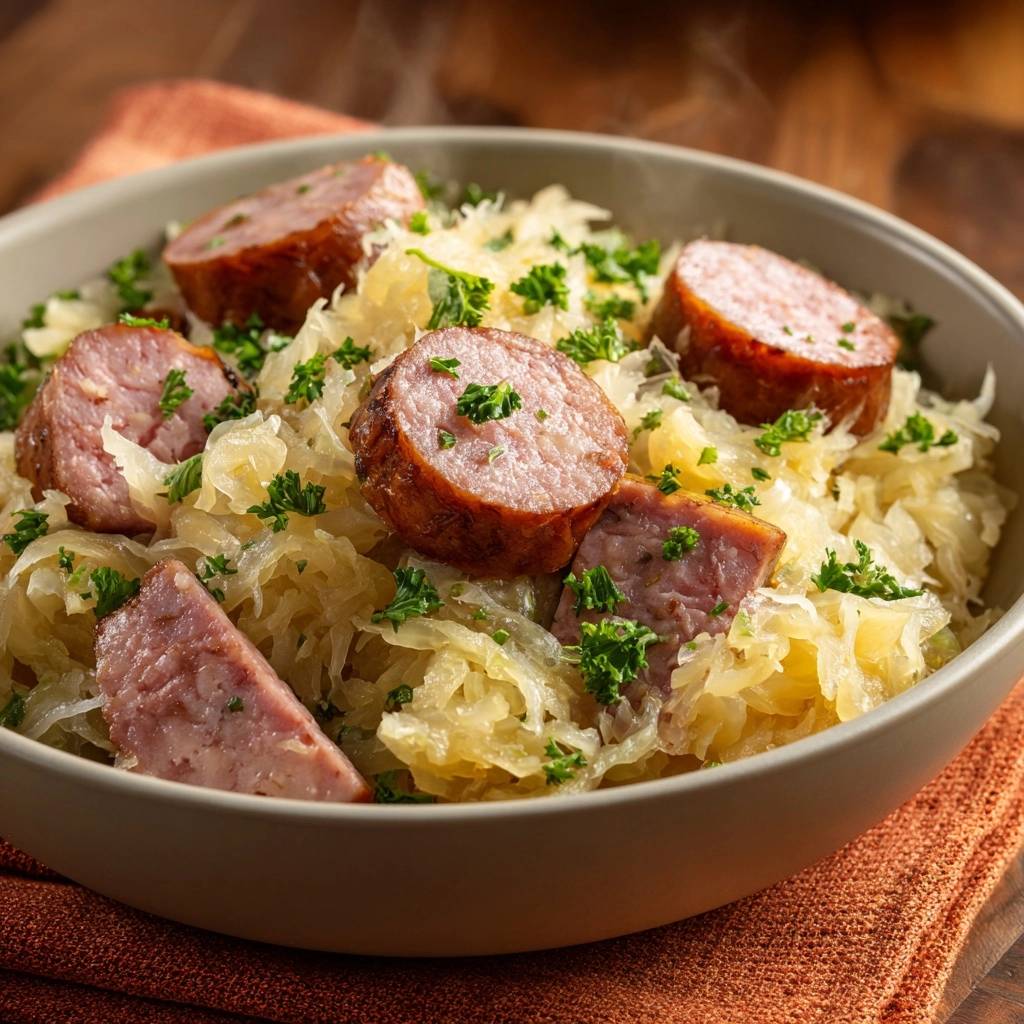
Start with 1 pound jarred sauerkraut. It delivers fermented tang from lactic acid bacteria, way better than bagged stuff that often lacks probiotics. Jarred holds up perfectly after rinsing.
Next, grab 1 pound smoked sausages, sliced into 1/2-inch rounds. Beef, turkey, or chicken varieties bring juiciness and smokiness without overpowering. Uniform slices ensure even browning and fat release.
Finish with 1/4 cup chopped fresh parsley. It cuts through the acidity with herbal brightness. Fresh beats dried every time for that vibrant pop.
Selecting the Best Jarred Sauerkraut
Head to the refrigerated section for unpasteurized options. They retain live probiotics for gut health and firmer texture post-rinse. Pasteurized works too, but raw styles keep more crunch.
Smoked Sausages: Types and Slicing Precision
Choose beef or turkey for bold smoke without excess fat. Slice precisely at 1/2-inch to maximize browning surface. This renders juices that flavor the whole dish.
Parsley’s Role in Balancing Tang
Fresh parsley adds color and aroma at the end. It contrasts sauerkraut’s sharpness without wilting. Chop fine for even distribution.
Science of Rinse-and-Squeeze for Firm Sauerkraut Texture
Sauerkraut turns soggy because excess brine breaks down pectin, the natural structure that holds cabbage firm. Rinsing in cold water flushes salts, while squeezing expels hypertonic liquid.
In addition, this preserves lactic acid tang from fermentation, a process dating back centuries in Europe. No-rinse methods trap moisture, leading to soup. Here, strands stay snappy.
Picture it: pre-squeeze, it’s dripping wet. Post-squeeze, firm and ready. That’s the transformation you taste.
Equipment Essentials for Skillet Sauerkraut and Smoked Sausages
You need a 12-inch cast-iron or nonstick skillet. It handles single-layer browning without crowding. Smaller pans steam instead of sear.
Grab a colander and kitchen towels for squeezing. Tongs flip sausages gently, keeping juices in. This setup means minimal tools, max results.
Why Cast-Iron Excels Here
Cast-iron retains heat for perfect sausage sear. Its seasoning releases sauerkraut easily. Nonstick is fine, but iron adds depth.
Step-by-Step: Mastering Skillet Sauerkraut and Smoked Sausages
This flows in one pan for easy weeknights. Follow timings closely, and you’ll nail it. Sensory cues guide you every step.
Phase 1: Rinsing and Squeezing Sauerkraut Dry
Rinse 1 pound sauerkraut under cold water for 1 full minute. Drain in a colander, then squeeze with towels like wringing laundry. You’ll feel it go from sloppy to dry, preventing mush.
Avoid hot water; it softens fibers. This step locks in tang and crunch.
Phase 2: Browning Sliced Smoked Sausages
Heat skillet over medium. Add 1 pound sliced sausages in one layer. Cook 5-7 minutes, flipping for caramelized edges and rendered fat.
Smell that smoke? It builds flavor base for sauerkraut.
Phase 3: Integrating Sauerkraut for Evaporation
Stir in squeezed sauerkraut, spread evenly. Cook uncovered 8-10 minutes, stirring occasionally. Moisture steams off, leaving firm strands with snap.
Test by bite: it should resist, not wilt.
Phase 4: Fresh Parsley Finish
Off heat, sprinkle 1/4 cup chopped parsley. Toss gently for bright aroma and color.
Avoiding Common Mistakes in Skillet Sauerkraut and Smoked Sausages
Skipping the rinse turns it watery. Overcrowding steams sausages pale. Cooking covered traps steam, dooming texture.
Therefore, taste sauerkraut post-rinse; adjust if too salty. For crowds, batch in two pans. Pro tip: room-temp sausages prevent bursting.
Fixing Watery Sauerkraut Results
Blot with paper towels post-squeeze. Cook longer uncovered to evaporate. Firmness returns fast.
Preventing Sausage Bursting
Slice at room temp, turn gently with tongs. Medium heat avoids splits.
Flavor Variations for Skillet Sauerkraut and Smoked Sausages
Add apple slices mid-cook for sweet-tang balance. Sprinkle caraway seeds with sauerkraut for German flair. No pork? Bacon bits from turkey work.
In addition, stir in paprika for smoke boost or mustard for zing. Vegans, swap plant-based sausages; they crisp up nicely.
Classic German-Style Twists
Caraway seeds release earthy aroma when toasted first. Juniper berries add piney depth, evoking Oktoberfest.
Quick Veggie Boosts
Bell peppers soften sweetly alongside. Diced potatoes absorb flavors for heartiness.
Perfect Pairings for Skillet Sauerkraut and Smoked Sausages
Serve with crusty rye bread to sop juices. Boiled potatoes or mashed roots add comfort. A green salad brings crunch contrast.
Pair with herbal tea or sparkling cranberry juice. For meal prep, layer over grains.
Make-Ahead and Storage for Skillet Sauerkraut and Smoked Sausages
Store leftovers in an airtight container up to 4 days in fridge. Reheat stovetop over medium to crisp sauerkraut; microwave softens it.
Freezes well for 2 months in portioned bags. Thaw overnight, add fresh parsley post-reheat. Great for batch cooking.
Skillet Sauerkraut and Smoked Sausages FAQ
Can I Use Fresh Sauerkraut?
Yes, fresh cabbage-fermented sauerkraut works great. Rinse lightly since it’s less briny; expect even firmer texture and brighter probiotics than jarred.
Best Smoked Sausage Substitutes?
Turkey or beef smoked links match flavor perfectly. Plant-based options like beyond sausage brown similarly; check for no added sugars to keep tang pure.
How to Reduce Tanginess?
Rinse 30 seconds longer or add sliced apples during cook. These mellow acidity while boosting natural sweetness; taste as you go.
Is This Recipe Gluten-Free?
Yes, naturally gluten-free. Always check sausage labels for fillers; most smoked varieties are safe, making it ideal for gluten-sensitive eaters.
Scaling for Larger Crowds?
Double ingredients but use two skillets to avoid steaming. Cook in batches; it reheats well, serving 6-8 easily with no texture loss.
How Do I Store Leftovers?
Keep in an airtight container in the fridge for up to 4 days. Reheat gently on stovetop to restore sausage crisp and sauerkraut snap; avoid microwave for best results.
Why Is My Sauerkraut Still Watery?
You likely skipped full squeezing or covered the pan. Extra towel blot and 2 more uncovered minutes fix it; always cook single-layer for evaporation.
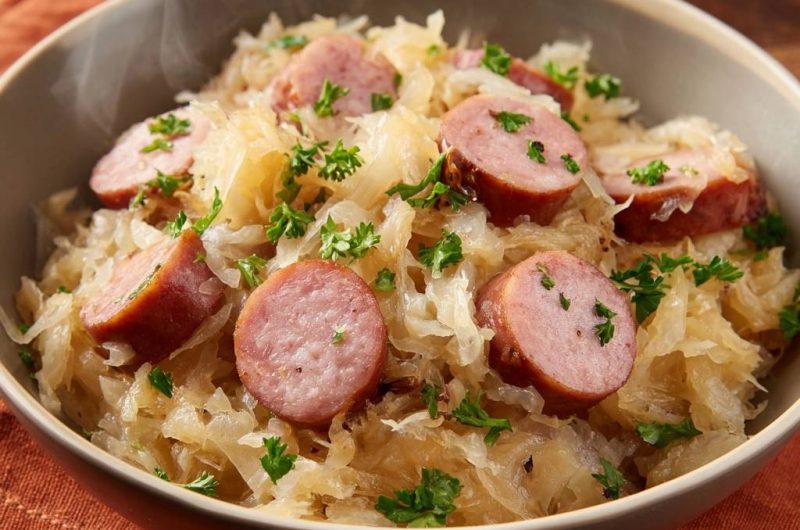
Skillet Sauerkraut and Smoked Sausages
Course: Main CourseCuisine: AmericanDifficulty: easy4
servings10
minutes20
minutes30
Minutes450
kcalAmerican
Ingredients
1 pound jarred sauerkraut
1 pound smoked sausages, sliced into 1/2-inch rounds
1/4 cup fresh parsley, chopped
Directions
- Rinse the sauerkraut thoroughly under cold running water for 1 full minute to remove excess brine. Drain well in a colander, then use clean kitchen towels or your hands to squeeze out every drop of moisture. This crucial step prevents sogginess and delivers firm, flavorful strands every time.
- Heat a large skillet over medium heat. Add the sliced smoked sausages in a single layer. Cook for 5-7 minutes, turning occasionally, until they are lightly browned and heated through.
- Stir in the prepared sauerkraut. Spread it evenly around the sausages. Cook uncovered for 8-10 minutes, stirring occasionally, allowing any remaining moisture to evaporate fully for that non-soggy texture.
- Remove from heat. Sprinkle chopped fresh parsley over the top for a bright finish. Serve hot straight from the skillet.
Notes
- The rinse-and-squeeze step is crucial to prevent sogginess and achieve firm, flavorful sauerkraut.