

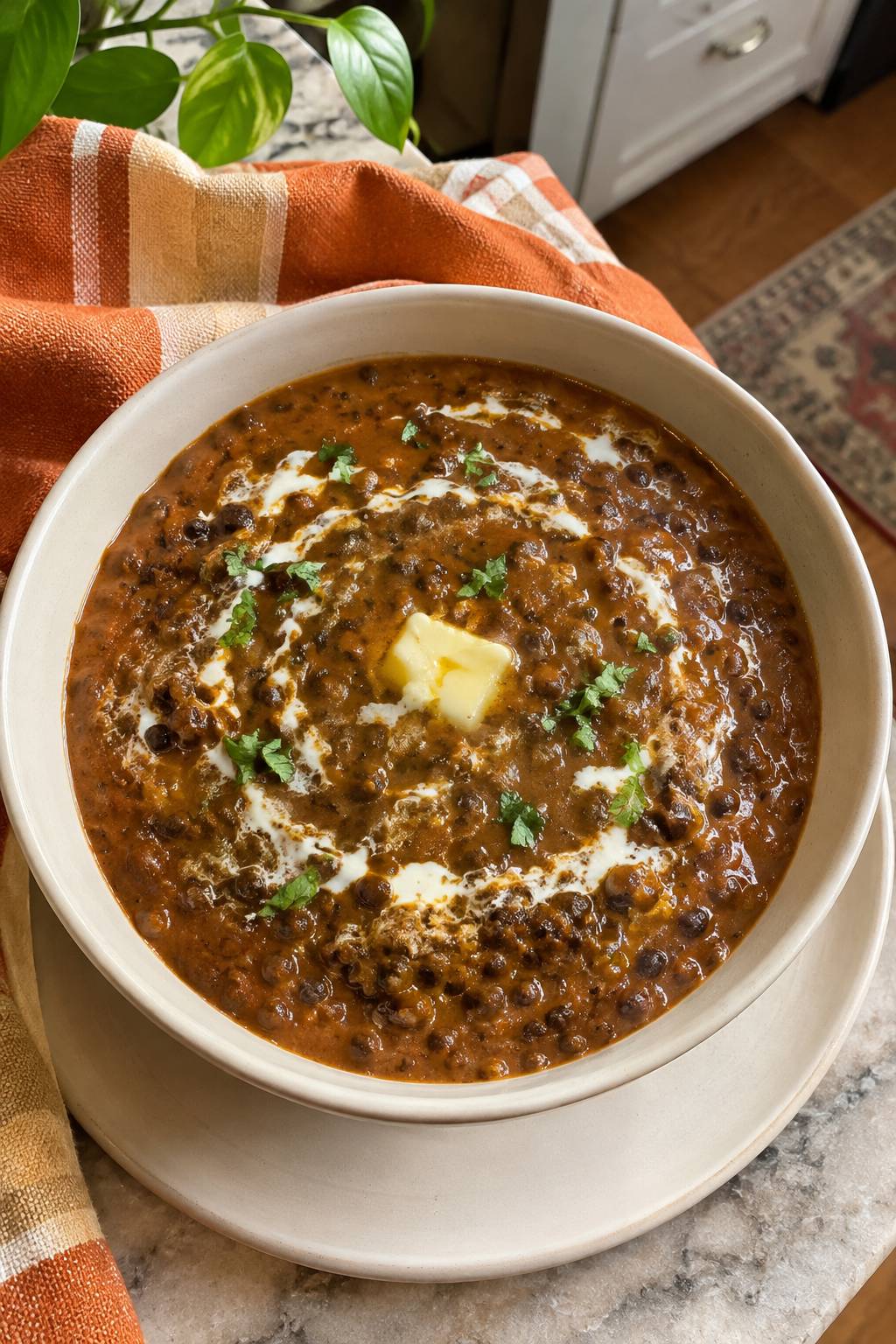
A good spoonful of dal makhani gives you tender kidney beans and soft black lentils in a sauce thick enough to coat them. In this Punjabi main dish, butter carries the flavor of the onion and spices through the tomato sauce, and a swirl of heavy cream, a pat of butter, and chopped cilantro finish the bowl. You can judge the texture as you cook by how easily the lentils crush and how the dal settles when you ladle it.
Look for whole black urad dal
Look for dried whole black urad dal, which may also be labeled sabut urad. The black skins give the cooked lentils their speckled appearance, and the creamy interiors help thicken the dal when you mash them. Canned red kidney beans bring a larger, distinct bite to each spoonful. Since the kidney beans are already cooked, you can drain and rinse them and use the tenderness of the urad dal to judge when the pot is ready for the tomato sauce.
Check the lentils by pressing one against the pot
Scoop up a lentil and press it against the side of the Dutch oven with your spoon. It should crush easily, with a soft center that smears under the spoon. Check a lentil that still looks intact, since the whole skins can hold their shape even when the centers are tender. This check matters before you add the tomato sauce. The acidity of the tomatoes can slow softening, so give firm lentils more time in their cooking liquid.
Use the skillet to gauge the tomato sauce
Look for an onion that has softened and turned golden at the edges. That color tells you it’s ready for the garlic, fresh ginger, and ground spices. Give those seasonings your attention once they hit the butter, since they need constant stirring at that stage. Plain tomato puree gives the spices plenty of room to come through. As it cooks, watch for a slight deepening in color and drag a spoon across the skillet to see if it leaves a visible trail.
Aim for a dal that settles in the bowl
Mash some of the softened lentils against the pot to give the sauce body while keeping whole lentils and kidney beans in the mix. As the dal thickens, stir more often and check how it falls from the ladle. You want it to settle into the bowl under its own weight. The cream stirred into the pot gives the sauce a smooth finish, and the cream reserved for serving makes a visible swirl under the butter and cilantro.
Frequently Asked Questions
What if the urad dal still feels firm?
Keep it at a gentle simmer and add water as needed to keep the lentils submerged. Test again by pressing a lentil against the side of the pot. Once it gives easily under the spoon, it’s ready for the tomato sauce.
Can you thin the dal if it mounds on a spoon?
Yes. Stir in water gradually and check the consistency as you go. The dal should still coat the spoon, then spread gently when it lands in the bowl. Water also helps restore that texture if the dal has thickened when you reheat it.
When do you add the garam masala?
Stir it into the dal with the cream that goes into the pot, once the lentils, kidney beans, and tomato sauce have simmered together. Let the dal simmer gently with the garam masala and cream, then taste it and adjust the salt before serving.

Slow-Simmered Dal Makhani with Black Lentils
Course: Main CourseCuisine: Punjabi, IndianDifficulty: Easy5
servings15
minutes2
hours40
minutes420
kcal10
hours55
minutesWhole black urad dal and kidney beans simmer in a buttery, spiced tomato sauce until thick and creamy. A swirl of heavy cream, a pat of butter, and fresh cilantro finish the dish.
Ingredients
- Lentils and Beans
1 1/2 cups dried whole black urad dal
5 cups water, plus more for soaking and thinning as needed
1 tsp fine sea salt, plus more to taste
1 (15 oz) can red kidney beans, drained and rinsed
- Tomato Sauce and Finish
4 tbsp unsalted butter, divided
1 medium yellow onion, finely chopped
4 garlic cloves, minced
1 tbsp finely grated fresh ginger
1 tsp ground cumin
1 tsp ground coriander
1 tsp Kashmiri chili powder
1 cup plain tomato puree
1 tsp garam masala
1/3 cup heavy cream, divided
2 tbsp chopped fresh cilantro
Directions
- Cook the Lentils
- Rinse the urad dal and put it in a large bowl. Cover it with several inches of water and soak for 8 hours. Drain and rinse.
- Put the soaked dal, 5 cups water, and salt in a Dutch oven. Bring to a boil over high heat, about 10 minutes. Reduce the heat to low, partially cover, and simmer gently for 75 minutes, stirring occasionally. The lentils should crush easily against the side of the pot. If they are still firm, simmer a little longer, adding water as needed to keep them submerged.
- Make the Tomato Sauce
- Melt 3 tbsp butter in a skillet over medium heat. Add the onion and cook for 8 minutes, stirring occasionally, until soft and golden at the edges. Stir in the garlic, ginger, cumin, coriander, and Kashmiri chili powder and cook for 1 minute, stirring constantly.
- Stir in the tomato puree and cook over medium-low heat for 8 minutes, stirring occasionally, until the sauce darkens slightly and a spoon drawn across the skillet leaves a trail.
- Slow-Simmer and Finish
- Stir the tomato sauce and kidney beans into the lentils and their cooking liquid. Mash a few spoonfuls of lentils against the side of the pot. Simmer uncovered over low heat for 55 minutes, stirring more often as the dal thickens. If it gets stiff enough to mound on a spoon, stir in water 1/4 cup at a time. The finished dal should be thick but still settle into the bowl when ladled.
- Set aside 1 tbsp of the cream for serving. Stir the remaining cream and the garam masala into the dal and simmer gently for 3 minutes. Taste and adjust the salt. Spoon into a serving bowl, swirl the reserved cream over the top, and finish with the remaining tablespoon of butter and the cilantro.
Notes
- Look for whole black urad dal, also labeled sabut urad. Its black skins and creamy interiors give dal makhani its characteristic texture.
- Wait until the lentils crush easily before adding the tomato sauce. The acidity of the tomatoes can slow softening.
- The dal thickens in the refrigerator. Stir in a splash of water when reheating to bring it back to a spoonable consistency.