
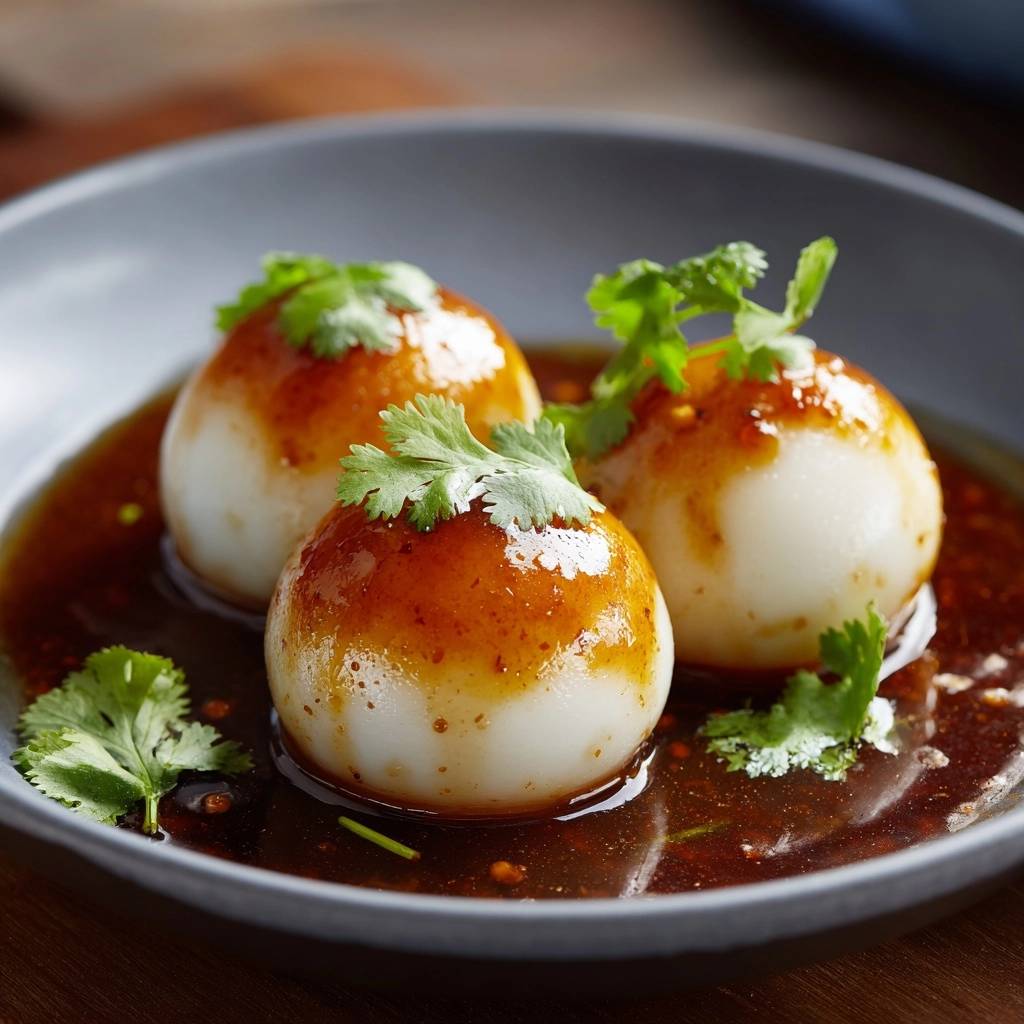
Why Soy Glazed Ramen Eggs Elevate Every Bowl
Picture this: you dive into your ramen bowl, excited for that perfect soft-boiled egg, only to find the whites shredded and mushy from peeling hell. It ruins the whole vibe. But these soy glazed ramen eggs fix that nightmare with a simple vinegar-ice shock method. Peels slide off smooth, leaving pro-level eggs with glossy shine.
So why bother? Because jammy yolks and that umami-packed soy glaze turn basic ramen into something restaurant-worthy. You control the freshness and flavor depth. In addition, the marinade soaks in just right, adding sweet-savory magic without overpowering.
Here’s the expertise kicker: room-temp eggs plus exactly 6 minutes 30 seconds boiling nails the jammy center every time. No guesswork. You’ll wonder why you ever struggled with soy glazed ramen eggs before.
Key Ingredients for Perfect Soy Glazed Ramen Eggs
You start with 6 large eggs at room temperature. They prevent cracks during the boil. Fresh ones, ideally pasture-raised, give richer yolks that stay jammy.
One tablespoon white vinegar goes in the boiling water. It weakens the membrane for effortless peeling. Low-sodium soy sauce, one cup, balances saltiness in the glaze. Don’t skip it; regular soy overpowers.
Half a cup water thins the mix, while quarter cup brown sugar caramelizes for glossy depth. Fresh cilantro leaves garnish at the end, adding bright contrast. These ramen-marinated eggs, or ajitsuke tamago, rely on this balance. Pro tip: grate your own ginger if you want extra zing later.
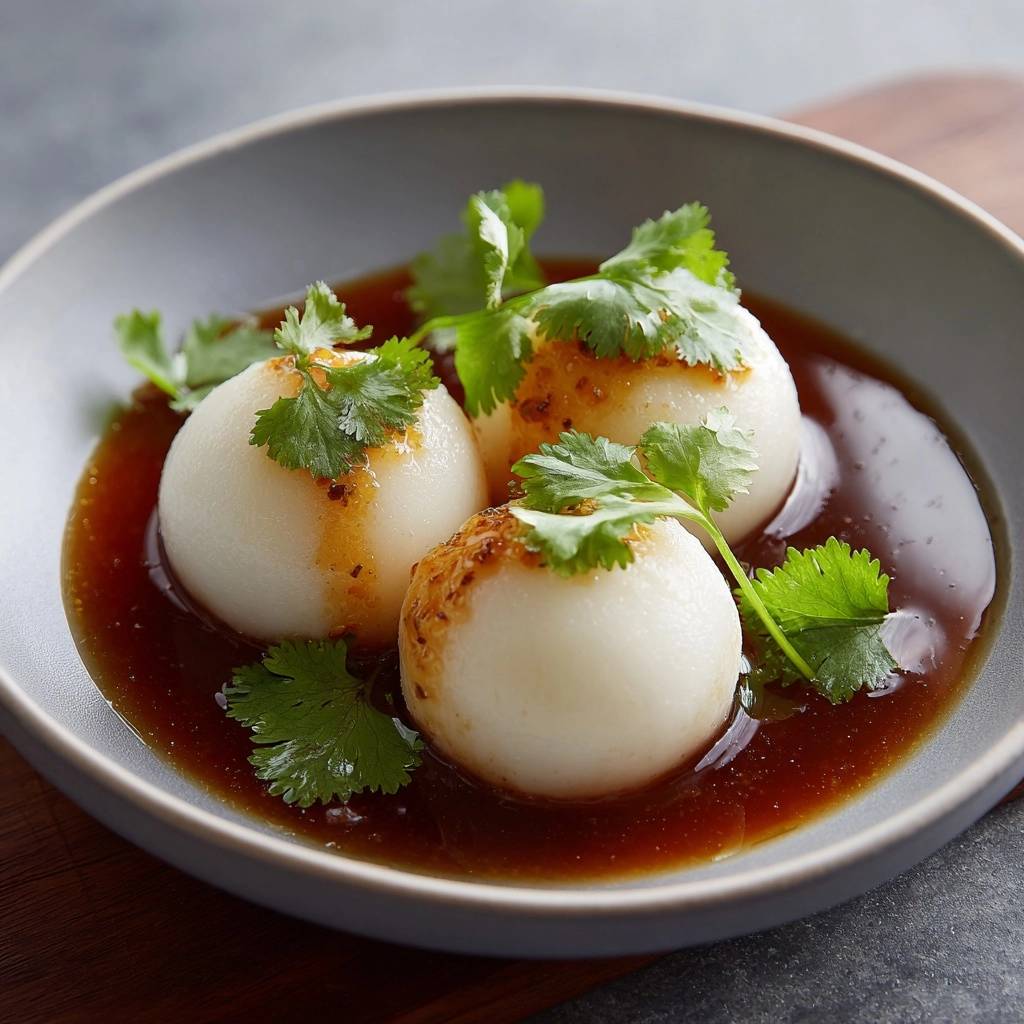
Eggs and Vinegar: Peel-Proof Foundations
Large room-temp eggs are non-negotiable. Cold ones shock and crack. Vinegar’s acidity shifts the eggshell pH, loosening proteins. White vinegar works best; apple cider muddies flavor.
This duo ensures intact whites. You’ll peel them like a chef. Therefore, let eggs sit out 30 minutes before starting.
Soy Glaze Components: Umami and Sweet Balance
Low-sodium soy prevents a too-salty glaze. Water dilutes for even coating, and brown sugar’s molasses adds caramel notes. Simmer them together for shine.
Regular soy works in a pinch, but cut salt elsewhere. This ratio clings perfectly to soy glazed ramen eggs without dripping.
Science of Shock-Cooling Soy Glazed Ramen Eggs
Boiling expands egg whites against the shell. Then, ice bath shock contracts them fast, creating an air pocket for easy peeling. Vinegar aids by curdling the outer albumen slightly.
At 6:30, proteins coagulate to 165°F inside for jammy yolks. Room-temp eggs avoid thermal cracks. It’s simple physics, but it delivers flawless results.
However, skip the ice bath, and shells stick. This method transforms soy glazed ramen eggs into smooth perfection.
Thermal Shock Mechanics for Intact Whites
Heat expands proteins; rapid cool to under 40°F pulls them inward. Vinegar preps by softening bonds. Watch whites shrink visibly in the bath.
Five full minutes seals it. No shortcuts here.
Equipment Essentials for Soy Glazed Ramen Eggs
Grab a medium pot for even boiling. A spoon lowers eggs gently, preventing cracks. Ice bath needs a big bowl with ice and water.
Small saucepan simmers glaze smoothly. A digital timer ensures 6:30 precision. No fancy tools; kitchen basics win.
Therefore, set up everything first. It keeps you stress-free.
Precise Timer and Ice Bath Setup
Use a digital timer for exact 6:30. Ice bath: equal ice and water for sub-40°F chill. Peel under cool running water at a sink station.
This setup guarantees success.
Mastering the Boil: First Phase of Soy Glazed Ramen Eggs
Fill pot halfway with water, add vinegar, boil hard with big bubbles. Lower room-temp eggs one by one with a spoon. Start timer at 6:30 for jammy yolks.
Gentle entry avoids cracks. Rolling boil cooks evenly. Common pitfall: overcrowded pot slows heat.
In addition, swirl water slightly for single-layer boil. Your soy glazed ramen eggs start here.
Achieving Jammy Yolks Through Timing
Six minutes gives runny yolks, 6:30 jammy, seven firm. Core hits 165°F at perfect coagulation. Test one first if unsure.
Peel and Glaze: Core Techniques for Soy Glazed Ramen Eggs
Transfer hot eggs straight to ice bath for five minutes. Whites pull away clean. Tap on counter, roll to crack all over, peel from wide end under water.
Pat dry. Meanwhile, simmer soy, water, sugar five minutes till glossy. Stir constantly; cool fully before adding eggs.
Hot glaze cooks whites tough. Therefore, patience pays off. Pro tip: strain glaze for smooth serving pool.
Effortless Peeling Under Running Water
Start at wide end air pocket. Roll cracks shell evenly. Water slips pieces off; vinegar magic shines now. Smooth whites every time.
Simmering Soy Glaze to Glossy Perfection
Medium heat, stir till sugar dissolves. Thickens in five minutes, coats spoon back. Cool to room temp; submersion prevents overcooking eggs.
Marinating Soy Glazed Ramen Eggs for Maximum Flavor
Submerge peeled eggs in cooled glaze. Fridge for two hours minimum, flip halfway for even coat. Overnight deepens umami.
Glaze penetrates via osmosis. Strain remainder for serving. Your soy glazed ramen eggs glow with flavor.
However, don’t exceed two days or whites get too dark.
Optimal Marination Times and Flavor Penetration
Two hours light glaze, six balanced, 24 intense. Sugar-soy soaks into whites slowly. Flip for symmetry.
Avoiding Pitfalls in Soy Glazed Ramen Eggs
Cold eggs crack; soak room-temp 30 minutes. Short ice bath leaves sticky shells; do five full. Overboil turns yolks chalky.
Hot glaze toughens whites; cool completely. Peel fails? Re-ice briefly. These fixes save every batch.
In addition, measure vinegar precisely. Too much sours taste.
Crack Prevention and Shell Adhesion Fixes
Spoon lowers gently. One tablespoon vinegar max. Ice bath drops temp fast; add more ice if needed. Fixes adhesion instantly.
Flavor Twists on Soy Glazed Ramen Eggs
Swap brown sugar for mirin sweetness. Add chili flakes for heat, ginger slices for spice, green onions for freshness. Garlic or sesame oil boosts too.
Vegan? Try aquafaba “eggs” but expect texture tweaks. These keep soy glazed ramen eggs versatile.
Therefore, experiment after mastering basics. Store extras airtight.
Spicy or Herbal Soy Glaze Variations
Chili flakes add kick; ginger warms. Splash rice vinegar for tang, sesame oil for nutty depth. Matches marinade strength perfectly.
Pairing Soy Glazed Ramen Eggs with Ramen and Beyond
Top tonkotsu or miso ramen with one or two eggs. They burst into rice bowls or poke. Snack on them with glaze dip.
Cilantro amps freshness. Veggie ramen loves the umami punch. Portion wisely; they shine small.
However, save glaze for drizzling. Elevates everything.
Best Ramen Broths for Soy Glazed Eggs
Miso’s earthiness, shoyu’s soy harmony, shio’s clean salt balance best. Wavy noodles trap glaze; straight hold shape. Perfect match.
Make-Ahead Guide for Soy Glazed Ramen Eggs
Marinate up to three days in fridge. Freeze peeled, unglazed eggs one month; thaw in fresh glaze. Scale batch double by widening pot.
Re-glaze day-old ones for refresh. Shelf life post-marinade: three days max. Pro tip: label dates.
Therefore, prep for weeknight ramen wins.
Soy Glazed Ramen Eggs: Common Queries
Scaling Recipes and Storage Durations
How do I store soy glazed ramen eggs and scale up? Fridge in airtight container with glaze up to three days. Freeze peeled eggs one month; thaw overnight in glaze. Double recipe: use larger pot, same timings.
Yolk Texture Adjustments and Substitutions
Can I adjust yolk texture or substitute ingredients? Six minutes runny, 6:30 jammy, seven firm. No soy? Coconut aminos work, less salty. Gluten-free soy sauce fine too.
Why do my egg whites tear when peeling?
Why do my egg whites tear? Cold eggs or short ice bath causes it. Use room-temp eggs, five-minute ice shock. Vinegar in boil breaks membrane bonds. Peel under running water from wide end for smooth results.
Can I make soy glazed ramen eggs in an Instant Pot?
Can I use an Instant Pot? Yes, add vinegar-water, eggs on trivet, five minutes high pressure, quick release to ice bath. Same 6:30 jammy effect. Gentle on shells.
Is overnight marination too long?
Does overnight marinate make them too strong? No, 24 hours max deepens umami perfectly without overpowering. Flip midway. Beyond that, whites darken; use within three days.
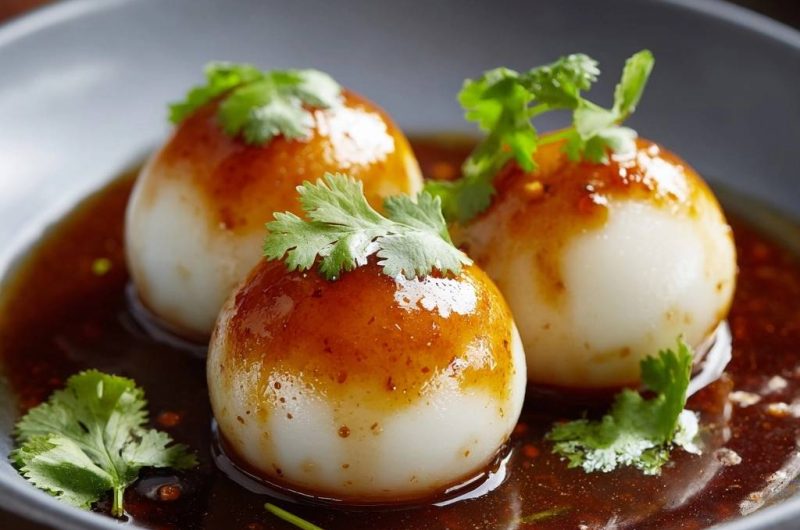
Soy Glazed Ramen Eggs
Course: AppetizerCuisine: JapaneseDifficulty: easy6
eggs20
minutes15
minutes120
Minutes120
kcalJapanese
Ingredients
6 large eggs (room temperature)
1 tablespoon white vinegar
1 cup low-sodium soy sauce
1/2 cup water
1/4 cup brown sugar
Fresh cilantro leaves, for garnish
Directions
- Fill a medium pot with water, add vinegar, and bring to a rolling boil over high heat. The vinegar subtly breaks the egg membrane bond for effortless peeling, solving the
Notes
- Room temperature eggs prevent cracking. Marinate overnight for deeper flavor. Perfect for ramen, rice bowls, or snacks.