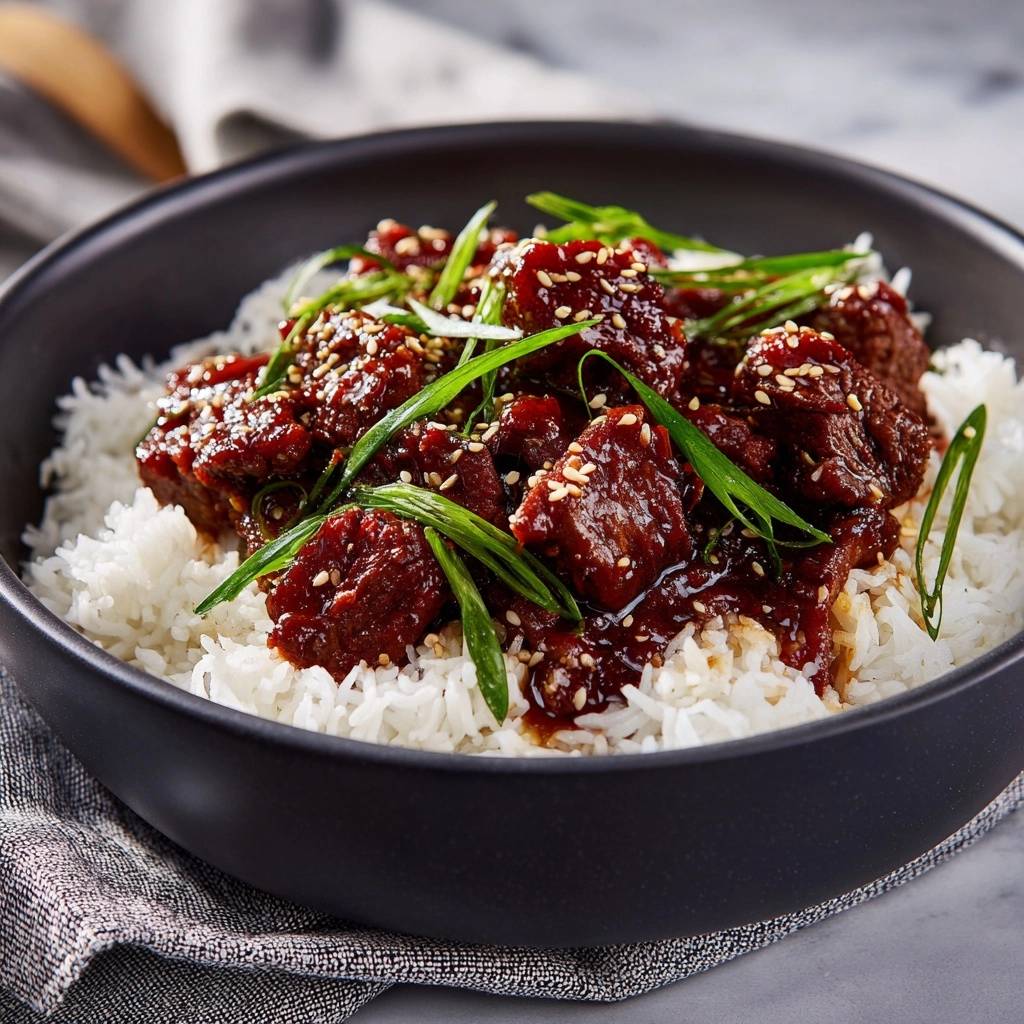
You know that frustration when your Korean beef rice bowl turns out chewy and dry, no matter how careful you try to be? This sticky Korean beef rice bowl fixes it all with a simple cornstarch marinade that tenderizes beef cubes in just 30 minutes. You’ll get restaurant-quality, melt-in-your-mouth results right at home, with bold flavors and glossy sauce that clings perfectly to every bite.
Therefore, this recipe shines because it skips overnight waits and delivers juicy beef every time. In addition, the high-heat stir-fry creates that irresistible sticky glaze without sogginess. You’ll crave the sweet-spicy kick from gochujang paired with savory soy.
Here’s the expertise booster: the cornstarch in the marinade acts as a protective barrier. It locks in juices during cooking, so your beef stays tender instead of tough. Trust me, once you try this Korean beef bowl technique, takeout won’t compare.
Why Cornstarch Transforms Sticky Korean Beef Rice Bowl
Science of Tenderizing Beef Cubes
Cornstarch tenderizes beef through its alkaline action, which gently breaks down tough proteins in chuck or sirloin. This velveting technique, rooted in Chinese-Korean fusion cooking, coats each cube and seals in moisture far better than acidic marinades alone. As a result, your sticky Korean beef rice bowl boasts juicy bites that don’t dry out.
Traditional marinades often over-tenderize and make meat mushy. However, cornstarch creates a thin barrier that fries up crisp outside while staying succulent inside. You’ll notice the difference in every glossy, tender cube.
30-Minute Marinade vs Overnight Methods
This 30-minute cornstarch rest outperforms long overnight soaks because it avoids mushiness while maximizing juiciness. The quick chill lets proteins relax without breaking down too much. Therefore, your tender Korean beef rice bowl cooks evenly and stays flavorful.
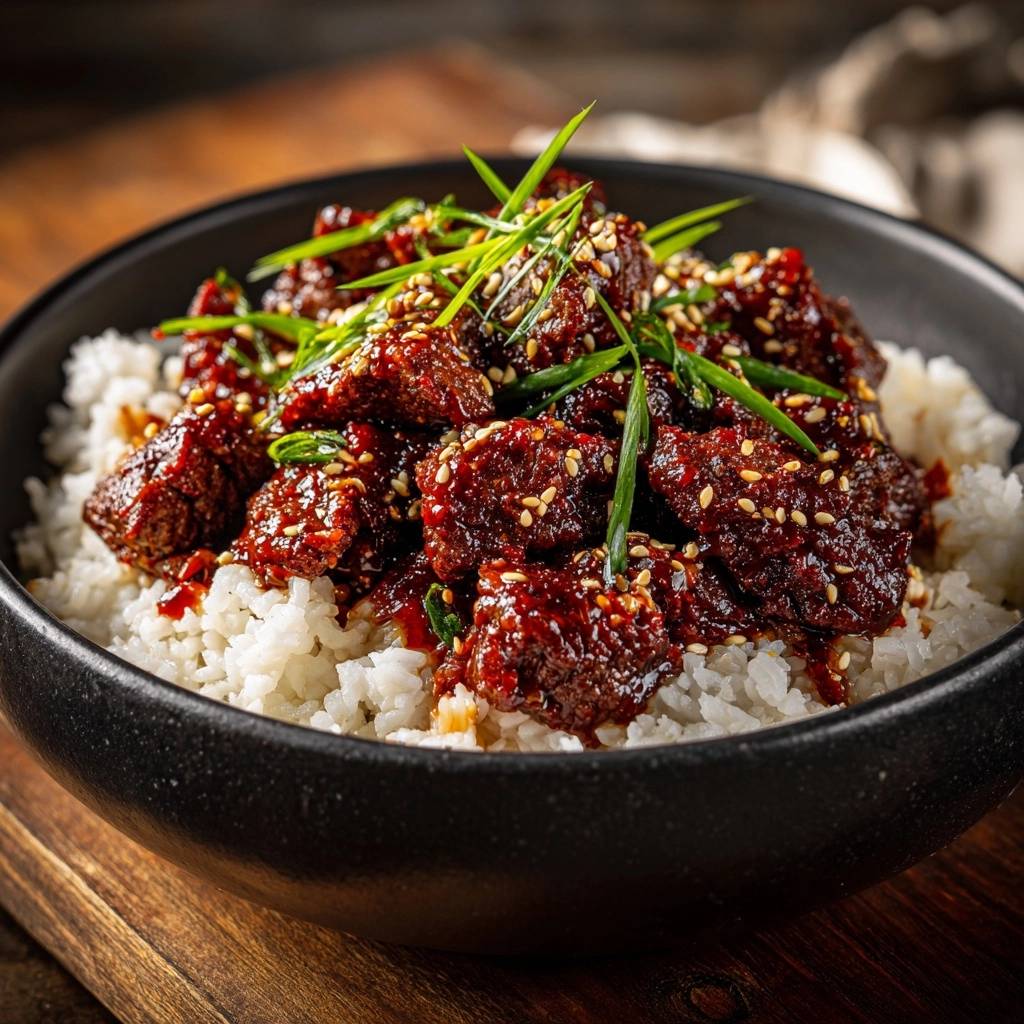
Overnight methods can draw out moisture, leading to dry results. In contrast, this method retains up to 20% more juices post-cooking. It’s perfect for weeknights when you want sticky beef rice fast.
Key Ingredients for Authentic Sticky Korean Beef Rice Bowl
Beef Cuts: Chuck vs Sirloin Choices
Choose 1 lb of chuck for richer flavor from its fat marbling, or sirloin for a leaner bite; both cut into 1-inch cubes work best. Avoid super-lean cuts like round, as they toughen easily. Therefore, these picks ensure budget-friendly tenderness in your sticky Korean beef rice bowl.
Chuck’s intramuscular fat melts during stir-fry, boosting juiciness. Sirloin offers quicker cooking with less chew. Source from your butcher for fresh, well-marbled options.
Gochujang and Soy Sauce Balance
The 1/4 cup soy sauce provides deep umami, while 2 tbsp gochujang delivers fermented heat and sweetness. Brown sugar (2 tbsp) caramelizes for that sticky glaze, and sesame oil (1 tbsp) adds nutty aroma. In addition, 3 minced garlic cloves and 2 tbsp water tie it all into a smooth marinade.
This balance creates bold Korean beef bowl flavors without overpowering. Gochujang’s complexity elevates every bite. Pro tip: taste the marinade before adding beef and adjust sugar if needed.
Rice Base and Fresh Garnishes
3 cups cooked white rice forms the sticky base; short-grain sticks best for that authentic Korean beef rice bowl feel. Slice 4 green onions for freshness, and sprinkle 2 tbsp sesame seeds for crunch. Use neutral oil for stir-frying to let flavors shine.
Warm rice absorbs the glossy sauce perfectly. Store extra garnishes in the fridge to keep them crisp. This setup makes your sticky Korean beef over rice irresistible.
Cornstarch Marinade Assembly Guide
Whisking Technique for Smooth Sauce
Start with a cold bowl: whisk soy sauce, gochujang, brown sugar, sesame oil, cornstarch, minced garlic, and water until lump-free and smooth. The cornstarch dissolves fully this way, creating a glossy coat. Then, toss in 1-inch beef cubes to marinate.
Chill in the fridge for 30 minutes; you’ll see the beef glisten. This prevents clumps that ruin texture. Sensory cue: it smells sweet-spicy and garlicky right away.
Marinating Beef for Maximum Juiciness
Coat beef in a single layer for even coverage; fridge chill sets the proteins without over-tenderizing. For 1 lb, divide if your bowl’s small. Therefore, every cube gets maximum juiciness protection.
The cold rest enhances the cornstarch barrier. Don’t skip it, or beef dries out. Batch size keeps marinade effective.
High-Heat Stir-Fry for Glossy Sticky Korean Beef
Skillet Prep and Oil Heating
Heat 1 tbsp oil in a large skillet or wok over high until shimmering, around 375°F. Add marinated beef in a single layer; batch if needed to avoid steaming. High heat triggers Maillard reaction for a savory crust.
Listen for the sizzle; it means perfect searing. Crowding lowers temp and toughens meat. This step builds flavor fast.
Browning Beef Cubes Perfectly
Stir-fry 3-4 minutes per side until browned and cooked to 135°F internal for juicy results. Sauce thickens into a sticky glaze as cornstarch activates. Don’t overcook, or it dries out.
The beef transforms from raw cubes to glossy, caramelized bites. Check one cube; it should yield softly. Pro tip: rest skillet off heat briefly to finish cooking.
Building the Rice Bowl Assembly
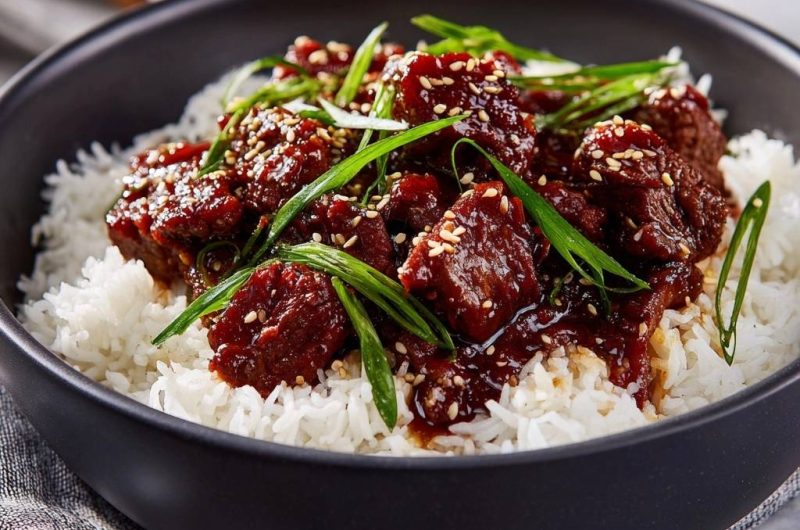
Spoon hot beef and thickened sauce over warm rice bowls. Garnish with sliced green onions and sesame seeds for pop. Serve immediately for peak sticky Korean beef rice bowl appeal.
Plating centers beef with sauce pooling around rice. The contrast of textures shines. Visual cue: glossy red sauce clings beautifully.
Science Behind Sticky Korean Beef Rice Bowl Glaze
Cornstarch Thickening Under Heat
Cornstarch gelatinizes at 144°F, turning thin marinade into glossy sauce that clings to beef. Brown sugar reduces alongside for extra stickiness. Unlike arrowroot, it holds up to high heat without breaking down.
This creates the signature shine and chew. You’ll feel the sauce coat your spoon. It’s why home sticky beef rice tastes pro-level.
Maillard Reaction in Korean Beef Marinade
Amino acids from soy and garlic react with sugars under heat, forming a savory crust. Gochujang’s fermentation amps browning. The marinade’s pH speeds this for deeper flavor.
Result: caramelized edges with juicy centers. High heat maximizes it. Sensory win: nutty, toasty aroma fills your kitchen.
Avoiding Common Sticky Korean Beef Rice Bowl Mistakes
Preventing Tough or Dry Beef Cubes
Avoid over-marinating past 30 minutes, overcrowding the pan, or low heat; these cause chewiness. Use a thermometer for 135°F doneness. If chewy, next time cut smaller cubes and marinate fresh.
Batch cooking prevents steaming. High heat sears fast. Fixes save your Korean beef bowl every time.
Sauce Separation and Texture Fixes
Whisk in cold liquid first to prevent separation; reheat gently with a splash of water. Stir constantly as it thickens. This keeps sauce glossy, not oily.
Order matters for emulsion. Microwave reheats work too, covered. Texture stays perfect.
Flavor Variations for Sticky Korean Beef Rice Bowl
Spice Level Adjustments with Gochujang
For mild, use 1 tbsp gochujang; crank to 3 tbsp for heat. Swap in gochugaru flakes for smokier spice. Add bell peppers or mushrooms for veggie bulk without diluting flavor.
These tweaks customize your Korean beef bowl. Taste as you go. Veggies add crunch.
Gluten-Free and Low-Sugar Swaps
Use tamari instead of soy for gluten-free; swap brown sugar with honey or monk fruit. Cauliflower rice works as a low-carb base. Try tofu or chicken cubes for protein variety in Korean beef bowl variations.
These keep authenticity. Tofu absorbs marinade well. Scale sweetness to taste.
Perfect Pairings for Sticky Korean Beef Rice Bowl
Quick Pickled Veggies and Sides
Quick cucumber kimchi: slice cukes thin, toss with rice vinegar, salt, and chili flakes for 10 minutes. Spinach banchan: blanch spinach, squeeze, mix with sesame oil and garlic. They cut the richness perfectly.
These add tang and crunch. Prep ahead. Balance transforms your bowl.
Beverage Matches Without Alcohol
Iced barley tea cools the spice with earthy notes. Sparkling yuzu refreshes with citrus brightness. Both balance heat and sweet seamlessly.
They’re crisp sides to sticky beef rice. Serve chilled.
Make-Ahead Guide for Sticky Korean Beef Rice Bowl
Freezing Marinated Beef Cubes
Marinate, then freeze beef in portions up to 1 month. Thaw overnight in fridge; stir-fry fresh. Avoid refreezing cooked beef to keep texture.
3 days fridge storage works too. Re-stir-fry restores gloss. Meal prep win.
Batch Cooking for Meal Prep
Double the recipe; it scales perfectly for 4 bowls. Cook rice fresh or store cooked up to 4 days. Assemble weekly for grab-and-go sticky Korean beef rice bowls.
Portion sauce separately. Reheat skillet-style. Keeps flavors bold.
Troubleshooting Sticky Korean Beef Rice Bowl Issues
Sauce Not Thickening Solutions
Make a slurry with 1 tsp cornstarch and water; stir in during last minute. Boost heat and simmer 1-2 minutes more. It gels perfectly then.
Undercooking causes this. Fix saves the dish.
Beef Still Chewy After Cooking
Check cut size; smaller 3/4-inch cubes tenderize faster. Extend marinade to 45 minutes max. Velvet again with fresh cornstarch if needed.
Low heat often culprit. Adjust next batch.
Rice Bowl Lacks Stickiness
Use short-grain rice and more sauce ratio. Rinse less for starchiness. Warm rice absorbs glaze better.
Jasmine works but flakes. Sticky fix easy.
Garnish and Presentation Fixes
Chill green onions pre-slice to prevent wilting. Plate beef high center with seeds scattered. Drizzle extra sauce for shine.
These pro hacks elevate looks. Freshness key.
Sticky Korean Beef Rice Bowl FAQ
Can I Use Frozen Beef Cubes?
Thaw fully in fridge first to ensure even marinating; pat dry before coating. Adjust marinade time to 45 minutes since frozen beef absorbs slower. This keeps tenderness intact for your Korean beef rice bowl.
Best Rice for Sticky Korean Beef?
Short-grain white rice like sushi rice sticks best, cooked 1:1.25 water ratio for fluff yet clingy texture. Jasmine adds floral notes but rinse well; it pairs great with glossy sauce.
How Spicy Is This Korean Beef Rice Bowl?
Medium heat from 2 tbsp gochujang; builds warmth without overwhelming. Dial down to 1 tbsp for mild or up to 3 tbsp for fire. Taste marinade and add gochugaru for custom kick.
Storage Time for Leftovers?
Store in airtight containers in fridge up to 3 days; freezes well for 1 month in portions. Reheat in skillet with splash of water over medium to restore glaze and juiciness, avoiding microwave sogginess.
Vegetarian Sticky Korean Beef Alternatives?
Extra-firm tofu or king oyster mushrooms mimic beef texture; cube, press tofu dry, and marinate 20 minutes. They soak up gochujang flavors perfectly for a meaty, sticky Korean rice bowl vibe.
Sticky Korean Beef Rice Bowl
Course: Main CourseCuisine: KoreanDifficulty: easy4
servings35
minutes10
minutes45
MinutesKorean
Ingredients
1 lb beef chuck or sirloin, cut into 1-inch cubes
3 cups cooked white rice
1/4 cup soy sauce
2 tbsp gochujang (Korean chili paste)
2 tbsp brown sugar
1 tbsp sesame oil
1 tbsp cornstarch
3 garlic cloves, minced
4 green onions, sliced (plus extra for garnish)
2 tbsp sesame seeds
2 tbsp water
Oil for cooking
Directions
- Make the tenderizing marinade: In a bowl, whisk soy sauce, gochujang, brown sugar, sesame oil, cornstarch, garlic, and water until smooth. This cornstarch coating is the key, it seals in moisture and breaks down tough proteins during a quick 30-minute rest, preventing dryness forever. Add beef cubes, toss to coat, and marinate in fridge for 30 minutes.
- Heat 1 tbsp oil in a large skillet or wok over high heat until shimmering. Add marinated beef in a single layer (work in batches if needed). Stir-fry 3-4 minutes per side until browned and cooked through, but still juicy, thanks to the protective cornstarch barrier. Sauce will thicken and glaze the beef.
- Spoon beef and glossy sauce over warm rice bowls. Garnish with sliced green onions and sesame seeds. Serve hot for perfect tender beef every time.
Notes
- Use beef chuck or sirloin cut into 1-inch cubes. Marinate for exactly 30 minutes in the fridge for optimal tenderness. Work in batches when stir-frying to avoid overcrowding the pan.