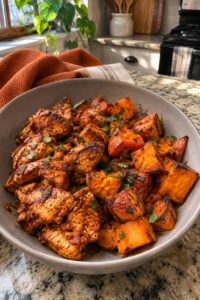
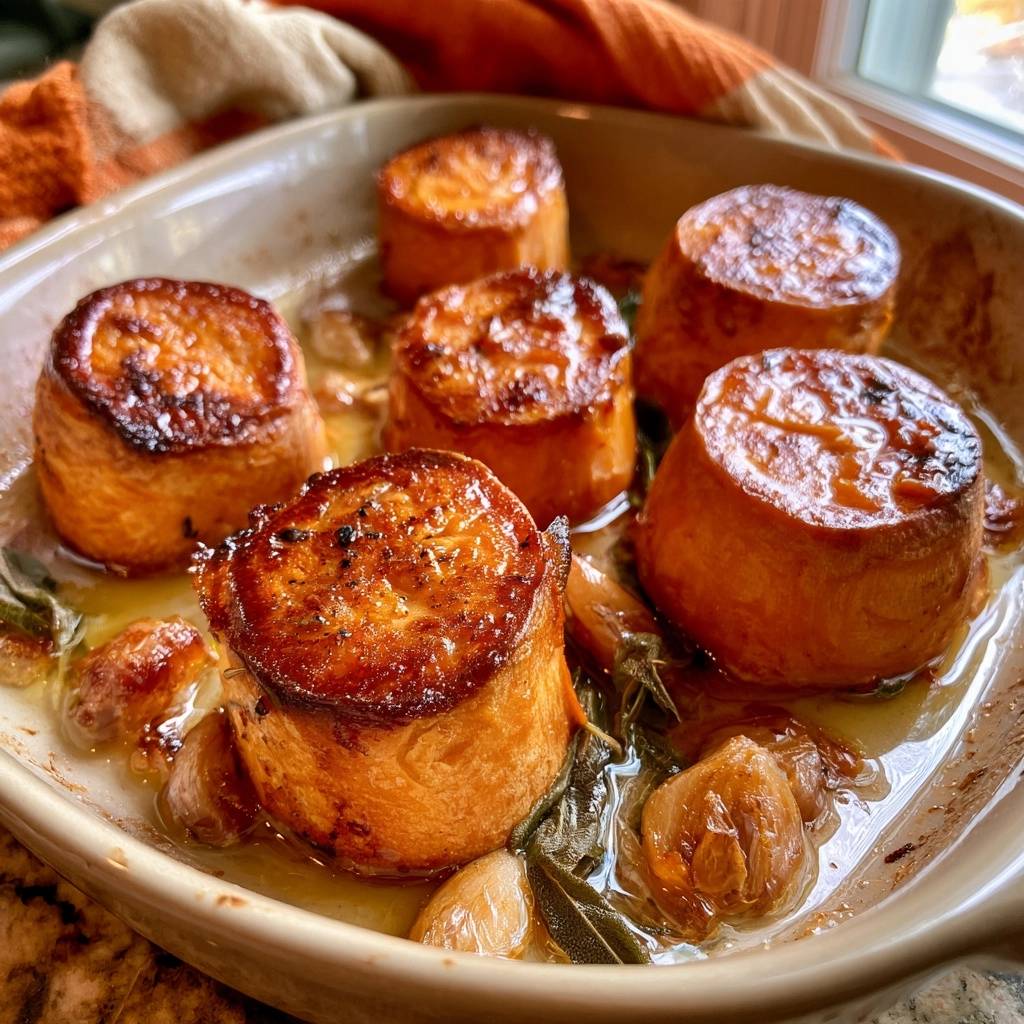
Sweet potato fondant brings a polished look to a familiar side dish. Peeled sweet potatoes are shaped into short cylinders, browned on their ends and sides, then baked until tender in a buttery broth with garlic and sage. The finished potatoes are glossy, with caramelized tops and savory pan juices.
The method rewards a little attention at the skillet: dry potatoes and room to brown help build the color that makes this dish appealing. The oven then takes over, softening the centers while the sauce gathers around them.
Why the shape and sear matter
Cutting the sweet potatoes into evenly sized cylinders helps them cook at a similar pace and gives each piece a flat end to brown. Trimming the rounds into short cylinders also creates tidy sides that can pick up color in the skillet. Patting the pieces dry before they hit the pan is key; moisture on the surface can make them steam instead of sear.
Give the potatoes enough space to sit in a single layer. If the skillet is crowded, work in batches so the pieces can brown rather than release moisture into a packed pan. Turn them to color the ends and sides, then arrange them upright in the baking dish with browned ends facing up. Those exposed tops will caramelize further as the dish finishes in the oven.
Build a fragrant garlic and sage sauce
Butter and extra-virgin olive oil help the sweet potatoes brown, while a little more butter in the skillet carries the garlic and sage flavors into the broth. Keep the garlic cloves whole so they soften and turn golden at the edges as the sage becomes fragrant. The whole leaves bring a savory herbal note without taking attention away from the sweet potatoes.
When you add the broth, scrape up the browned bits left in the skillet. They bring the seared flavor into the sauce. Letting the broth reduce slightly before it goes into the baking dish gives it a more concentrated, glossy quality. Pour the sauce, garlic, and sage over the potatoes so the flavors can mingle as everything bakes.
Finish covered, then uncover for color
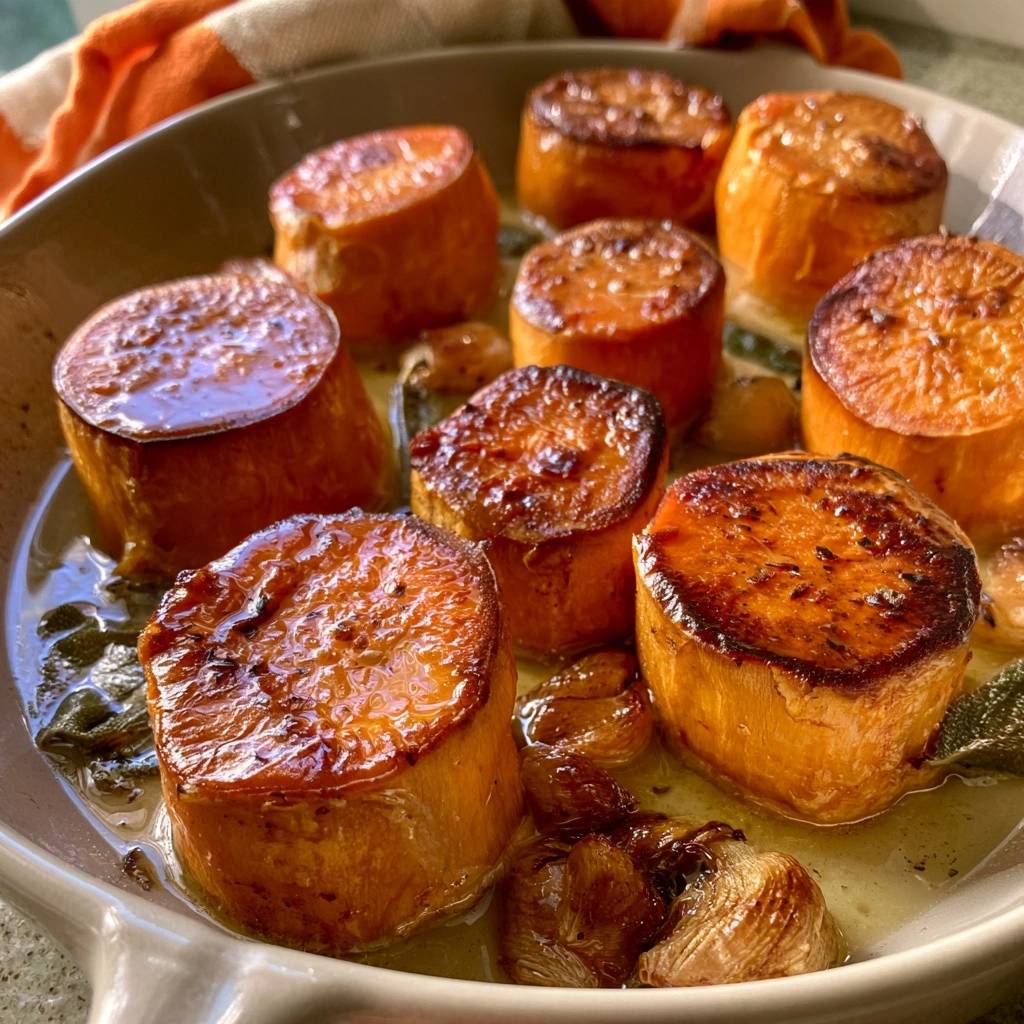
Covering the baking dish tightly with foil traps steam and helps the sweet potatoes cook through evenly. Once they are tender, uncover the dish so the broth can reduce and the tops can caramelize. Spoon the pan juices over the potatoes during this final stage to coat them with the buttery garlic and sage sauce.
Sweet potatoes vary in size and density, so check the center with the tip of a knife rather than relying only on the recipe card’s timing. It should slide in with little resistance. Serve the fondant warm with the garlic and sauce spooned over each portion.
Pair it with a protein-rich main
This side dish has a rich, buttery character, so it works alongside a simple protein that lets the sage and garlic remain clear. Grilled chicken thighs make a fitting higher-protein dinner pairing. For another option, serve it with Greek yogurt topped with chopped chives, as suggested in the recipe notes.
Frequently Asked Questions
Why do the sweet potatoes need to be dry before searing?
Dry surfaces help the potatoes brown in the skillet. If they are wet, they can steam instead, making it harder to develop color on the ends and sides. Pat them thoroughly with paper towels before seasoning and arranging them in the pan.
How can I tell when the sweet potatoes are tender?
Test the center of a cylinder with the tip of a knife. It should slide in with little resistance. Sweet potatoes can differ in size, so this check is more useful than relying on the recipe card’s timing alone.
What does covering the baking dish do?
The foil holds in steam while the sweet potatoes cook through. Uncovering the dish for the final part of baking lets the broth reduce and the exposed tops caramelize. Spoon the pan juices over the potatoes so they stay coated with the sauce.
Sweet Potato Fondant with Garlic and Sage
Course: Side DishCuisine: AmericanDifficulty: Easy4
servings20
minutes42
minutes315
kcal1
hour2
minutesPeeled sweet potatoes are cut into short cylinders, seared in butter until browned on the ends and sides, then baked in a garlic, sage and butter broth sauce until tender. The result is a rich, glossy side dish with caramelized tops.
Ingredients
- Sweet Potatoes
2 lb sweet potatoes (about 3 medium), peeled
2 tbsp unsalted butter
1 tbsp extra-virgin olive oil
1 tsp kosher salt
1/4 tsp freshly ground black pepper
- Garlic and Sage Sauce
8 cloves garlic, peeled and left whole
8 large fresh sage leaves
1 tbsp unsalted butter
1/2 cup low-sodium chicken broth
Directions
- Prep
- Heat the oven to 400°F with a rack in the center. Cut the peeled sweet potatoes crosswise into 2-inch-thick rounds, then trim each round with a sharp knife into a short cylinder about 2 inches across. Pat the cylinders dry with paper towels.
- Sear
- Heat the 2 tbsp butter and the olive oil in a 12-inch skillet over medium-high heat until the butter foams. Season the cylinders with the salt and pepper. Arrange them in a single layer and sear for 8 minutes total, turning to brown the flat ends and sides. Work in batches if the skillet is crowded.
- Bake
- Transfer the seared cylinders to a 9×13-inch baking dish, arranging them upright with the browned ends facing up.
- Sauce
- Reduce the heat under the skillet to medium. Add the 1 tbsp butter, the garlic cloves and the sage leaves, and cook for 2 minutes, stirring, until the garlic softens and turns golden at the edges and the sage is fragrant. Add the broth and scrape up the browned bits from the bottom of the pan. Simmer for 2 minutes, until slightly reduced, then pour the sauce, garlic and sage over the sweet potatoes.
- Bake
- Cover the baking dish tightly with foil and bake for 20 minutes. Uncover and bake for 10 minutes more, spooning the pan juices over the sweet potatoes once, until a knife slides easily into the center and the tops are deeply caramelized. Serve warm with the garlic and sauce spooned over each portion.
Notes
- Pat the sweet potatoes completely dry before searing. Surface moisture cools the pan and steams the potatoes instead of browning them, so crowding the skillet has the same effect.
- The foil traps steam so the sweet potatoes cook through evenly. Removing it for the last 10 minutes lets the broth reduce and the exposed tops caramelize.
- Sweet potatoes vary in size, so check for doneness with the tip of a knife at 30 minutes. A knife should slide into the center with little resistance.
- To make this a higher-protein dinner, serve it alongside grilled chicken thighs or a serving of Greek yogurt with chopped chives.