Ever ended up with grainy peanut sauce that clumps on your noodles and kills the vibe? This Thai Peanut Noodles recipe fixes that frustration for good. You’ll have dinner ready in 20 minutes, serving 4, and it’s naturally vegan with gluten-free options.
Hot pasta water works the magic here. It emulsifies the peanut butter into a silky coating that clings perfectly. Add fresh lime zing, chili heat, and crunchy peanuts, and you’ve got something way better than takeout, fresher and cheaper too.
Here’s the pro tip that sets this apart: reserve that starchy hot water right after draining. It melts the peanut oils instantly at around 180°F, binding everything without a single lump. You’ll taste the difference in every glossy bite.
Why Hot Pasta Water Transforms Thai Peanut Noodles
The Emulsion Science in Peanut Sauce
Hot pasta water isn’t just any liquid. Its starch and heat, hitting 180°F or more, dissolve peanut butter’s oils quickly. This creates a stable emulsion with coconut milk fats, so the sauce stays velvety instead of separating like cold blends do.
Most folks fail because they skip the heat. Cold water leads to gritty textures that no stirring fixes. However, this method guarantees smoothness every time.
In addition, the starch acts like a natural thickener. Therefore, your sauce coats noodles flawlessly without extra fuss.
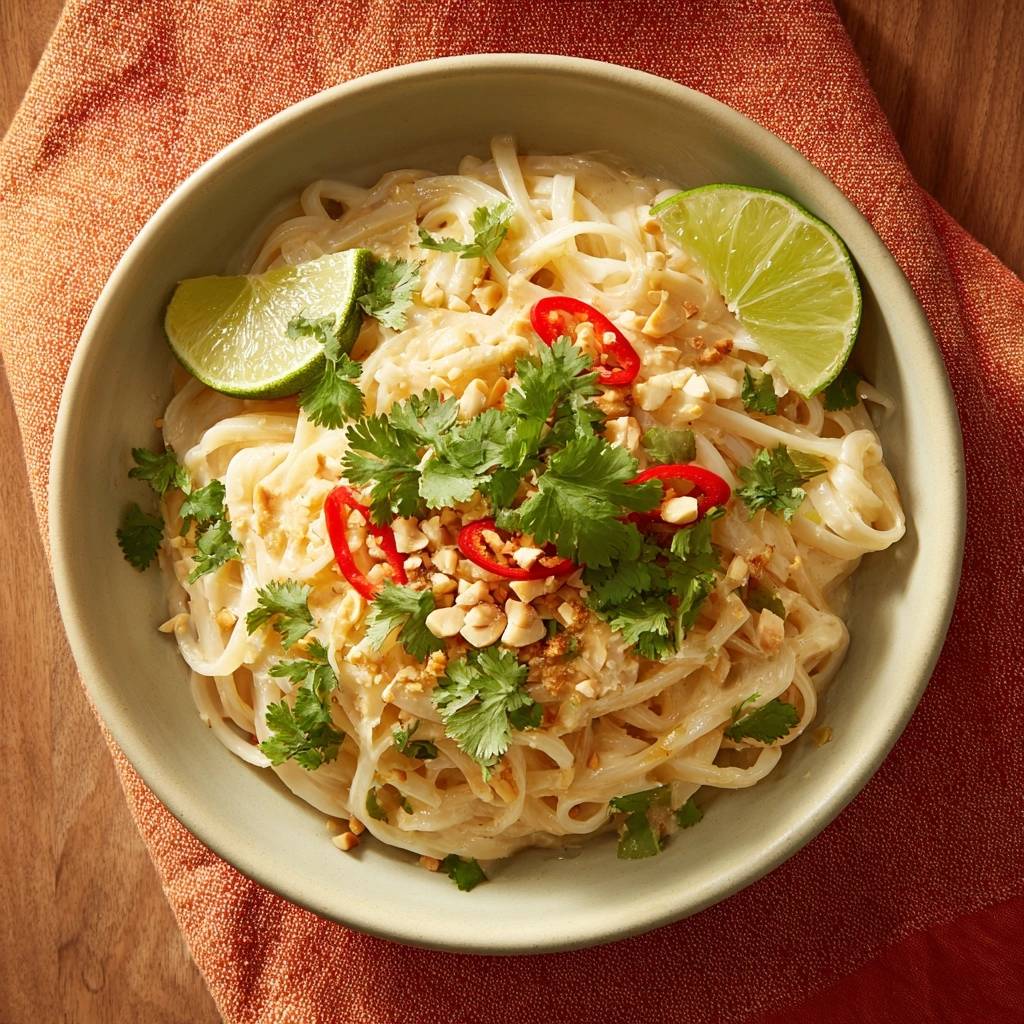
Rice Noodles vs Wheat: Texture Impact
Rice noodles bring a neutral chew that soaks up sauce perfectly. They stay firm without getting soggy, unlike wheat pasta which can turn mushy in rich peanut sauces.
Prep them al dente, about 4 to 5 minutes. Rinse briefly under cold water right after to halt cooking. That keeps the bite you crave.
Furthermore, rice noodles absorb flavors better. So, every strand bursts with that silky peanut goodness.
Key Ingredients for Flawless Thai Peanut Noodles
Peanut Butter and Coconut Milk Balance
Grab smooth, natural peanut butter without added sugars. It delivers pure nutty richness that blends cleanly. Full-fat coconut milk adds creaminess, so shake the can well first to mix the fats.
These two create the base. However, the 1/2 cup peanut butter to 1 cup coconut ratio keeps it rich but not heavy. For allergies, swap peanut butter with sunflower seed butter.
Pro tip: room temperature ingredients blend faster. You’ll avoid any stubborn lumps this way.
Fresh Lime Juice and Soy Sauce Roles
Fresh lime juice from 2 limes cuts through the richness with bright acidity. Bottled stuff lacks that zing, so squeeze it yourself. It wakes up the whole dish.
Low-sodium soy sauce brings umami depth, just 1 tablespoon. Too much salts it out, so measure precisely. Together, they balance nutty and tangy perfectly.
Therefore, taste as you go. Adjust lime if you want more brightness.
Crunchy Toppers: Peanuts, Cilantro, Chilies
Finely crush 1/4 cup roasted peanuts for that addictive crunch. It contrasts the silky noodles beautifully. Chop fresh cilantro leaves for herbal pop.
Thinly slice 2 red chilies, adjusting for heat. Bird’s eye ones pack more fire, so deseed for milder kicks. Add them last to preserve freshness.
In addition, these toppings make it customizable. Everyone builds their bowl just right.
Blender Technique for Smooth Thai Peanut Sauce
Boiling and Reserving Pasta Water Precisely
Start with a large pot of vigorously boiling water for 8 ounces rice noodles. Cook to al dente, 4 to 5 minutes. Reserve exactly 1/2 cup hot pasta water right away.
Why hot? Cooled water won’t emulsify properly. Drain and rinse noodles briefly under cold water to stop cooking. They stay chewy this way.
Pro tip: use a measuring cup for the water. Precision here prevents a thick or runny sauce later.
Blending Order for Grain-Free Emulsion
Use a high-powered blender or food processor. Combine 1/2 cup peanut butter, 1 cup coconut milk, 3 tablespoons lime juice, 1 tablespoon soy sauce, and 1/4 cup hot pasta water first.
Blend on high for 30 to 45 seconds. Look for a pourable, glossy cream with zero graininess. If lumps linger, add a splash more hot water and pulse again.
However, don’t overblend or it aerates. The sauce should flow smoothly off a spoon.
Tossing Thai Peanut Noodles to Perfection
Low-Heat Pot Method for Even Coating
Put drained noodles back in the pot over low heat. Pour in the blended sauce and remaining pasta water if it’s too thick. Toss gently for 1 to 2 minutes.
This warms everything evenly without clumping. You’ll see a glossy sheen when it’s ready. The noodles transform, fully coated and fragrant.
Therefore, keep the heat low. High heat breaks the emulsion fast.
Bowling and Immediate Topping Assembly
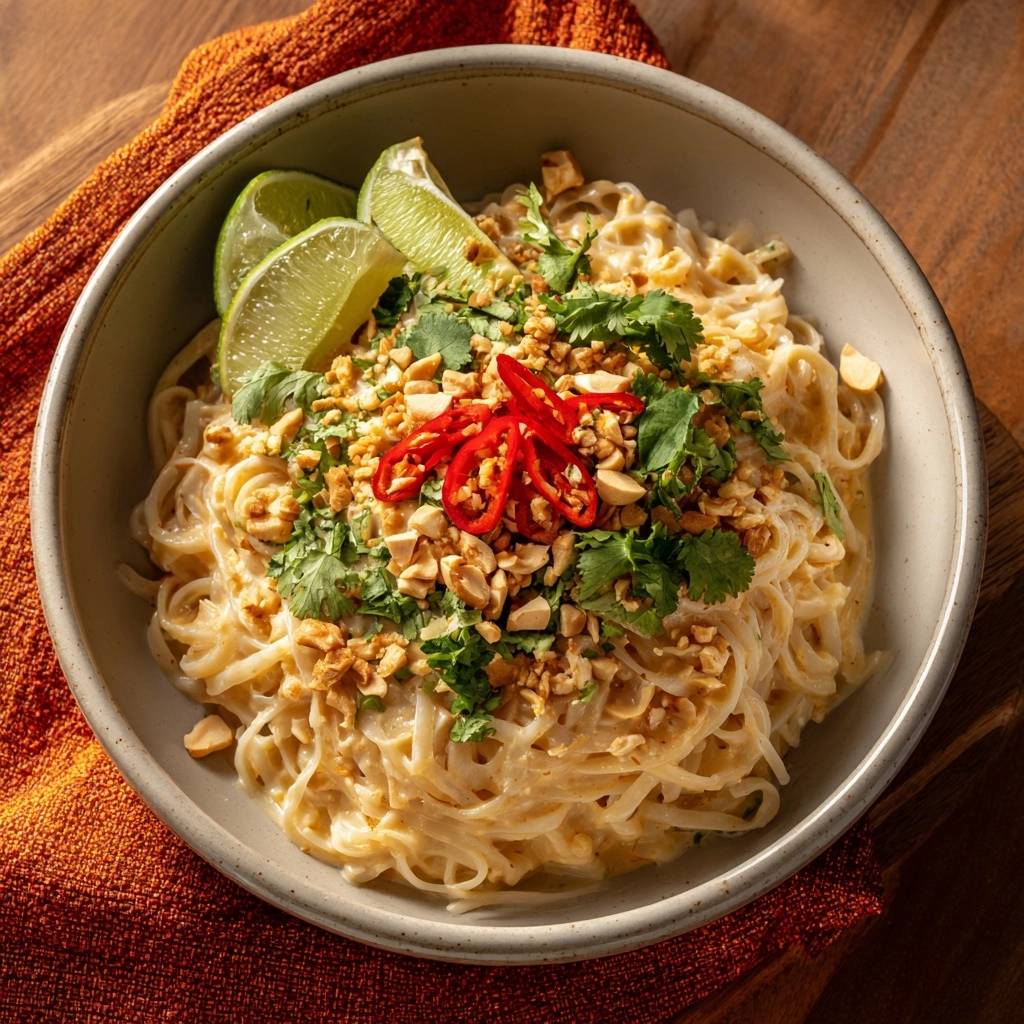
Divide into bowls right away. Layer crushed peanuts, chopped cilantro, sliced chilies, and lime wedges on top. Let everyone squeeze lime for extra zing.
Serve hot to keep the noodle bite. Plating like this looks vibrant and invites digging in. The textures pop together.
In addition, fresh toppings stay crisp this way.
Avoiding Pitfalls in Thai Peanut Noodles
Grainy Sauce Fixes and Prevention
Graininess comes from cold water or weak blenders. Always use hot pasta water and pulse on high. If it happens, re-blend with a tablespoon more hot water.
Test texture by rubbing between fingers. It should feel silky, not gritty. Prevention beats fixing every time.
Furthermore, natural peanut butter without stabilizers blends best.
Noodle Overcooking and Rinse Mistakes
Overcook and they go slimy. Stick to package times for al dente. Cold rinse prevents this but don’t soak them.
If they stick later, a quick oil toss revives chew. Store pre-tossed in the fridge up to a day.
Flavor Variations for Thai Peanut Noodles
Spice Levels and Protein Add-Ins
Tweak chilies for mild or wild heat. Add cubed tofu, shrimp, or veggies like bell peppers for protein. Stir them in during the toss.
A teaspoon grated ginger or garlic amps savoriness. However, keep the emulsion core intact. It stays silky regardless.
These boosts make it a full meal fast.
Nut Swaps and Herb Twists
Swap peanut butter for almond or cashew. They emulsify similarly for new twists. Try basil or mint over cilantro for freshness.
Light coconut milk works if you want less richness. Balance with extra lime. Experiment, but blend thoroughly.
Pairing Sides with Thai Peanut Noodles
Cucumber Salad and Veggie Crunch
Quick pickled cucumbers cool the heat perfectly. Slice thin, toss with rice vinegar, sugar, and salt for 10 minutes. They add refreshing crunch.
Mango slaw or edamame pods balance too. These sides cut richness without overpowering.
Beverage Matches for Zesty Heat
Iced green tea refreshes with its subtle bitterness. Sparkling lime water echoes the citrus zing nicely.
They tame spice while enhancing flavors.
Make-Ahead Strategies for Thai Peanut Noodles
Sauce Storage and Noodle Prep Hacks
Blend sauce up to 3 days ahead, store airtight in the fridge. Par-cook noodles, rinse, and refrigerate separately. Reheat sauce gently with a splash of hot water to revive emulsion.
Don’t freeze the full dish. Sauce separates upon thawing. Noodles alone freeze okay for 1 month.
Batch Cooking for Meal Prep
Double the recipe easily. Portion into bowls post-toss. Re-toss day 2 or 3 with extra water for freshness.
It holds up great for quick lunches.
Origins of Thai Peanut Noodles Influence
Street Food Roots in Thailand
Thai Peanut Noodles draw from pad Thai and satay traditions. Street vendors slather peanut sauce on grilled skewers, blending nuts with coconut for creamy dips.
Modern versions go vegan, skipping meat. It’s evolved into quick, bold noodle bowls everywhere. The silky sauce nods to those authentic flavors.
Therefore, this recipe captures that street-side thrill at home.
Troubleshooting Thai Peanut Noodles Issues
Sauce Too Thick or Separates?
Add hot pasta water one tablespoon at a time. Shake vigorously before tossing. More lime juice stabilizes acidity too.
Noodles Sticking or Losing Chew?
Rinse with a touch of oil post-drain. Cook al dente always. Microwave revival with damp towel works wonders.
Toppings Wilting or Overpowering?
Add toppings at serving only. Store garnishes separately in fridge. Use less chili if heat dominates.
Scaling for Crowds or Solo?
Multiply ingredients evenly, sauce scales 1:1. For solo, halve noodles and sauce. Yields adjust perfectly.
Common Questions on Thai Peanut Noodles
Can I Use Regular Pasta Instead?
Yes, wheat pasta works but cook to al dente and sauce absorbs less. Add a tablespoon extra soy for gluten balance. Rice stays truer to Thai texture.
Is This Recipe Gluten-Free?
Naturally with rice noodles and soy. Swap soy for tamari to be fully safe. All else is gluten-free.
How Spicy Are the Chilies?
Red chilies hit 30,000 Scoville, medium-hot. Deseed or use milder Fresno for less fire. Start small and taste.
Vegan Confirmation and Dairy Subs?
Fully vegan as written, all plant-based. No dairy anywhere. Coconut milk can’t be subbed without changing creaminess.
Nut-Free Version Possible?
Yes, use sunflower or tahini for similar emulsion. Flavor shifts slightly nuttier or seed-forward. Blend extra for smoothness.
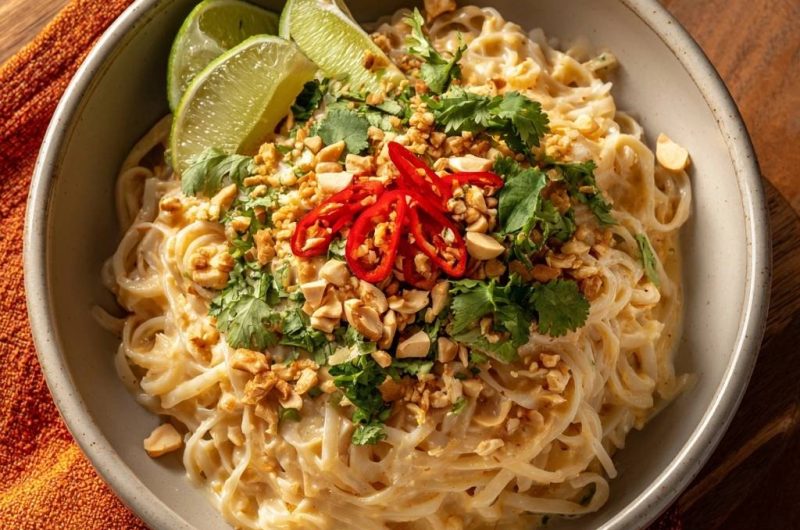
Thai Peanut Noodles
Course: Main CourseCuisine: ThaiDifficulty: easy4
servings10
minutes10
minutes20
Minutes450
kcalThai
Ingredients
8 ounces dried rice noodles
1/2 cup smooth peanut butter
1 cup full-fat coconut milk
3 tablespoons fresh lime juice (from 2 limes, plus wedges for serving)
1 tablespoon low-sodium soy sauce
1/2 cup reserved hot pasta cooking water
1/4 cup roasted peanuts, finely crushed
1/4 cup fresh cilantro leaves, chopped
2 fresh red chilies, thinly sliced
Directions
- Bring a large pot of water to a boil. Cook rice noodles according to package instructions until just al dente, about 4 to 5 minutes. Reserve 1/2 cup of the hot pasta cooking water, then drain noodles and rinse briefly under cold water to stop cooking. Set aside.
- While noodles cook, make the sauce. In a blender or food processor, combine peanut butter, coconut milk, lime juice, soy sauce, and 1/4 cup of the reserved hot pasta water. Blend on high for 30 to 45 seconds until completely smooth and creamy with no trace of graininess. The hot water is the key: it melts the peanut butter instantly and creates a perfect emulsion that stays velvety even after tossing.
- Return drained noodles to the pot over low heat. Pour in the blended sauce and remaining pasta water if needed for a glossy coating. Toss gently for 1 to 2 minutes until noodles are evenly coated and warmed through.
- Divide into bowls. Top with crushed peanuts, chopped cilantro, sliced red chilies, and lime wedges. Squeeze extra lime for brightness. Serve immediately.
Notes
- The hot pasta water is the key: it melts the peanut butter instantly and creates a perfect emulsion that stays velvety even after tossing. Use full-fat coconut milk for best creaminess.