We’ve all been there. You sit down for a comforting plate of spaghetti, expecting a soft, savory bite, only to find the meatballs are as tough as golf balls. It’s a common frustration that turns a nostalgic favorite into a chewy chore. Most home cooks assume the meat is the problem, but the real culprit is usually how the proteins are handled before they ever hit the pan.
The difference between a mediocre dinner and a restaurant-quality experience comes down to simple kitchen chemistry. To get that melt-in-your-mouth texture, you have to stop the meat fibers from knitting together into a dense, rubbery mass. It isn’t about buying the most expensive cut of beef; it’s about how you treat the binder that holds everything together.
I’ve found that the absolute secret to success is the panade technique. By creating a specific paste of starch and liquid before adding your meat, you create a physical barrier that keeps the beef tender and juicy. This one extra step ensures your meatballs stay light and airy even after simmering in a rich tomato sauce for twenty minutes.
The Science of the Panade Technique
A panade is a simple mixture of a starch—in this case, breadcrumbs—and a liquid like milk. While many recipes just toss dry crumbs into the meat, that actually draws moisture out of the beef. When you soak the crumbs first, they expand and form a gel-like paste that acts as a structural “wedge” between the meat proteins.
When meat cooks, the proteins (specifically myosin) want to bond tightly together, which squeezes out moisture and creates a tough, bouncy texture. The starch molecules in the panade physically get in the way of those bonds. Because the breadcrumbs are already saturated with milk, they provide a reservoir of moisture that stays trapped inside the meatball during the searing process.
If you use only dry breadcrumbs, they act like tiny sponges that suck the natural juices out of the beef. This results in a dry, crumbly interior. By using a hydrated panade, you ensure the meatballs remain soft enough to break with a spoon while still being sturdy enough to hold their shape in a bubbling pot of marinara.
Essential Components for Classic Spaghetti and Meatballs
For the best flavor and texture, always reach for an 80/20 ground beef blend. Leaner mixes, like 90/10 or 95/5, simply don’t have enough fat to keep the meatballs moist during the long simmering process. That fat renders out slowly, basting the meat from the inside and adding incredible depth to your sauce.
The cheese you choose also plays a massive role in the final structure. Freshly grated Parmesan is a must because it contains less moisture and no anti-caking agents compared to the stuff in the green shaker bottle. Real Parmesan melts into the meat, acting as a secondary binder that adds a salty, nutty punch without making the mixture greasy.
Finally, don’t underestimate the importance of your poaching liquid. Since the meatballs finish cooking in the marinara, the quality of that sauce matters. A high-quality, slow-simmered sauce provides the acidity needed to cut through the richness of the beef, creating a balanced and cohesive meal.
Selecting the Right Pasta Shape and Texture
Spaghetti is the traditional partner for a reason. Its long, thin profile provides the perfect surface area for the sauce to cling to without overwhelming the meatballs. However, not all spaghetti is created equal. If you can find it, look for “bronze-cut” pasta, which has a rough, chalky surface.
Standard pasta is often pushed through Teflon molds, resulting in a slick, shiny noodle that sauce just slides right off of. Bronze-cut pasta has tiny ridges and a porous texture that grabs onto the tomato sauce. This ensures that every forkful of noodles is properly coated rather than sitting in a puddle at the bottom of the bowl.
Step-by-Step: Preparing the Meatball Base
Start by mixing your panko and milk in a large bowl and let it sit for a full 10 minutes. You want it to turn into a thick, uniform paste where you can no longer see individual crumbs. This patience pays off because a fully hydrated panade integrates seamlessly into the meat without leaving weird bready chunks.
When it’s time to add the beef, egg, and seasonings, put your spoon away. Your hands are the best tool for this job because they allow you to feel the texture. Gently fold the ingredients together, lifting from the bottom and pressing lightly. You want to stop the very second the ingredients look evenly distributed.
Think of this like mixing muffin batter. If you knead or squeeze the meat too much, you’ll develop the proteins and end up with that rubbery texture we’re trying to avoid. The mixture should feel cold, slightly wet, and loose. If it feels like heavy clay, you’ve likely over-mixed it.
Precision Shaping for Even Cooking
Aim for meatballs that are about 1.5 inches in diameter, roughly the size of a golf ball. This is the “Goldilocks” size—large enough to stay juicy in the center, but small enough to brown quickly on the outside. If they’re too big, the outside will overcook before the middle is safe to eat.
Using a cookie scoop is a great trick for keeping things uniform. When every meatball is the same size, they all finish cooking at the exact same time. When rolling them, use a light touch; don’t pack them tightly into hard spheres, or they will become dense during the sear.
Developing Flavor Through the Maillard Reaction
Searing the meatballs in a Dutch oven is a non-negotiable step for deep flavor. This creates the Maillard reaction, which is the chemical process that gives browned meat its savory, complex taste. You aren’t trying to cook them all the way through yet; you just want a beautiful golden-brown crust on at least two sides.
As the meatballs sear, they’ll leave behind “fond”—those little brown bits stuck to the bottom of the pot. Don’t wash those away! When you pour the marinara sauce in, those bits dissolve and infuse the sauce with a rich, meaty essence. This is how you make a jarred sauce taste like it’s been simmering on a stove in Italy all day.
Be careful not to crowd the pan. If you put too many meatballs in at once, the temperature of the oil will drop, and the meat will start to steam in its own juices. Work in batches if you have to so each meatball has enough space to develop a proper crust.
The Low-and-Slow Poaching Method
Once the meatballs are browned, pour the sauce directly over them and turn the heat down to a low simmer. This is essentially a poaching method. By finishing the cooking process inside the sauce, the meatballs absorb the moisture and acidity of the tomatoes while releasing their own fats into the marinara.
This exchange of flavors is what makes the dish cohesive. The fats from the 80/20 beef emulsify into the sauce, mellowing out the sharp acidity of the tomatoes and creating a silky, rich mouthfeel. Covering the pot is essential here to trap the steam and keep the tops of the meatballs from drying out.
Let them simmer for about 20 to 25 minutes. You’ll know they’re done when they feel firm but still have a slight “give” when pressed with a spoon. This gentle heat ensures the center stays tender while the outside stays bathed in flavor.
Troubleshooting Common Meatball Failures
If your meatballs are falling apart in the sauce, it usually means the panade was too wet or you didn’t brown them long enough. That initial sear creates a “crust” that acts like an external skeleton. Next time, ensure the panade is a thick paste and give the meatballs an extra minute of browning before adding the sauce.
Tough meatballs are almost always the result of over-handling. If you find yours are too dense, try “fluffing” the meat with a fork before adding the other ingredients. Also, make sure your egg is lightly beaten before it goes into the bowl so it incorporates quickly without needing extra mixing.
If the flavor feels bland, you might be under-salting the meat itself. Remember that the pasta and sauce are separate components. You need to season the beef mixture well enough that it can stand on its own. A quick trick is to fry a tiny “test patty” of the mixture to check the salt levels before rolling the whole batch.
Finishing the Dish: The Emulsion Secret
Never just pile plain noodles on a plate and ladle sauce over the top. To get that glossy, restaurant-style finish, you need to use the “Mantura” method. Drain your spaghetti about a minute before it’s fully done and toss it directly into the pot with the sauce and meatballs.
Add a splash of that starchy pasta water you reserved. The starch in the water acts as an emulsifier, helping the fat in the sauce bond with the water in the noodles. This creates a silky “bridge” that makes the sauce cling to every inch of the spaghetti rather than sliding off to the bottom of the plate.
Toss everything gently over low heat for about sixty seconds. You’ll see the sauce transform from a watery red liquid into a thick, velvety coating. This is the hallmark of a well-made pasta dish, ensuring every single bite is perfectly balanced.
Make-Ahead Strategies and Storage
This is one of those rare dishes that actually tastes better the next day. As the meatballs sit in the sauce in the fridge, the garlic, oregano, and beef fats continue to meld and deepen. You can store leftovers in an airtight container for up to three days.
If you want to freeze them, I recommend freezing the meatballs and sauce together. The sauce protects the meat from freezer burn and keeps them moist during reheating. To serve, thaw them in the fridge overnight and reheat gently on the stovetop with a splash of water to loosen the sauce.
You can also freeze the meatballs raw. Shape them and place them on a baking sheet in the freezer until solid, then transfer to a zip-top bag. When you’re ready for dinner, you can sear them straight from frozen—just add a few extra minutes to the simmering time to ensure they cook through.
Expert Tips for Perfect Results
First, never rinse your pasta after draining it. Rinsing washes away the surface starch that helps the sauce stick. You want that starch to stay on the noodles so it can help thicken the final dish.
If you find the meat mixture is sticking to your hands while rolling, try the “cold hands” trick. Dip your palms in a bowl of ice water before rolling. The cold prevents the fat in the beef from melting against your skin, making the process much cleaner and faster.
Always cook your pasta in water that is “salty like the sea.” Since the spaghetti only spends a few minutes in the sauce, the boiling water is your only chance to season the noodle itself. This makes a massive difference in the overall flavor profile of the meal.
Finally, always pull your pasta out of the water when it still has a slight bite (al dente). It will continue to cook and absorb liquid once you toss it into the hot sauce. If you cook it to “soft” in the water, it will turn into mush by the time it hits the dinner table.
What is the best substitute for Panko?
If you don’t have panko, you can use plain dry breadcrumbs or even fresh bread torn into tiny pieces. If using fresh bread, you may need slightly less milk since the bread already contains moisture. Crushed saltine crackers also work in a pinch and add a nice savory note, though you should reduce the added salt in the recipe if you go this route.
Can I use ground turkey or chicken instead?
You can, but poultry is much leaner than 80/20 beef and can dry out quickly. To fix this, add one tablespoon of olive oil directly into the meat mixture. This replaces the missing animal fat and helps maintain that tender texture. Also, be extra careful not to over-sear them, as poultry can become rubbery faster than beef.
Why are my meatballs still tough even with a panade?
The most likely culprit is over-handling the meat or using ingredients that are too warm. When the fat in the beef gets warm, it starts to melt and coat the protein fibers, which can lead to a dense, mealy texture. Keep your ground beef in the refrigerator until the very moment you are ready to mix, and use a light “folding” motion rather than kneading.
How do I prevent the garlic from burning during the sear?
The key is to mince the garlic very finely or use a microplane so it incorporates fully into the meat mixture. If there are large chunks of garlic sticking out of the surface of the meatball, they will hit the hot oil and burn, becoming bitter. By keeping the garlic tucked inside the meat, it perfumes the meatball from the inside out without ever touching the direct heat of the pan.
How should I store and reheat leftovers?
Store your spaghetti and meatballs in an airtight container in the refrigerator for up to 3 days. When reheating, the microwave can often make the meat rubbery. Instead, place the leftovers in a small saucepan with a tablespoon of water or extra marinara. Cover and heat over medium-low, stirring occasionally, until the meatballs are warmed through to the center.
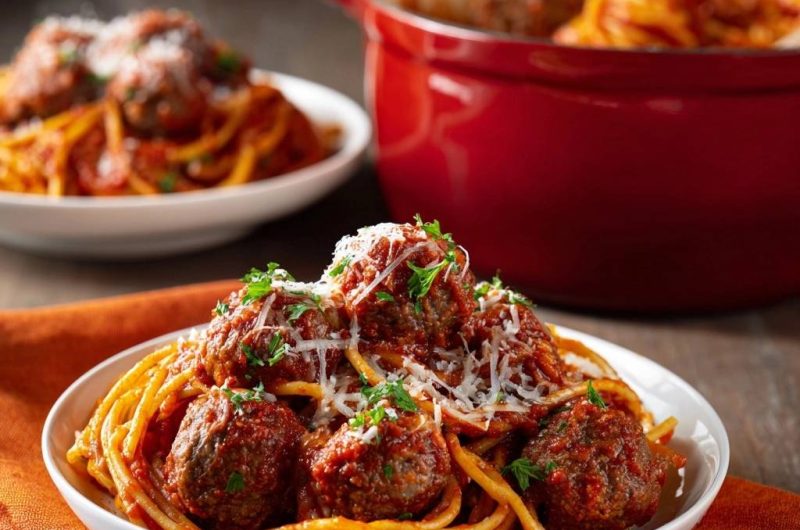
Classic Spaghetti and Meatballs
Course: Main CourseCuisine: Italian-AmericanDifficulty: easy4
servings20
minutes40
minutes60
MinutesItalian-American
Ingredients
1 pound ground beef (80/20 blend for best flavor)
1/2 cup panko or plain breadcrumbs
1/4 cup whole milk
1 large egg, lightly beaten
1/2 cup freshly grated Parmesan cheese, plus extra for serving
2 cloves garlic, minced
1 teaspoon dried oregano
1/2 teaspoon salt
1/4 teaspoon black pepper
2 tablespoons olive oil
24 ounces high-quality marinara sauce
1 pound spaghetti pasta
Fresh parsley, finely chopped for garnish
Directions
- Create the Panade: In a large bowl, combine the breadcrumbs and milk. Let this sit for 5 to 10 minutes until it forms a thick, uniform paste. This panade acts as a physical barrier between meat proteins, preventing them from knitting together too tightly and becoming rubbery.
- Combine: Add the ground beef, egg, Parmesan, garlic, oregano, salt, and pepper to the bowl with the panade.
- Mix Gently: Use your hands to gently fold the ingredients together just until combined. Do not squeeze or over-knead the meat, as over-handling will toughen the beef.
- Shape: Gently roll the mixture into 1.5-inch balls. You should get approximately 12 to 14 meatballs.
- Sear: Heat the olive oil in a large Dutch oven or heavy-bottomed pot over medium heat. Add the meatballs in a single layer (work in batches if necessary). Brown them for 3 to 4 minutes per side until a deep golden-brown crust forms. They do not need to be cooked through at this stage.
- Simmer: Pour the marinara sauce over the meatballs in the pot. Bring to a gentle simmer, then reduce heat to low. Cover and cook for 20 to 25 minutes. This slow poaching in the sauce ensures the meatballs stay incredibly moist.
- Cook Pasta: While the sauce simmers, cook the spaghetti in a large pot of heavily salted boiling water until al dente.
- Finish: Reserve 1/2 cup of pasta water, then drain the spaghetti. Add the pasta directly into the Dutch oven with the sauce and meatballs. Gently toss to coat, adding a splash of pasta water if the sauce needs thinning to better cling to the noodles.
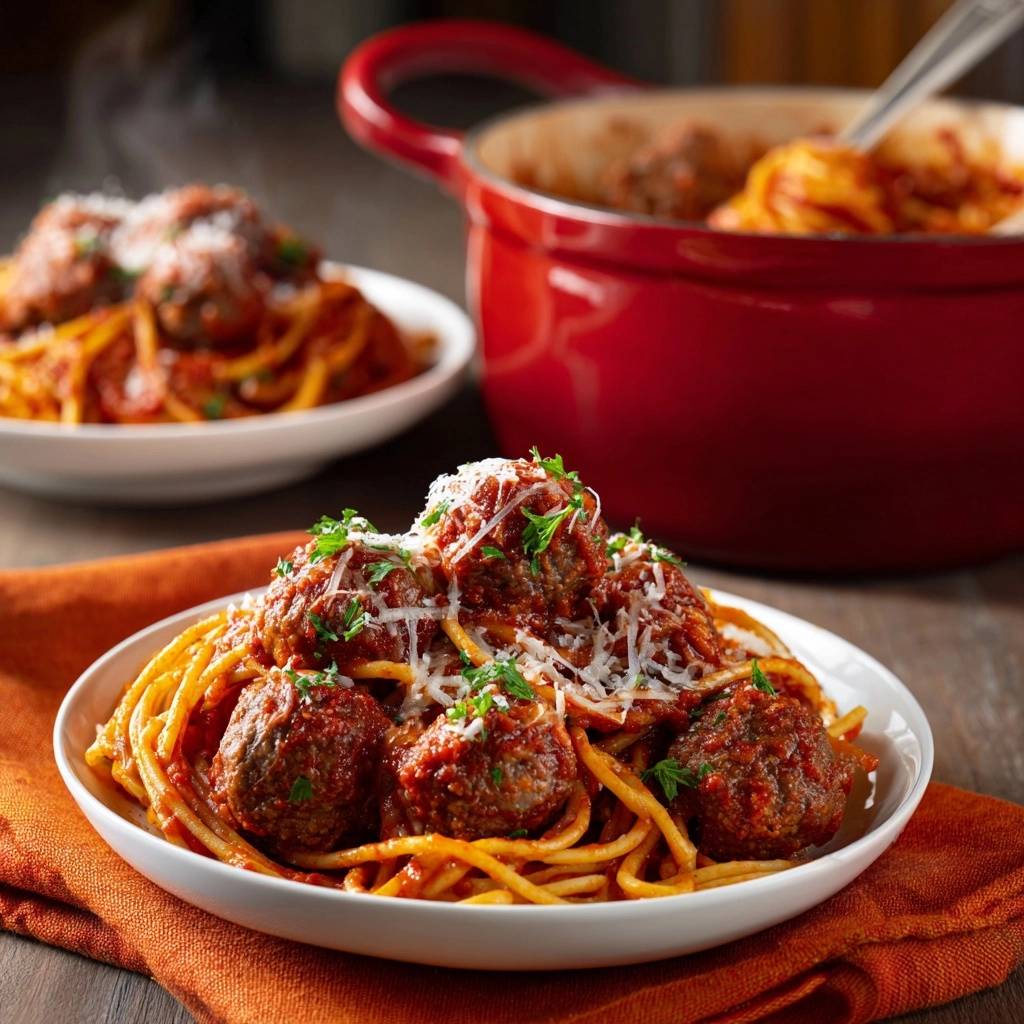
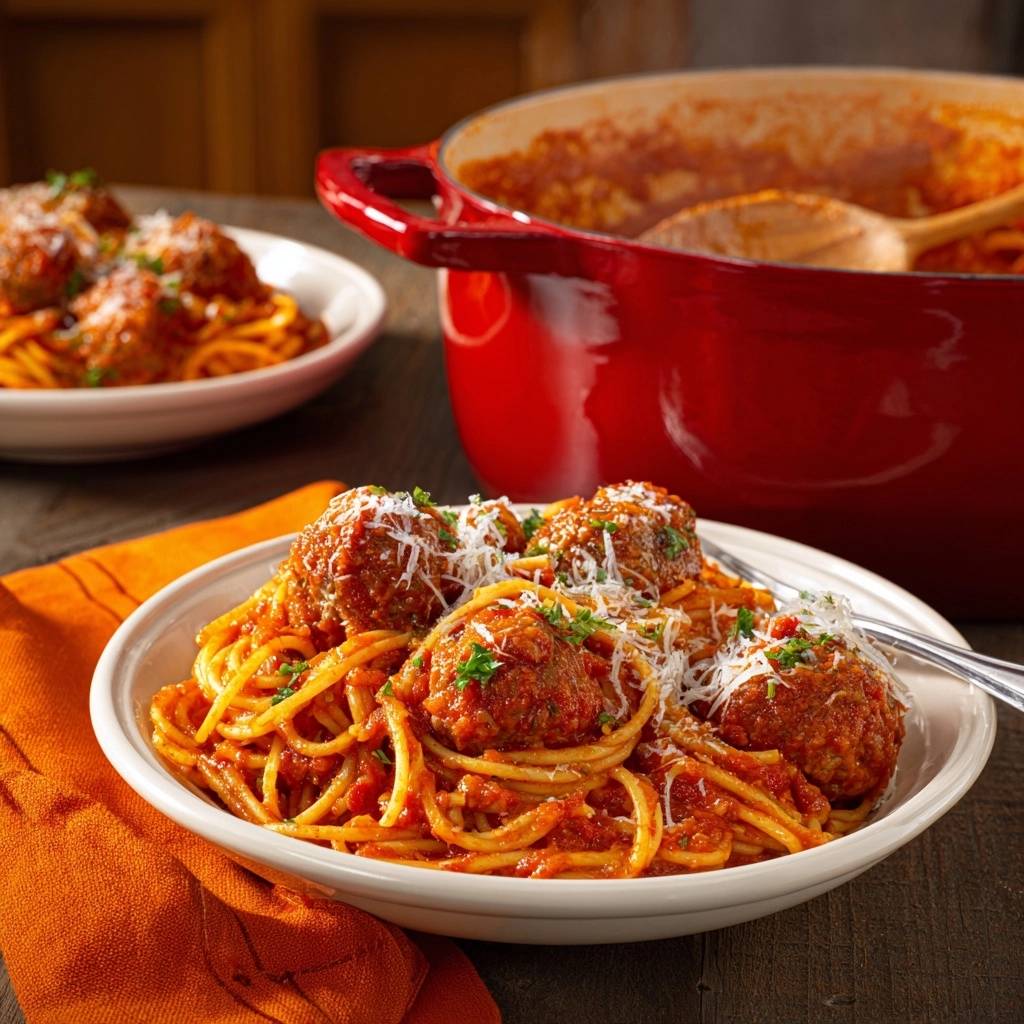
- Serve: Plate the spaghetti and meatballs immediately. Top generously with freshly grated Parmesan cheese and a sprinkle of fresh parsley as shown in the image.
Notes
- The panade (milk and breadcrumb paste) is the secret to preventing rubbery meatballs. Avoid over-kneading the meat to maintain a tender texture.