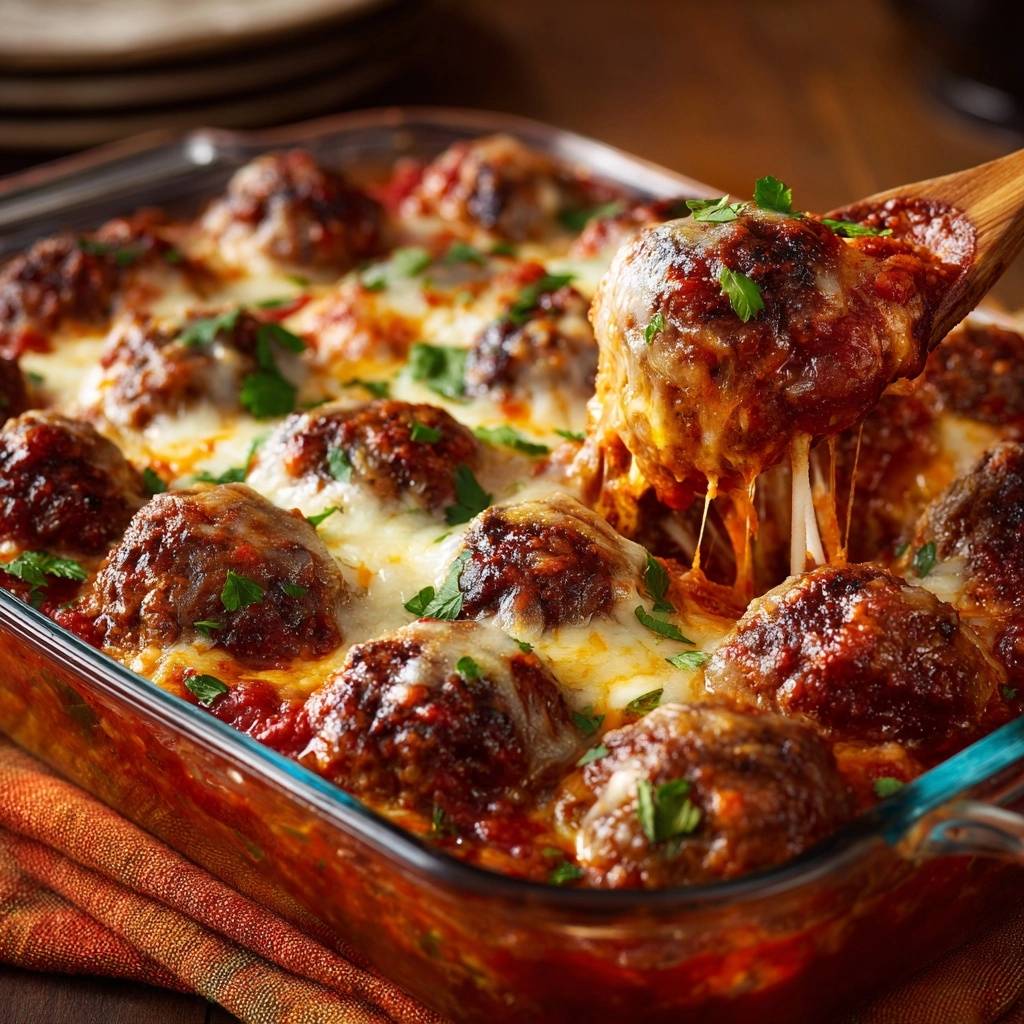
Imagine pulling a bubbling, golden-brown tray out of the oven, the aroma of toasted garlic and melted provolone filling your kitchen. You slide your spatula in, expecting a firm, juicy meatball, but instead, you find a watery, greasy soup at the bottom of the dish. It’s a common heartbreak for home cooks, but it doesn’t have to be your reality.
This Cheesy Baked Meatball Casserole is designed specifically to fight the “mush factor” that plagues most oven-baked pasta and meat dishes. We aren’t just tossing ingredients into a pan and hoping for the best. Instead, we’re using a strategic layering technique that prioritizes structural integrity and concentrated, bold flavors over a one-pot shortcut.
The secret to this success lies in the Maillard reaction. By searing the meatballs before they ever touch the baking dish, you create a flavor-packed crust that acts as a waterproof barrier. This ensures the meat stays succulent while the sauce remains thick and velvety, rather than thinning out into a puddle. Let’s get into how you can master this comfort food classic.
Why Most Meatball Casseroles Fail
Most recipes fail because they ignore the physics of moisture. When you place raw or lightly browned meat into a bed of sauce, the beef releases its natural juices and rendered fat directly into the marinara. This creates a “boiling” effect rather than a roasting one, which softens the exterior of the meatball until it’s crumbly and wet.
Furthermore, many store-bought sauces have a high water content. When that water mixes with the fat from the beef, the sauce “breaks,” leading to an oily orange film on top of your casserole. Managing this moisture is the difference between a premium, restaurant-quality meal and a soggy disappointment.
Essential Components for the Perfect Meatball Base
We start with 1.5 pounds of 80/20 ground beef. This specific ratio is the gold standard for meatballs because the 20% fat content provides the necessary lubrication to keep the meat tender during a high-heat bake. If you go too lean, the meatballs will turn into dry, rubbery pucks.
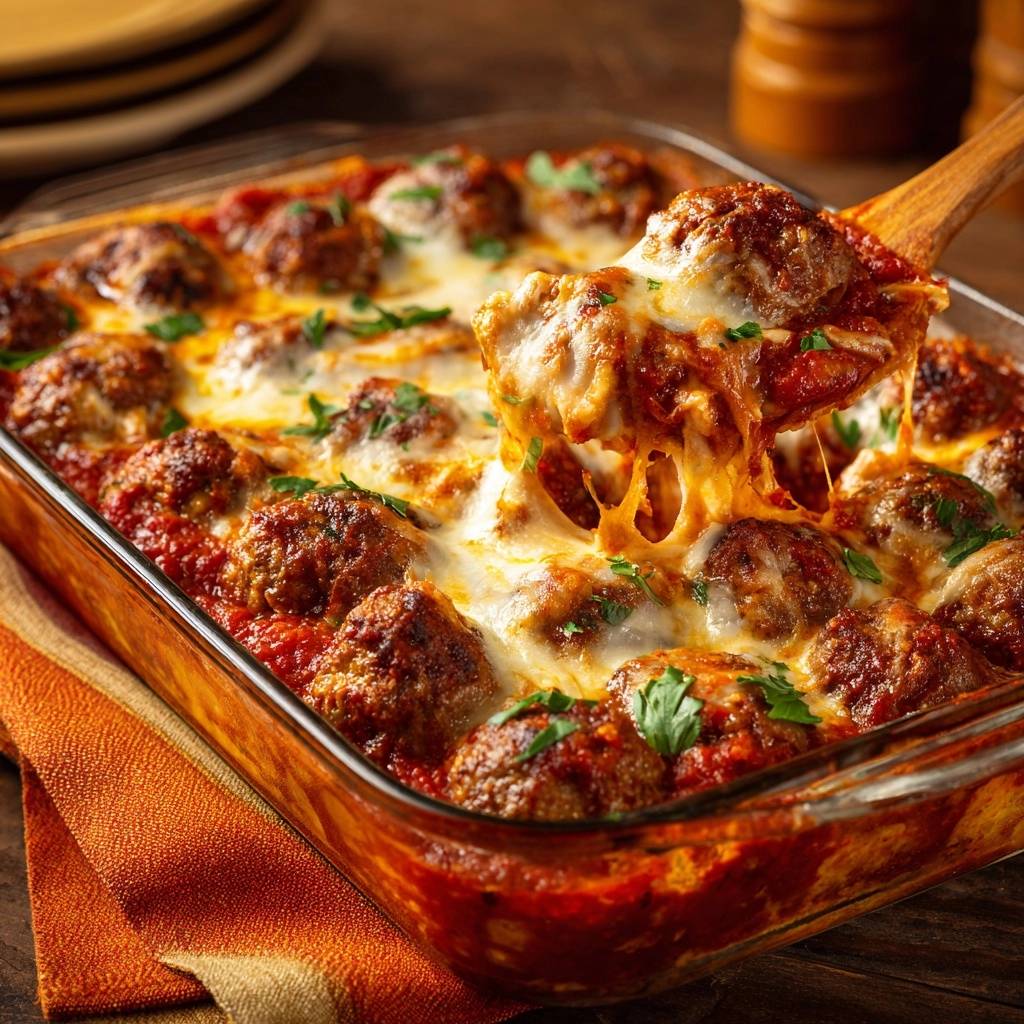
To bind everything together, we use a combination of a large egg and Italian breadcrumbs. These aren’t just fillers; they act as a structural sponge. As the meat cooks and releases juices, the breadcrumbs trap that moisture inside the meatball, ensuring every bite is juicy rather than leaking out into the pan.
The Role of Hard Cheeses in Meatball Texture
Grated Parmesan is a secret weapon for texture. Unlike melty cheeses, Parmesan is a hard, aged cheese that adds a punch of umami and salt. When mixed into the meat, it helps create a tighter, more sophisticated crumb structure. It prevents the meatball from feeling like a loose clump of ground beef, giving it a satisfying “snap” when you bite into it.
Aromatic Profiles: Garlic and Dried Oregano
Fresh garlic is essential, but you must mince it very finely. Large chunks of garlic won’t soften enough in the short searing time and can leave a pungent, raw bite in the finished dish. Finely minced garlic distributes evenly, so every meatball has a consistent savory depth.
While fresh herbs are great for garnishing, dried oregano is actually superior for the meatball mixture itself. Dried herbs contain concentrated oils that stand up much better to the 400°F heat of the oven. Fresh oregano can often turn bitter or lose its punch when baked, but the dried version blooms beautifully in the beef fat.
The Science of the Sear: Preventing Soggy Bottoms
Searing your meatballs in olive oil for about 3 minutes per side is the most important step in this recipe. You are looking for a deep, dark brown crust. This isn’t just about aesthetics; it’s about chemistry. This crust creates a “flavor barrier” that keeps the meat juices locked inside the sphere.
By the time these meatballs hit the casserole dish, the exterior is already set. This means they won’t “stew” in the marinara. Instead, they sit proudly on top of the sauce, maintaining their shape and texture even as the cheese melts around them.
Degreasing: The Critical Paper Towel Step
After searing, you must transfer the meatballs to a paper-towel-lined plate. You’ll notice a significant amount of yellow-orange fat left on the paper. This is fat that would have otherwise ended up at the bottom of your casserole dish, making your sauce greasy and thin.
Removing this excess rendered fat is the “secret” step that most quick recipes skip. By taking sixty seconds to drain the meat, you ensure that the only thing flavoring your sauce is the beef itself, not a pool of heavy grease. This keeps the final dish light enough to enjoy a second helping.
Strategic Layering for Maximum Sauce Consistency
We use the “1/3 Sauce Rule” to protect the texture of the dish. By pouring only a thin layer of marinara into the bottom of the 9×13 dish, you create a flavorful bed for the meatballs without submerging them. The meatballs should sit *on* the sauce, not *in* it.
This prevents the bottom of the meatballs from becoming waterlogged. It also allows the heat of the oven to circulate around the base of each meatball, ensuring the entire casserole heats evenly and the sauce reduces slightly to a thick, jammy consistency.
Targeted Saucing Techniques
When you add the remaining sauce, don’t just pour it over the whole tray. Spoon it specifically over the center of each meatball. This leaves the sides of the meatballs exposed to the dry heat of the oven. Those exposed edges will continue to caramelize and crisp up, providing a wonderful contrast to the soft, cheese-covered tops.
The Dual-Cheese Blend: Mozzarella and Provolone
Mozzarella is famous for its incredible “cheese pull,” but it can be a bit bland on its own. That’s why we mix in a half-cup of shredded Provolone. Provolone has a slightly higher fat content and a sharper tang that cuts through the richness of the beef.
This 2-cup to 1/2-cup ratio gives you the best of both worlds: the iconic stretchy texture of mozzarella and the sophisticated, savory flavor of provolone. Together, they form a golden crust that protects the meat while adding a creamy mouthfeel to every bite.
Step-by-Step: Executing the Cheesy Baked Meatball Casserole
Start by preheating your oven to 400°F. This high temperature is vital for getting that bubbly, browned cheese finish without overcooking the meat inside. While the oven warms, combine your beef, breadcrumbs, Parmesan, egg, and aromatics in a large bowl.
Use a light touch when mixing. If you squeeze the meat too hard or overwork it, the proteins will cross-link and become tough. Mix just until the ingredients are distributed, then gently roll them into 1.5 to 2-inch balls. They should be uniform in size so they cook at the same rate.
Heat your olive oil in a large skillet over medium-high heat. Sear the meatballs in batches; if you crowd the pan, the temperature will drop and the meat will steam instead of browning. Once they have a dark crust, drain them on paper towels. Layer your 1/3 sauce, the meatballs, the remaining targeted sauce, and finally the cheese blend.
Bake for 20 to 25 minutes. You are looking for the cheese to develop those beautiful leopard spots of golden brown. If the cheese is melted but still pale, give it another two minutes. The caramelization on the cheese adds a nutty flavor that rounds out the acidity of the tomato sauce.
Why the 10-Minute Rest is Non-Negotiable
It is tempting to scoop into the casserole the second it leaves the oven, but you must wait. During these ten minutes, the sauce undergoes a process called emulsification. The residual heat allows the tomato solids and the small amount of remaining fats to bind together, thickening the sauce significantly.
Furthermore, the meat fibers in the meatballs need time to relax. If you cut into them immediately, the juices will run out instantly, leaving the meat dry. A rested meatball reabsorbs those juices, ensuring a tender, melt-in-your-mouth experience when you finally sit down to eat.
Make-Ahead Strategies and Freezing Guidelines
You can easily prep this dish 24 hours in advance. I recommend searing the meatballs and storing them in an airtight container in the fridge, while keeping the sauce separate. Assemble the casserole just before you are ready to bake to keep the breadcrumbs from absorbing too much moisture overnight.
If you want to freeze this meal, freeze the seared meatballs alone in a freezer bag. They will last up to three months. When you’re ready for dinner, thaw them in the fridge overnight and proceed with the layering and baking steps. Avoid freezing the fully assembled raw casserole, as the sauce can separate and become watery upon thawing.
Optimal Pairings for a Heavy Casserole
Since this is a rich, cheese-heavy dish, you want sides that offer a bit of “zip” or crunch. A simple arugula salad with a sharp lemon vinaigrette is perfect for cutting through the fat of the beef and provolone. The peppery greens wake up your palate between bites of savory meatball.
Roasted broccolini with a sprinkle of red pepper flakes also works beautifully. Of course, you can’t go wrong with a thick slice of toasted sourdough or garlic bread. You’ll want something sturdy to swipe up every last drop of that thick, concentrated marinara sauce left on your plate.
Troubleshooting Common Casserole Issues
If you notice your cheese is browning too quickly but the meatballs don’t seem hot in the center, simply tent the dish with a piece of aluminum foil. This reflects the direct heat away from the cheese while allowing the ambient heat to continue warming the meat. However, since we sear the meatballs first, they are usually nearly cooked through before they even enter the oven.
If your meatballs feel too soft or are falling apart, you likely need a touch more breadcrumbs or a smaller egg next time. The mixture should feel moist but should hold its spherical shape easily on the counter. If the sauce looks thin mid-bake, don’t panic; it will thicken considerably during the mandatory 10-minute resting period.
Choosing the Right Marinara
The quality of your sauce will make or break this dish. Look for a “thick consistency” marinara where the first few ingredients are tomatoes and olive oil, not water or corn syrup. A high-quality sauce has less water to begin with, which means less chance of a soggy bottom. If your favorite sauce seems a bit thin, simmer it on the stove for 10 minutes to reduce it before using it in the casserole.
Adjusting for Different Meat Blends
You can certainly use ground turkey or even a mix of beef and lamb for this recipe. However, keep in mind that turkey is much leaner and can dry out quickly. If using turkey, reduce your searing time slightly and ensure you don’t skip the egg, as it provides the essential moisture that lean poultry lacks. For lamb, you may need to spend an extra minute draining the meatballs on paper towels, as lamb can be quite fatty.
How should I store and reheat leftovers?
Store any leftover casserole in an airtight container in the refrigerator for up to 3 or 4 days. To reheat, place a portion in an oven-safe dish, cover with foil, and bake at 350°F until the center is hot. This preserves the texture much better than a microwave, which can make the meatballs rubbery and the cheese chewy.
Why are my meatballs tough instead of tender?
Tough meatballs are almost always the result of overworking the meat. When you mix the beef, breadcrumbs, and egg, use your fingertips to gently toss the ingredients together rather than mashing them with your palms. Stop the moment everything is combined. Additionally, make sure you aren’t using meat that is too lean; that 80/20 fat ratio is key for tenderness.
Can I use frozen meatballs for this recipe?
You can, but the “Anti-Soggy” results won’t be quite as spectacular. If you use store-bought frozen meatballs, thaw them completely and pat them dry with paper towels before searing them in the skillet. This helps remove the ice crystals that would otherwise melt into your sauce and cause the very sogginess we are trying to avoid.
What can I use if I don’t have Italian breadcrumbs?
You can easily substitute Panko breadcrumbs or even crushed crackers. If you use plain breadcrumbs or Panko, be sure to add an extra half-teaspoon of dried oregano and a pinch of dried basil to the mix to make up for the missing seasoning. Avoid using fresh bread chunks, as they hold too much moisture and can make the meatballs feel mushy.
Is the searing step really necessary?
Yes, it is the most critical part of the “Anti-Soggy” method. Searing creates a crust that prevents the meat juices from leaking into the sauce. Without this step, the meatballs will essentially boil in the marinara, leading to a softer texture and a much thinner, greasier sauce. It takes an extra 10 minutes but doubles the quality of the final dish.
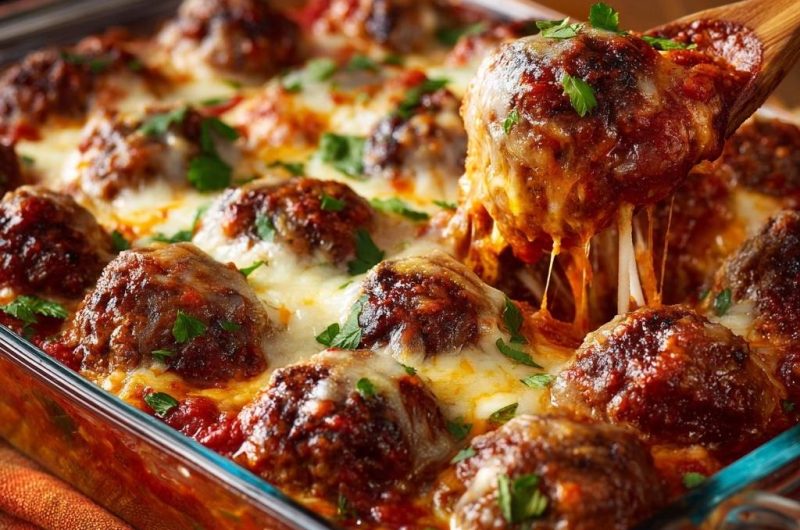
Cheesy Baked Meatball Casserole
Course: Main CourseCuisine: AmericanDifficulty: easy6
servings20
minutes30
minutes50
MinutesAmerican
Ingredients
1.5 lbs ground beef (80/20 blend)
1/2 cup Italian breadcrumbs
1/4 cup grated Parmesan cheese
1 large egg
2 cloves garlic, minced
1 teaspoon dried oregano
1/2 teaspoon salt
1/2 teaspoon black pepper
24 ounces high-quality marinara sauce (thick consistency)
2 cups shredded mozzarella cheese
1/2 cup shredded Provolone cheese (for extra stretch)
Fresh parsley, chopped for garnish
2 tablespoons olive oil
Directions
- Preheat your oven to 400 degrees F.
- In a large bowl, combine the ground beef, breadcrumbs, Parmesan, egg, garlic, oregano, salt, and pepper. Mix until just combined. Do not overwork the meat or it will become tough.
- Roll the mixture into 1.5 to 2-inch balls.
- To solve the soggy bottom problem, heat olive oil in a large skillet over medium-high heat. Sear the meatballs in batches for 3 minutes per side until a deep, dark brown crust forms. This Maillard reaction creates a flavor barrier and prevents raw meat juices from thinning out your sauce.
- Transfer the seared meatballs to a paper-towel-lined plate to drain off all excess rendered fat. This is the critical step to prevent a greasy, watery casserole.
- Pour only 1/3 of the marinara sauce into the bottom of a 9×13 inch glass baking dish.
- Arrange the seared meatballs on top of the thin sauce layer.
- Spoon the remaining sauce specifically over the center of each meatball, leaving the sides of the meatballs exposed to maintain their texture.
- Sprinkle the mozzarella and provolone cheese around the meatballs, ensuring the tops of the meatballs remain visible (as seen in the image) for a roasted, caramelized finish.
- Bake for 20-25 minutes until the cheese is bubbly and develops golden-brown spots.
- Let the casserole rest for 10 minutes before serving. This allows the sauce to emulsify and set, ensuring a perfect, thick consistency. Garnish with fresh parsley and serve.
Notes
- The secret to the anti-soggy bottom is searing the meatballs to create a crust and draining them on paper towels before assembly. Letting the dish rest for 10 minutes after baking is crucial for the sauce to set.