Most home cooks have faced the heartbreak of a soggy, oil-laden potato pancake. You start with high hopes, but you end up with a limp, grey mass that slides around the plate. It’s frustrating because you know that perfect, glass-shattering crunch is possible, yet it feels just out of reach. The culprit isn’t your stove or your skillet; it’s the hidden moisture lurking inside the potatoes that steams the latke from the inside out.
This Golden Crispy Potato Latke Stack is built on an “Anti-Soggy Bottom” philosophy. We aren’t just frying shredded vegetables; we’re engineering a structural masterpiece. By focusing on aggressive moisture management and starch reclamation, we create a latke that stands tall and stays crunchy long after it leaves the pan. This isn’t a side dish that hides under a pile of applesauce; it’s a sturdy, mahogany-hued centerpiece designed to hold its own against cool cream and vibrant slaw.
The secret to this professional-grade texture lies in the “Double-Squeeze” method. While most recipes suggest a quick pat-dry, we’re going to wring these potatoes until they feel like parched wood shavings. This extreme dryness allows the exterior to caramelize instantly upon hitting the oil. If you’ve ever wondered why restaurant latkes have those wild, craggy edges that shatter when you bite them, this is the technique that bridges that gap.
The Science of the Starch Reserve
When you grate a potato, you’re essentially breaking open thousands of tiny cells and releasing their liquid contents. Most people see this cloudy water as a nuisance and pour it down the drain. However, that liquid contains the most powerful tool in your culinary arsenal: natural potato starch. This starch is the “glue” that provides structural integrity without the heavy, bready texture that comes from using too much flour.
Russet potatoes are the non-negotiable choice for this recipe because of their high solids-to-water ratio. They’re packed with the amylose starch needed to achieve a deep, golden-brown color. When you let the squeezed potato water sit in a bowl for five minutes, you’ll notice a thick, white sludge settling at the bottom. This is pure, reclaimed starch. By pouring off the water and folding this “liquid gold” back into your dry potato shreds, you’re creating a natural coating that fries up into a crisp, lace-like shell.
This process of starch reclamation is what separates a mediocre pancake from a superior latke. Flour can make a latke feel heavy or gummy if overused, but potato starch is light and brittle. When it hits the hot oil, it undergoes a rapid dehydration process that creates a glass-like crunch. It’s the difference between a soft fritter and a crisp that rings when you tap it with a fork.
Essential Components for the Perfect Latke
Every ingredient in this stack serves a specific functional purpose. We use a large yellow onion not just for its savory depth, but for the moisture it contributes during the mixing phase, which helps the starch distribute evenly. The onion’s natural sugars also assist in the Maillard reaction, giving the stack its signature mahogany hue. Using a fresh, firm onion ensures the flavor is sweet rather than bitter after frying.
The choice of frying oil is equally critical for success. You need an oil with a high smoke point, such as grapeseed or canola oil. These oils can withstand the 350°F temperatures required for a flash-fry without breaking down or imparting a burnt flavor. Avoid olive oil here; its low smoke point will cause the latkes to taste acrid and greasy before they ever reach the desired level of crispness.
Selecting the Right Russet Potatoes
Look for Russets that feel heavy for their size and have a dusty, rough skin. If a potato feels soft or has a green tint, the starch content has started to convert to sugar, which will cause the latkes to burn before they cook through. Peeling is mandatory for this specific stack. While skin adds rustic charm to some dishes, here it can become leathery and tough, distracting from the uniform, shredded texture we want for our vertical stack.
The Role of Chemical Leavening
You might be surprised to see baking powder in a potato recipe, but it’s our secret weapon for aeration. As the latkes hit the hot oil, the baking powder reacts with the heat and the slight acidity of the potatoes to create micro-pockets of air. This prevents the dense potato shreds from compacting into a leaden mass. Instead, you get a stack that feels light and “fluffy” on the inside while remaining incredibly rigid on the outside.
Mastering the Double-Squeeze Moisture Extraction
This is the technical heart of the recipe, and it requires a bit of elbow grease. After grating your potatoes and onions, transfer them to a clean, lint-free kitchen towel. Gather the corners to create a bundle and twist. You’ll be amazed at how much liquid pours out. Most cooks stop here, but a single squeeze is the most common failure point. After the first round, let the mixture sit for a minute, then twist again with everything you’ve got.
You are looking for a “bone-dry” sensation. When you open the towel, the potato shreds should not cling to each other; they should look like individual, distinct ribbons of wood. If the mixture feels damp or clumpy, it still has too much water. That water will turn to steam in the pan, preventing the oil from sealing the exterior. A truly dry potato shred is the only way to achieve that coveted, craggy crust that stays firm even under the weight of toppings.
Don’t forget to save that liquid! As mentioned before, the starch at the bottom of the bowl is the key binder. Once you’ve squeezed the potatoes twice, carefully pour off the brown water. You’ll find a layer of white paste at the bottom. This is the reclaimed starch that will act as the “cement” for your Golden Crispy Potato Latke Stack, ensuring it doesn’t fall apart when you flip it.
Step-by-Step: Building the Golden Crispy Potato Latke Stack
Cooking the perfect latke is a three-phase operation that requires patience and precision. You aren’t just browning the outside; you’re ensuring the thick center is fully cooked while the edges become lace-like and brittle. If you rush any of these stages, you’ll end up with a raw middle or a burnt exterior.
Phase 1: Integrating the Binder and Starch
Add your bone-dry potatoes and onions to the bowl containing the reserved starch. Pour in your beaten eggs, flour, baking powder, salt, and pepper. Use your hands or a large fork to fold the ingredients together. You want to be gentle here. Over-mixing can develop the gluten in the flour, which leads to a “bready” or “cakey” texture. You want the shreds to remain distinct, merely coated in the starch and egg mixture.
Phase 2: Precision Frying and Temperature Control
Heat about half an inch of oil in a heavy cast-iron skillet. You’ll know it’s ready when the oil shimmers and a small piece of potato sizzles instantly upon contact. Aim for 350°F. Form the mixture into thick, puck-shaped mounds. Once they’re in the oil, use a spoon to carefully splash hot oil over the sides of the latke. This “spoon-splashing” technique ensures the vertical edges of the stack crisp up at the same rate as the bottom, creating a 360-degree crunch.
Phase 3: The Wire Rack Cooling Method
Never drain your latkes on paper towels. While it seems intuitive to soak up the grease, the paper towel traps steam underneath the latke, which immediately softens the crust you worked so hard to build. Instead, transfer the fried stacks to a wire cooling rack set over a baking sheet. This allows air to circulate around the entire latke, letting the crust “set” and stay shatteringly crisp while any excess oil drips away.
Troubleshooting Common Frying Obstacles
If your latkes are browning too fast on the outside but remain raw in the middle, your oil is likely too hot. Lower the heat slightly and add a splash of room-temperature oil to bring the temperature down. Conversely, if the latkes feel heavy and greasy, your oil wasn’t hot enough when you started. Always wait for that shimmer before adding the next batch.
If the stacks are falling apart in the oil, it usually means the mixture was too wet or you didn’t use enough of the reserved starch. You can fix this mid-batch by adding another tablespoon of flour to the remaining mixture. However, the best fix is always the double-squeeze. Remember, the drier the potato, the stronger the bond.
Assembling the Signature Cabbage and Apple Slaw
A dish this rich needs a sharp, acidic counterpoint to wake up the palate. We use a combination of shredded red cabbage and apple cider vinegar to provide that necessary “zing.” The cabbage offers a dense, peppery crunch that contrasts beautifully with the brittle potato shreds. If you want a bit of sweetness, adding thin matchsticks of Granny Smith apple provides a bright, tart flavor that cuts right through the fried richness.
Toss the slaw just before serving. You want the cabbage to be coated and slightly seasoned, but it should still have its structural snap. If it sits too long in the vinegar, it will become limp and watery, which is the enemy of our crispy stack. This slaw isn’t just a garnish; it’s the foundation that lifts the entire dish, providing a fresh, cool base for the hot potato.
Plating for Maximum Visual Impact
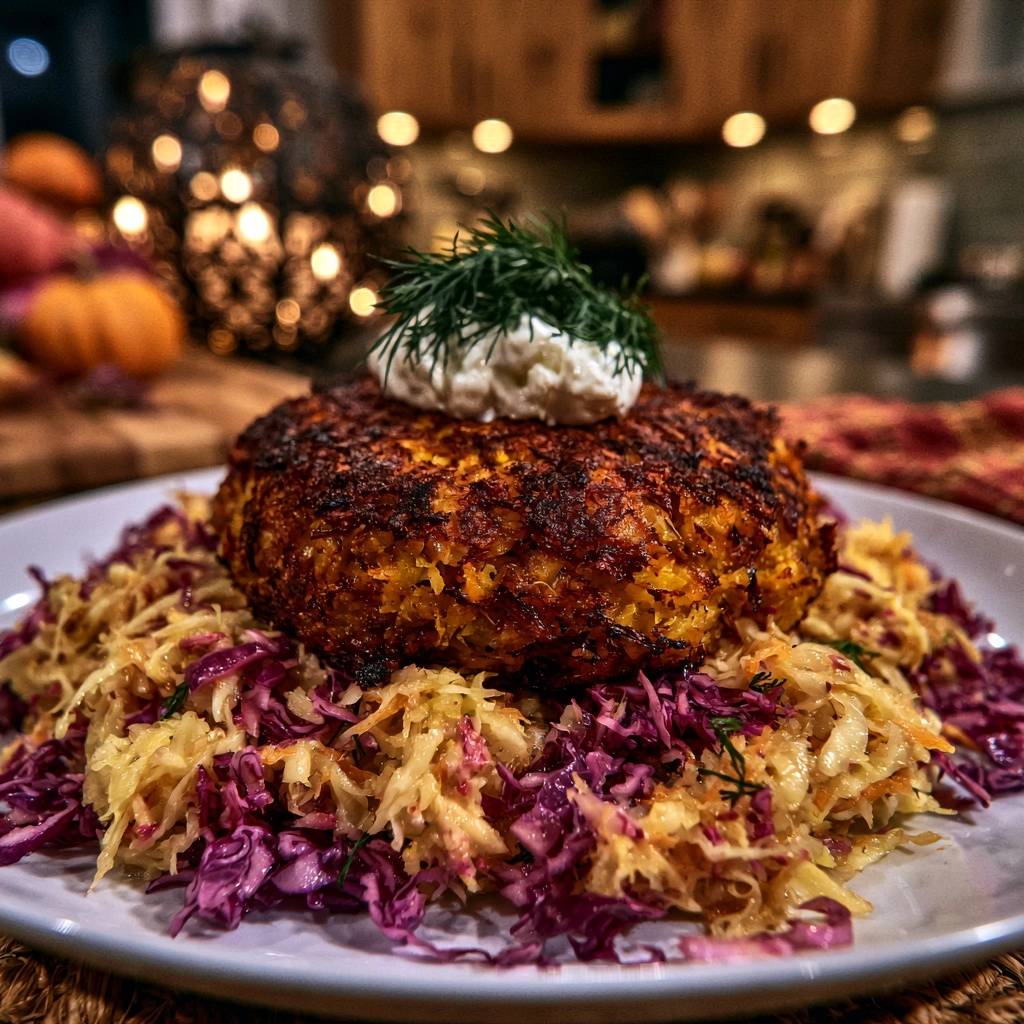
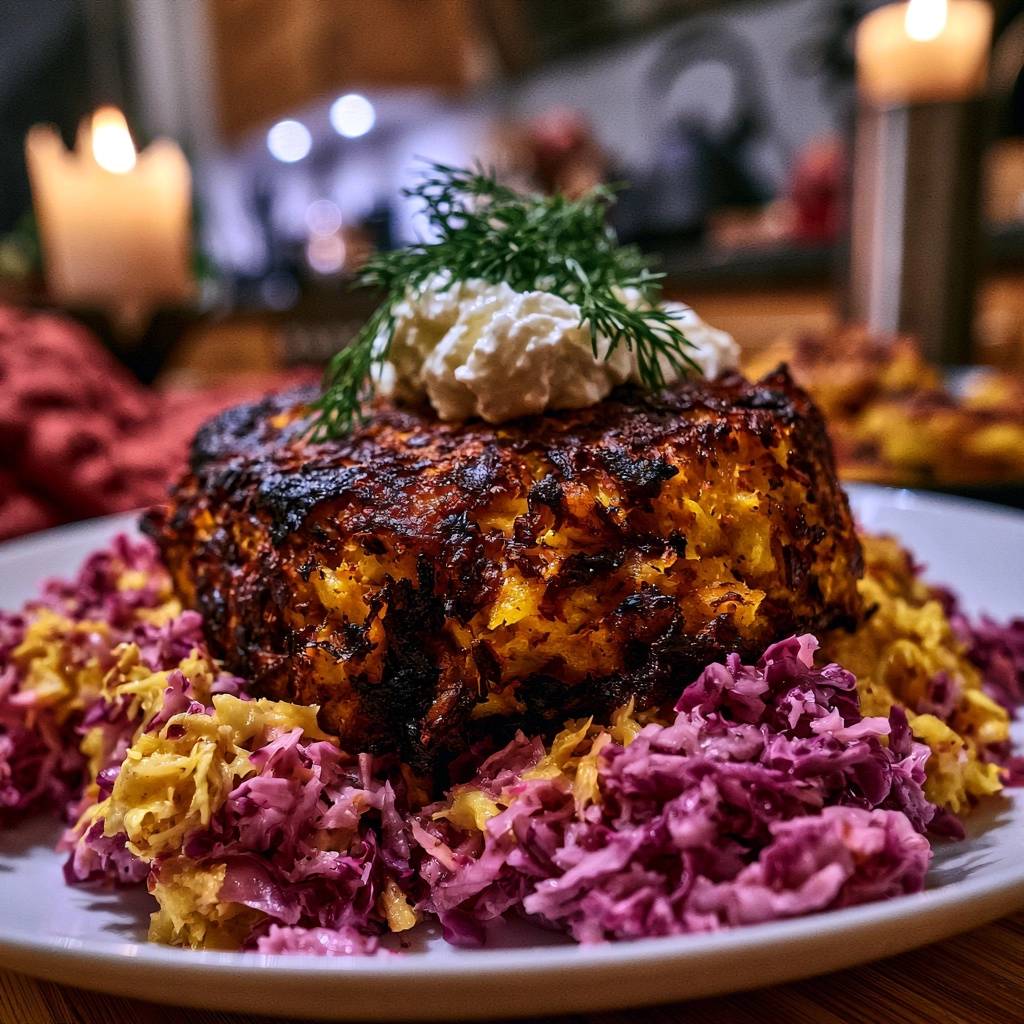
To plate this like a pro, start with a generous bed of the cabbage slaw in the center of a warm plate. Place one thick, golden latke stack directly on top. The height of the latke is what makes this dish feel special, so don’t be afraid to make them thick. The contrast between the deep mahogany potato and the vibrant purple cabbage is visually stunning.
Add a heavy dollop of cold sour cream or Greek yogurt right in the center. The temperature contrast between the piping hot potato and the cold cream is half the fun. Finally, garnish with a generous bunch of fresh dill. The aromatic oils in the dill are released by the heat of the latke, providing a fresh, herbal scent that rounds out the savory experience.
Optimal Pairings and Serving Suggestions
Since this is a rich, savory dish, you want beverages that offer high carbonation or acidity. A crisp sparkling cider is a fantastic choice, as the apple notes mirror the flavors in the slaw. If you prefer something with a bit of a kick, a sharp ginger beer provides a spicy heat that complements the black pepper in the latkes. These drinks help cleanse the palate between bites of the decadent potato stack.
If you’re serving this as part of a larger meal, consider pairing it with roasted root vegetables like carrots or parsnips. A bitter greens salad with a lemon vinaigrette also works wonders to balance the plate. The goal is to keep the sides light and bright so the Golden Crispy Potato Latke Stack remains the undisputed star of the show.
Expert Tips for Advanced Texture
Firstly, never grate your potatoes in a food processor. The high-speed blades damage the starch cells and turn the potato into a mushy paste. Use a traditional box grater for long, distinct shreds. Secondly, use a cast-iron skillet if you have one. The heavy metal retains heat much better than stainless steel, which prevents the oil temperature from dropping too low when you add the cold potato mixture.
If you’re cooking for a crowd, keep the finished latkes in a 200°F oven on their wire rack. This keeps them warm without making them soggy. Finally, use an instant-read thermometer to check your oil between batches. The oil temperature will drop every time you add new latkes, so give it a minute to recover to 350°F before starting the next round. This ensures the last latke is just as crispy as the first.
How do I store and reheat leftover latkes?
Store any leftovers in an airtight container in the refrigerator for up to three days. To regain that signature crunch, never use a microwave, as it will make the potatoes rubbery. Instead, place the latkes on a wire rack in a 375°F oven for about 8 to 10 minutes. This allows the internal oils to heat up and “re-fry” the exterior, bringing back the original texture. You can also crisp them up in an air fryer at 350°F for 3 to 5 minutes.
Why are my latkes falling apart in the pan?
This usually happens for two reasons: excess moisture or lack of binder. If the potatoes weren’t squeezed dry enough, the steam will push the shreds apart before the egg and starch can set. Additionally, make sure you are using the reserved white starch from the bottom of the potato water bowl. That starch is the “glue” that holds the thick stack together. If you’re still having trouble, add one extra tablespoon of flour to the mix to help stabilize the pucks.
Can I use a different type of potato?
While you can technically use Yukon Gold potatoes, they have a much higher sugar content and lower starch content than Russets. This means they will brown very quickly (sometimes burning) and will have a creamier, softer interior. For the specific “Golden Crispy” result this recipe promises, Russets are the gold standard. If you must use Yukons, be extra diligent with the moisture extraction and lower your frying temperature by 10 degrees to prevent premature burning.
What can I use instead of all-purpose flour?
If you need a substitute for flour, potato starch or cornstarch works beautifully and actually enhances the crispness. Use the same measurement (1/4 cup). Using starch instead of flour often results in an even lighter, more brittle crust. Avoid using almond flour or coconut flour, as they do not have the binding properties needed to hold a thick stack together and will likely result in a crumbly mess in the oil.
How do I keep the potatoes from turning grey while I work?
Potatoes discolor due to oxidation when exposed to air. The best way to prevent this is to work quickly. Have all your other ingredients (eggs, flour, spices) measured and ready before you start grating. Once the potatoes are grated and squeezed, the addition of the eggs and the acidic onion juice will naturally slow down the browning process. If you have to wait a few minutes, keep the squeezed potato bundle tightly wrapped in the kitchen towel to minimize air contact.

Golden Crispy Potato Latke Stack
Course: Appetizer or Side DishCuisine: Jewish and AmericanDifficulty: easy4
servings25
minutes20
minutes45
Minutes340
kcalJewish and American
Ingredients
2 pounds russet potatoes, peeled
1 large yellow onion
2 large eggs, beaten
1/4 cup all-purpose flour
1 teaspoon baking powder (for extra lift and crunch)
1.5 teaspoons salt
1/2 teaspoon black pepper
Vegetable oil for frying (canola or grapeseed)
For the Slaw & Topping:
1 cup shredded red cabbage
1 cup shredded green cabbage or apple
1 tablespoon apple cider vinegar
1/2 cup sour cream or Greek yogurt
Fresh dill sprigs for garnish
Directions
- Grate the potatoes and onion using the large holes of a box grater.
- To solve the soggy bottom problem, place the grated mixture into a clean kitchen towel. Squeeze out as much liquid as possible into a bowl. Let the liquid sit for 5 minutes; a layer of white potato starch will settle at the bottom. Carefully pour off the water, leaving the thick starch behind.
- Squeeze the potato mixture a second time in the towel to ensure it is bone-dry. Add the dry potatoes and onions into the bowl with the reserved starch.
- Add the beaten eggs, flour, baking powder, salt, and pepper. Mix thoroughly. The starch and baking powder will create the deep golden, craggy crust seen in the image.
- Heat 1/2 inch of oil in a heavy cast-iron skillet over medium heat. The oil must be shimmering (350°F) before frying to prevent the potato from absorbing excess grease.
- Form the mixture into thick, puck-shaped mounds (about 3 inches wide and 1.5 inches thick). Carefully place them in the oil. Do not overcrowd the pan.
- Fry for 6 to 8 minutes per side. Use a spoon to carefully splash hot oil over the sides of the latke to ensure the edges crisp up uniformly. Do not flip until the bottom is a deep mahogany brown and the structure is rigid.
- While the latkes fry, toss the shredded cabbages with vinegar and a pinch of salt to create the bright slaw base.
- Drain the latkes on a wire rack for 2 minutes to maintain airflow.
- To plate: Create a generous bed of the cabbage slaw. Place one thick latke stack in the center. Top with a heavy dollop of sour cream and a generous bunch of fresh dill.
Notes
- The secret to preventing soggy bottoms is the double-squeeze method and using the natural potato starch that settles at the bottom of the extracted liquid. Drain on a wire rack instead of paper towels to maintain airflow and crunch.