If you’ve ever brought a bowl of dip to a party only to watch it turn into a watery, unappealing soup within twenty minutes, you know the frustration. Dill pickles are notoriously difficult to work with because they’re essentially little sponges filled with brine. While the flavor is addictive and tangy, that hidden moisture is the enemy of a thick, scoopable appetizer.
Most people just chop their pickles and toss them into the bowl, but that’s exactly why their dips fail. You need a strategy that prioritizes texture just as much as taste. This recipe solves the “weeping” problem once and for all, ensuring every chip comes back with a heavy, rich coating of cream and crunch.
The secret to a professional-grade finish is my “Moisture-Lock Method.” By aggressively drying the pickles before they ever touch the dairy, you prevent the brine from breaking the emulsion of the cream cheese. It’s a simple extra step that makes the difference between a grocery-store tub and a gourmet spread that people will beg you to make again.
The Science of Preventing Watery Pickle Dip
Pickles are structurally designed to hold liquid. Because they sit in a salt-based brine, the cellular walls of the cucumber have already broken down, making them prone to leaking. When you dice a pickle, you create hundreds of tiny exit points for that juice. If you stir those wet pieces directly into cream cheese, the acid and water will immediately start to separate the fats in the dairy.
Therefore, the “Moisture-Lock Method” is your most important tool. You aren’t just draining the pickles; you’re actively dehydrating the exterior surfaces. By letting the finely diced pieces sit on a double layer of paper towels for at least five minutes, you allow the capillary action of the paper to pull out the deep-seated brine. You’ll be shocked at how much liquid comes out even after you think they’re dry.
In addition, this drying period allows the pickles to “firm up” slightly. When they’re bone-dry, the cream cheese can actually cling to the pickle bits rather than sliding off them. This creates a stable, unified structure that holds its shape even at room temperature. If you skip this, the salt in the dip will continue to draw water out of the pickles while it sits on your serving table, leading to that dreaded puddle at the bottom of the bowl.
Why Full-Fat Dairy is Non-Negotiable
Fat is the scaffolding of a great dip. I always insist on using full-fat cream cheese and sour cream because they contain fewer stabilizers and more milk solids. These solids are what give the dip its “scoopable” integrity. Low-fat or “light” versions often rely on gums and water-based fillers, which have a much lower melting point and will turn runny almost instantly.
Furthermore, the higher fat content provides a better flavor carrier for the dill and garlic. Fat coats the tongue, allowing the tangy pickle notes to linger longer. If you use a watery base, the flavors will feel sharp and thin rather than rich and balanced. Stick to the real deal for the best structural results.
Essential Components for Loaded Creamy Dill Pickle Dip
Quality ingredients are the backbone of this dish. When you’re shopping, look for the “refrigerated” pickles found in the deli section rather than the shelf-stable jars in the middle aisles. Refrigerated pickles are usually processed with less heat, which means they retain a much louder “snap” and a brighter, more vibrant green color. That crunch is vital for the “loaded” texture we’re after.
Fresh dill is another non-negotiable element. While dried dill works in a pinch for soups, it lacks the grassy, citrusy punch that makes a pickle dip feel fresh. Freshly chopped dill also provides beautiful green flecks that contrast against the white cream cheese. If you use dried herbs, the dip can end up looking a bit grey and dull, and you’ll miss out on that hit of aromatics that hits your nose before you even take a bite.
The Role of Acidity and Aromatics
Balance is everything when you’re working with heavy dairy. We use two tablespoons of actual pickle juice to thin the base just enough to make it dippable without making it weak. This juice provides a consistent tang throughout the entire mixture. It acts as a bridge between the creamy cheese and the chunky pickle pieces.
I also prefer garlic and onion powders over fresh aromatics in this specific recipe. Fresh garlic can become overpowering and “hot” as it sits in the fridge, and raw onions often release even more moisture. The powders distribute evenly, ensuring every single bite has a savory, umami backbone without any gritty or sharp surprises.
Step-by-Step: Preparing the Loaded Creamy Dill Pickle Dip
Making this dip is a three-phase process that focuses on transformation. You’re moving from raw, wet ingredients to a light, aerated masterpiece. Don’t rush the steps; the order of operations matters for the final mouthfeel. You want a dip that feels substantial but not heavy, and that starts with how you handle the base.
Phase 1: The Moisture-Lock Technique
Start by dicing your pickles into very small, uniform pieces. Once they’re chopped, spread them out in a single layer on a thick bed of paper towels. Place another layer on top and press down firmly with your palms. You want to see the brine soaking through the paper. Let them sit there for five minutes while you prep the rest of the ingredients. This is the secret to that professional, thick finish.
Phase 2: Achieving the Aerated Cream Cheese Base
Your cream cheese must be truly at room temperature. If it’s too cold, you’ll end up with tiny white lumps that are impossible to smooth out. Use a hand mixer to beat the cream cheese and sour cream together for about two minutes. You’re looking for the mixture to look fluffy and slightly increased in volume. This aeration makes the dip easier to scoop with a fragile potato chip.
Phase 3: Folding and Chilling for Stability
Once your base is fluffy, put away the electric mixer. Use a spatula to gently fold in your dried pickles and herbs. Folding preserves the air bubbles you just created, keeping the dip light. Finally, give it at least 30 minutes in the fridge. This allows the fats to firm back up around the pickles, essentially “locking” everything into place so it doesn’t shift or separate when served.
Texture Contrast: The Importance of Toppings
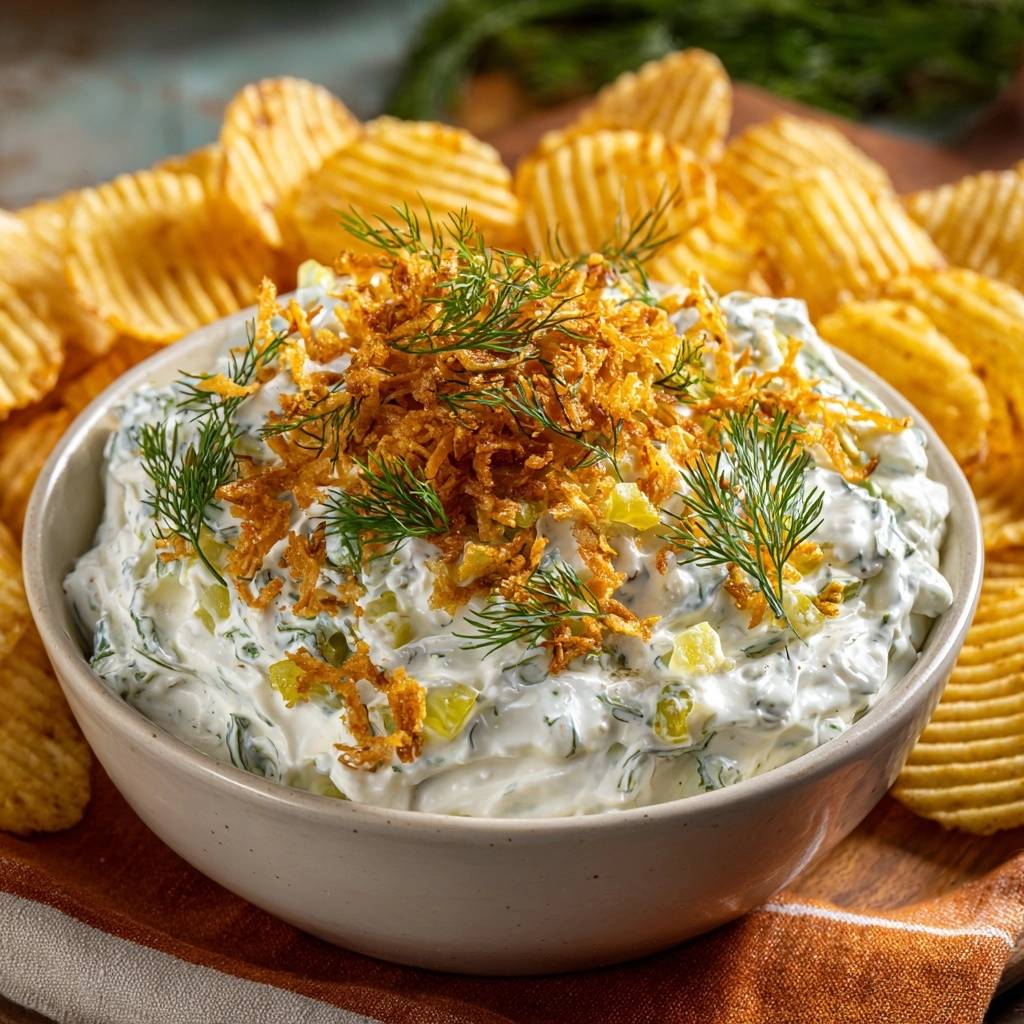
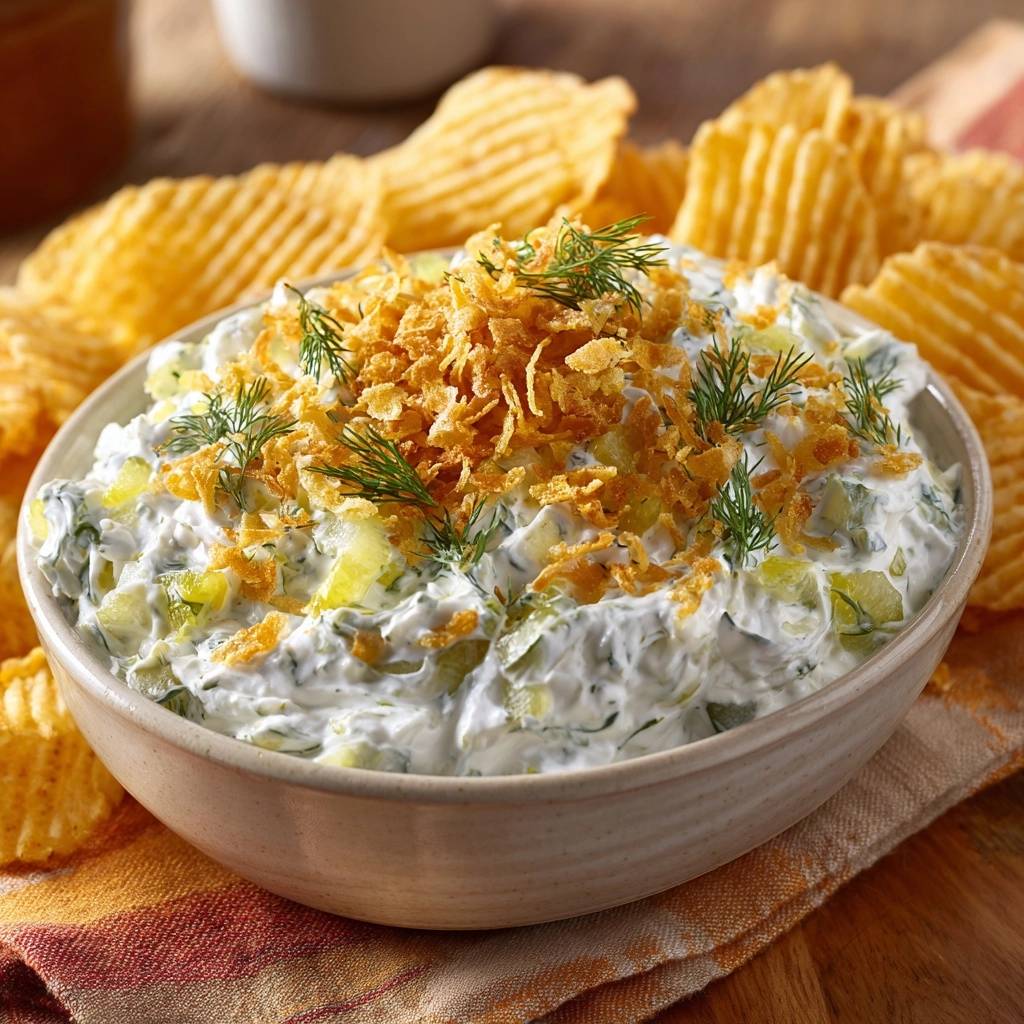
The “loaded” part of this recipe comes from the final flourishes. Crispy fried onions provide a salty, toasted crunch that perfectly offsets the cool, creamy dip. However, you must wait until the very last second to add them. Fried onions are highly sensitive to moisture and will turn soft if they sit on the damp dip for too long.
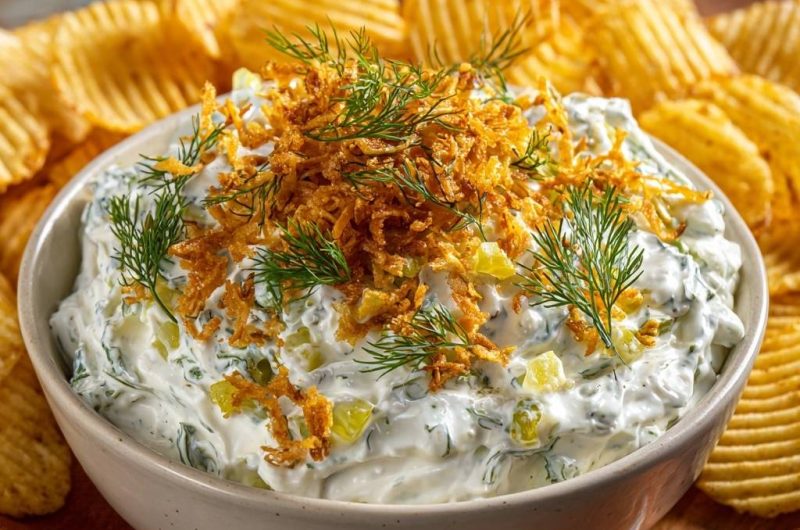
In addition to the onions, use your reserved fresh dill and a few extra pickle bits to decorate the top. This isn’t just for looks; it tells your guests exactly what’s inside. A well-decorated dip looks gourmet and inviting, making it the star of the snack table. The visual contrast of the golden onions against the green herbs is stunning.
Flavor Variations and Ingredient Swaps
If you want to experiment, this base is incredibly forgiving. For those who love a bit of heat, try dicing up a fresh jalapeño and drying it right alongside your pickles. The spicy kick cuts through the richness of the cream cheese beautifully. You could also add some vegetarian-friendly smoky bits or even a dash of smoked paprika to give it a “bacon-like” depth without using meat.
If you prefer a tangier, more protein-forward profile, you can substitute the sour cream with plain Greek yogurt. Just be sure to use the full-fat version, or the dip may lose some of its structural integrity. The yogurt adds a sharp fermented note that pairs excellently with the vinegar in the pickles.
What to Serve with Loaded Creamy Dill Pickle Dip
Ruffled potato chips are the classic choice for a reason. Their ridges act like little shovels, and their sturdiness can handle the thick, heavy texture of this dip. However, don’t limit yourself to just chips. Cold-snap vegetables like thick carrot coins, radishes, or even hollowed-out mini bell peppers provide a refreshing, low-carb crunch.
You can also serve this with toasted pita points or crusty baguette slices. If you have leftovers, this dip actually makes an incredible spread for a vegetarian burger or a toasted sandwich. The thickness ensures it stays on the bread rather than soaking in and making things soggy.
Troubleshooting Common Dip Issues
If your dip feels too thick to scoop after chilling, don’t panic. Simply stir in one teaspoon of pickle juice at a time until it reaches your desired consistency. Be careful not to overdo it, as a little liquid goes a long way. If it’s too thin, you likely didn’t dry the pickles enough; you can fix this by whisking in another two ounces of softened cream cheese.
If the flavor feels a bit flat, it usually needs more acid or salt. Add an extra splash of pickle juice or a pinch of salt to brighten the herbs. Remember that flavors mute slightly when cold, so you might need to adjust the seasoning right before you put it out for guests.
How long does this dip stay fresh?
This dip will stay fresh in the refrigerator for about 3 to 4 days if kept in an airtight container. I do not recommend freezing it, as the cream cheese and sour cream will undergo a molecular change when frozen, resulting in a grainy, separated texture once thawed. If you’re eating leftovers, give the dip a quick stir and add a fresh sprinkle of fried onions to bring back that essential crunch.
Can I use sweet pickles instead?
You can certainly use bread and butter pickles if you prefer a sweeter profile, but keep in mind it will drastically change the dish. If you go this route, I suggest increasing the amount of black pepper and perhaps adding a pinch of red pepper flakes. The extra spice helps balance out the high sugar content of the sweet pickles so the dip doesn’t taste like dessert.
Why are my fried onions getting soggy?
Fried onions are hygroscopic, meaning they actively suck moisture out of the air and the dip. Even if your dip is perfectly thick, the onions will eventually soften. To prevent this, keep the onions in their original container or a separate bag until the very moment you are ready to serve. If you’re bringing this to a potluck, top it once you arrive!
Is a food processor better than a hand mixer?
I strongly recommend a hand mixer over a food processor for this recipe. A food processor is too powerful and will often pulverize the pickles into a green paste, which ruins the “loaded” chunky texture. The hand mixer allows you to aerate the dairy perfectly while leaving the folding of the pickles to your own hands, ensuring you keep those distinct, crunchy bits intact.
Loaded Creamy Dill Pickle Dip
Course: AppetizerCuisine: AmericanDifficulty: easy8
servings15
minutes15
MinutesAmerican
Ingredients
16 ounces full-fat cream cheese, softened to room temperature
1/2 cup sour cream
1 1/2 cups dill pickles, finely diced (divided)
2 tablespoons pickle juice
1/2 cup fresh dill, finely chopped (divided)
1 teaspoon garlic powder
1/2 teaspoon onion powder
1/4 teaspoon black pepper
1/2 cup crispy fried onions
Ruffled potato chips for serving
Directions
- The most critical step to prevent a watery dip is to place your finely diced pickles on a double layer of paper towels. Press down firmly with another paper towel to remove all excess brine. Let them sit for 5 minutes to ensure they are bone-dry before adding them to the dairy.
- In a large mixing bowl, beat the softened cream cheese and sour cream together using a hand mixer or whisk until completely smooth and aerated.
- Reserve 2 tablespoons of the dried diced pickles and 1 tablespoon of the chopped fresh dill for the final garnish.
- Fold the remaining dried pickles, the remaining fresh dill, 2 tablespoons of pickle juice, garlic powder, onion powder, and black pepper into the cream cheese mixture. Mix until well combined and the herbs are evenly distributed throughout the white base.
- Transfer the mixture to a serving bowl. Use a spoon to create texture and peaks on the surface. Cover and refrigerate for at least 30 minutes. This chilling period allows the fats in the cream cheese to firm back up, locking the ingredients into a thick, stable texture.
- Just before serving, top the center of the dip with a generous mound of crispy fried onions. Sprinkle the reserved diced pickles and fresh dill sprigs over the top to match the vibrant, layered look of the image.
- Serve immediately with thick, ruffled potato chips for the ultimate crunch.
Notes
- The most critical step to prevent a watery dip is ensuring the diced pickles are bone-dry before mixing them with the dairy.