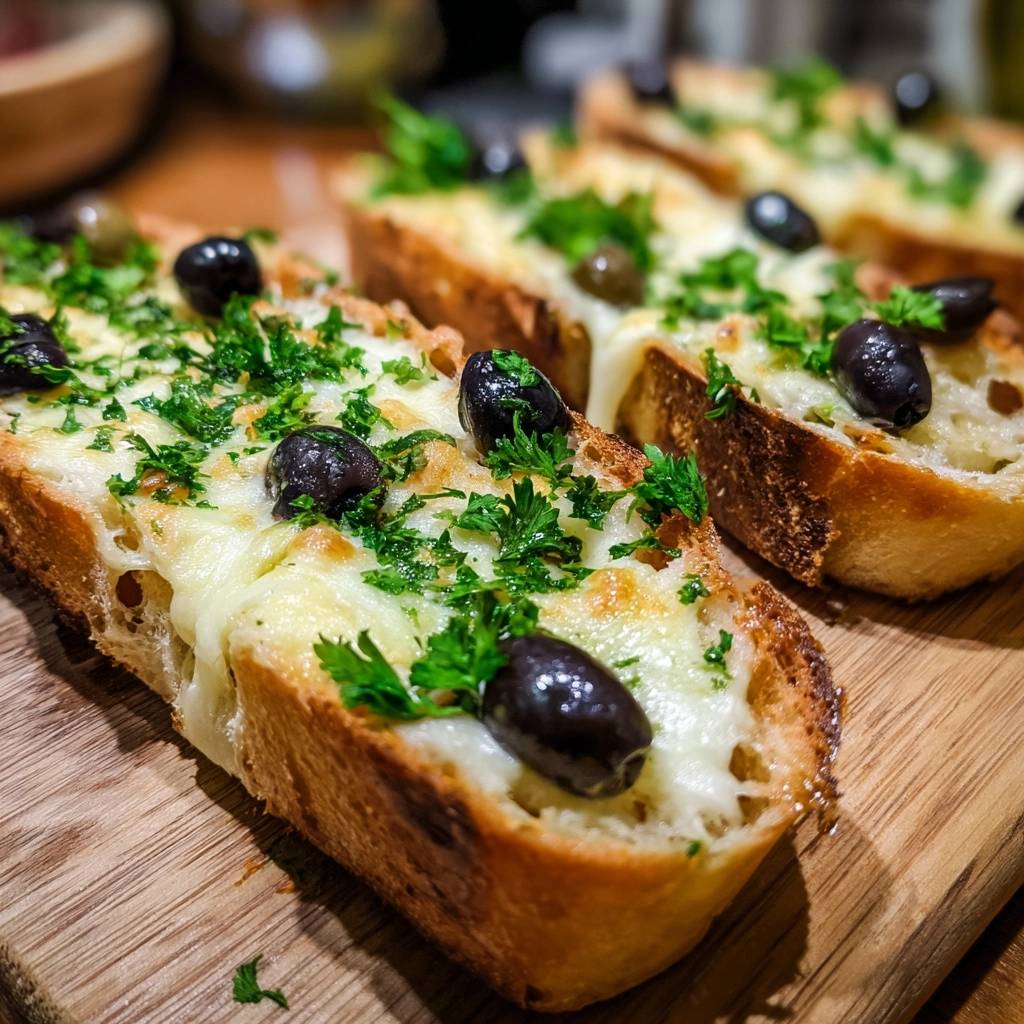
Imagine biting into a slice of bread where the crust shatters like glass, revealing a center that is pillowy, warm, and dripping with molten mozzarella. Most people have suffered through the disappointment of a greasy, limp appetizer that sags under the weight of its own toppings. That soggy middle is the enemy of great cooking, but it doesn’t have to be your reality.
This Mediterranean Cheesy Garlic Bread uses a specific “Anti-Soggy Bottom” philosophy to ensure every single bite maintains its structural integrity. By focusing on moisture control and heat distribution, we can transform simple ingredients into a high-end starter. You’ll get that satisfying crunch against the briny pop of Kalamata olives and the aromatic punch of fresh garlic.
The secret to this recipe’s success lies in the two-stage bake. Instead of loading raw toppings onto soft dough, we create a toasted thermal barrier first. This simple change in physics prevents the butter and cheese oils from migrating into the crumb, keeping the base firm while the top stays gooey. It’s a total game-changer for your kitchen repertoire.
The Structural Foundation: Choosing Your Bread
When you’re building a dish with heavy toppings like melted cheese and whole olives, the bread acts as the literal foundation. You need a loaf with a sturdy crumb and a resilient crust that can handle high heat without turning into a cracker. Standard white sandwich bread or soft brioche will collapse under the moisture of the garlic butter, leading to that dreaded mushy texture.
Sourdough and ciabatta are the gold standards for this Mediterranean version. These breads have a naturally lower moisture content in the crust and a complex internal structure. Because they are fermented longer, they possess the strength to support the “cheese skirt” we’re aiming for. If you use a bread that is too airy or soft, the oils will simply vanish into the center, leaving the bottom greasy.
Sourdough vs. Ciabatta: Which Wins?
Sourdough offers a sophisticated tang that cuts right through the richness of the mozzarella and butter. Its dense, chewy crumb provides a wonderful contrast to the crispy edges. On the other hand, ciabatta is famous for its large air pockets, which act as little reservoirs for the garlic-infused butter. Both are excellent, but sourdough usually provides a slightly more robust crunch.
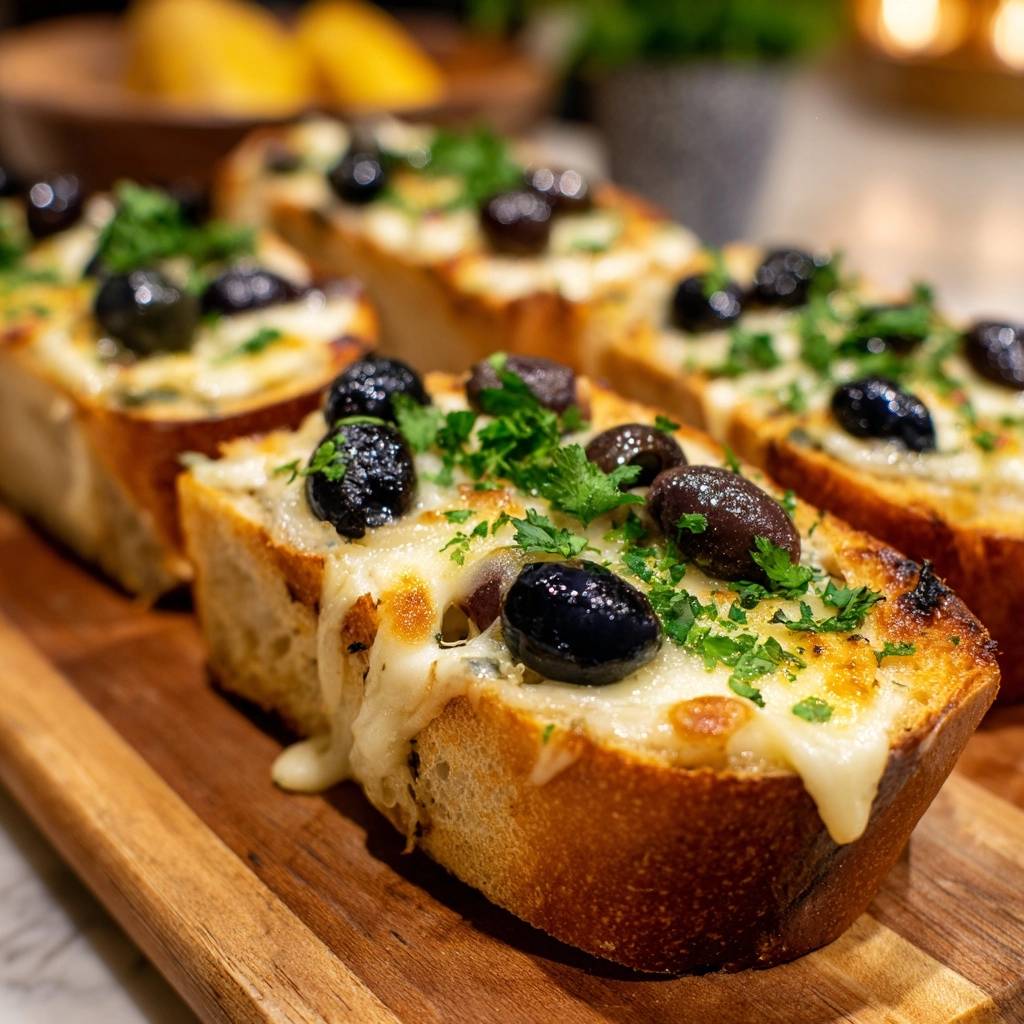
Regardless of which loaf you choose, aim for thick 1.5-inch wedges. This specific thickness is the “sweet spot” for Mediterranean Cheesy Garlic Bread. It allows enough room for the exterior to become shatteringly crisp while the very center stays soft and steaming. If you slice it too thin, the bread dries out completely; too thick, and the heat won’t penetrate the middle effectively.
Essential Components for Mediterranean Cheesy Garlic Bread
Quality ingredients are the heartbeat of Mediterranean cooking, and since this recipe is simple, every element stands out. I always recommend using unsalted butter because it gives you total control over the seasoning. Since the olives and cheese already bring a lot of salt to the party, starting with a neutral butter base prevents the dish from becoming overwhelming.
Fresh garlic is another non-negotiable component here. Those pre-minced jars often have a metallic or acidic aftertaste that can ruin the delicate balance of the herbs. When you mince fresh cloves right before mixing, you release the natural oils that provide a sweet, pungent aroma. You’ll notice the difference the moment the bread hits the oven and the scent fills your kitchen.
The Cheese Profile: Why Mozzarella Works
Mozzarella is the undisputed king of meltability, providing that iconic “cheese pull” we all crave. However, the type of mozzarella you choose matters immensely for the final texture. While fresh mozzarella balls in water are delicious on salads, they release too much liquid when baked at high temperatures. This extra moisture is a one-way ticket to a soggy crust.
For the best results, use a low-moisture, part-skim shredded mozzarella. It has the perfect fat-to-protein ratio to create those crispy, browned “skirts” where the cheese hits the baking sheet. This variety melts evenly and stays stretchy even as the bread cools slightly. It provides a mild, creamy backdrop that lets the bolder Mediterranean flavors shine.
Briny Accents: Kalamata Olives and Oregano
Kalamata olives bring a deep, wine-like saltiness that elevates this from a standard garlic bread to a Mediterranean masterpiece. Their firm texture holds up well under the broiler, providing a meaty bite against the soft cheese. By using whole pitted olives, you get concentrated bursts of flavor that balance the richness of the dairy.
Dried oregano is the workhorse herb in this recipe because it is incredibly heat-stable. Unlike fresh herbs that might turn bitter or black in a hot oven, dried oregano releases its earthy oils during the bake. We save the fresh Italian parsley for the very end. Adding it as a garnish preserves its bright, peppery flavor and vibrant green color, providing a necessary hit of freshness.
The Science of the Anti-Soggy Bottom Technique
To understand why bread gets soggy, we have to look at moisture migration. When you put cold butter and cheese on room-temperature bread and slide it into the oven, the fats melt before the bread has a chance to crisp. The liquid fat then soaks into the porous crumb like a sponge. Once that happens, no amount of extra baking will ever make that center crunchy again.
The “Two-Stage Bake” solves this by using heat to create a structural barrier. By toasting the plain bread slices first, you evaporate the surface moisture and “set” the starches. This creates a dry, toasted crust on the face of the bread. When you finally apply the garlic butter, it sits on top of this barrier rather than soaking through, ensuring the bread stays light and crisp.
Using a wire rack set over a baking sheet is another professional secret for 360-degree airflow. If the bread sits directly on a flat metal pan, steam gets trapped underneath the slice, which softens the bottom crust. A rack allows the hot air to circulate entirely around the wedge. This ensures the bottom is just as toasted and firm as the top, providing a consistent “snap” in every bite.
Step-by-Step: Preparing Mediterranean Cheesy Garlic Bread
Start by preheating your oven to 400°F. While it warms up, slice your sourdough or ciabatta into those thick wedges. Place them on your wire rack and slide them into the oven for about 4 to 5 minutes. You aren’t looking for a deep brown color yet; you just want the surface to feel dry to the touch and look slightly golden.
This initial toast is the most important step in the entire process. It prepares the bread to receive the toppings without losing its integrity. While the bread is in its first bake, you can quickly whip up your garlic butter. The aroma of the toasting bread will let you know when it’s ready for the next phase.
Infusing the Garlic Butter Base
In a small bowl, combine your softened butter with the minced garlic, dried oregano, and a pinch of sea salt. It is vital that the butter is soft but not melted into a liquid. Softened butter has an emulsified consistency that allows it to spread evenly across the toasted surface.
If you use melted butter, it will behave like a liquid and try to seep into the bread’s pores despite our pre-toasting efforts. Use a pastry brush or the back of a spoon to apply a thin, even layer to each warm slice. The residual heat from the bread will gently coax the garlic flavor into the crust without compromising the crunch.
Assembling for Maximum Texture
Now comes the fun part: the layering. Sprinkle the shredded mozzarella generously over each slice, making sure to push some of the cheese right to the very edges. When that edge-cheese melts and hits the hot rack or pan, it creates “frico,” those lacy, crispy bits of toasted cheese that everyone fights over.
Press the Kalamata olives firmly into the cheese layer so they stay put. Finally, give the tops a very light drizzle of extra virgin olive oil. This oil acts as a heat conductor, helping the cheese brown more effectively while protecting the olives from drying out under the intense heat. It also adds a final layer of Mediterranean fruitiness to the flavor profile.
Mastering the Broiler for Golden Peaks
After the second bake of 6 to 8 minutes, your cheese should be fully melted, but we want to take it a step further. Switching to the broiler setting triggers the Maillard reaction. This chemical reaction between amino acids and reducing sugars is what creates those deep golden-brown spots and complex, toasted flavors.
You must stay by the oven during this stage! The window between “perfectly toasted” and “burnt” is often less than 30 seconds. Watch for the cheese to bubble vigorously and develop dark tan peaks. Once the edges of the bread look dark and the cheese is sizzling, pull the tray out immediately. The smell at this stage should be irresistible.
Troubleshooting Common Texture Issues
If your bread still feels a bit soft, you might be using too much butter. A thin, even layer is all you need for flavor; any more than that will overwhelm the bread’s ability to stay crisp. Also, ensure you aren’t overcrowding the wire rack. If the slices are touching, steam will build up between them, leading to soft spots on the sides.
On the flip side, if the bread feels too hard or like a crouton, you may have over-toasted it during the first phase. Next time, reduce the initial toast by one minute. Every oven is different, so keep an eye on the visual cues. You want a “dry” surface, not a “hard” one, before you add your toppings.
Optimal Pairings for Mediterranean Cheesy Garlic Bread
This bread is incredibly rich, so it pairs best with dishes that offer a bit of acidity to cleanse the palate. A fresh Greek salad with a sharp lemon-oregano vinaigrette is a classic choice. The crisp cucumbers and acidic tomatoes provide a refreshing contrast to the buttery, cheesy bread.
For a heartier meal, serve these wedges alongside a rustic tomato-based soup or a platter of roasted Mediterranean vegetables like zucchini and bell peppers. The acidity in the tomatoes helps break down the fats in the mozzarella, making each bite of bread feel as light as the first. Sparkling grape juice or a cold ginger ale also makes for a crisp, bubbly accompaniment.
Make-Ahead Strategies and Storage
You can easily prep the garlic butter up to three days in advance and keep it in the fridge. Just make sure to bring it back to room temperature before spreading so you don’t tear the bread. You can also slice the bread and pit the olives ahead of time, making the actual assembly a breeze when guests arrive.
While this bread is best served straight from the oven, you can store leftovers in an airtight container in the fridge for up to two days. To reheat, avoid the microwave at all costs, as it will turn the bread rubbery. Instead, pop the slices into an air fryer or a 350°F oven for 5 minutes. This will re-crisp the bottom and get the cheese bubbly again.
Expert Tips for Flavor Customization
If you want to vary the flavor while staying within the Mediterranean theme, try adding a few sun-dried tomatoes along with the olives. Their concentrated sweetness adds a lovely dimension to the salty cheese. You could also crumble a small amount of feta over the mozzarella for a tangy, sharp kick that doesn’t melt away completely.
For a gourmet finish, drizzle a tiny bit of balsamic glaze over the bread after it comes out of the broiler. The sweetness of the glaze against the savory garlic and salty olives is a fantastic combination. Another great trick is to rub a raw garlic clove directly onto the toasted crust before adding the butter for an even more intense garlic punch.
Frequently Asked Questions
Can I use roasted garlic instead of raw?
Yes, you certainly can! Roasted garlic has a much sweeter, milder, and almost caramelized flavor compared to the sharp bite of raw garlic. If you use roasted garlic, you can be more generous with the amount. Mash the soft cloves directly into the butter. It will result in a deeper, more mellow Mediterranean Cheesy Garlic Bread that lacks the spicy “zing” of the original but offers a rich, jammy alternative.
How do I prevent the olives from popping out?
The trick is to press the olives firmly into the shredded cheese before the tray goes into the oven. As the mozzarella melts, it acts as a structural glue that surrounds the base of the olive. If you just scatter them on top, they are more likely to roll off. For even better security, you can slice the olives in half lengthwise so they have a flat surface to sit on.
What is the best substitute for Kalamata olives?
If you find Kalamata olives too strong, Castelvetrano olives are a fantastic substitute. They are bright green, buttery, and much milder in flavor. If you want that briny punch without using olives at all, try a tablespoon of drained capers. They provide a similar salty “pop” that cuts through the richness of the cheese and butter perfectly.
Is a wire rack absolutely necessary?
While you can make this on a standard baking sheet, the wire rack is the secret to the “Anti-Soggy Bottom” promise. It allows the hot air to hit the bottom of the bread, evaporating moisture that would otherwise get trapped. If you don’t have a rack, flip the bread halfway through the initial toasting phase to ensure both sides get some direct heat exposure before you add the toppings.
Can I use dried parsley instead of fresh?
I strongly recommend sticking with fresh parsley. Dried parsley often loses its flavor and takes on a dusty, hay-like taste that doesn’t add much to the dish. Fresh Italian parsley provides a “bright” finish and a pop of color that balances the heavy fats. If you don’t have fresh parsley, fresh basil or even a little bit of fresh thyme would be a better substitute than the dried version.
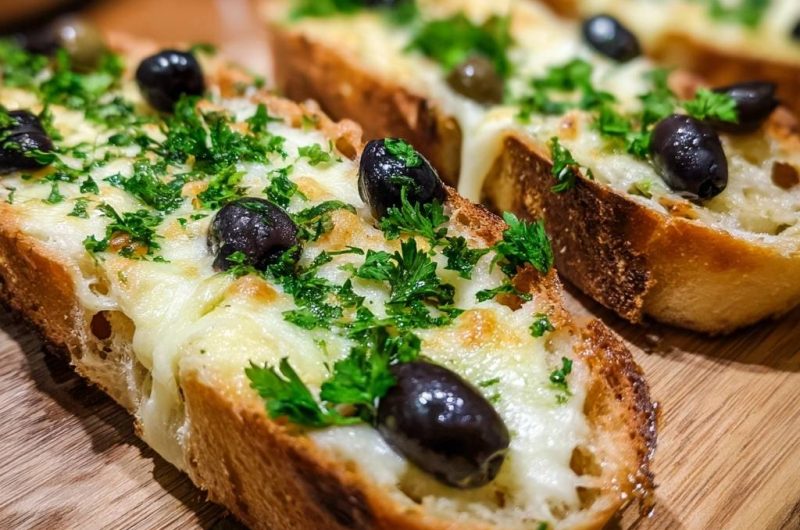
Mediterranean Cheesy Garlic Bread
Course: AppetizerCuisine: MediterraneanDifficulty: easy4
servings10
minutes12
minutes22
Minutes340
kcalMediterranean
Ingredients
1 large loaf crusty sourdough or ciabatta, sliced into thick 1.5-inch wedges
4 tablespoons unsalted butter, softened
3 cloves garlic, minced
2 cups shredded mozzarella cheese
1/2 cup whole pitted Kalamata olives
1/4 cup fresh Italian parsley, roughly chopped
1 tablespoon extra virgin olive oil
1/2 teaspoon dried oregano
Pinch of sea salt
Directions
- Preheat your oven to 400°F (200°C).
- To prevent a soggy bottom, place your plain bread slices on a wire rack set over a baking sheet. Toast them for 4-5 minutes until the surface feels dry and slightly golden. This creates a structural “crunch” that prevents the oils from soaking into the crumb.
- While the bread toasts, mix the softened butter with the minced garlic, dried oregano, and a pinch of salt.
- Remove the bread from the oven. Immediately brush each slice with a thin layer of the garlic butter. The heat from the bread will melt the butter into the toasted pores without making it mushy.
- Top each slice generously with shredded mozzarella cheese, ensuring it reaches the edges to create those crispy cheese “skirts” seen in the image.
- Press the whole black olives into the cheese layer. Drizzle the tops very lightly with olive oil to help the cheese brown and prevent the olives from shriveling.
- Return the tray to the oven and bake for 6 to 8 minutes, or until the cheese is bubbly and melted.
- Switch the oven to the broiler setting for 1-2 minutes. Watch closely until the cheese develops deep golden-brown toasted peaks and the edges of the crust are dark and crispy.
- Remove from the oven and garnish immediately with a heavy sprinkle of fresh chopped parsley. Serve hot on a wooden board for the ultimate crunch.
Notes
- The secret to the anti-soggy bottom is the initial toast on a wire rack before adding toppings, which creates a structural crunch and moisture barrier.