Why This Braise Delivers Fork-Tender Beef
Ever end up with chewy braised beef that fights your fork after hours in the pot? This recipe fixes that frustration with a quick sear followed by a slow oven braise. You’ll get melt-in-your-mouth chunks every time, no more tough disappointments.
Here’s why it works so well. The high-heat sear creates a crust that traps juices inside, while the low oven temp gently breaks down those stubborn connective tissues. In addition, caramelized onions add a sweet, savory depth that mingles perfectly with creamy mashed potatoes.
The real secret? Pat the beef completely dry before seasoning. That simple step ensures a proper crust forms, locking in moisture from the start. Oh man, the first bite’s tenderness will have you hooked.
Key Ingredients for Thyme-Braised Beef Success
You’ll need quality picks to nail this dish. Beef chuck roast shines because its marbling and connective tissue turn silky after braising. Therefore, grab 2 pounds and cut into 2-inch chunks for even cooking.
Yellow onions, thinly sliced, bring natural sweetness when caramelized. Fresh thyme sprigs add an earthy punch that dried just can’t match. Plus, beef broth builds a rich gravy base, but vegetable broth works if you want lighter flavor.
For the mash, Yukon gold potatoes give that buttery, fluffy texture. Warm the milk first so it blends smoothly without gumminess. Don’t forget 4 tablespoons of butter and salt to taste.
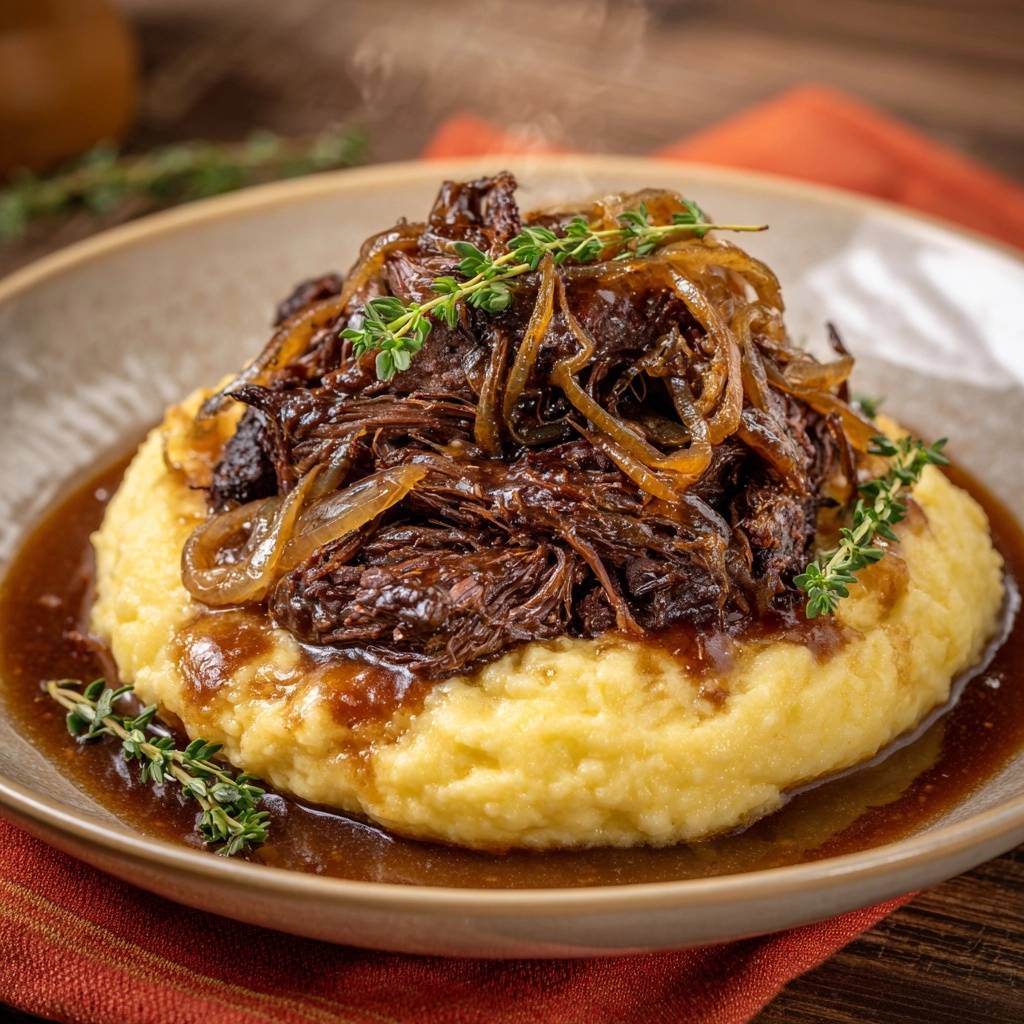
Beef and Broth Foundations
Chuck roast’s fat content keeps the meat juicy during the long braise. Cut into 2-inch chunks so every piece cooks evenly. The 3 cups of beef broth not only covers the meat but thickens naturally from its gelatin.
Onions and Thyme Flavor Base
Two large yellow onions, sliced thin, caramelize without burning. Salt them early to draw out moisture for faster browning. Four fresh thyme sprigs infuse subtle earthiness as they slowly release oils.
Mashed Potato Creamy Essentials
Two pounds of peeled, quartered Yukon golds boil up fluffy. Warm 1/2 cup milk and melt in 4 tablespoons butter for silkiness. Season with salt after mashing to avoid waterlogging.
Science of Tender Thyme-Braised Beef
The Maillard reaction happens during searing, browning the surface for deep flavor and a barrier against dryness. However, without it, your beef steams and stays tough. This crust traps juices beautifully.
Then, the 300°F oven braise converts collagen to gelatin over 2.5-3 hours. In addition, the covered pot keeps steam in, preventing moisture loss. That’s your fork-tender guarantee.
Caramelized onions release sugars through chemistry, adding savory sweetness. Contrast this with high-heat methods that evaporate liquids and toughen meat. You’ll smell the transformation building.
Searing Locks in Juices
Pat beef dry for crisp browning; wet meat steams instead. Heat oil until shimmering, then sear batches 3-4 minutes per side. Therefore, avoid overcrowding to prevent steaming and weak crusts.
Braising Melts Connective Tissues
A tight lid traps steam at 300°F, the perfect temp for collagen breakdown. Check tenderness by shredding with a fork after 2.5 hours. If needed, go the full 3 hours for perfection.
Equipment Choices for Perfect Braise
A Dutch oven’s cast iron spreads heat evenly for consistent braising. Its lid seals tight to lock in moisture. However, an oven thermometer ensures that steady 300°F.
For mash, use a potato masher or ricer to avoid lumps. If you lack a Dutch oven, a heavy lidded pot works. Enameled interiors prevent sticking too.
Slow cooker alternative? Set to low for 6-8 hours after searing on stovetop. It mimics the oven’s gentle heat nicely.
Phase 1: Searing Beef Chunks to Perfection
Pat 2 pounds of beef chunks bone-dry with paper towels. Season generously with salt and pepper. This dryness is key; it creates steam for the crust.
Heat 2 tablespoons olive oil in your Dutch oven over medium-high until shimmering. Sear in batches, 3-4 minutes per side, for a deep brown crust. You’ll hear sizzling and smell rich beefiness developing.
Don’t overcrowd, or it’ll steam and stay tough. Transfer to a plate; those juices will flavor everything later.
Phase 2: Caramelizing Onions with Thyme
Lower heat to medium, add sliced onions, and season with salt. Stir occasionally for 8-10 minutes until golden and sweet-smelling. Salt draws out moisture for quicker caramelization.
Toss in 4 thyme sprigs; their oils release slowly. The pot’s beefy bits mix in, building flavor. However, patience here prevents burnt edges.
Aroma’s building now, right? That sweet-savory scent promises goodness.
Phase 3: Low Oven Braise for Tenderness
Return beef and juices to the pot. Pour in 3 cups beef broth, scraping browned bits for max flavor. Bring to a simmer.
Cover tightly and braise in a 300°F oven for 2.5-3 hours. The oven beats stovetop for even, hands-off heat. Test by shredding; it should pull apart easily.
Pro tip: If short on time, check at 2.5 hours, but don’t rush the melt.
Phase 4: Creamy Mashed Potatoes Timing
While beef braises, boil 2 pounds quartered Yukon golds in salted water for 15-20 minutes until fork-tender. Drain well to remove excess water.
Return to the pot over low heat. Mash in 4 tablespoons butter and 1/2 cup warmed milk until creamy. Season with salt last for perfect taste.
Don’t overmash, or it’ll turn gummy. Warm dairy keeps it silky smooth.
Final Assembly: Shred and Serve Thyme-Braised Beef
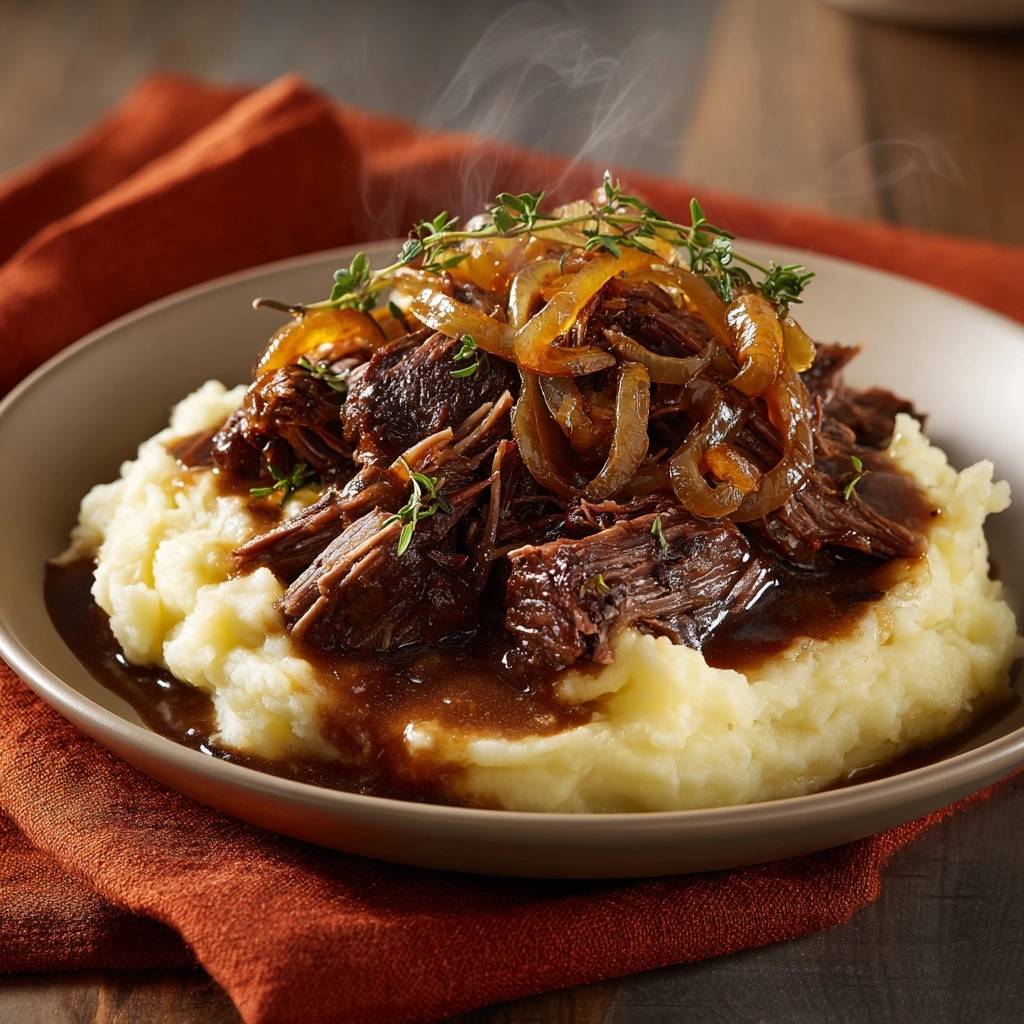
Lightly shred beef in the pot, mixing with onions and gravy. Spoon generously over mashed potatoes. Garnish with fresh thyme.
Steam rises with that tender, saucy goodness. Plate family-style for cozy vibes. Dig in while hot.
Avoiding Common Thyme-Braise Pitfalls
Tough beef often comes from skipping the dry pat or overcrowding the sear. Always batch it and check oven temp. Therefore, extend braise time if needed.
For mash, cold milk shocks starches into gumminess. Warm it first, and drain potatoes thoroughly. Soggy onions? Give caramelization time; rushing burns them.
Over-salted? Dilute with a splash of broth before serving. These fixes keep everything perfect.
Fixing Tough Beef Texture
Insufficient sear or high braise heat dries it out. Pat dry, sear properly, and stick to 300°F. If still chewy, braise 30 minutes longer.
Preventing Gummy Mashed Potatoes
Overworking after dairy toughens starches. Use a ricer and add warm milk gradually. Drain hot potatoes well first.
Make-Ahead and Freezing Thyme-Braised Beef
Braise fully, cool, then refrigerate in an airtight container for 3-4 days. Reheat gently on stovetop with a bit of broth to revive gravy.
Freeze beef portions up to 3 months; thaw overnight in fridge. Mashed potatoes freeze separately with extra milk, up to 2 months. Reheat mash with a splash of milk.
Portion for weeknights. It’s even better next day as flavors meld.
Pairing Sides with Thyme-Braised Beef
Crisp green beans add snap against the richness. Roasted carrots bring earthy sweetness that echoes the thyme.
A simple green salad with vinaigrette cuts through the gravy. Rustic bread soaks it up perfectly. Sparkling cranberry juice refreshes alongside.
These contrasts balance the onions and tender beef beautifully.
Flavor Twists on Thyme-Braised Beef
Swap rosemary for thyme for woodsy notes. Add sliced mushrooms with onions for umami depth. Garlic cloves roast nicely too.
Try short ribs for richer meat. For mash, stir in horseradish for zing or cheddar for cheesiness. Lighter vegetable broth keeps it fresh.
Core method stays the same for guaranteed tenderness.
Troubleshooting Thyme-Braised Beef Queries
How do I store leftovers and can I freeze this dish?
Store cooled beef in an airtight container in the fridge for 3-4 days. Reheat on stovetop with extra broth to loosen gravy. Freeze beef portions up to 3 months; thaw overnight and reheat gently. Keep mashed potatoes separate, freeze with extra milk for 2 months max, as they can get watery otherwise. Portion into meal-sized bags for easy weeknights.
Why is my beef still tough after braising?
Toughness usually hits from poor searing or wrong temp. Pat beef extra dry, sear in batches without overcrowding, and braise covered at exactly 300°F. Collagen needs 2.5-3 hours to fully break down to gelatin. If unsure, test a chunk with a fork; extend time by 30 minutes if needed. Cheap cuts like chuck improve most from this method.
Can I substitute ingredients in this recipe?
Swap beef broth for vegetable broth to lighten it up; it still builds flavor. No chuck roast? Lamb shoulder braises similarly. For dairy-free mash, use warm coconut milk instead of regular milk and vegan butter. Yukon golds are best, but russets work if peeled well. Fresh thyme can’t be beat, but 1 teaspoon dried does in a pinch, added earlier.
Can I make this in a slow cooker or Instant Pot?
Yes, slow cooker shines: sear first on stovetop, then low for 6-8 hours. Add onions and thyme midway for best texture. Instant Pot? Sear on sauté, add broth, 50 minutes high pressure with natural release. Both deliver tender results, but oven gives superior onion caramelization. Adjust liquid down by 1/2 cup for pressure cooking to avoid soupy gravy.
What if my mashed potatoes are watery or gummy?
Watery mash comes from undrained potatoes or cold dairy. Boil in just enough salted water, drain thoroughly, and dry over low heat before mashing. Warm milk and butter first prevents starch clumping. Gummy? You overworked it; use a ricer next time and stop once creamy. Season after for balanced flavor without excess liquid.
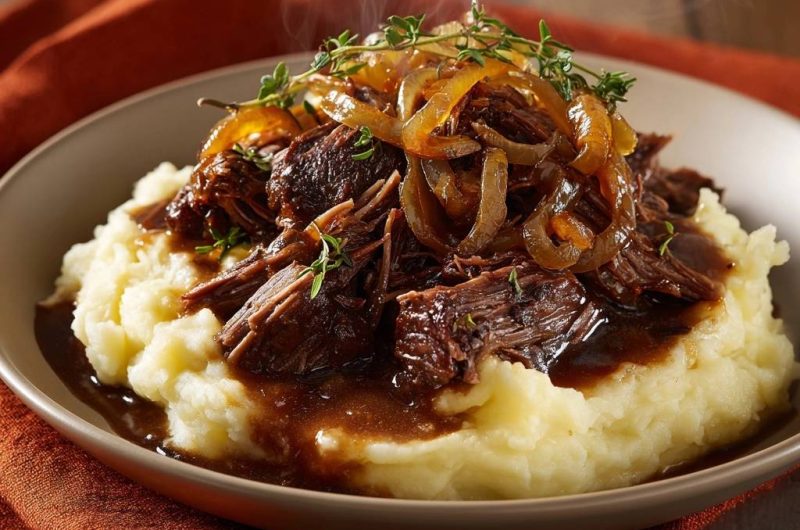
Thyme-Braised Beef with Caramelized Onions over Mashed Potatoes
Course: Main CourseCuisine: AmericanDifficulty: easy4
servings30
minutes3
hours180
MinutesAmerican
Ingredients
For the beef:
2 pounds beef chuck roast, cut into 2-inch chunks
2 large yellow onions, thinly sliced
4 sprigs fresh thyme (plus extra for garnish)
3 cups beef broth
2 tablespoons olive oil
Salt and black pepper to taste
For the mashed potatoes:
2 pounds Yukon gold potatoes, peeled and quartered
1/2 cup milk, warmed
4 tablespoons butter
Salt to taste
Directions
- Pat beef chunks completely dry with paper towels. This is crucial: dry meat sears better, creating a crust that seals in moisture and prevents toughness. Season generously with salt and pepper.
- Heat olive oil in a large Dutch oven over medium-high heat until shimmering (not smoking). Sear beef in batches, 3-4 minutes per side, until deep brown crust forms on all sides. Do not overcrowd; this high-heat sear (the anti-tough secret) develops flavors and juices that braise into tenderness. Remove beef to a plate.
- Lower heat to medium. Add sliced onions to the pot, season with salt, and cook 8-10 minutes, stirring occasionally, until deeply caramelized and golden. Add thyme sprigs.
- Return beef and any juices to the pot. Pour in beef broth, scraping up browned bits. Bring to a simmer, then cover tightly and transfer to a 300°F oven. Braise 2.5-3 hours, until beef shreds easily with a fork. The low, slow, covered braise melts connective tissues without evaporating moisture, guaranteeing no-tough-beef results.
- While beef braises, boil potatoes in salted water 15-20 minutes until fork-tender. Drain, return to pot, and mash with warm milk and butter until creamy. Season with salt.
- Shred beef lightly in the pot, mix with onions and gravy. Serve over mashed potatoes, topped with extra thyme. Steam rises, tenderness awaits!
Notes
- Pat beef completely dry before searing for the best crust. Braise covered at low temperature to ensure tenderness without drying out. Yukon gold potatoes yield the creamiest mash.