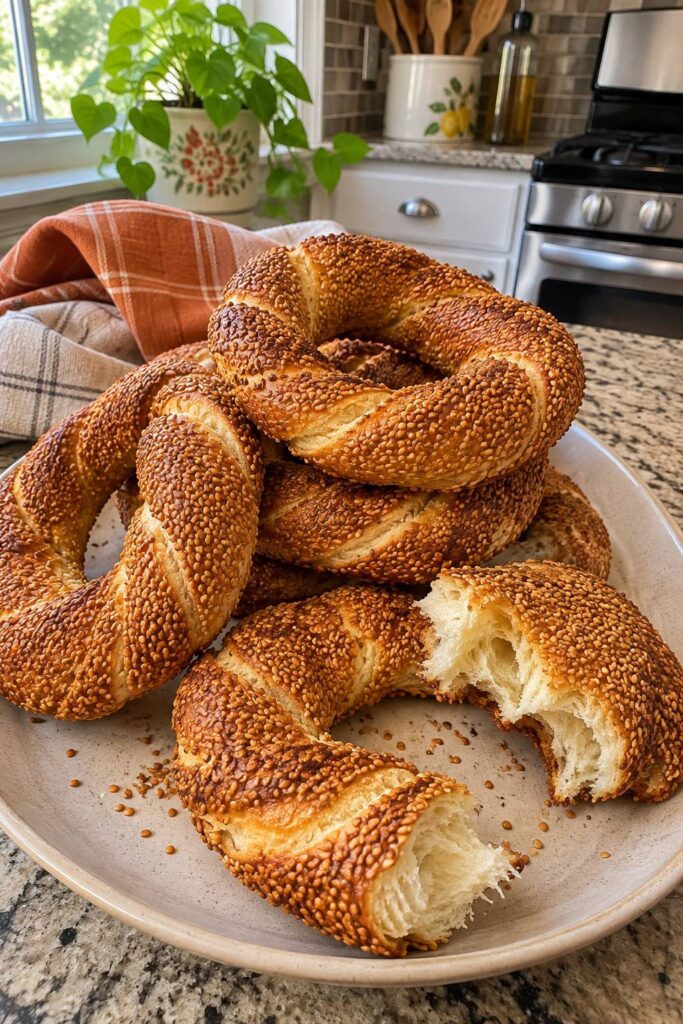
Simit is one of Turkey’s best-loved breads, a thick ring of dough coated in sesame seeds and sold everywhere from street carts to bakeries. Its appeal is simple: a crisp, deeply golden outside and a tender, chewy inside that makes it a satisfying breakfast or snack. This recipe follows that classic idea with a soft yeast dough, a sweet molasses dip, and a generous sesame coat.
Home bakers often find simit intimidating because it looks like a simple shape but depends on dough feel and careful handling. Once you understand what each stage is doing, the process becomes much easier to manage. Here is what to watch for so your rings come out round, glossy, and evenly browned.
Developing the Dough Texture
The dough should feel smooth, elastic, and slightly tacky without clinging to your fingers. That tackiness is what you want. Kneading builds gluten, the network that traps gas from the yeast and gives simit its layered, chewy crumb. If you add too much flour because the dough feels soft at first, the bread can turn dense and dry. Instead, keep the counter lightly dusted and add flour only when the dough is wet enough to stick to your hands. Kneading time varies with your method, so judge by feel rather than the clock.
Rising matters too. Let the dough double in a warm spot, covered so its surface does not dry out. A well-risen dough gives you the soft interior that contrasts so nicely with the crisp crust.
Why the Molasses Bath Builds the Crust
Traditional simit is dipped in pekmez, a Turkish grape molasses. Unsulfured molasses is a practical stand-in for home cooks because it produces a similar sweet, dark coating. Stir it into the warm water until it fully dissolves so no dark streaks cling to the dough. The sugars in the molasses brown in the oven, which is why the crust turns such a rich golden color.
Dip each ring briefly and let the excess drip off so the coating stays thin enough to set rather than pool. Then press both sides firmly into the sesame seeds. Thorough coverage gives you the nutty, crunchy shell that defines simit, and it helps the seeds stay put during baking.
Shaping Rings That Hold Their Form
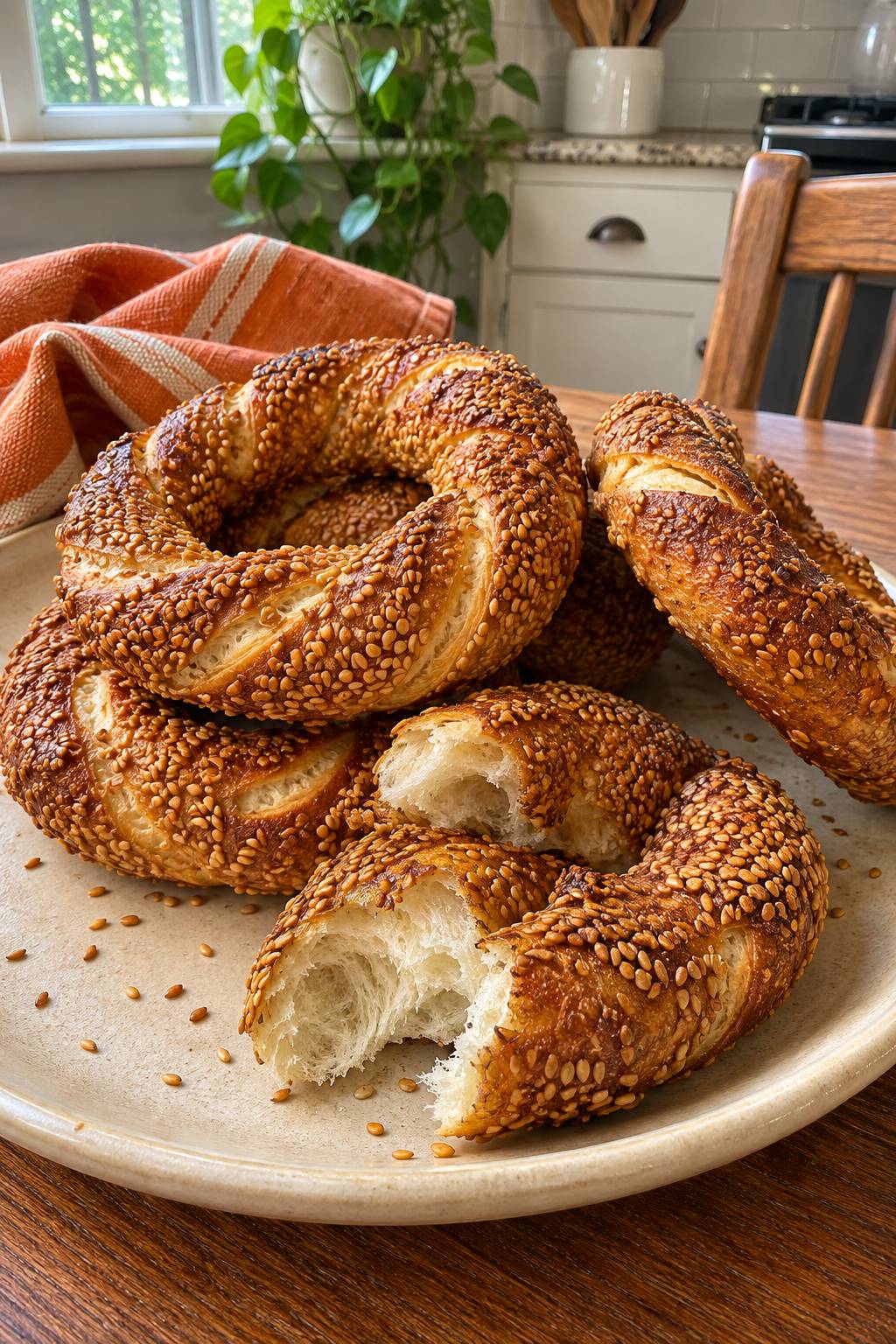
A rope that is slightly thicker in the center and tapered at the ends bakes more evenly than a uniform cylinder. The thin ends are the part that needs the most attention. When you overlap them, press firmly so they seal completely. A weak seal can open as the dough expands in the oven, leaving a misshapen ring. Resting the shaped rings loosely covered lets the gluten relax so they keep their round form instead of springing back.
Keep your ropes consistent in length and thickness so every ring bakes at the same rate. Mixed sizes on one pan often lead to some pieces that are pale while others are overdone.
Baking to a Deep Golden Finish
Let the oven fully heat while the rings rest so they go in on stable heat. Rotate the pans from top to bottom and front to back partway through baking to compensate for hot spots. Look for a deep golden brown crust. Tapping the bottom should produce a hollow sound, which signals a fully baked interior.
Cooling matters as much as baking. Move the simit to a wire rack so air circulates around them. The crust crisps as it cools, while the inside settles into its soft, tender texture. Patience at this stage rewards you with the contrast that makes simit so appealing.
Frequently Asked Questions
Why are my simit pale instead of deep golden?
Pale rings usually mean the molasses coating was too thin or the pans were not rotated during baking. Make sure the dip is fully dissolved, let the excess drip off, and press the seeds on thickly. The sugars in the molasses drive the browning, so good coverage and even heat both matter for a rich, deep color.
Why do my rings open up in the oven?
Rings usually open when the overlapped ends are not pressed together firmly enough to seal. Taper the ropes so the ends are thinner and easier to join, then press until they stick. Resting the shaped rings loosely covered also helps them keep their round form before they go into the hot oven.
Which molasses works best for simit?
Unsulfured molasses is the most practical choice for home cooks, since it gives a sweet, dark coating similar to the traditional grape molasses called pekmez. Stir it into warm water until fully dissolved before dipping. The dip is what gives simit its signature glossy finish and deep golden color in the oven.
Turkish Sesame Simit
Course: Breakfast, SnackCuisine: TurkishDifficulty: Medium6
servings25
minutes20
minutes525
kcal2
hours15
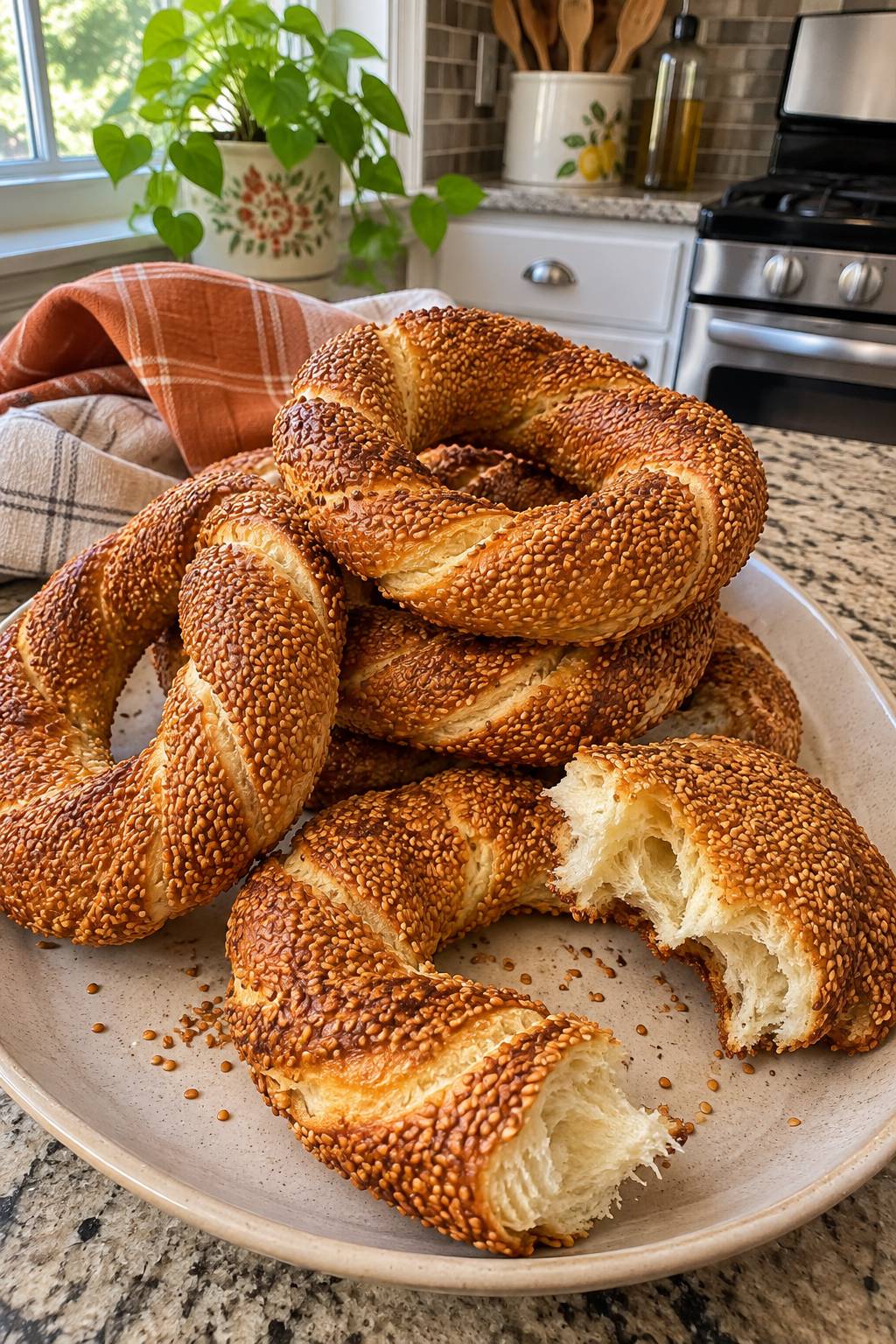
minutesSoft yeast dough is rolled into ropes, shaped into rings, dipped in sweetened molasses water, coated in sesame seeds, and baked until deeply golden. The crust is crisp and the inside stays tender and chewy.
Ingredients
- Dough
4 cups bread flour (about 17 oz)
2 1/4 tsp instant yeast (1 packet)
1 tbsp granulated sugar
1 1/2 tsp fine sea salt
1 1/3 cups warm water (about 110°F)
3 tbsp extra-virgin olive oil
1 tbsp olive oil, for the bowl and baking sheets
- Molasses dip
1/2 cup warm water
2 tbsp unsulfured molasses
- Topping
1 cup sesame seeds (about 5 oz)
Directions
- Make the dough
- In a large bowl, whisk the bread flour, yeast, sugar, and salt. Add the warm water and 3 tbsp olive oil, then stir with a wooden spoon or dough hook until a shaggy dough forms.
- Knead by hand on a lightly floured counter for 8 to 10 minutes, or in a stand mixer with the dough hook on medium-low for about 6 minutes, until the dough is smooth, elastic, and slightly tacky but not sticky. Add flour a tablespoon at a time only if it is wet enough to stick to your hands.
- Lightly oil a clean bowl with about 1 tsp of the olive oil. Place the dough in the bowl, turn it to coat, cover with plastic wrap or a clean towel, and let rise in a warm spot for about 1 hour, until doubled in size.
- Shape and coat
- While the dough rises, stir the molasses into the 1/2 cup warm water in a shallow dish until dissolved. Spread the sesame seeds in a second shallow dish. Lightly brush two baking sheets with the remaining olive oil and line them with parchment paper.
- Punch down the dough and divide it into 6 equal pieces, about 5 oz each. Roll each piece on the counter into a 20-inch rope that is slightly thicker in the center and tapered at the ends.
- Shape each rope into a ring, overlapping the ends by about 2 inches. Press the overlapped ends firmly together so they seal, then set the rings on a lightly floured board and let them rest, loosely covered, for 15 minutes.
- Place the oven rack in the center of the oven and preheat to 425°F while the rings rest.
- Dip each ring into the molasses water, letting the excess drip off. Press both sides into the sesame seeds so they are thickly coated, then place the rings on the prepared baking sheets, about 2 inches apart.
- Bake
- Bake for 20 minutes, rotating the pans from top to bottom and front to back halfway through, until the rings are deep golden brown and sound hollow when tapped on the bottom.
- Transfer the simit to a wire rack and let them cool for about 15 minutes before serving. The crust crisps as it cools, and the inside stays soft and tender.
Notes
- Traditional simit is dipped in pekmez, a Turkish grape molasses. Unsulfured molasses gives a similar sweet, dark coating, and pomegranate molasses also works but tastes tangier.
- The molasses sugars brown in the oven and help the crust turn deep golden. Kneading develops gluten, which gives the crumb its chewy, layered texture.
- Shaping the rings with a slight taper and firmly sealed ends helps them keep their round shape in the oven.