Ever pulled a Turtle Cheesecake from the oven only to see those heartbreaking cracks across the top? You don’t have to anymore. This Turtle Cheesecake recipe uses a foolproof water bath and slow-cool method that delivers a perfectly smooth, creamy surface every time. Dinner parties or holidays just got a whole lot easier with this showstopper on your table.
Therefore, you’ll savor the indulgent blend of chocolate cookie crust, rich filling, and glossy toppings that mimic classic turtle candies. In addition, it beats bakery versions because you control the freshness and quality. Oh man, that first creamy bite with caramel drizzle? Pure bliss.
The secret lies in the water bath’s gentle heat. It insulates the pan, so the edges don’t overcook while the center sets just right. That’s why this Turtle Cheesecake stays flawless, no fancy equipment needed.
Why Turtle Cheesecake Demands Precision
Turtle Cheesecake captures the essence of turtle candies with layers of chocolate, pecans, and caramel piled on ultra-creamy cheesecake. However, most home bakers struggle with cracks or uneven texture. This recipe fixes that for pro-level results.
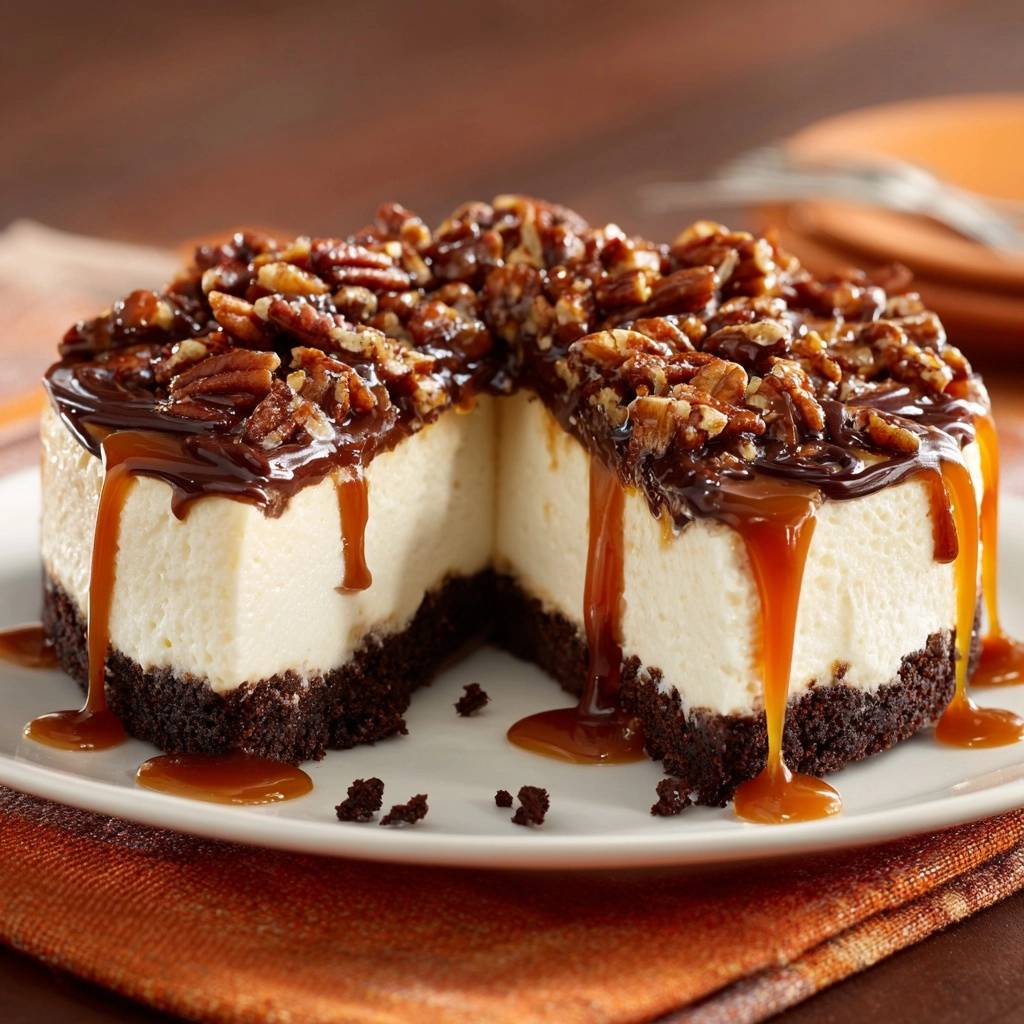
You’ll love the contrast: crunchy crust against silky filling, then glossy ganache with nutty pecans and sticky caramel. It’s perfect for holidays or dinners, drawing oohs and aahs. Plus, the sensory payoff hits hard, that sweet-salty crunch melting into smooth richness.
Precision matters because eggs in the filling coagulate unevenly without even heat. That’s why this turtle-style cheesecake shines. Follow these steps, and you’ll nail it.
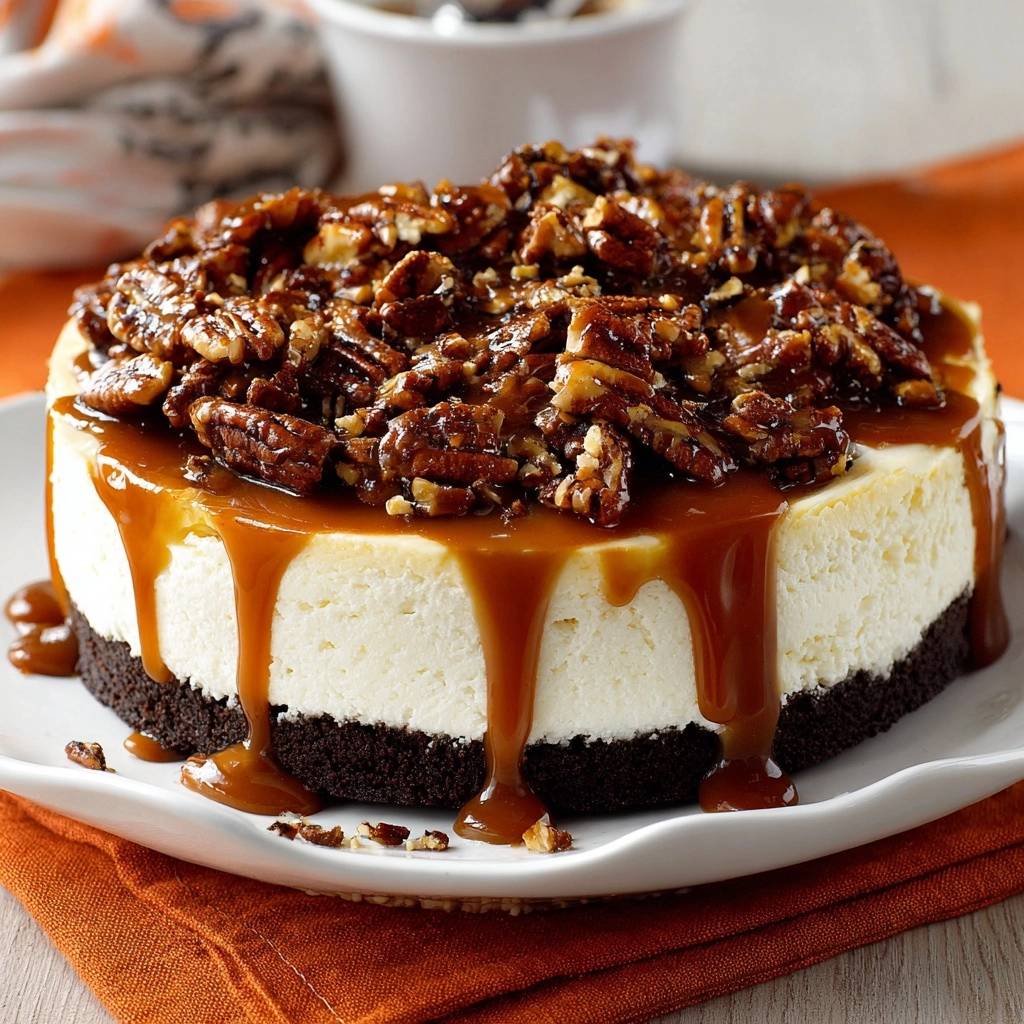
Signature Layers Defined
This Turtle Cheesecake builds three tiers like a turtle candy. First, the chocolate cookie crust delivers deep crunch. Then, the smooth filling offers creamy density.
Finally, toppings seal the deal: glossy chocolate ganache, toasted pecan halves, and warm caramel drizzle. Each layer transforms the classic candy into dessert heaven. You won’t stop at one slice.
Crust Foundation: Chocolate Cookie Base
Start with 2 cups chocolate cookie crumbs and 6 tablespoons melted unsalted butter for the Turtle Cheesecake crust. Use Oreo-style cookies, ground finely for even texture. Unsalted butter keeps it from getting soggy, unlike salted versions.
Press the mix firmly into a 9-inch springform pan, going 1 inch up the sides for stability. Bake at 325°F for 10 minutes to set it. This blind bake crisps the base and prevents sogginess later.
No chocolate cookies? Try gluten-free graham crackers mixed with cocoa powder. Cool the crust on a wire rack before adding filling. That step locks in the perfect crunch.
Grinding and Mixing Techniques
Pulse cookies in a food processor for fine crumbs, or seal in a bag and crush with a rolling pin. Melt butter evenly over low heat, no browning allowed. Mix until it resembles wet sand.
Press with the bottom of a glass for uniform thickness. Chill 10 minutes if it softens. Even pressure means no weak spots.
Smooth Filling: Cream Cheese Mastery
For the Turtle Cheesecake filling, gather 4 (8-ounce) packages softened cream cheese, 1 1/4 cups granulated sugar, 4 large eggs, 1 cup sour cream, 2 teaspoons vanilla extract, and 1/4 cup all-purpose flour. Room-temp cream cheese beats smooth without lumps. Sour cream adds tangy balance, while flour stabilizes the structure.
Beat cream cheese and sugar first until creamy. Add eggs one at a time, mixing just until blended on low speed. Overbeating traps air, leading to cracks. Stir in sour cream, vanilla, and flour last.
Pro tip: scrape the bowl often for even distribution. Pour over cooled crust. This order ensures a dense, velvety fill.
Room Temperature Prep Secrets
Soften cream cheese 1-2 hours out of the fridge for smooth emulsion. Microwaving risks uneven melting and lumps. Temper eggs by letting them sit briefly too.
That prep prevents curdling when mixing. Your batter will look glossy and pourable. Skip it, and you’ll fight lumps the whole way.
Science of Crack-Free Baking
Preheat to 325°F for Turtle Cheesecake baking science at work. Wrap the springform pan tightly in heavy-duty foil to waterproof it. Place in a roasting pan with 1 inch hot water for the bath.
The water bath conducts even heat, so proteins coagulate gently. Without it, dry oven air overcooks edges first. Bake 60 minutes until edges set but center jiggles like Jell-O.
This method mimics steam ovens pros use. Compare to dry baking disasters: cracks from rapid expansion. Yours stays pristine.
Water Bath Mechanics Explained
Set the foil-wrapped springform in a large roasting pan. Add boiling water to 1 inch deep around it. Double-layer foil prevents leaks.
Steam adds humidity, keeping the top soft. It insulates against oven hot spots. No more uneven baking.
Slow Cooling Prevents Sinks
Turn off oven after baking, crack the door, and cool inside 1 hour. Gradual temp drop lets the center set without surface cracks. Remove to room temp, then chill 6 hours.
Sudden cold shocks contract the top faster than the inside. This thermodynamics trick avoids sinks too. Patience pays off big.
Equipment Essentials for Turtle Cheesecake
A 9-inch springform pan is key for Turtle Cheesecake. It releases cleanly without damage. Heavy-duty foil, large roasting pan, wire racks, and a stand mixer with paddle attachment round it out.
Springform’s latch makes unmolding easy. Thick foil resists tears in water. Budget option: thrift store pans work fine if tight-sealing.
Pro tip: use two racks for even cooling. No mixer? Hand beaters do, but tire quicker. Essentials ensure success.
Springform Pan Selection Guide
Pick 9-inch for 12 generous slices. Anodized aluminum heats evenly over steel. Non-stick helps release, but avoid cheap coatings that warp.
Test seal before use. Larger pans need more batter adjustments. Quality pays in flawless results.
Toppings Assembly: Ganache, Pecans, Caramel
For Turtle Cheesecake toppings, toast 1 cup pecan halves at 350°F for 8 minutes. Their nutty aroma deepens flavor. Heat 1/2 cup heavy cream to simmer, pour over 1 cup semisweet chips.
Let sit 2 minutes, stir to glossy ganache. Pour over chilled cheesecake, spread to edges for drips. Arrange pecans on top, drizzle 1 cup warmed caramel sauce.
Chill 30 minutes to set the shine. Store-bought caramel warms easily in microwave. Layer order creates that iconic turtle look.
Ganache Temperature Control
Simmer cream gently, don’t boil, or it separates. Use 60% cacao chips for smooth melt. Stir slowly for emulsion, no seizing.
Pour at warm temp for drips. Glossy finish wows. Reheat gently if needed.
Avoiding Turtle Cheesecake Pitfalls
Cracks come from overbeating eggs or temp shocks in Turtle Cheesecake. Fix by low-speed mixing and slow cooling. Soggy crust? Seal foil tight and dry-bake fully.
Lumpy filling means cold dairy; always soften first. Runny ganache from overheated cream; simmer precisely. Prevention beats fixes every time.
Tap pan post-fill to release bubbles. These steps keep your Turtle Cheesecake perfect.
Overmixing and Air Bubbles
Mix on low after eggs to minimize air. Tap pan firmly on counter pre-bake. Flour binds structure too.
Bubbles rise and crack tops. Low speed keeps it dense.
Leak-Proof Pan Wrapping
Layer foil three times, fold edges up. Test by submerging in sink. Oven bags work as backup.
No leaks mean no water in crust. Dry bottom guaranteed.
Flavor Twists on Turtle Cheesecake
Upgrade Turtle Cheesecake with salted caramel for contrast. Add vanilla bean paste for depth. Pumpkin spice mix in fall screams seasonal joy.
Nut-free? Use sunflower seeds toasted same way. Scale up batter 1.5x for crowds. Mini versions in muffin tins bake 20 minutes.
Each twist keeps the no-crack method. Experiment confidently.
Nut Alternatives and Extracts
Walnuts swap for pecans, toast equally. Almond extract boosts chocolate notes. Dairy-free? Coconut cream in ganache works smooth.
Test small batches first. Flavor stays true.
Make-Ahead and Storage Strategies
Assemble crust and filling 2 days ahead, bake day-of for Turtle Cheesecake. Full cake freezes 2 months wrapped tight. Thaw overnight in fridge, add fresh toppings.
Slice with hot knife for clean cuts. Chill 6 hours minimum post-bake. Make-ahead saves holiday stress.
Pro tip: portion before freezing. Reheats texture perfectly.
Freezing Without Texture Loss
Cool fully, wrap in plastic then foil. Freeze slices individually. Thaw slow, refresh ganache with warm cream stir.
No graininess or cracks. Like fresh-baked.
Pairing Turtle Cheesecake Sides
Pair Turtle Cheesecake with strong coffee to cut richness. Iced lattes refresh between bites. Fresh berries add tart pop.
Whipped cream dollops lighten it up. Coffee ice cream scoops melt divinely alongside. Simple sides elevate.
Ruby port complements chocolate notes too. Keep pairings bold.
Turtle Cheesecake Troubleshooting
Cracked anyway? Check oven temp with thermometer; highs cause it. Dense filling from overmix; beat minimally. Ganache seized? Water splashed in, start over dry.
Crust slid? Chill pre-fill 15 minutes. Soggy bottom means wet crust; bake and cool fully first. Log your temps next time.
Each fix ties to science. You’ll master it quick.
Frequently Asked Turtle Cheesecake Questions
Can I skip the water bath for Turtle Cheesecake?
No, don’t skip it. The water bath ensures even heat, preventing cracks from overcooked edges. Dry ovens cause 90% of failures. Use a roasting pan; it’s worth the setup for smooth results every time.
How do I store Turtle Cheesecake leftovers?
Store in an airtight container in the fridge up to 5 days. It freezes well for 2 months; wrap tightly in plastic and foil after full chill, no toppings. Thaw overnight in fridge. Avoid room temp over 2 hours to prevent spoilage.
Why did my Turtle Cheesecake crack despite the water bath?
Common culprits: overbeating eggs traps air bubbles that expand and crack, or slamming the oven door post-bake shocks it. Also, cooling too fast contracts the top unevenly. Fix by low-speed mixing, tap pan to release bubbles, and follow slow cool exactly. Oven too hot? Verify with thermometer.
Can I make gluten-free Turtle Cheesecake?
Yes, swap all-purpose flour for 1:1 gluten-free blend in filling. For crust, use gluten-free chocolate cookies or almond flour with cocoa and butter. Texture holds; bake same times. No cracks if water bath used.
What if I don’t have a springform pan for Turtle Cheesecake?
Use a 9-inch cake pan lined with parchment overhang for lifting. Foil-wrap bottom for bath. Bake time same, but chill fully before unmolding. Slices cleanly with knife run under hot water.
Can I make a vegan Turtle Cheesecake?
Yes, use vegan cream cheese like Kite Hill, cashew-based sour cream, flax eggs, and coconut cream ganache. Crust with vegan cookies. Water bath still key for no cracks. Bake 65 minutes; tang comes from lemon juice in “sour cream.”
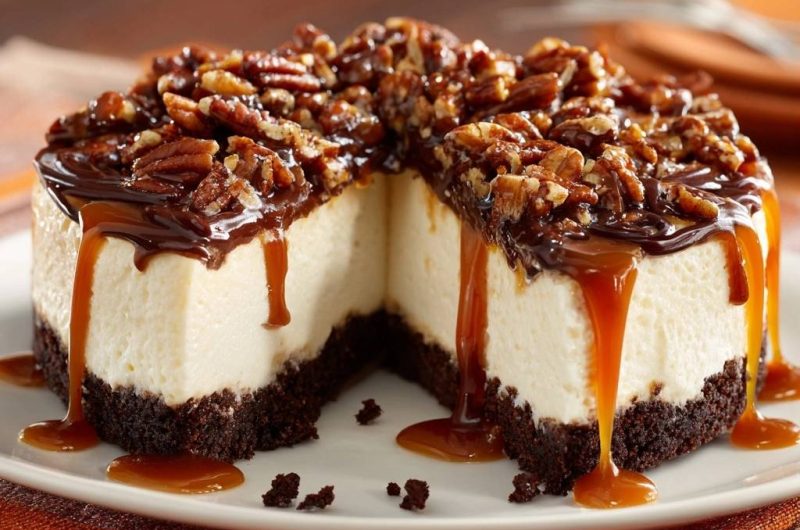
Turtle Cheesecake
Course: DessertCuisine: AmericanDifficulty: easy12
servings30
minutes1
hour10
minutes480
Minutes650
kcalAmerican
Ingredients
Crust:
2 cups chocolate cookie crumbs
6 tablespoons unsalted butter, melted
Filling:
4 (8-ounce) packages cream cheese, softened
1 1/4 cups granulated sugar
4 large eggs
1 cup sour cream
2 teaspoons vanilla extract
1/4 cup all-purpose flour
Toppings:
Chocolate Ganache:
1 cup semisweet chocolate chips
1/2 cup heavy cream
1 cup pecan halves, toasted
1 cup caramel sauce, warmed
Directions
- Preheat oven to 325 degrees F. Wrap the outside of a 9-inch springform pan tightly in heavy-duty foil to make it waterproof.
- Mix chocolate cookie crumbs and melted butter. Press firmly into the bottom and 1 inch up the sides of the prepared pan. Bake 10 minutes, then cool on a wire rack.
- Beat cream cheese and sugar until smooth. Add eggs one at a time, beating just until blended. Mix in sour cream, vanilla, and flour on low speed.
- Pour filling over crust. Place springform pan in a large roasting pan. Fill roasting pan with 1 inch hot water (the key no-crack step: water bath insulates for even, gentle heat).
- Bake 60 minutes until edges are set but center jiggles slightly. Turn off oven, crack door open, and cool cheesecake inside 1 hour (slow cooling prevents cracks from sudden temp drop).
- Remove from water bath, cool to room temperature, then chill 6 hours or overnight.
- Run knife around edge, release pan sides. Toast pecans in 350 degree F oven 8 minutes.
- For ganache: Heat heavy cream until simmering, pour over chocolate chips in a bowl, let sit 2 minutes, then stir until smooth and glossy. Pour ganache over chilled cheesecake, spreading to edges and letting it drip down sides. Arrange toasted pecans on top of ganache. Drizzle with warm caramel sauce. Chill 30 minutes to set, then slice and serve.
Notes
- Use a water bath for even baking and prevent cracks. Slow cool in the oven with the door cracked. Chill overnight for best results.