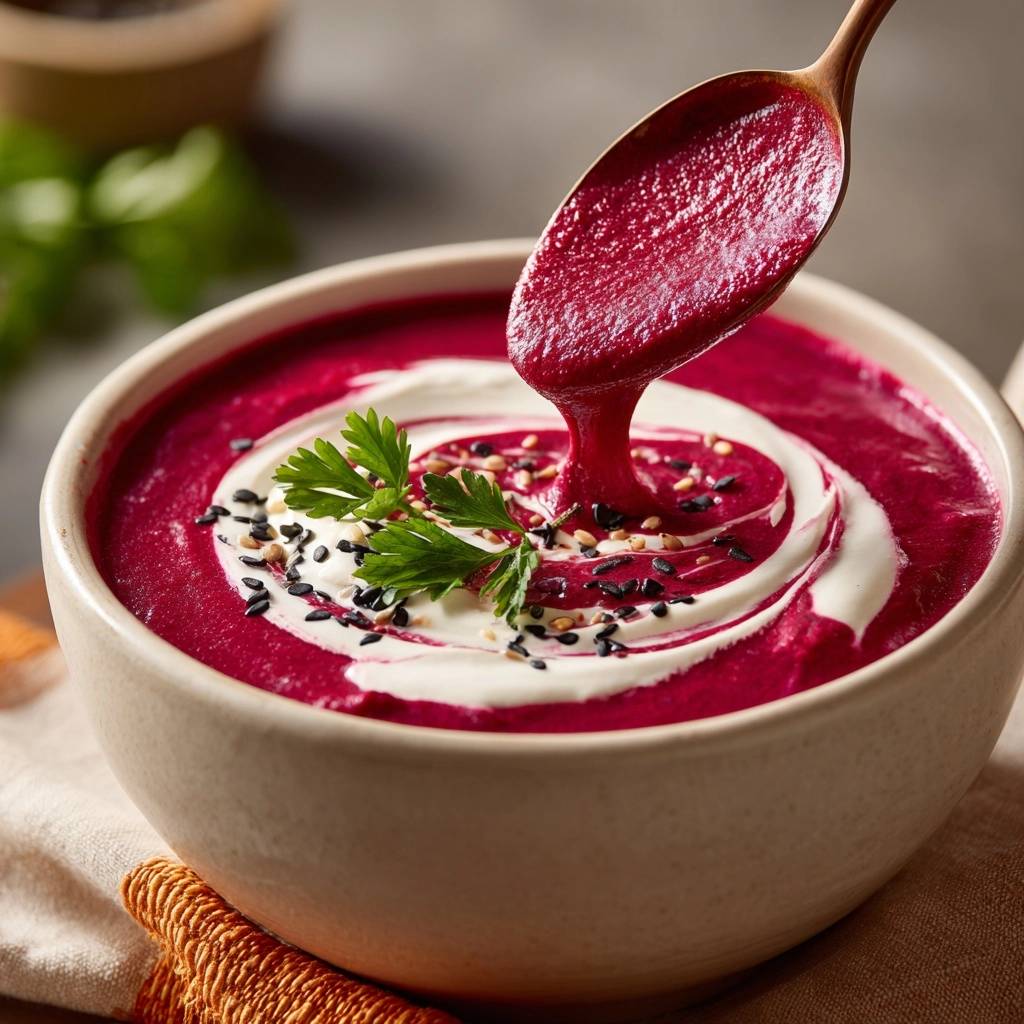
Ever spooned into a beet soup only to hit that annoying gritty crunch from tough fibers? Most home cooks boil beets and end up with sandy texture that ruins the whole bowl. This velvety beet soup fixes that for good with foil-wrapped roasting that turns beets fork-tender and effortless to peel.
Therefore, you get a soup so smooth it glides over your tongue like silk. In addition, the antioxidants from beets shine through without any woody bite, packing health perks in every vibrant sip. You’ll wonder why you ever settled for less.
The secret lies in roasting beets whole in foil at 400 degrees F. This steaming method inside breaks down fibers completely. Then, a hot immersion blend pulverizes everything into pure velvet, no strainer required.
Core Ingredients for Velvety Beet Soup
You start with 6 medium beets, about 2 pounds. They deliver the perfect balance of sweet earthiness without overpowering the soup. Larger ones often hide woody cores that cause grit, so stick to medium size.
Vegetable broth forms a neutral base that lets beet flavors pop purely. Use 4 cups low-sodium to control saltiness. It infuses smoothly during the simmer, enhancing natural sugars.
Salt and black pepper go in at the end. They brighten flavors without drawing out moisture that could toughen fibers. Freshly ground pepper adds a subtle kick to the silkiness.
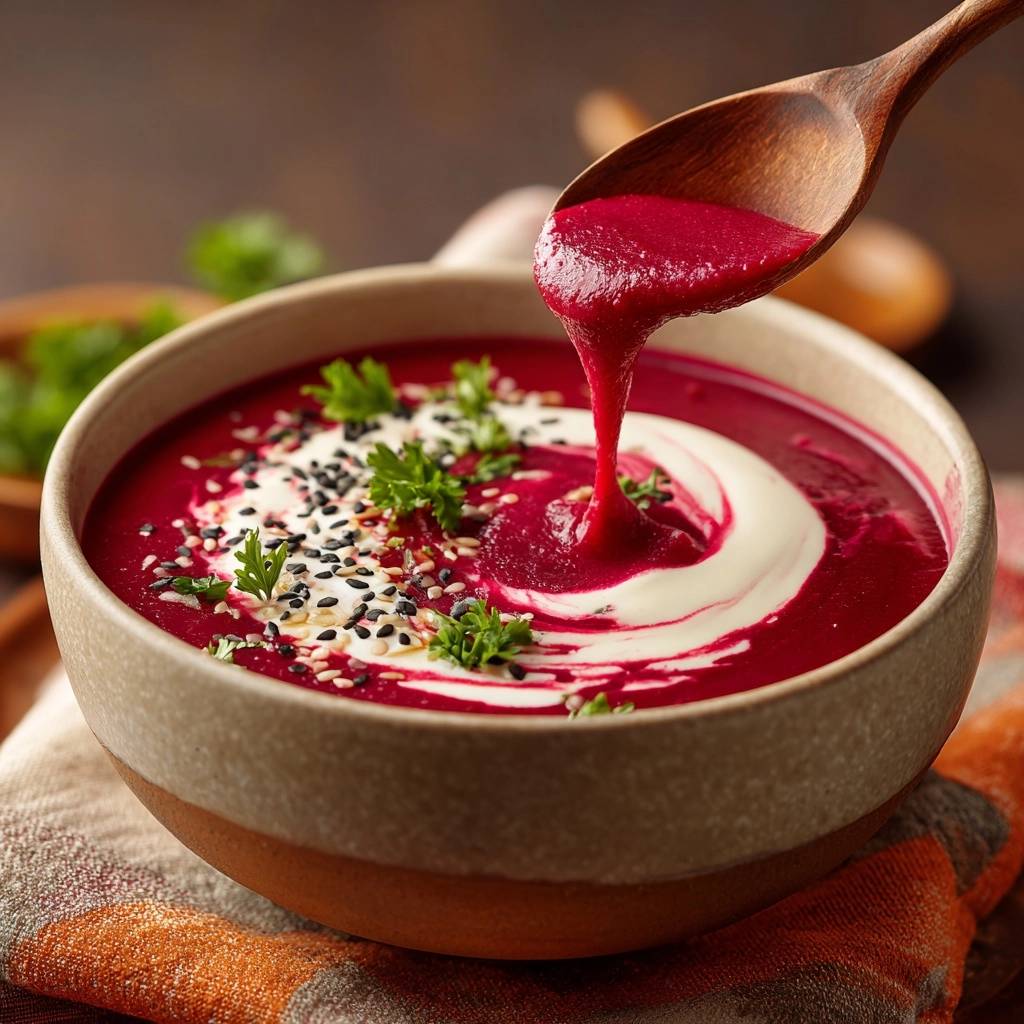
Sour cream or plain yogurt creates creamy swirls on top. The fat emulsifies with the warm soup for luxurious mouthfeel. Black sesame seeds bring nutty contrast, while parsley adds fresh herbal lift.
Fresh beets beat pre-cooked ones hands down. Pre-cooked versions lose vibrancy and often harbor grit from improper processing. Roast fresh for that deep, sweet transformation.
Selecting Perfect Beets
Pick firm beets about 2-3 inches wide with smooth skins. They roast evenly and yield tender results. Avoid oversized ones; they develop tough centers that foil can’t fully soften.
Look for deep red color without blemishes. Firm greens on top signal freshness. These roast up sweet and peel like a dream, ensuring no grit sneaks in.
Garnish Elements Breakdown
Sour cream’s fat coats your palate, amplifying the soup’s velvet. Plain yogurt works too for tangier creaminess. Swirl it gently to avoid curdling.
Black sesame seeds toast lightly in the garnish stage, balancing beet sweetness with nuttiness. Chopped parsley cuts through with bright, green freshness. Together, they elevate every bowl.
Foil-Roasting Beets for Fork-Tender Results
Preheat your oven to 400 degrees F. Trim beet tops and roots but keep skins on. Wrap each beet tightly in foil; this traps steam for perfect softening.
Place them on a baking sheet. Roast 50 to 60 minutes until a fork slides in with zero resistance. Smaller beets finish faster, so check at 45 minutes.
Let them cool just enough to handle. Rub skins off under cool running water; they slip right off. No knife needed, and nutrients stay locked in.
This method prevents waterlogging from boiling. You smell sweet earthiness filling your kitchen as fibers break down. It’s the key to grit-free bliss.
Why Individual Foil Wrapping Works
Each foil packet creates a self-contained steam bath. It gelatinizes starches without sogginess from open roasting. Boiled beets stay tough; foil makes them melt.
Therefore, no excess moisture dilutes flavors. You get concentrated sweetness and tenderness every time.
Infusing Broth with Roasted Beets
Chop peeled beets roughly; uniform size isn’t critical here. In a pot, bring 4 cups vegetable broth to a full boil. Add beets right away.
Reduce to a simmer for 5 minutes. Flavors meld beautifully, and the low heat preserves that stunning pink hue. Stir occasionally to infuse evenly.
You’ll see the broth turn vibrant and smell deepening sweetness. This short simmer extracts sugars without toughening any stragglers.
Broth Boiling Precision
A full boil kickstarts sugar extraction fast. Then simmer prevents bitterness from overcooking. Vegetable broth keeps it clean, no muddy flavors.
Hot Immersion Blending for Ultimate Smoothness
Remove the pot from heat. Plunge your immersion blender in and hit high speed for 2 full minutes. Keep it submerged to avoid splatters.
The residual heat from roasting and broth disintegrates every fiber. No need for a strainer; it turns silky right in the pot. Season with salt and pepper now.
Blend in short bursts if your blender struggles, but aim for continuous. You’ll feel the transformation from chunky to velvety under the blade. Safety first: use a tall pot.
Food processors cool the mix and leave grit. Immersion keeps heat working for you. Pro tip: tilt the pot for better vortex action.
Blending Duration Impact
Two minutes on high breaks pectins fully. Short bursts leave sandy bits. Heat aids shear force for true silk.
Science of Grit-Free Velvety Beet Soup
Beet cell walls hold pectin and cellulose, causing grit if not broken down. Foil-roasting at 400 degrees F triggers enzymes that soften them. Steam penetrates evenly.
Hot blending adds shear force and thermal energy. It pulverizes remnants into oblivion. Boiling skips this, trapping fibers.
Broth’s neutral pH helps smoothness; dairy stabilizes it further. No grit means pure beet essence shines. It’s simple science for pro results.
Pro tip: always blend hot. Cold purees resist breakdown, staying grainy.
Roasting Heat Transformations
Heat converts starches to tender gels via steam. Skins hold Maillard precursors for subtle depth. Fibers yield completely at this temp.
Blending Physics Breakdown
Immersion creates a vortex that shears uniformly. Hot puree flows better than cold. Static methods fail here.
Equipment Essentials for Velvety Beet Soup
An immersion blender is non-negotiable for pot-side blending. It retains heat perfectly. Look for 200+ watts to tackle beets.
Use a heavy baking sheet for even roasting. Quality foil seals steam tight. A deep pot handles the broth volume safely.
Standard blenders require cooling and straining. Dutch ovens work for simmering but lack blend power. Stick to essentials for foolproof silk.
Immersion Blender Advantages
High-power models handle hot, fibrous beets. Position deep to avoid burns. Cordless options give flexibility.
Avoiding Grit in Velvety Beet Soup
Over-roast and you get charred bitterness; under-roast leaves crunch. Test with a fork religiously. Blender air pockets cause lumps, so submerge fully.
Over-season early masks silkiness. Add salt post-blend. If gritty, re-blend with a splash more hot broth.
Pro tip: rub skins thoroughly under water. Lingering bits ruin texture. Batch small if your blender bogs down.
Post-Roast Peeling Fixes
Skins sticking? Rinse longer in cool water. Gritty batch? Re-roast 10 minutes or re-blend hot. It salvages most mishaps.
Flavor Variations for Velvety Beet Soup
Add grated ginger during simmer for zing. Orange zest brightens earthiness without grit risk. Keep blends hot and full duration.
Coconut milk swaps for vegan creaminess; it emulsifies beautifully. A splash of apple cider vinegar adds tang. Cumin seeds toast for warmth.
These tweaks maintain velvet focus. Experiment post-blend to taste.
Seasonal Beet Soup Twists
Golden beets make milder soup. Chioggia adds pink stripes visually. Fall herbs like thyme infuse during simmer.
Pairing Sides with Velvety Beet Soup
Crunchy seeded crackers contrast the silk perfectly. Goat cheese crostini adds creamy pop. A simple green salad balances richness.
Sparkling cranberry juice pairs with the earthiness. For meals, portion with bread for prep-ahead lunches. It reheats like a dream.
Storage Guide for Velvety Beet Soup
Store in airtight glass containers in the fridge up to 4 days. Freezes well in portions for 3 months; thaw overnight. Reheat gently on stovetop.
Avoid microwave boiling; it can separate texture. Stir in fresh garnishes after warming. Immersion re-blend refreshes silkiness.
Troubleshooting Velvety Beet Soup Issues
How do I store Velvety Beet Soup leftovers?
Keep it in airtight glass jars in the fridge for up to 4 days. For freezing, portion into freezer bags flat; it holds up 3 months without separating. Thaw in fridge overnight, then reheat on low stove heat while stirring. A quick immersion blend revives the perfect velvet texture every time.
Why is my beet soup still gritty?
Grit usually comes from under-roasted beets or short blending. Ensure fork-tender roast and 2 full minutes on high with immersion blender in the hot pot. If skins linger, rub harder under water. Salvage by adding hot broth and re-blending; heat breaks down stubborn fibers.
Can I make a vegan version of Velvety Beet Soup?
Absolutely, swap sour cream for coconut milk or vegan yogurt. Both emulsify smoothly for creaminess. Use the same hot-blend method; the fat content mimics dairy perfectly without curdling. Black sesame and parsley stay vegan-friendly for nutty, fresh finish.
What if my beets won’t peel easily?
Roast longer next time, up to 70 minutes for larger ones. For stuck skins, cool fully then rub under cool running water with paper towel. Steam from foil softens them 99% of the time; persistent bits blend out fine if you go 2 minutes hot.
How can I fix soup that’s too earthy?
Brighten with a teaspoon of apple cider vinegar or orange zest post-blend. A pinch of sugar balances if needed. Simmer time extracts sugars naturally, but citrus lifts flavors without diluting silkiness. Taste and adjust before garnishing.
What’s the best blender substitute if I don’t have immersion?
Use a high-speed blender in batches, but keep puree hot by working fast. Ladle small amounts, blend smooth, return to pot. Cool completely first for safety; reheat after. It works but loses some heat magic, so extend blend time to avoid grit.
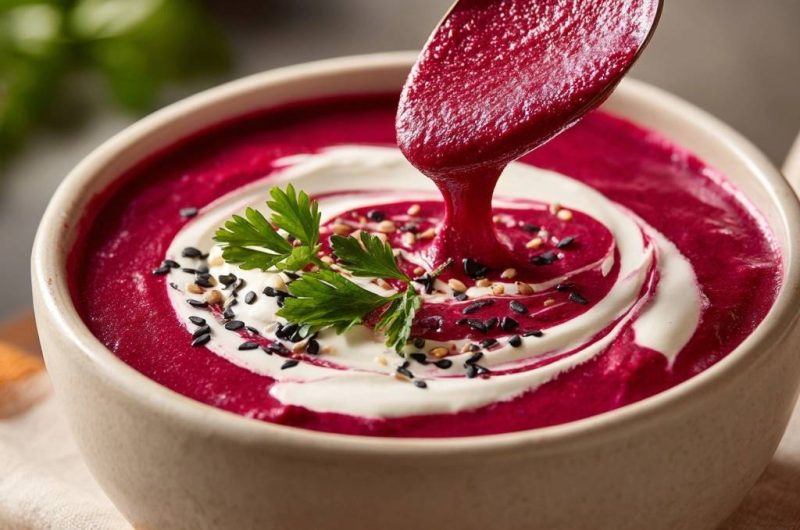
Velvety Beet Soup
Course: SoupCuisine: AmericanDifficulty: easy4
servings20
minutes1
hour60
Minutes180
kcalAmerican
Ingredients
6 medium beets (about 2 pounds), scrubbed
4 cups vegetable broth
Salt and black pepper to taste
1/2 cup sour cream or plain yogurt, for garnish
2 tablespoons black sesame seeds, for garnish
Fresh parsley leaves, chopped, for garnish
Directions
- Preheat oven to 400 degrees F. Trim beet tops and roots, leaving skins on. Wrap each beet individually in aluminum foil. This steaming method inside the foil softens them completely without water, preventing any woody grit.
- Place foil-wrapped beets on a baking sheet and roast for 50 to 60 minutes, until a fork pierces them easily with no resistance. Let cool slightly, then rub off skins under cool running water. They slip right off, leaving zero gritty residue.
- Chop roasted beets roughly. In a pot, bring vegetable broth to a boil. Add beets, reduce heat, and simmer 5 minutes to infuse flavors.
- Remove from heat. Use an immersion blender directly in the hot pot, blending on high for 2 full minutes. The residual heat from roasting and broth breaks down every fiber for ultra-silky texture, no strainer needed. Season with salt and pepper.
- Ladle into bowls. Swirl in sour cream, sprinkle black sesame seeds, and top with parsley. Serve warm.
- This grit-busting roast-and-hot-blend method delivers restaurant-smooth soup that wows every time.
Notes
- This grit-busting roast-and-hot-blend method delivers restaurant-smooth soup that wows every time. No strainer needed for ultra-silky texture.