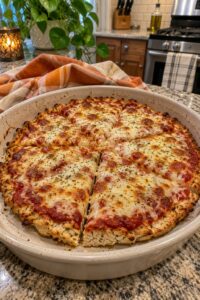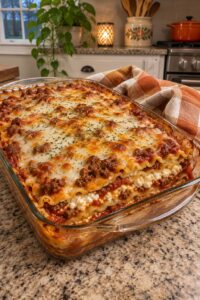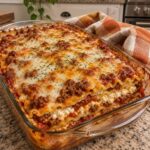
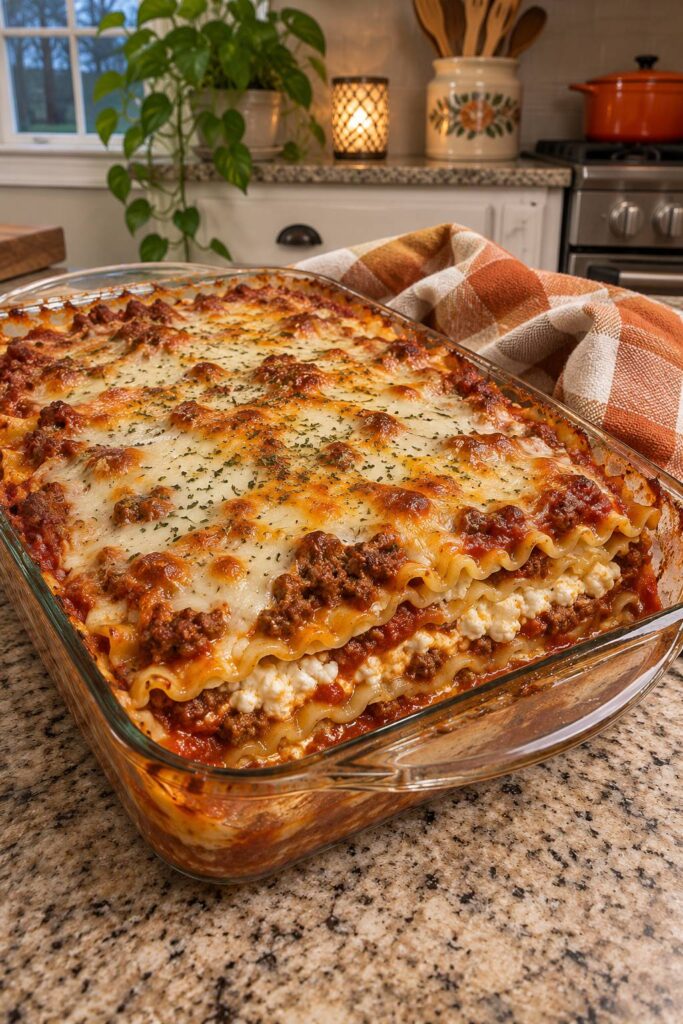
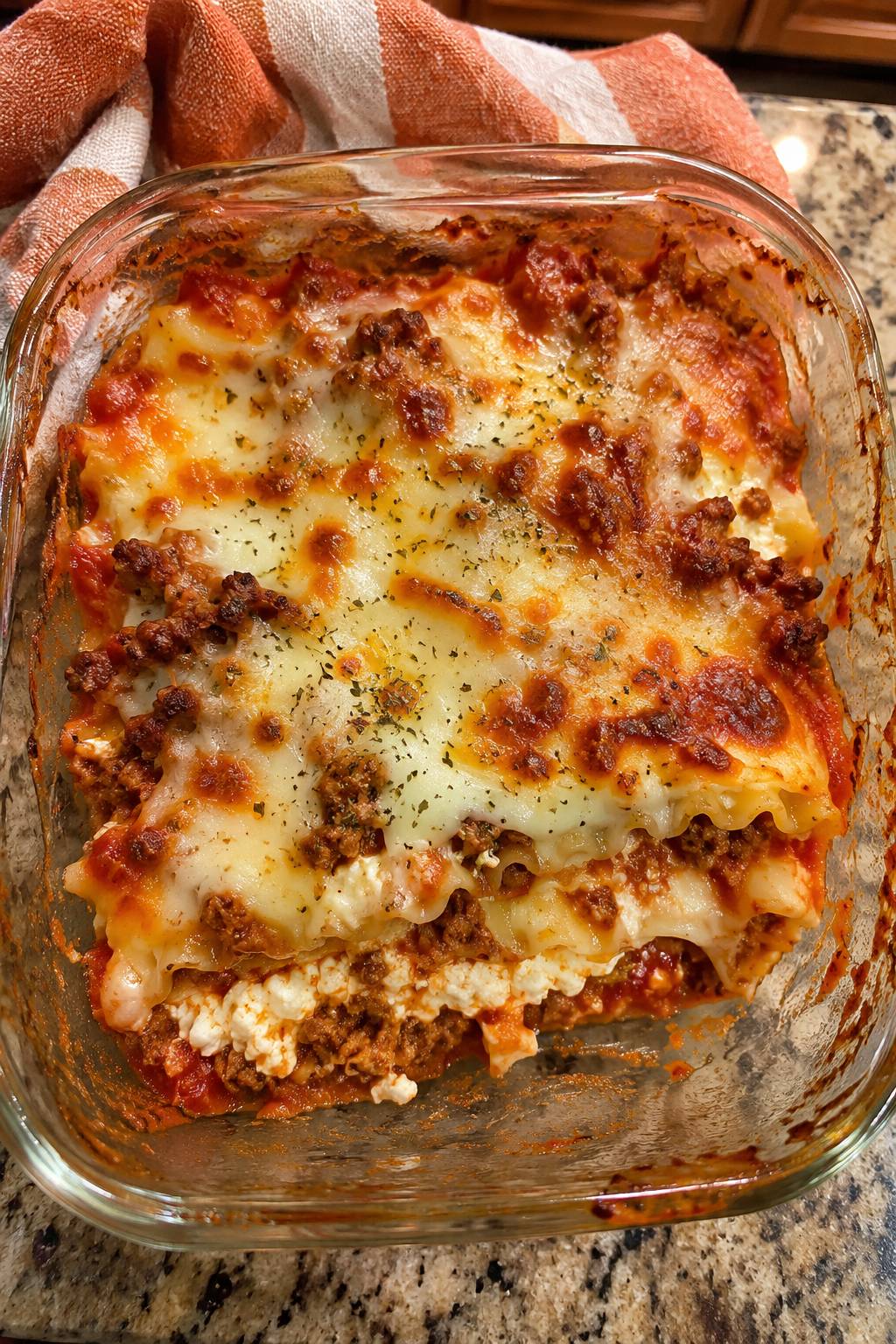
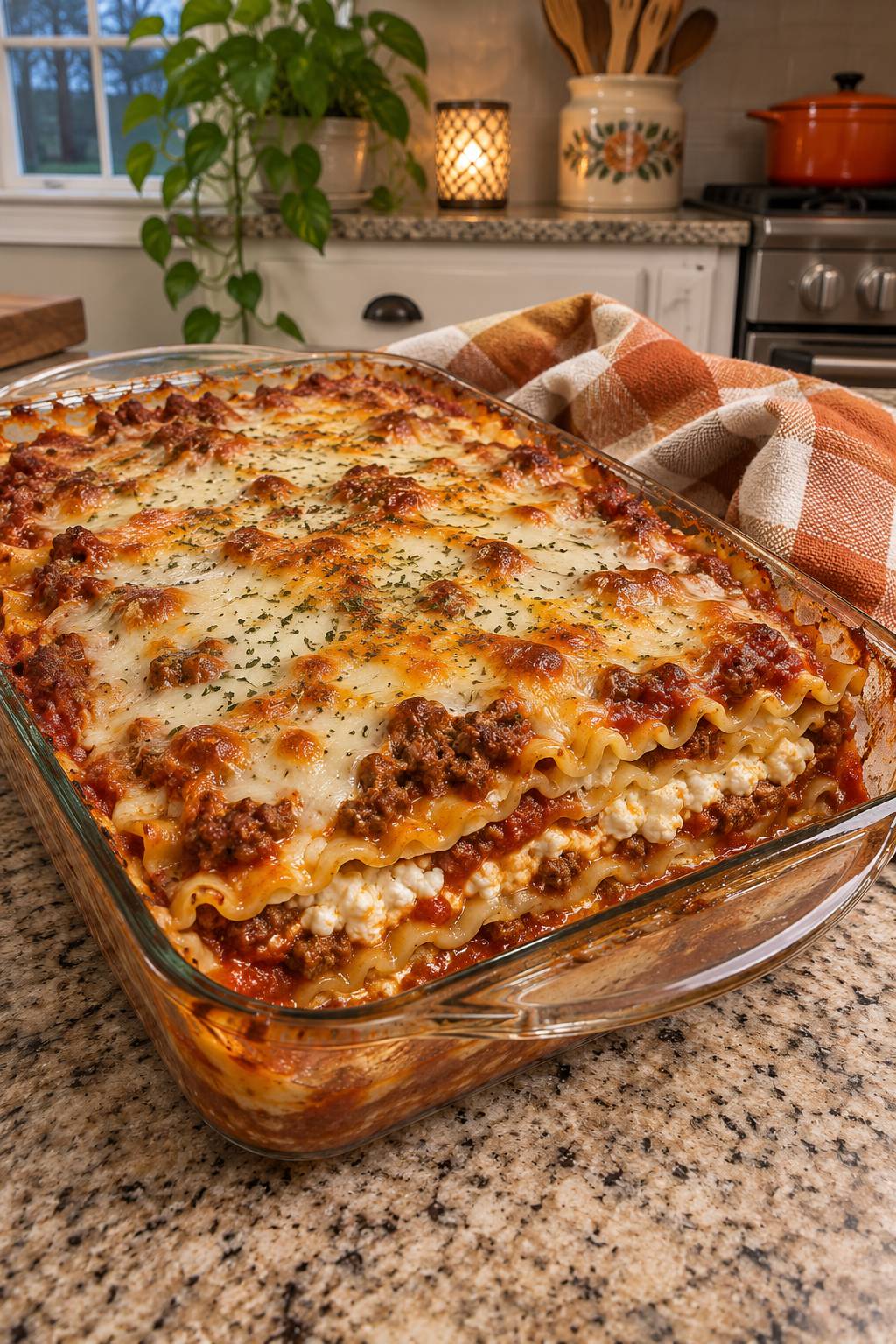
This Cottage Cheese Lasagna Bake has everything you want in a hearty pasta dinner: ruffled noodles, a thick ground beef marinara, and a layer of mozzarella with golden-brown spots. Small-curd cottage cheese gives the middle a creamy, lightly textured filling that contrasts with the stretchy mozzarella on top. If you usually think of cottage cheese as something you eat cold, this bake shows how naturally it fits into a cozy main dish.
Keep the noodles flexible but firm
Regular lasagna noodles should bend easily when you lift them from the pot but still feel a little firm. They’ll continue to soften in the sauce as the lasagna bakes, so there’s no need to boil them until they’re as tender as you’d want them on your plate. Lay the drained noodles flat on a baking sheet rather than leaving them in a pile. It’s much easier to lift a strip by itself than to pull apart noodles that have stuck together.
Give jarred marinara a hearty texture
Finely chopped yellow onion softens into the sauce, while lean ground beef gives it substance without making it greasy. As you brown the beef, break it into small crumbles so the sauce spreads evenly over the noodles. Large chunks can make it harder to spoon the sauce into an even layer. If you see excess fat in the skillet, spoon it off before adding the marinara.
You want the sauce to thicken slightly, not cook down into a stiff paste. Simmering it uncovered lets you watch the consistency as you stir. It should still be loose enough to spread into the corners of the baking dish, where a patch of uncovered pasta can dry out.
Let each cheese do its job
Small-curd cottage cheese is easy to spread over the noodles without leaving big lumps in the filling. The egg helps that layer hold together as it bakes, and grated Parmesan adds a savory note. Low-moisture mozzarella plays a different role: it melts between the layers and gives the top its stretchy, golden finish. Keeping the cottage cheese mixture and the mozzarella separate lets you get both textures in the same slice.
Watch the edges and let the layers settle
Pay attention to the edges as you spread the top layer of sauce. The ruffled corners are easy to miss, and a cover of mozzarella doesn’t replace the sauce underneath it. Once the foil comes off, look for bubbling sauce around the edges and golden-brown spots on the cheese. After baking, give the lasagna its rest before you cut into it. The sauce and filling settle as it stands, so the layers are less likely to slide apart when you lift a slice.
Frequently Asked Questions
Do I need to drain the cottage cheese?
Only if you see liquid pooled in the container. Pour off that loose liquid or let it drain through a fine-mesh strainer before you stir in the egg and Parmesan. The filling should still be creamy enough to spread easily.
Why is there sauce underneath the bottom noodles?
The sauce gives the bottom noodles a moist layer to sit on instead of putting them directly against the baking dish. Spread it across the base rather than leaving it in the middle, so the noodles at the edges sit on sauce too.
How do I keep the foil from sticking to the mozzarella?
Give the foil a slight dome instead of pressing it flat across the dish. The space above the mozzarella keeps the foil from touching the cheese as it melts, so you’re less likely to pull off part of the topping when you uncover the lasagna.
Cottage Cheese Lasagna Bake
Course: Main CourseCuisine: AmericanDifficulty: Easy8
servings25
minutes1
hour15
minutes580
kcal1
hour47
minutesRuffled lasagna noodles are layered with ground beef marinara, small-curd cottage cheese, and mozzarella. The top bakes until bubbly and golden, with a sprinkle of parsley to finish.
Ingredients
- Noodles and Meat Sauce
12 regular lasagna noodles (about 10 oz)
1 tbsp kosher salt, for the pasta water
1 tbsp olive oil
1 cup finely chopped yellow onion
1 1/4 lb lean ground beef (93% lean)
1 tbsp minced garlic
2 jars marinara sauce (24 oz each)
1 tsp Italian seasoning
1/4 tsp ground black pepper
- Cheese Filling and Topping
24 oz small-curd 2% cottage cheese
1 large egg
1/2 cup grated Parmesan
3 cups shredded low-moisture mozzarella, divided
1 tsp dried parsley
Directions
- Noodles and Meat Sauce
- Preheat the oven to 375°F with a rack in the center. Bring a large pot of water to a boil and add the kosher salt. While the meat sauce cooks, boil the noodles for about 8 minutes, until flexible but still a little firm. Drain and lay them flat on a baking sheet so they don’t stick together.
- Heat the olive oil in a large skillet over medium heat. Add the onion and cook for 4 minutes, stirring occasionally, until softened. Add the ground beef and cook for 7 minutes, breaking it into small crumbles, until browned and cooked through. Spoon off any excess fat. Stir in the garlic and cook for 1 minute.
- Stir in the marinara, Italian seasoning, and black pepper. Simmer uncovered for 10 minutes, stirring occasionally, until the sauce thickens slightly.
- Assembly
- Stir the cottage cheese, egg, and Parmesan together. Spread 1 cup of meat sauce in the bottom of a deep 9×13-inch baking dish. Lay 4 noodles over the sauce, overlapping them slightly as needed. Spread half the cottage cheese mixture over the noodles, then spoon on 2 cups of meat sauce and sprinkle with 1/2 cup mozzarella. Repeat with 4 noodles, the remaining cottage cheese mixture, 2 cups of meat sauce, and another 1/2 cup mozzarella. Finish with the last 4 noodles, the remaining meat sauce, and the remaining 2 cups mozzarella. Spread the sauce all the way to the edges so no noodle corners are left exposed.
- Baking
- Cover the dish with foil, tenting it slightly so it doesn’t touch the cheese. Bake for 30 minutes, then uncover and bake for 15 minutes more, until the sauce bubbles around the edges, the mozzarella has golden-brown spots, and the center reaches 165°F.
- Sprinkle with the dried parsley and let the lasagna rest for 15 minutes before slicing.
Notes
- If liquid has pooled in the cottage cheese container, pour it off or briefly drain the cottage cheese in a fine-mesh strainer before mixing the filling.
- The 15-minute rest gives the sauce and cheese filling time to settle so the layers hold together better when sliced.