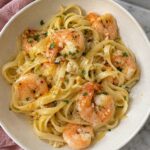
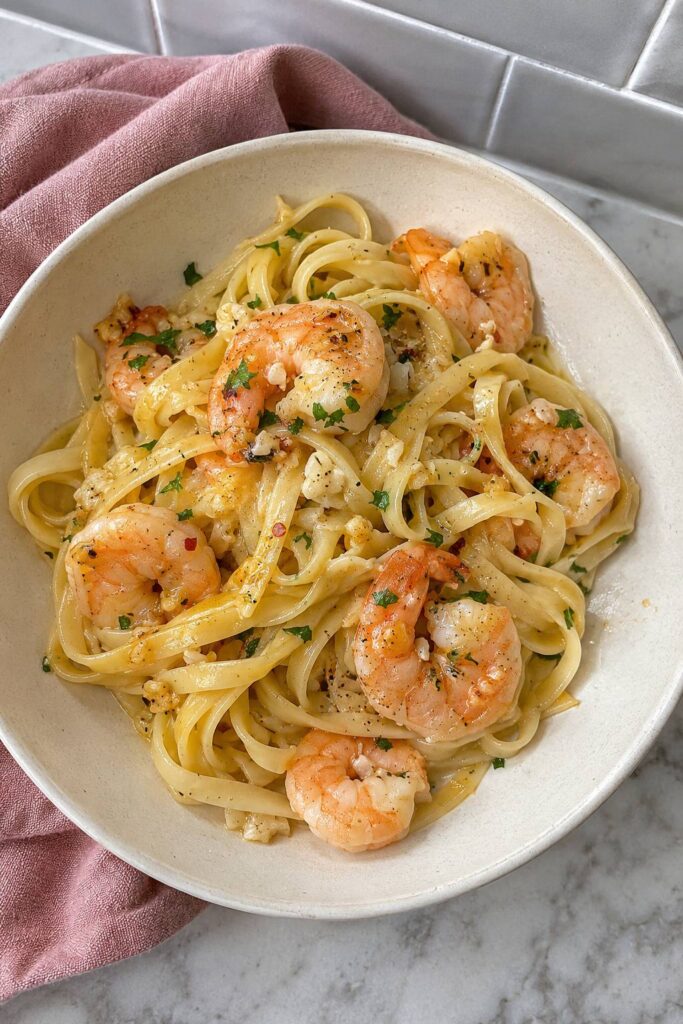
Garlic shrimp linguine is all about the way the sauce clings to the pasta. Butter gives it a silky finish, fresh lemon juice brightens each forkful, and crushed red pepper flakes leave a little warmth behind. The shrimp bring lightly browned edges and a tender bite, while chopped flat-leaf parsley adds a fresh finish to the rich sauce.
The recipe card gives you the measurements and timing. At the stove, texture and color tell you how things are going. You’re looking for linguine with enough bite to finish in the skillet, shrimp that turn opaque throughout, and garlic that smells fragrant and stays pale golden.
Dry shrimp are easier to brown
Large raw shrimp give you a substantial bite alongside the linguine. Starting with peeled, deveined shrimp with the tails removed also makes the finished pasta easy to eat with a fork. If your shrimp are frozen, thaw them completely and pat them dry before seasoning with fine sea salt and freshly ground black pepper.
Dry shrimp brown more readily, especially when they have room to sit flat. Shimmering olive oil gives you a visual cue that the skillet is ready, and a single layer keeps the shrimp in contact with the pan. Look for light browning and flesh that’s opaque throughout. Moving the cooked shrimp to a plate keeps them out of the skillet while you finish the pasta.
Let the linguine finish in the sauce
Taste a strand before you drain the linguine. It should feel slightly firmer than you’d want to eat because it will continue cooking as you toss it in the skillet. If it already feels fully al dente in the pot, it can lose that satisfying bite by the time it’s coated in sauce.
Scoop out the pasta water before you drain so you have it on hand for the skillet. The reserved water helps the butter and lemon juice coat the strands. As you toss, look for an even sheen. If the linguine starts to drag or clump, loosen the sauce with more of the reserved water until the strands move freely again.
Watch the color of the garlic
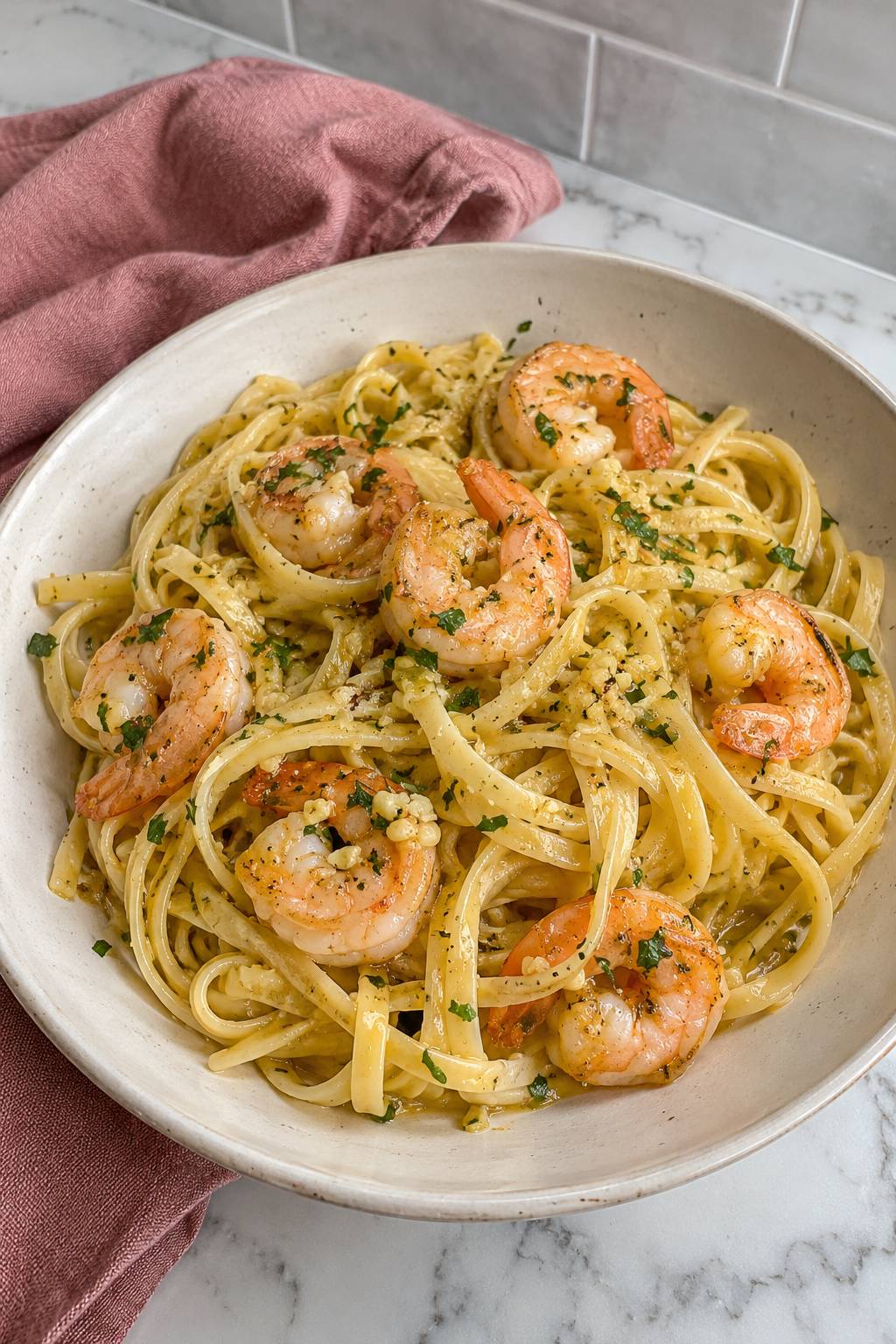
Finely chopped fresh garlic flavors the melted butter, and crushed red pepper flakes give the sauce a gentle heat. Once the shrimp are out of the skillet, lower the heat. Stir the garlic and watch for a pale golden color. That’s the cue to move on, since deeper browning can give the sauce a bitter edge.
The browned bits left by the shrimp are worth scraping up when the lemon juice and pasta water go in. They add savory flavor to the butter sauce. The parsley goes in off the heat, where its fresh flavor comes through alongside the lemon.
Frequently Asked Questions
Can you use frozen shrimp for garlic shrimp linguine?
Yes. Thaw the shrimp completely, then blot away surface moisture before you season them. Pay attention to the spots where the shrimp curl. Water can collect there, and a dry surface helps the shrimp brown when they hit the skillet.
What should you do if the sauce feels too thick?
Toss in some of the reserved pasta water and watch how the sauce moves around the linguine. Once the strands separate easily and have a glossy coating, you’ve loosened the sauce enough.
Why do you add the shrimp back off the heat?
The shrimp are already cooked through by the time you take them out of the skillet. Folding them into the finished linguine off the heat coats them in the warm sauce and helps preserve their tender texture.
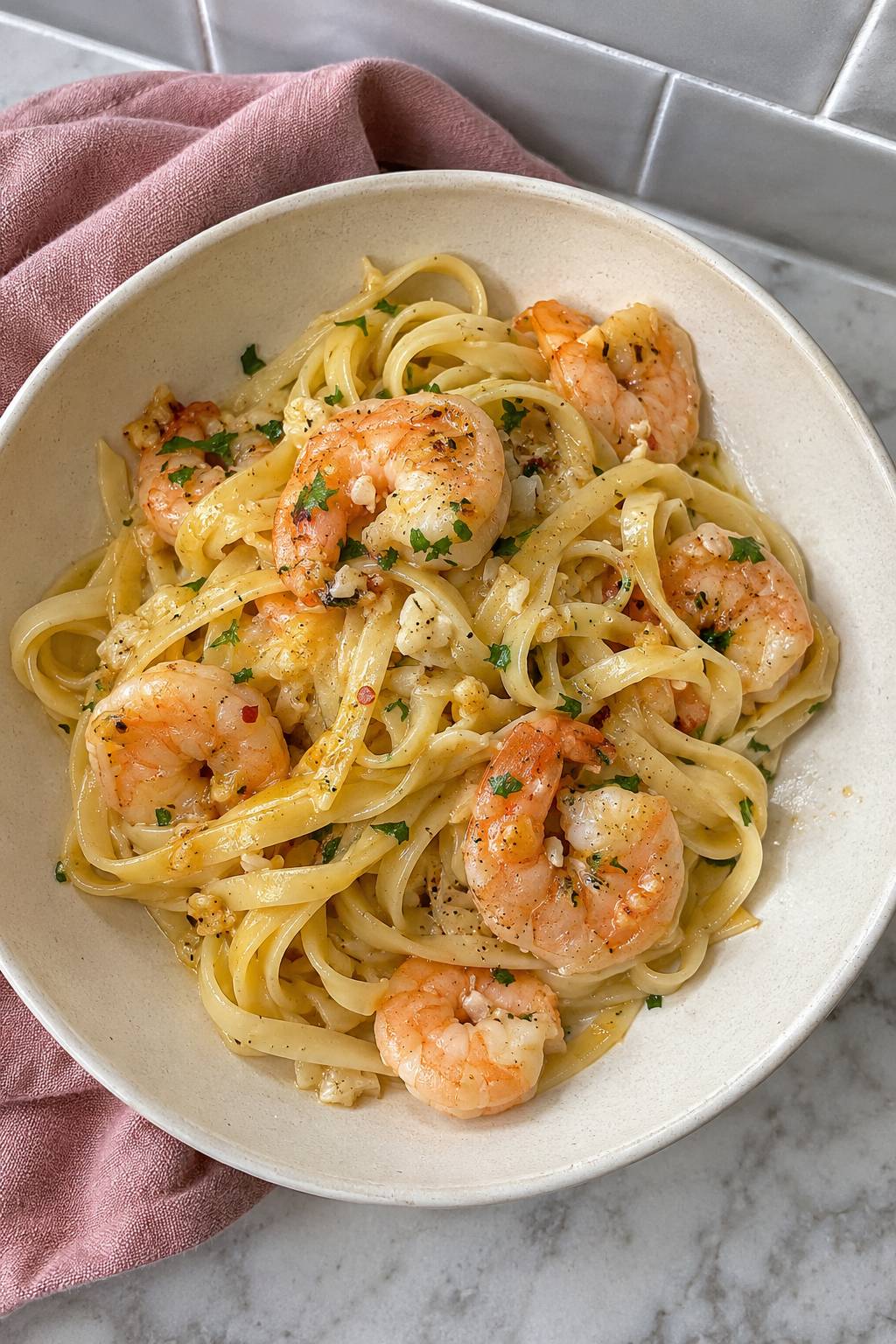
Garlic Shrimp Linguine
Course: Main CourseCuisine: AmericanDifficulty: Easy4
servings15
minutes26
minutes540
kcal41
minutesLightly browned shrimp and linguine are tossed in a glossy garlic butter sauce with lemon, parsley, and a pinch of red pepper flakes.
Ingredients
12 cups water
1 tbsp plus 1/4 tsp fine sea salt, divided
12 oz dry linguine
1 lb large raw shrimp, peeled, deveined, and tails removed
1/4 tsp freshly ground black pepper
1 tbsp olive oil
4 tbsp unsalted butter, divided
2 tbsp finely chopped fresh garlic
1/8 tsp crushed red pepper flakes
2 tbsp fresh lemon juice
1/4 cup chopped fresh flat-leaf parsley
Directions
- Bring the water and 1 tbsp of the salt to a boil in a covered large pot over high heat, about 10 minutes. Add the linguine and cook uncovered, stirring occasionally, until just shy of al dente, about 10 minutes or 1 minute less than the package directs. Scoop out 1 cup of the pasta water, then drain the linguine.
- Pat the shrimp dry and season with the remaining 1/4 tsp salt and the black pepper. Heat the olive oil in a 12-inch skillet over medium-high heat until shimmering. Add the shrimp in a single layer and cook for 2 minutes on the first side and about 1 minute on the second, until lightly browned and opaque throughout. Transfer to a plate.
- Reduce the heat to medium and melt 2 tbsp of the butter in the skillet. Add the garlic and red pepper flakes and stir for about 1 minute, until fragrant and the garlic is pale golden.
- Add 1/3 cup of the reserved pasta water and the lemon juice, scraping up the browned bits. Add the linguine and remaining 2 tbsp butter and toss over medium heat for about 2 minutes, until the pasta is al dente and coated in a glossy sauce. If the sauce is tight, toss in more pasta water 1 tbsp at a time. Take the skillet off the heat, toss in the shrimp and parsley, and serve in shallow bowls.
Notes
- If using frozen shrimp, thaw them completely and pat them dry before seasoning. Dry shrimp brown more readily in the skillet.