Greek Lamb Youvetsi with Tomato Orzo
Greek lamb youvetsi brings tender lamb shoulder and orzo together in a rich tomato sauce. Learn what gives this comforting dinner its glossy finish.
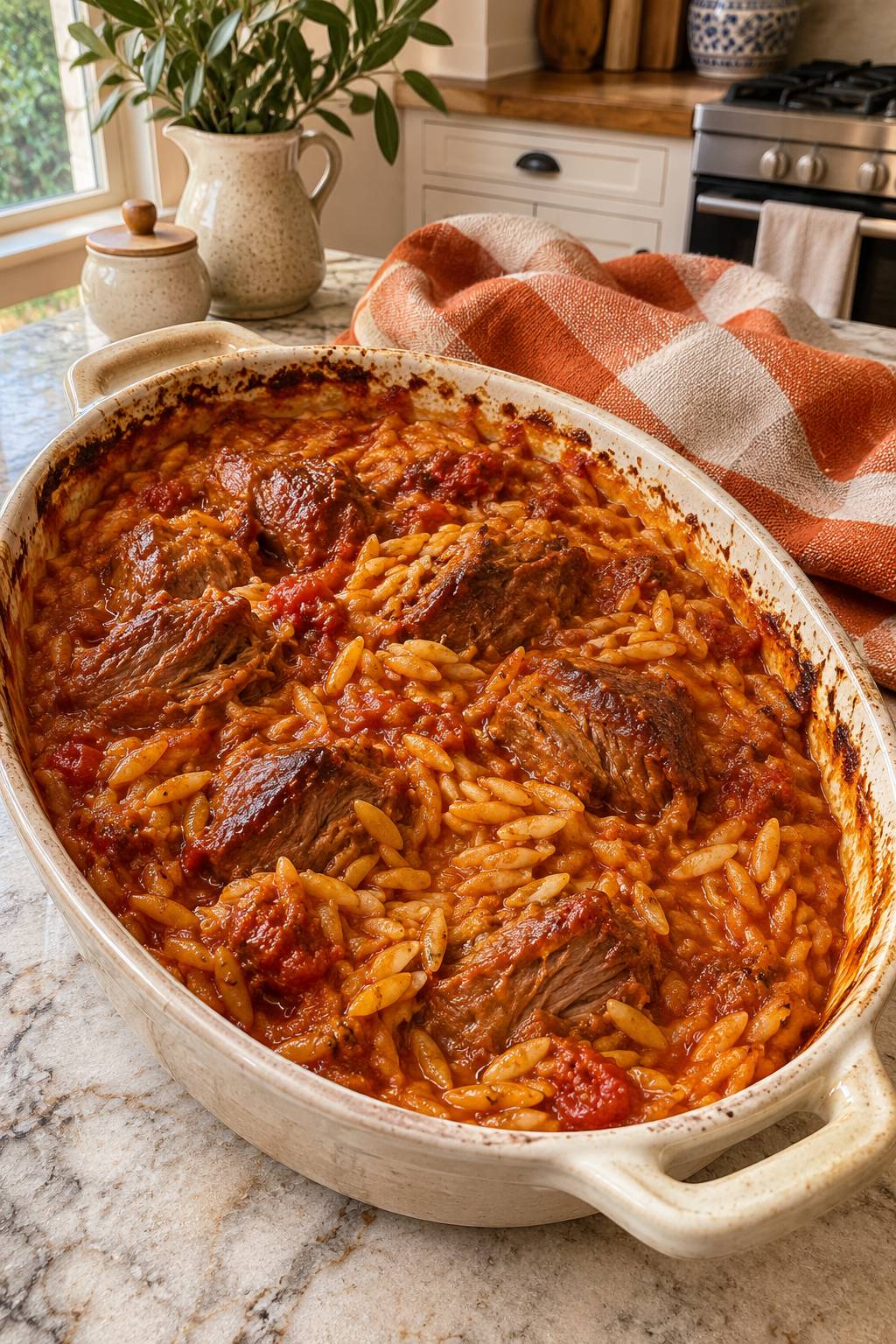
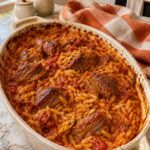
Greek lamb youvetsi brings browned lamb shoulder and tender orzo together in a warmly spiced tomato sauce. The lamb anchors this hearty dinner, while the pasta cooks in the sauce, taking on its savory flavor. You’re looking for meat that yields easily to a fork and orzo surrounded by a thick, glossy sauce.
The key is letting the lamb and pasta cook at their own pace. Lamb shoulder needs a covered braise to become tender; orzo joins it only after that tenderness is there. Keeping those stages distinct helps you avoid firm meat or pasta that has softened too far.
Why lamb shoulder and regular orzo work here
Boneless lamb shoulder suits the covered braise and gives the finished dish its substantial, meaty character. Trimming excess exterior fat prepares it for browning without removing every trace of fat. Patting the surface dry helps you develop the browned exterior that adds depth to the sauce.
Regular wheat orzo is the pasta this recipe is designed around. Its small shape distributes easily around the lamb, but it needs enough sauce around it to cook evenly. Keep the dry pasta submerged when it goes into the pot.
Build a savory tomato sauce with gentle warmth
Crushed tomatoes form the sauce’s base, while tomato paste deepens its tomato flavor. Softened, lightly golden onion and garlic add savory depth. Give the onion room to soften before adding the garlic and paste, and keep stirring so the mixture cooks evenly.
Oregano, cinnamon, and bay leaf bring herbal flavor and warm spice to the tomatoes. The cinnamon belongs in the background of the savory sauce. Scraping up the browned bits with beef broth carries the flavor left by the lamb into the braise.
Let tenderness decide when the orzo goes in
A wide, oven-safe Dutch oven with a tight-fitting lid supports both browning and covered braising. When browning, leave space around the lamb so its surfaces can develop color. The goal is a browned exterior; the covered oven stage handles the tenderness.
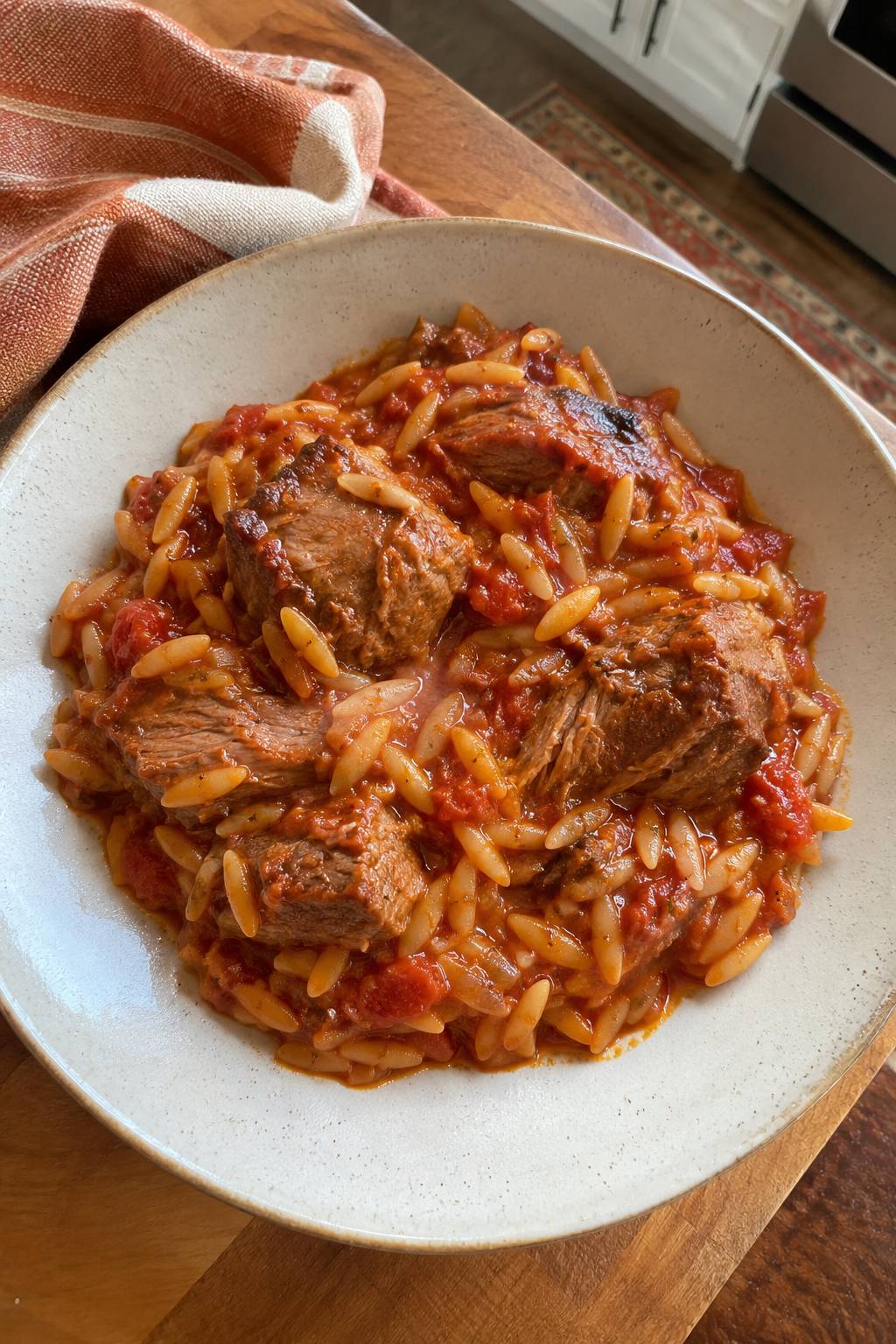
Before adding orzo, check the lamb with a fork. It should yield easily rather than resist. If it still feels firm, continue the covered braise as directed on the recipe card. Adding pasta too early leaves you trying to finish the meat while the orzo keeps softening.
Keep the finish glossy and moist
Once the orzo is cooking, gentle stirring helps distribute it without breaking up the tender lamb. Scrape along the bottom when you stir, where pasta can settle and stick. The finished sauce should be thick enough to cling to the orzo while still looking moist.
If the pasta looks dry before it becomes tender, use the hot water allowed for in the recipe. Remember that orzo continues absorbing sauce during the rest. A pot that looks completely dry before resting will leave you with less of that glossy finish.
Frequently Asked Questions
How can you tell whether the lamb is ready for the orzo?
Pierce the lamb with a fork and check that it yields easily. Browning alone does not tell you whether the meat is tender inside. If you feel resistance, keep braising it covered before introducing the pasta.
Why does the orzo need to stay submerged?
The orzo cooks in the tomato sauce and broth, so it needs contact with that liquid. Gently distribute it around the lamb rather than leaving dry pasta piled on top. Check for tenderness as well as moisture.
Should the sauce look thick when the pot leaves the oven?
Yes, but it should still look moist around the tender pasta. The orzo absorbs more sauce as the dish stands, so avoid baking until the pot looks dry. Look for a glossy coating with sauce remaining around the lamb.
Recipe
Greek Lamb Youvetsi with Tomato Orzo
Chunks of lamb shoulder braise in a warmly spiced tomato sauce before orzo finishes cooking alongside them. The finished dish has browned lamb, tender pasta and a thick, glossy sauce.
- Course
- Main Course
- Cuisine
- Greek
- Difficulty
- Easy
- Servings
- 6 servings
- Prep time
- 25 mins
- Cook time
- 2 hr 50 mins
- Total time
- 3 hr 25 mins
- Calories
- 775 kcal
Ingredients
Instructions
Preheat the oven to 325°F. Pat the lamb dry and season with the salt and pepper. Use a wide, oven-safe 6-quart Dutch oven with a tight-fitting lid.
Heat the olive oil over medium-high heat for 2 minutes. Brown the lamb in three batches, cooking each batch for 4 minutes and turning halfway through to brown two sides. Transfer the lamb to a plate after each batch.
Reduce the heat to medium. Add the onion and cook for 6 minutes, stirring frequently, until softened and lightly golden. Add the garlic and tomato paste and cook, stirring, for 1 minute.
Add 2 cups of the broth, scraping up the browned bits. Stir in the crushed tomatoes, oregano, cinnamon and bay leaf. Return the lamb and accumulated juices to the pot. Bring to a steady simmer over medium-high heat, allowing 4 minutes.
Cover and bake for 2 hours, until the lamb yields easily when pierced with a fork. If it is still firm, continue baking covered until tender before adding the orzo; this additional time is outside the base cooking time.
Increase the oven temperature to 375°F. Remove the bay leaf. Gently stir the dry orzo and remaining 1 cup broth into the hot sauce, distributing the pasta around the lamb and keeping it submerged. Cover and bake for 15 minutes.
Uncover and gently stir the orzo around the lamb, scraping along the bottom. Bake uncovered for 10 minutes, until the orzo is tender and the sauce is thick but still moist. If the pasta appears dry before it is tender, stir in the hot water as needed and bake a few additional minutes.
Let stand for 10 minutes before serving. The orzo will absorb more sauce as it rests. Taste and adjust the salt.
Notes
- Use regular wheat orzo for the stated timing; other types can absorb liquid differently.
- The lamb should be fork-tender before the orzo goes in, since the pasta finishes much faster than the meat.
- Refrigerate leftovers in covered containers for up to 4 days. Add a splash of broth when reheating because the orzo continues absorbing sauce.
Recipe: https://mealsnrecipes.com/greek-lamb-youvetsi-with-tomato-orzo/