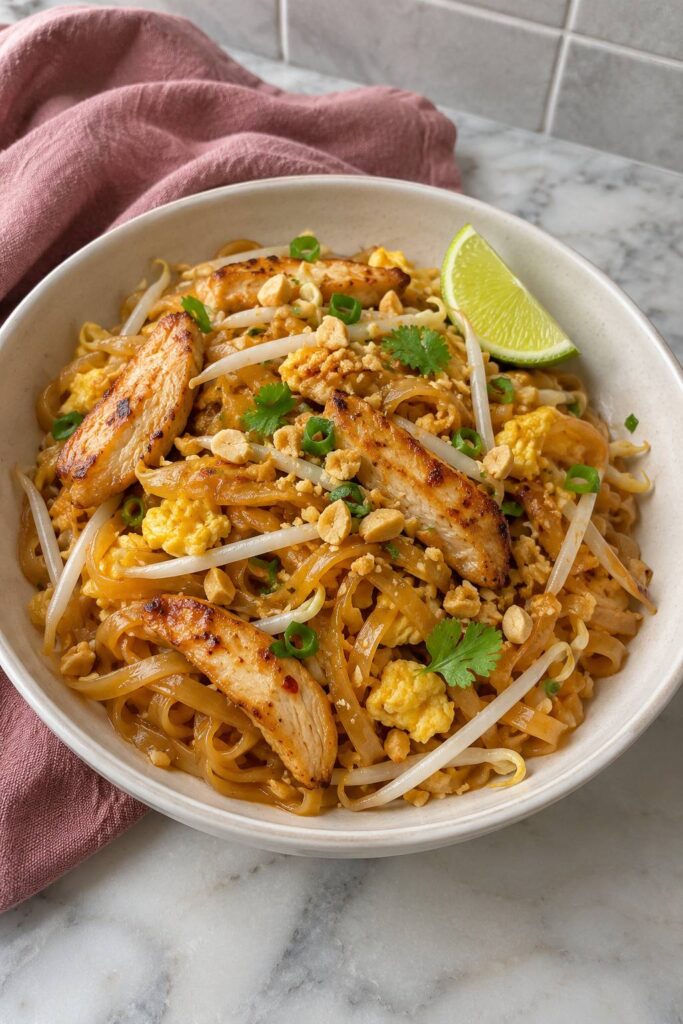
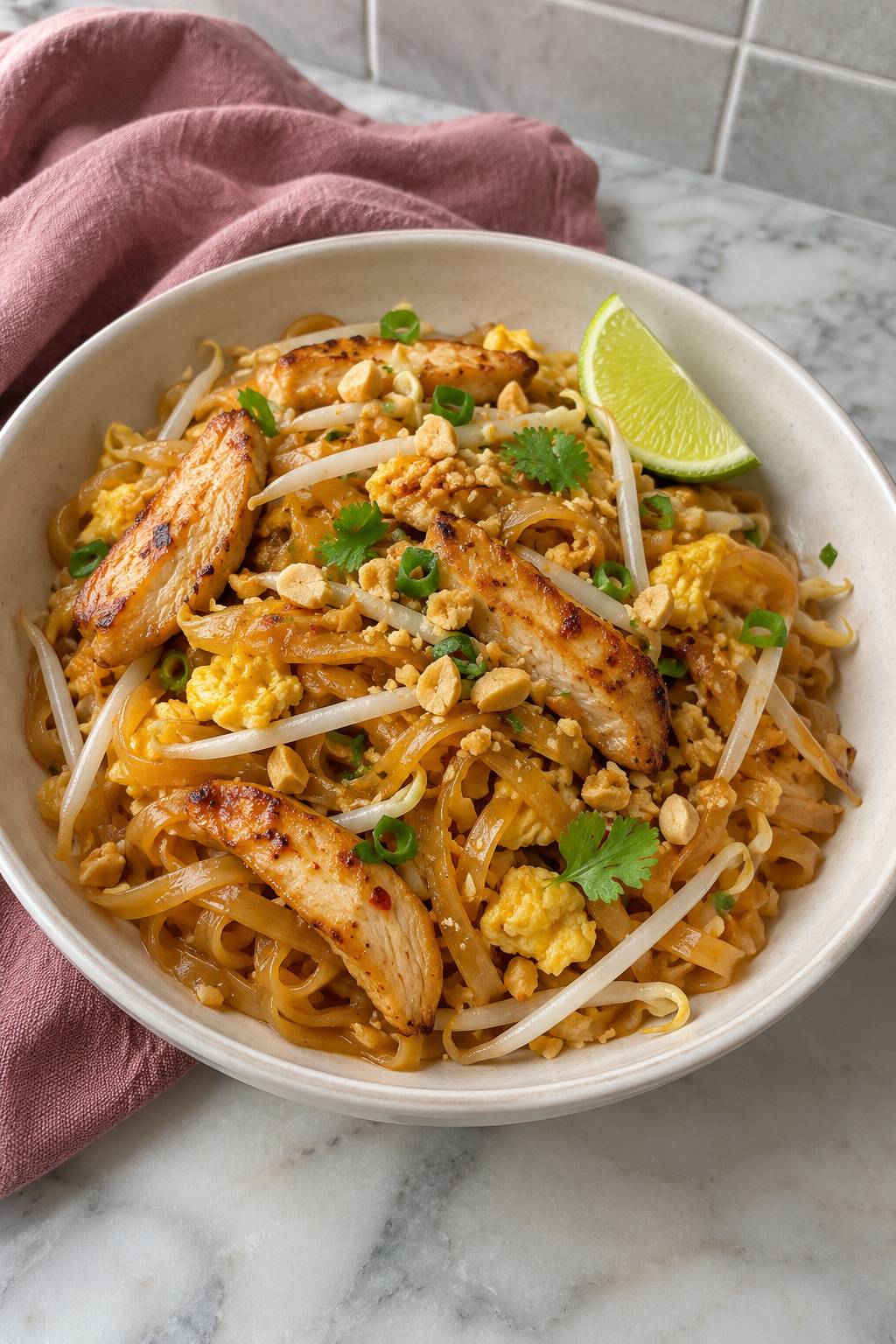
The best bites of this chicken pad thai bring together chewy rice noodles, golden strips of chicken breast, and soft folds of scrambled egg. The tamarind sauce gives the noodles their tang, crisp-tender mung bean sprouts lighten each forkful, and chopped roasted peanuts add a deeper crunch. A squeeze of lime brightens the sauce right in your bowl.
Keep an eye on how the noodles feel as you cook. You want them pliable enough to toss when they come out of the pot, with a slightly firm center that softens in the sauce. Once the noodles are glossy and tender, they can carry the chicken, eggs, and sprouts without losing their chew.
Start With Ready-to-Use Tamarind Puree
Look for unsweetened tamarind puree labeled ready to use. Its tartness is the backbone of the sauce. Light brown sugar rounds out the tang, fish sauce brings savory depth, and water helps bring the mixture together so it coats the noodles evenly. Whisk until the sugar dissolves. If you see grains at the bottom of the bowl, keep whisking before the sauce goes into the skillet.
Check the Noodles Before You Drain Them
Dried flat rice noodles soften at different rates depending on their width, so start checking them while they boil. Lift a noodle and taste it. It should bend easily and still feel slightly firm in the center. That little bit of firmness gives the noodles room to finish cooking as you toss them with the tamarind sauce.
After rinsing the noodles under cool water, drain them well. Water caught between the strands can dilute the sauce. When you toss the noodles in the skillet, look for an even sheen and check that the centers have softened while the noodles still have some chew.
Give the Chicken Room to Brown
Cutting the chicken breast across the grain keeps the strips tender to bite into. Pat them dry and leave space between them in the skillet so they can brown on both sides. Cook the chicken in batches to give each strip contact with the hot pan, and use the recipe card’s doneness guidance for the thickest pieces. Save the juices that collect on the plate so they go back into the skillet with the chicken.
Keep the Eggs Soft and the Sprouts Crisp
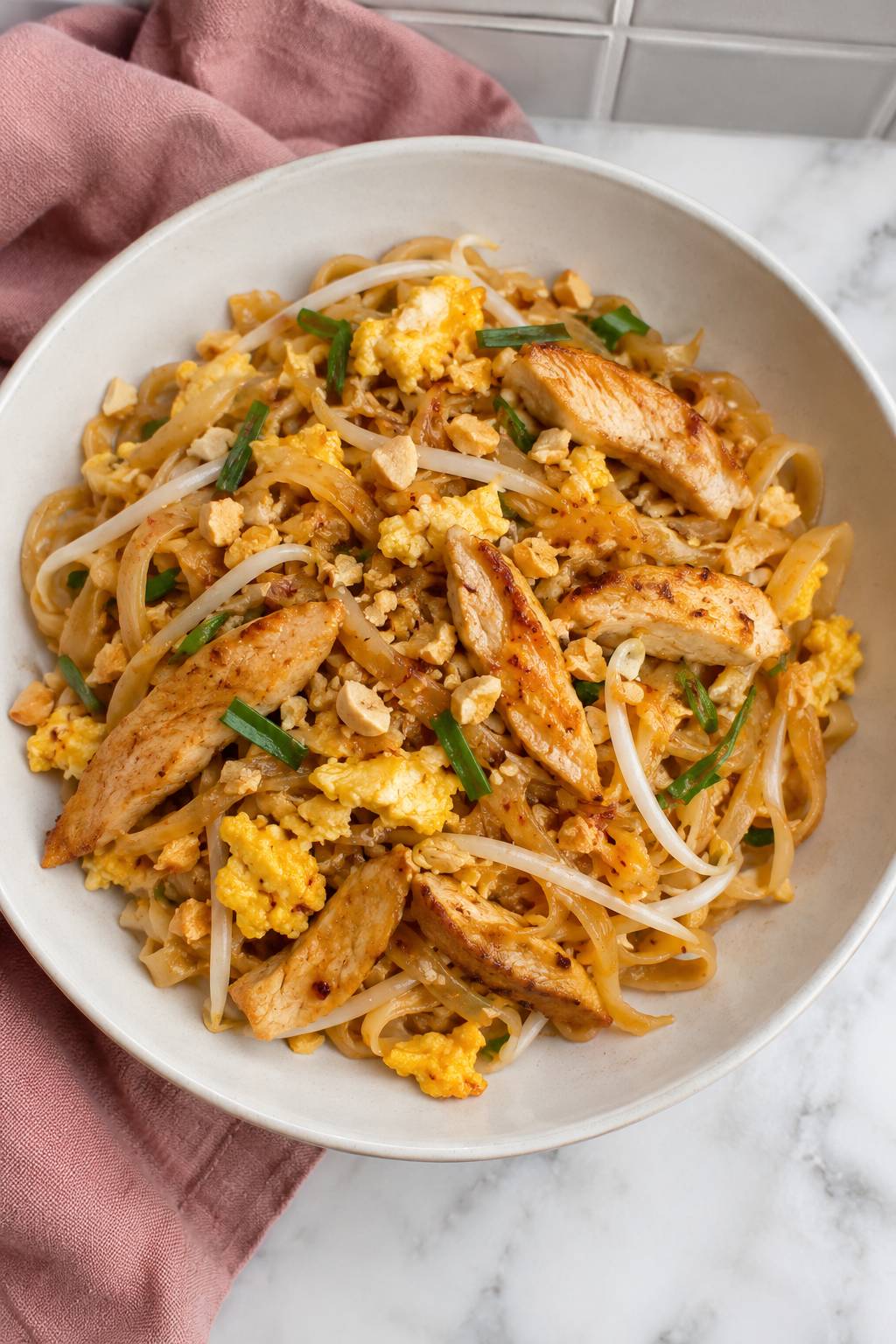
Push the fragrant garlic and scallion whites to the side to give the beaten eggs a clear spot in the skillet. Scramble the eggs until softly set so you get tender pieces throughout the noodles. The bean sprouts go in near the end with the scallion greens. Toss until the sprouts are steaming hot throughout and still have a little snap.
Frequently Asked Questions
How do I prepare tamarind concentrate for the sauce?
Follow the dilution directions on your package before measuring the tamarind for the sauce. Concentrates vary in strength, and the recipe is written for ready-to-use puree. Diluting first lets you measure the prepared tamarind at the intended strength.
What happens if I boil the rice noodles until fully tender?
The noodles continue to soften when you toss them with the sauce. If they’re already fully tender when you drain them, they can lose their chew in the skillet. Taste a strand as it boils and drain when the center still offers a little resistance.
When should I add the peanuts, cilantro, and lime?
Add the chopped peanuts and fresh cilantro leaves after the noodles are in the bowls. The peanuts keep their crunch and the cilantro stays fresh. Serve the lime in wedges so you can squeeze it over your bowl just before eating.
High Protein Chicken Pad Thai
Course: Main CourseCuisine: ThaiDifficulty: Easy4
servings20
minutes19
minutes600
kcal39
minutesChewy rice noodles are tossed in a tangy tamarind sauce with golden strips of chicken breast, soft scrambled eggs, and crisp-tender bean sprouts. Chopped peanuts, scallions, cilantro, and lime finish each bowl.
Ingredients
- Tamarind Sauce
3 tbsp unsweetened tamarind puree
3 tbsp packed light brown sugar
2 tbsp fish sauce
3 tbsp water
- Pad Thai
8 oz dried flat rice noodles
1 1/2 lb boneless, skinless chicken breasts, cut across the grain into 1/4-inch-thick strips
2 tbsp light olive oil, divided
3 garlic cloves, minced
3 large eggs, beaten
2 cups mung bean sprouts
4 scallions, thinly sliced, whites and greens separated
- For Serving
1/4 cup roasted unsalted peanuts, chopped
1/4 cup fresh cilantro leaves
1 lime, cut into wedges
Directions
- Whisk the tamarind puree, brown sugar, fish sauce, and water in a small bowl until the sugar dissolves. Pat the chicken strips dry.
- Cook the noodles in a large pot of boiling water for about 5 minutes, until pliable but still slightly firm in the center. Drain, rinse briefly under cool water, and drain well.
- Heat 2 tsp of the oil in a large deep skillet or wok over medium-high heat. Add half the chicken in a single layer and cook for about 4 minutes, turning once, until golden on both sides and the thickest strips reach 165°F. Transfer to a plate. Repeat with another 2 tsp oil and the remaining chicken.
- Add the remaining 2 tsp oil to the skillet, followed by the garlic and scallion whites. Stir for about 30 seconds, until fragrant. Push them to one side, pour in the eggs, and scramble for about 1 minute, until softly set.
- Add the noodles and tamarind sauce. Toss with tongs for about 2 minutes, until the noodles are tender and glossy. Return the chicken and any juices to the skillet, then add the bean sprouts and scallion greens. Toss for 2 to 3 minutes, until the sprouts are steaming hot throughout and still have some crunch.
- Divide among four bowls. Sprinkle with peanuts and cilantro, and serve with lime wedges for squeezing.
Notes
- Use tamarind puree labeled ready to use. Tamarind concentrate varies in strength, so follow the package dilution directions before measuring.
- Rice noodles soften at different rates depending on their width. Start checking them before the package time is up and drain while the centers are still slightly firm, since they finish cooking in the sauce.