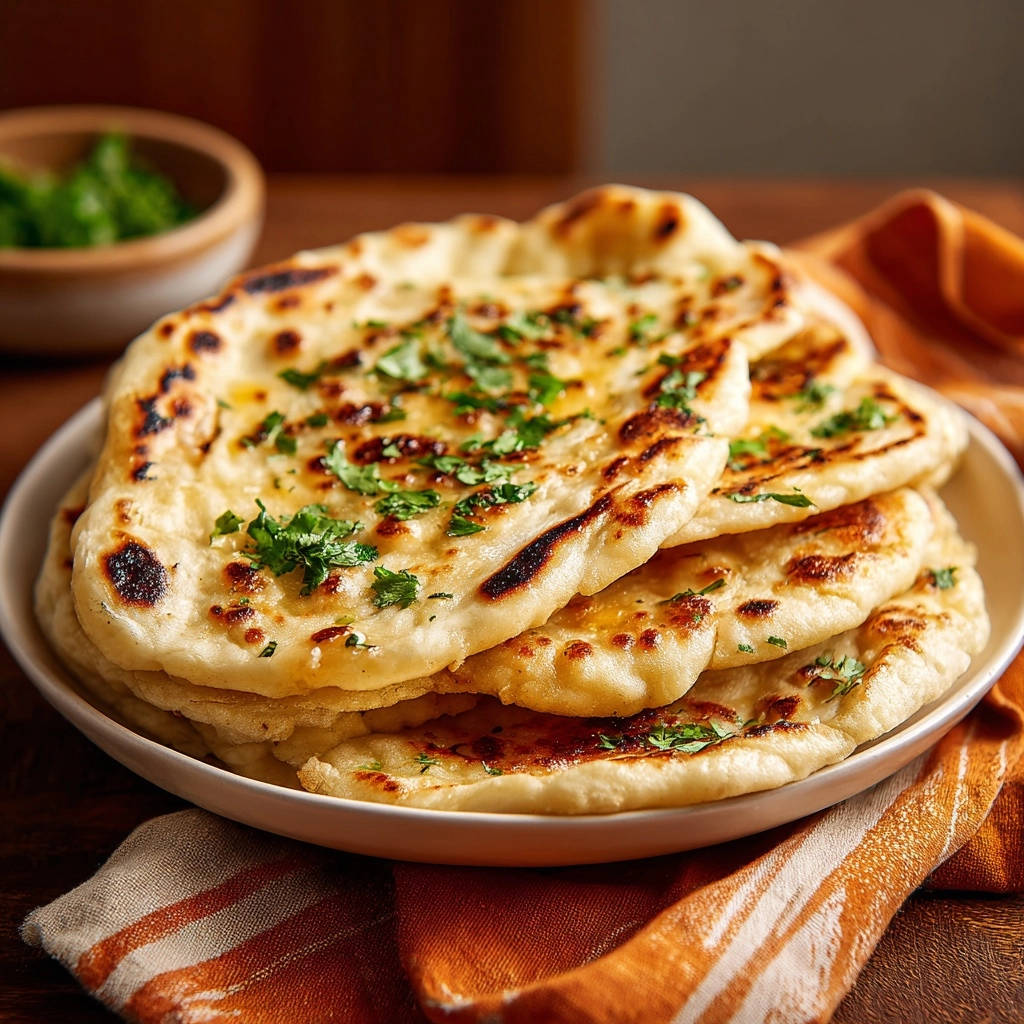
For years, my pursuit of truly authentic, pillowy soft naan at home was constantly thwarted by dry, stiff results-a frustration I know many home cooks share.
This recipe for Homemade Garlic Herb Naan solves that problem completely by focusing on one non-negotiable technique: the rapid, steam-trapping cook that guarantees those spectacular, airy pockets every single time.
Get ready for a richly flavored flatbread that is perfect for scooping up your favorite curries and stews.
Escape the Dryness: Why This Naan Recipe Always Works
The most common failure when making flatbread is ending up with a dense, overly chewy texture that feels more like a pita than a classic Indian naan.
Traditional methods often rely on quick, high heat alone, which can sometimes seal the exterior too slowly, allowing precious moisture to escape and resulting in a dry bread.
Our method shifts the focus to active steam capture, ensuring the dough maintains maximum hydration while the high heat develops incredible flavor and char.

The result is a light, flexible, pillowy bread with big, beautiful air bubbles, completely escaping the typical dryness.
Essential Ingredients for Your Perfect Homemade Garlic Herb Naan
While the list of ingredients is short, understanding the role of each component is vital for achieving the optimal texture and flavor of Homemade Garlic Herb Naan.
Yeast Activation: The Foundation of Fluff
To ensure a quick and vigorous proof, the active dry yeast must be woken up using warm water at around 105°F (not boiling hot) and a touch of sugar.
The sugar provides readily available food for the yeast, allowing it to rapidly multiply and create the necessary carbon dioxide that forms the foundational air structure of the naan.
The Secret Tenderizer: Whole Milk Yogurt (Why It Matters)
The addition of whole milk yogurt is the secret weapon for achieving maximum tenderness and a subtle tang that balances the rich herbs.
The fat content adds richness and elasticity, while the acidity helps break down the gluten structure just enough, keeping the dough soft rather than tough.
Crucially, use traditional plain whole milk yogurt, not Greek yogurt, which is too thick and dense and contains less moisture for the recipe’s hydration balance.
The Aromatic Finish: Fresh Herbs and Garlic Butter
The finish elevates this from plain flatbread to Garlic Herb Naan. Fresh herbs, such as cilantro or parsley, are essential for that bright, pungent flavor.
The mixture of melted butter, fresh minced garlic, and herbs should only be combined and brushed on the naan immediately after it comes off the heat.
The residual warmth of the bread gently cooks the raw garlic, unlocking its flavor without allowing it to burn or develop bitterness.
Prepping Your Kitchen: Essential Equipment Checklist
Having the right tools is almost as important as the technique itself for achieving guaranteed success with this recipe.
The Critical Cooking Vessel: Cast Iron Skillet
A heavy cast iron skillet is highly recommended because it has exceptional heat retention capabilities, allowing it to get truly “screaming hot” and maintain that temperature between batches.
If cast iron is unavailable, use the heaviest, flattest-bottomed nonstick pan you own, ensuring it is allowed ample time to preheat completely.
You will also need a separate heavy skillet lid or a large metal bowl to use as the steam trap in step eight.
A Step-by-Step Guide to Crafting Pillowy Homemade Garlic Herb Naan
-
Activate and Rest the Yeast:
In a large bowl, combine the warm water, active dry yeast, and sugar. Stir briefly to dissolve the sugar.
Allow the mixture to stand for 5 to 10 minutes until a thick, frothy layer appears on the surface, which confirms your yeast is active and ready to use.
-
Knead Until Elastic:
Add the flour, salt, yogurt, and neutral oil to the yeast mixture. Mix until the ingredients are just combined into a shaggy dough.
Turn the dough out onto a lightly floured surface and knead vigorously for 5 to 7 minutes until it transforms into a smooth, supple, and highly elastic ball.
If the dough remains tacky and sticks to your hands, incorporate flour gradually-no more than one tablespoon at a time-to maintain proper hydration.
-
Proof for Maximum Rise:
Lightly oil a clean bowl and turn the dough to coat the surface. Cover the bowl tightly with plastic wrap or a damp kitchen towel.
Let the dough rise in a warm spot for 90 minutes, or until it has visibly doubled in size. This slow, long rise builds deep flavor and airiness.
-
Divide and Relax the Dough:
Gently punch down the risen dough to release the gases, then turn it out and divide it into 8 equal portions.
Roll each piece into a smooth, tight ball. Cover the dough balls and let them rest for 10 minutes; this crucial rest relaxes the gluten, preventing the dough from springing back when you roll it.
-
Preheat the Skillet (Screaming Hot and Dry):
Place your cast iron skillet or heavy pan over medium-high to high heat. Allow it to preheat for a full 5 to 10 minutes until it is absolutely screaming hot.
CRITICAL: The pan must remain completely dry. Do not add any oil or butter at this stage.
-
Roll Evenly and Thinly:
On a lightly floured surface, roll one dough ball into an oval or teardrop shape, aiming for a thickness of 1/8 to 1/4 inch.
Maintaining a uniform thickness across the entire piece is essential, as this allows the steam to distribute evenly and creates a unified air pocket.
-
The Initial Dry Cook and Bubble Check:
Place the rolled naan directly onto the dry, smoking hot skillet. Let it cook for approximately 60 to 90 seconds without touching it.
You will immediately see large bubbles start to form and puff up on the surface-this is your signal that the internal moisture is turning to steam.
Once the base is lightly set and the bubbles appear, use tongs to quickly flip the naan.
-
The Puffy Pocket Technique (Steam Trap):
Immediately after flipping, quickly invert a heavy skillet lid or a large metal bowl directly over the naan, effectively sealing it to the pan surface.
Trap the steam for a critical 30 seconds; this superheats the moisture inside, forcing the bubbles to inflate into those desired, huge, airy pockets.
-
Finishing the Cook: Char and Transfer:
Remove the steam-trapping lid. Let the naan finish cooking for another 15 to 30 seconds until soft, perfectly puffed, and displaying desirable char marks.
Transfer the piping hot naan directly to a clean plate or cutting board.
-
Brush and Repeat:
Stir the melted butter, minced garlic, and fresh herbs together in a small bowl. Generously brush the warm naan with the aromatic garlic herb butter.
Before cooking the next piece, quickly wipe out any flour or charred bits from the skillet with a dry cloth (use caution) and ensure the pan is reheated to full temperature.
Mastering the Puff: Decoding the Dry-Skillet Steam Technique
Achieving those signature airy pockets in Homemade Garlic Herb Naan is a precise dance between high heat and trapped moisture.
Why Extreme Heat on a Dry Surface is Non-Negotiable
The purpose of a dry, intensely hot surface is to create what is known as ‘oven spring’ but in a pan. When the dough hits the heat, the surface starch rapidly gelatinizes, setting a thin, inelastic crust.
Simultaneously, the high heat instantly converts the internal moisture into steam faster than it can escape, trapping the steam inside the developing dough structure.
The 30-Second Steam Trap: Elevating Air Pockets
Flipping the naan immediately after the initial bubble formation puts the developing crust directly against the pan, allowing it to set fully.
The instant sealing with the inverted bowl traps the massive burst of steam created by the intense heat.
This trapped, superheated steam has nowhere to go but up, forcing the internal air bubbles to inflate dramatically before the bread dries out, resulting in the perfect, pillowy texture.
Troubleshooting Your Naan: Solving Common Dough and Cooking Issues
“My Naan is Stiff, Dense, or Doesn’t Have Pockets.”
This is usually a result of insufficient proofing, over-kneading, or using a pan that was not hot enough.
Ensure you knead the dough for exactly 5-7 minutes; excessive kneading toughens the gluten, leading to a dense structure.
Always verify the yeast is foamy before mixing, and never cook the dough unless the skillet is smoking hot and completely dry.
“The Dough is Too Sticky to Handle or Difficult to Roll.”
A small amount of stickiness is fine; incorporate flour only one tablespoon at a time during kneading to maintain the recipe’s high hydration level.
The 10-minute rest after dividing the dough is crucial because it allows the gluten to relax, which prevents the dough from snapping back when you try to roll it out thinly.
“The Garlic Herb Butter Burns or Tastes Bitter.”
Garlic is highly susceptible to burning at high temperatures, which gives it a bitter taste.
Never add the garlic to the pan or mix it into the butter until the naan has been transferred off the heat.
The residual heat of the hot bread is all that is required to infuse the butter and take the raw edge off the minced garlic.
Beyond the Basket: Serving Suggestions and Naan Storage
Perfect Pairings: What to Serve with Homemade Garlic Herb Naan
This beautiful, fluffy flatbread is the ultimate accompaniment to almost any meal where scooping is required.
- Classic Indian Cuisine: Pair it with creamy Butter Chicken, rich Lentil Dal, or hearty Lamb Curry.
- Mezze and Dips: Use it as a superior scoop for fresh hummus, baba ghanoush, or spicy tzatziki.
- Light Wraps: Slice and fill the pockets with grilled vegetables, roasted chicken, or falafel.
The robust garlic and herb flavor profile means this naan is satisfying enough to be served simply on its own with a sprinkle of flaky sea salt.
Keeping Naan Fresh: Make-Ahead and Reheating Instructions
To make the dough ahead, follow steps 1 through 3 (proof) and then place the proofed dough in an airtight container in the refrigerator for up to 24 hours.
Allow the chilled dough to come back up to room temperature for about 30 minutes before punching down and proceeding with step 4.
Store cooked Homemade Garlic Herb Naan at room temperature in an airtight bag for up to two days, or freeze layered between parchment paper for up to two months.
To reheat, the best method is to warm the naan gently in a dry skillet over medium heat for 30-60 seconds per side until soft and pliable again.
Frequently Asked Questions About Homemade Garlic Herb Naan
Can I substitute dried herbs for fresh cilantro or parsley?
While fresh herbs are strongly recommended for their vibrant taste and aroma, you can substitute dried herbs if necessary.
Use approximately 1 tablespoon of dried herbs for every 1/4 cup of fresh, and allow the dried herbs to sit in the melted butter for at least 5 minutes to rehydrate slightly before brushing.
What is a good dairy substitute for the whole milk yogurt?
For a non-dairy option, look for a full-fat, unsweetened coconut yogurt or a cashew yogurt, ensuring it is slightly tangy to mimic the acidity of the dairy yogurt.
Alternatively, buttermilk works exceptionally well due to its ideal acidity and high moisture content, offering a soft texture.
Can I cook this naan on the grill?
Yes, cooking naan on a very hot gas or charcoal grill works beautifully and imparts a wonderful smoky flavor.
Place the rolled naan directly on the oiled grill grates over high heat for 60 seconds per side until fully puffed and charred, skipping the steam-trap step if the puff happens naturally.
Ready to Elevate Your Dinner Spread?
This recipe transforms Homemade Garlic Herb Naan from an intimidating baking project into a simple, reliable weeknight standard.
The payoff in flavor, texture, and aroma is immense, proving that authentic results are possible right on your stovetop.
Try the steam-trapping technique tonight, and leave a comment to share how those perfect, pillowy pockets changed your dinner routine!

Homemade Garlic Herb Naan
Course: BreadCuisine: Indian cuisineDifficulty: easy8
servings20
minutes15
minutes120
minutesIndian cuisine
Ingredients
1 and 1/2 teaspoons active dry yeast
1 cup warm water (about 105 degrees F)
2 teaspoons granulated sugar
3 cups all-purpose flour, plus more for dusting
1 teaspoon fine sea salt
1/2 cup plain whole milk yogurt (not Greek)
2 tablespoons neutral oil (like vegetable or canola)
2 tablespoons unsalted butter, melted
2 cloves fresh garlic, finely minced
1/4 cup fresh cilantro or parsley, chopped
Directions
- Activate the Yeast. In a large mixing bowl, combine the warm water, yeast, and sugar. Let stand for 5 to 10 minutes until foamy.
- Form the Dough. Add the flour, salt, yogurt, and neutral oil to the yeast mixture. Mix until a shaggy dough forms. Turn the dough out onto a lightly floured surface and knead for 5 to 7 minutes until smooth and elastic. If the dough is too sticky, add flour one tablespoon at a time.
- Proof. Place the dough in an oiled bowl, turning to coat. Cover tightly with plastic wrap or a kitchen towel and let rise in a warm place for 90 minutes, or until doubled in size.
- Divide. Punch down the risen dough gently and divide it into 8 equal portions. Roll each portion into a smooth ball. Cover the dough balls and let them rest for 10 minutes.
- Prep the Skillet for the Puff. This step is critical. Place a cast iron skillet or heavy nonstick pan over medium-high to high heat. You want the pan screaming hot before the dough hits it. DO NOT add any oil to the pan yet.
- Roll the Naan. On a floured surface, roll one dough ball into an oval or teardrop shape, about 1/8 to 1/4 inch thick. (Keep the thickness even to encourage the full puff.)
- The Puffy Pocket Technique. Place the rolled naan dough directly onto the dry, extremely hot skillet. Let it cook for about 60 to 90 seconds. You will immediately see large bubbles start to form on the surface. This is the key: as soon as the base is lightly set and the bubbles appear, use tongs to quickly flip the naan.
- Seal and Steam. Immediately after flipping, use a heavy skillet lid or a large metal bowl inverted over the naan to trap the steam for 30 seconds. The trapped steam will superheat, forcing the bubbles to inflate into large, airy pockets. Remove the lid and let the naan finish cooking for 15 to 30 seconds until soft, charred, and puffed perfectly.
- Finish and Brush. Transfer the hot naan to a plate. In a small bowl, stir the melted butter, minced garlic, and herbs together. Brush the warm naan generously with the garlic herb butter.
- Repeat. Wipe out the skillet with a dry cloth (be careful of the heat) and repeat the cooking process with the remaining dough balls, ensuring the pan remains very hot for each one. Serve immediately.
Notes
- The 90-minute proofing time is essential. Ensure the skillet is screaming hot and dry before cooking to achieve the perfect puffy pocket.