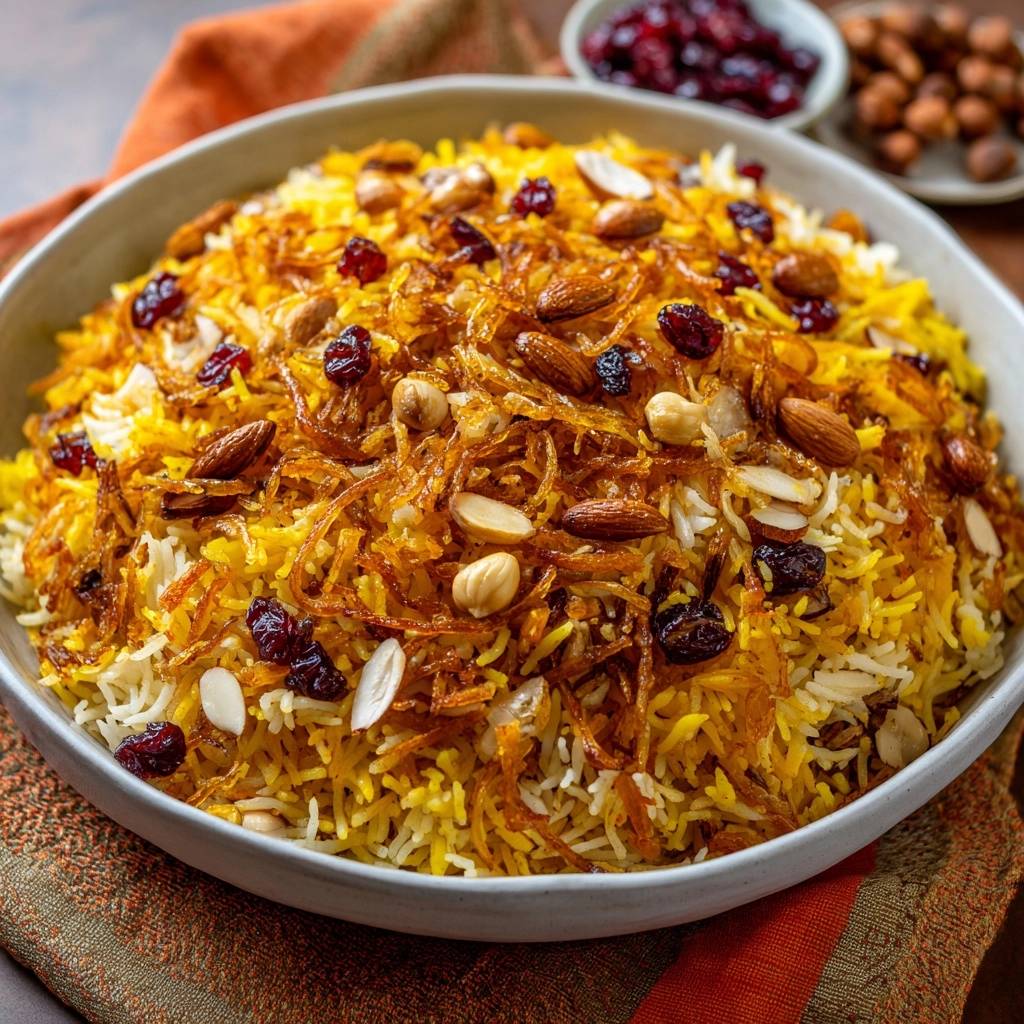
Imagine a platter of rice so vibrant it looks like a collection of rubies, gold, and pearls. Jeweled Saffron Basmati Rice, known traditionally as Javaher Polo, is the crown jewel of Persian cuisine. It isn’t just a side dish; it’s a sensory experience that fills your kitchen with the intoxicating aroma of blooming saffron and toasted nuts. Every bite offers a playful contrast between the tartness of dried berries, the sweetness of golden raisins, and the savory crunch of perfectly fried onions.
However, many home cooks shy away from this dish because they fear the dreaded “mushy rice” disaster. This isn’t a standard “dump and simmer” recipe where you walk away and hope for the best. Instead, we use a refined technical process that treats the rice more like pasta than a grain. By par-boiling and then steaming, we ensure that every single grain remains long, distinct, and incredibly fluffy.
The secret to this masterpiece lies in the “Damkoni” technique. By wrapping the pot lid in a clean kitchen towel, you create a moisture wick that prevents steam from dripping back onto the rice. This one simple step is what separates a sticky bowl of grains from a professional-grade Persian feast. Trust me, once you see those individual grains fall away from your fork, you’ll never go back to the old way of cooking rice.
The Anatomy of Long-Grain Basmati Rice
To get that iconic elongation, you must start with high-quality, aged Basmati rice. Aged rice has a lower moisture content, which allows the grains to expand significantly without breaking. When you look at the science, Basmati is prized for its high amylose content. This specific starch structure is what keeps the grains firm and separate rather than gummy.
Short-grain varieties are packed with amylopectin, which creates a sticky, glue-like texture when cooked. For this recipe, only long-grain Basmati will do. If you can find rice aged for at least 12 to 24 months, you’ll notice the grains are thinner and have a slightly creamier hue. This quality ensures the rice can withstand the par-boiling process while maintaining a perfect “al dente” bite.
Essential Pantry Items for the Jeweled Topping
The “jewels” of this dish are what provide the complex flavor profile. Traditionally, we use Barberries (Zereshk), which are tiny, intensely tart dried fruits. If you can’t find them at a local specialty market, dried cranberries are a fantastic substitute. They offer that same bright acidity that cuts through the richness of the butter and saffron.
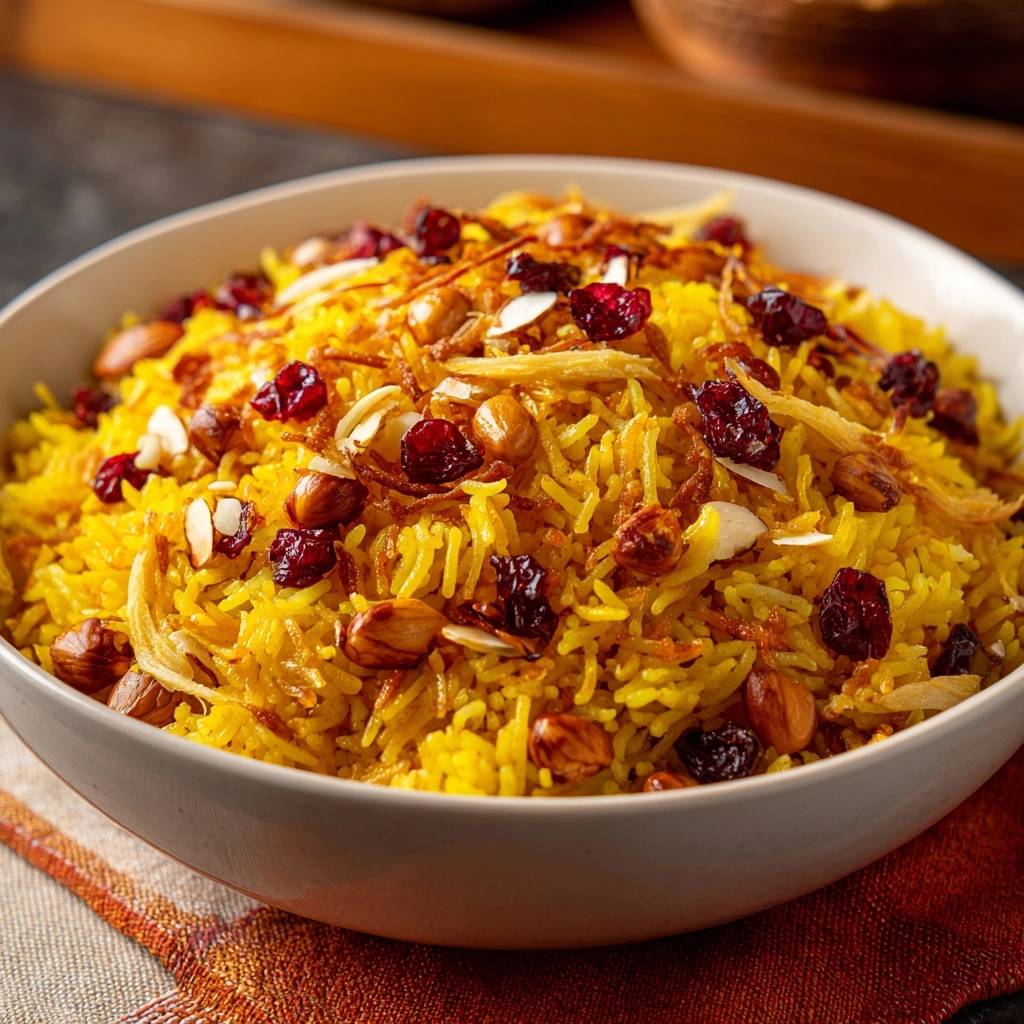
Texture is just as important as flavor, which is why we use a mix of slivered and whole blanched almonds. The slivered pieces distribute throughout the rice, while the whole almonds provide a satisfying, meaty crunch. Golden raisins add a subtle honey-like sweetness that balances the tart berries. For the best results, use ghee instead of standard butter; its higher smoke point and nutty depth elevate the entire dish.
Saffron Selection and Preparation
Real saffron is the world’s most expensive spice, so you want to treat it with respect. Avoid “safflower” or pre-ground powders, which lack the floral complexity of true threads. Look for deep red threads with very little yellow; this indicates a higher concentration of crocin, the compound responsible for that vivid orange-gold color.
To maximize the aroma, grind your saffron threads into a fine powder using a small mortar and pestle. Adding a tiny pinch of sugar helps act as an abrasive to get a smoother grind. “Blooming” the saffron in hot water—or even over an ice cube—is essential. This process extracts the full spectrum of color and scent, ensuring your rice is stained a deep, royal gold rather than a pale yellow.
The Science of the Par-Boil and Shock Method
Most people fail at rice because they cook it in exactly the amount of water the grain can absorb. In this method, we boil the rice in a massive pot of heavily salted water, just like boiling linguine. This allows the grains to move freely and prevents them from bumping into each other and releasing excess starch into a thick slurry.
You are looking for the “al dente” state. After about 5 to 7 minutes of boiling, bite into a grain. The outside should be tender, but the very center should still have a firm “bite” or a tiny white dot of uncooked starch. This is the crucial moment to drain the rice. If you wait until it’s fully soft, the steaming phase will turn it into mush.
Immediately after draining, hit the rice with a quick splash of lukewarm water. This “shocks” the grains, washing away any lingering surface starch and stopping the enzymatic cooking process instantly. This step is the ultimate insurance policy against clumping. It keeps the grains slippery and individual before they head back into the pot for the final steam.
Step-by-Step: Preparing the Saffron Rice Base
Rinsing and Soaking for Maximum Elongation
Before the rice ever touches a pot, you must rinse it thoroughly. Place the rice in a fine-mesh strainer and run cold water over it while gently agitating the grains with your fingers. You’ll notice the water starts out milky and cloudy; keep rinsing for at least 3 minutes until that water runs perfectly clear. This removes the surface dust that causes stickiness.
After rinsing, soak the rice in cold water for 30 minutes. This step is non-negotiable for long-grain Basmati. Soaking allows the grain to hydrate from the inside out. If you skip this, the outside of the grain will cook and expand much faster than the inside, causing the rice to curl or break during the boiling phase.
Frying Onions for Maximum Crispness
The crispy onions, or “Piaz Chichi,” provide a savory backbone to the dish. The key here is uniform, paper-thin slices. If the slices vary in thickness, the thin ones will burn before the thick ones get crunchy. Use a sharp knife or a mandoline to get them consistent.
Fry the onions in oil over medium-high heat rather than low heat. While low heat is great for soft, caramelized onions, we want a structural crunch. Stir them frequently so they brown evenly. Once they reach a deep mahogany gold, pull them out immediately; they will continue to darken for a few seconds as they drain on paper towels.
Building the Steam Pyramid
When you return the par-boiled rice to the pot, don’t just dump it in and flatten it. Instead, gently spoon the rice in, mounding it into a pyramid or cone shape. This shape creates more surface area for the steam to move around the grains rather than getting trapped in the center.
Take the handle of a wooden spoon and poke five holes through the mound all the way to the bottom of the pot. These act like little chimneys, allowing the steam from the butter and saffron water at the bottom to circulate evenly through the entire batch. This ensures the top layer of rice cooks just as perfectly as the bottom.
The Kitchen Towel Secret for Fluffy Grains
The “Damkoni” technique is the most important part of the Persian steaming method. As the rice steams, moisture rises and hits the cold lid of the pot, turning back into water droplets. In a standard pot, those droplets fall back onto the rice, making the top layer soggy and heavy.
By wrapping a clean, lint-free kitchen towel around the lid, you create a thirsty barrier. The towel absorbs that rising moisture, keeping the environment inside the pot hot but dry. This dry steam is what allows the grains to finish cooking while remaining separate and light. Just make sure to tuck the edges of the towel up over the handle so they stay far away from the heat source!
Troubleshooting Common Basmati Texture Issues
If you find your rice is too salty after the par-boiling stage, don’t panic. You can give it a more thorough rinse with lukewarm water in the colander before the steaming phase. The salt is mainly there to season the grain during the boil, and a quick rinse will remove the excess without ruining the texture.
Sometimes, despite your best efforts, the rice might still feel a bit crunchy after the 25-minute steam. If this happens, mix a tablespoon of water with a teaspoon of melted butter and drizzle it around the very edges of the pot. Cover it back up with the towel-lined lid and give it another 5 to 10 minutes on the lowest heat possible.
If the bottom of your rice burns too quickly, your heat is likely too high. Persian rice is often cooked on a “flame tamer” or heat diffuser to ensure the heat is distributed evenly across the bottom of the pot. If you don’t have one, simply ensure your burner is set to its absolute lowest setting once the initial steam has built up.
Assembling the Visual Masterpiece
Plating this dish is an art form. Start by taking about one cup of the cooked white rice and placing it in a small bowl. Pour your remaining concentrated saffron water over it and toss gently until every grain is a brilliant, uniform gold. This “saffron stain” creates a beautiful color contrast against the snowy white rice.
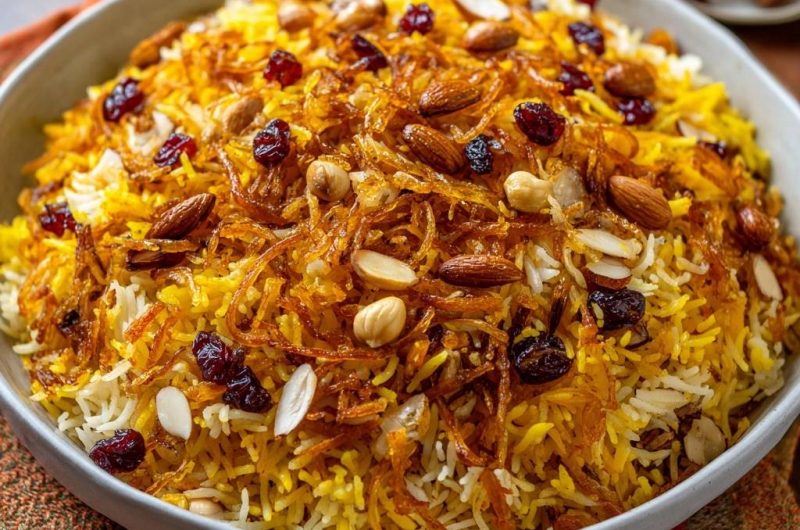
Spread the fluffy white rice onto a large serving platter first. Then, scatter the golden saffron rice over the top in a decorative pattern. Finally, shower the platter with your sautéed almonds, tart berries, and those incredibly crispy fried onions. The result is a mountain of rice that looks as expensive and precious as a box of jewels.
What to Serve with Jeweled Saffron Rice
This rice is so flavorful it can almost stand alone, but it truly shines when paired with grilled proteins. Lamb Kofta or Saffron Chicken (Joojeh Kabob) are classic choices that benefit from the rice’s aromatic profile. The savory juices from the meat soak into the grains, creating a perfect bite.
For a vegetarian option, roasted eggplant or a thick lentil stew works beautifully. To balance the warmth of the saffron and the crunch of the nuts, always serve a side of cool yogurt. A bowl of Mast-o-Khiar (yogurt with cucumbers and dried mint) provides a refreshing contrast that cleanses the palate between bites of the rich, jeweled rice.
Storage and Reheating for Optimal Texture
Rice tends to dry out quickly in the refrigerator because the starches undergo a process called retrogradation. To keep it fresh, store leftovers in an airtight container for up to three days. Avoid freezing this specific rice dish, as the delicate texture of the par-boiled grains can become grainy and crumbly once thawed.
When you’re ready to eat it again, skip the standard microwave method which can make rice rubbery. Instead, place the rice in a microwave-safe bowl and cover it with a damp paper towel. This creates a mini-steaming environment that rehydrates the grains. Alternatively, heat it in a pan on the stove with a tiny splash of water and a tight lid over low heat until it’s heated through.
Expert Tips for Success
Using a high-quality non-stick pot is a game changer for this recipe. It ensures that the bottom layer of rice—which often forms a delicious crust called Tahdig—releases easily without sticking or tearing. If you use stainless steel, you run a much higher risk of the rice bonding to the metal.
Resist the urge to stir! Once you have mounded the rice and started the steaming phase, do not lift the lid or stir the grains. Every time you lift the lid, you lose the precious steam and heat required to finish the cooking process. Let the “Damkoni” method do its work undisturbed.
Finally, be very careful when sautéing your berries and nuts at the end. Dried cranberries and barberries have a high sugar content and can go from plump to burnt in a matter of seconds. Keep them moving in the pan and remove them from the heat the moment they look shiny and full.
Frequently Asked Questions
Can I use Brown Basmati rice for this recipe?
It is not recommended for this specific technique. Brown Basmati has an outer bran layer that requires much longer cooking times and significantly more water. The par-boiling and steaming method used here is designed specifically for white Basmati to achieve that delicate, elongated texture. Using brown rice would likely result in grains that are tough on the inside and mushy on the outside.
What should I do if I don’t have a clean kitchen towel for the lid?
In a pinch, you can use several layers of heavy-duty paper towels. Lay them across the top of the pot and then press the lid down firmly over them. Just be extremely careful to fold the overhanging paper back over the lid so it doesn’t catch fire on the stove burner. The goal is simply to have an absorbent layer between the steam and the lid.
Is the 30-minute soaking step really mandatory?
Yes, if you want the best results. Soaking allows the rice grains to absorb water slowly and evenly. This strengthens the grain so it doesn’t shatter when it hits the boiling water. If you skip the soak, your rice will likely be shorter, more brittle, and prone to breaking into small pieces, which ruins the elegant look of the dish.
Can I make Jeweled Saffron Rice in a standard rice cooker?
While you can cook Basmati in a rice cooker, you won’t achieve the same results as the Persian steaming method. Rice cookers use a “set it and forget it” absorption method that doesn’t allow for the par-boiling starch removal or the “pyramid” steam circulation. You would lose the distinct grain separation and the ability to create the beautiful color contrasts and textures that make this dish special.
Why did my rice turn out sticky even though I followed the steps?
The most common culprit for stickiness is insufficient rinsing. If the water isn’t perfectly clear before you soak the rice, there is still enough surface starch to turn the pot into a gummy mess. Another possibility is over-boiling during the par-boil stage. If the rice is already soft when you drain it, the steaming phase will overcook it. Always aim for that “al dente” bite with a firm center.
Can I substitute the saffron with turmeric for color?
You can use turmeric for a yellow color, but the flavor profile will be completely different. Saffron provides a unique floral, earthy, and slightly sweet aroma that is central to the identity of Jeweled Rice. Turmeric has a much more pungent, peppery, and bitter taste. If you must substitute, use a very small amount of turmeric, but know that the authentic “Persian” fragrance will be missing.
Jeweled Saffron Basmati Rice
Course: Side DishCuisine: PersianDifficulty: easy6
servings20
minutes35
minutes55
Minutes450
kcalPersian
Ingredients
3 cups high-quality long-grain Basmati rice
1/2 teaspoon saffron threads, crushed
3 tablespoons hot water
5 tablespoons butter or ghee, divided
1/2 cup slivered almonds
1/2 cup whole blanched almonds
1/2 cup dried cranberries or barberries (zereshk)
1/2 cup golden raisins (optional, for extra “jewels”)
2 large yellow onions, very thinly sliced
1/2 cup vegetable oil (for frying onions)
2 tablespoons salt (for boiling water)
Water for boiling
Directions
- Rinse and Soak: Wash the rice in a fine-mesh strainer under cold running water, agitating gently with your fingers, for at least 3 minutes until the water runs perfectly clear. Soak the rinsed rice in a bowl of cold water for 30 minutes.
- Prepare Saffron: While the rice soaks, steep the crushed saffron in 3 tablespoons of hot water. Set aside to infuse.
- Crisp the Onions: In a wide skillet, heat 1/2 cup oil over medium-high heat. Fry the thinly sliced onions, stirring frequently, until they are a deep golden brown and crispy. Drain on paper towels and sprinkle with a pinch of salt.
- Par-boil: Bring a large pot (at least 6 quarts) of water to a rolling boil with 2 tablespoons of salt. Drain the soaking rice and add it to the boiling water. Boil for 5 to 7 minutes. Test a grain: it should be soft on the outside but still have a firm “bite” or tiny white dot in the center.
- Drain and Shock: Immediately drain the rice into a large colander and rinse with lukewarm water for 5 seconds to wash away excess starch and stop the cooking process.
- The Steam (Tahdig) Setup: Wipe the pot dry. Melt 3 tablespoons of butter in the bottom of the pot with 1 tablespoon of the saffron water. Gently spoon the par-boiled rice into the pot, mounding it into a pyramid shape. Use the handle of a wooden spoon to poke 5 holes through the rice mound down to the bottom of the pot to allow steam to circulate.
- The Towel Method: Wrap the pot lid in a clean kitchen towel (securing the edges away from the heat source) and cover the pot tightly. Cook on medium-low heat for 5 minutes to build steam, then reduce to the lowest possible heat setting for 20-25 minutes. The towel absorbs the rising moisture to keep the grains separate.
- Prepare Toppings: In a small pan, melt the remaining 2 tablespoons of butter. Sauté the slivered almonds, whole almonds, and dried cranberries for 2-3 minutes until the nuts are fragrant and the berries plump.
- Assemble: Once the rice is done, remove the lid. Take one cup of the white rice and mix it in a small bowl with the remaining saffron water until stained deep yellow. Fluff the remaining white rice in the pot with a fork.
- Serve: Layer the white rice on a platter, followed by the yellow saffron rice. Top generously with the crispy fried onions and the sautéed nut and berry mixture. Serve immediately.
Notes
- The use of a towel-lined lid is crucial as it absorbs excess moisture, preventing the rice from becoming gummy. Ensure the rice is rinsed until the water runs clear to remove surface starch.