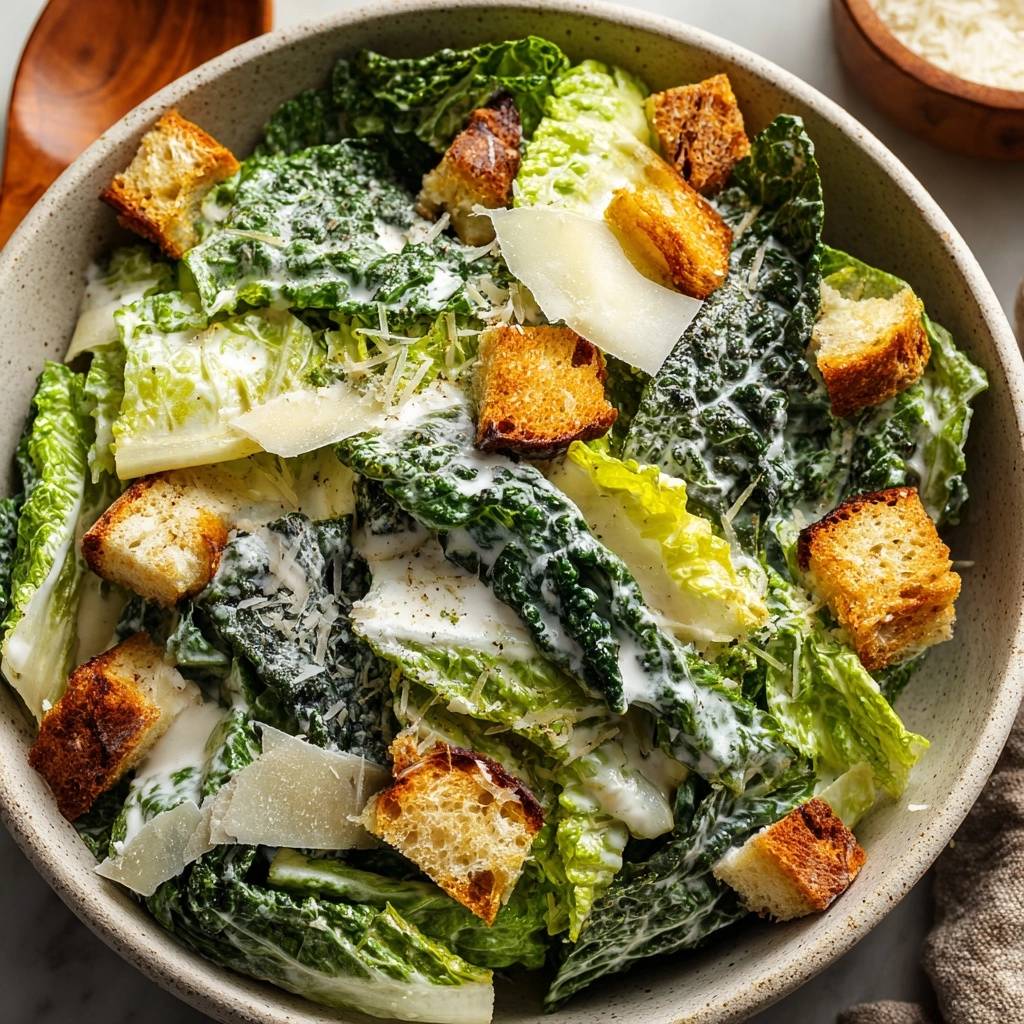
Close your eyes and imagine the perfect bite of a Classic Caesar Salad with Garlic Croutons. You hear that distinct, audible crunch of a golden sourdough cube, followed immediately by the cool, velvet snap of a perfectly chilled leaf. It’s a masterclass in contrast, where the sharp bite of parmesan meets the creamy richness of a well-emulsified dressing.
However, most home versions fall victim to the dreaded “Soggy Leaf Syndrome,” where the greens turn limp and the croutons become mushy sponges within minutes. This isn’t just a recipe; it’s a technical guide to maintaining structural integrity. We’re going to treat our greens like a construction project to ensure every forkful stays as crisp as the first.
The secret to a professional-grade salad lies in the moisture management. By using a specific cold-curing technique and creating a protective barrier on the leaves, you can serve a salad that holds its crunch even through a long dinner party. I’ve found that the temperature of your bowl matters just as much as the quality of your oil.
The Architecture of a Non-Soggy Caesar Salad
Physics plays a bigger role in your salad bowl than you might think. When you toss dressing onto wet lettuce, the water on the leaves repels the oil in the dressing, causing it to pool at the bottom of the bowl. This moisture migration is exactly what ruins the texture of your greens.
To combat this, we use a “Hydrophobic Barrier.” By lightly coating the bone-dry leaves in a thin layer of pure olive oil before adding the dressing, we create a shield. This prevents the water content in the dressing from penetrating the leaf’s surface, keeping the interior cells turgid and snappy.
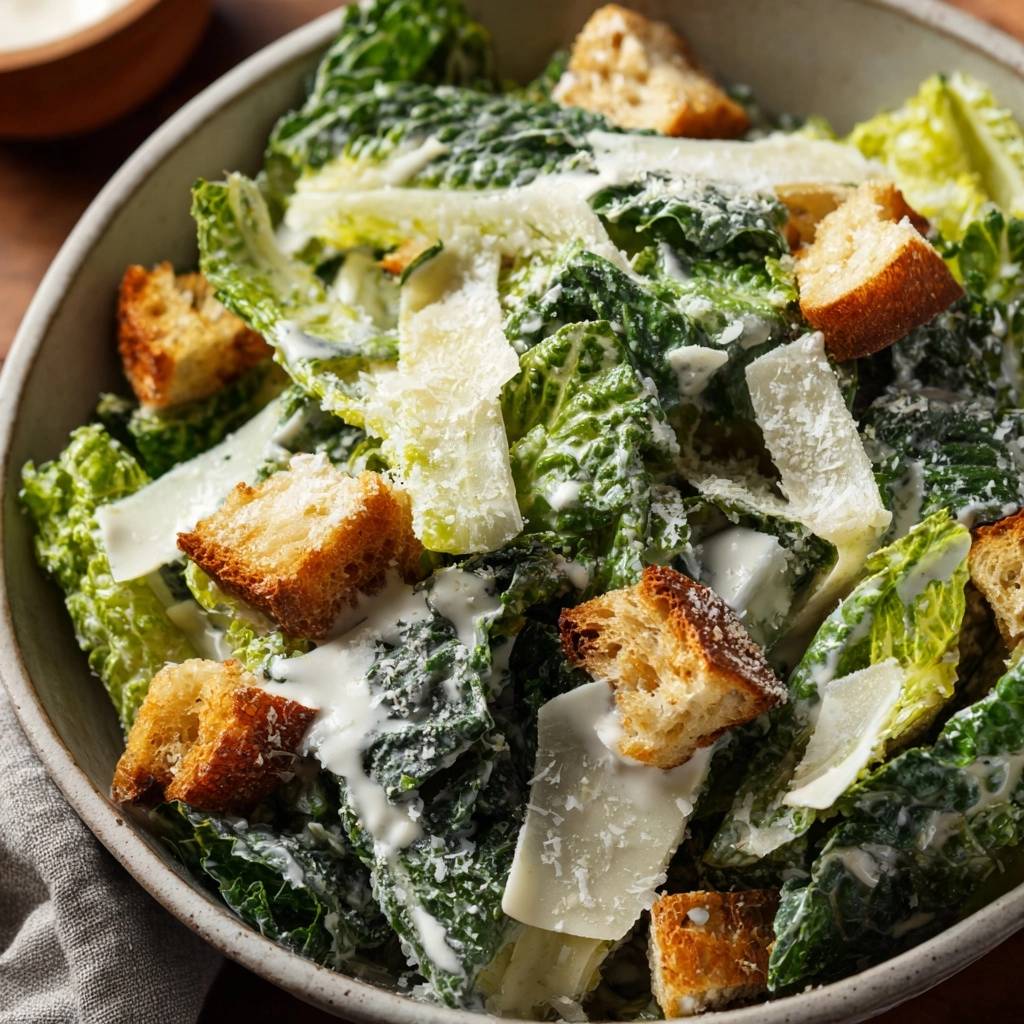
We also move away from the traditional all-Romaine approach. By introducing Lacinato kale, also known as Dino kale, we add a superior structural foundation. The kale’s sturdy, pebbled texture provides a “grip” for the dressing, while the Romaine offers that classic watery crunch we all crave. Together, they create a salad that doesn’t collapse under the weight of the parmesan.
Essential Components for the Classic Caesar Profile
Quality ingredients are the backbone of this dish. For the croutons, sourdough is the undisputed champion. Its natural fermentation creates large, irregular air pockets. When you sear these chunks in a pan, those pockets become tiny “flavor traps” for the garlic and oil, providing a much better crunch than standard white bread.
The greens need to be handled with care. Lacinato kale adds an earthy depth that balances the salty dressing. When selecting your kale, look for deep, blue-green leaves that feel firm. For the Romaine, the inner hearts are your best friend because they have the highest water content and the most satisfying snap.
Don’t settle for one type of cheese. We use finely shredded Parmesan to act as a “flavor seal” that sticks to the dressing, and large shaved flakes for a bold, salty finish. Using a high-quality extra virgin olive oil is also non-negotiable, as it forms the base of our protective barrier and adds a peppery finish to the sourdough.
Selecting the Best Greens for Maximum Crunch
Romaine hearts are significantly crispier than the floppy outer leaves, so stick to the center of the head. Lacinato kale is the perfect partner here because its flat, textured surface holds onto the creamy dressing much better than curly kale. It doesn’t wilt easily, which means your leftovers (if there are any!) stand a better chance of surviving.
The Role of Sourdough in Texture Contrast
Sourdough’s dense crumb and sturdy crust allow it to stand up to the moisture of the dressing. While standard bread often turns into gritty dust when toasted, sourdough maintains its integrity. Those craggy, torn edges get extra crispy in the skillet, creating a beautiful contrast against the tender greens.
The Cold-Curing Technique for Crisp Leaves
The first step to a legendary Caesar is the “cold-cure.” After washing your Romaine and kale in ice-cold water, you must dry them thoroughly. A salad spinner is essential here, but it’s not the final step. Residual moisture is the enemy of emulsion.
Once spun, wrap the leaves in dry paper towels and tuck them into the refrigerator for at least 20 minutes. This process increases the “turgor pressure” within the plant cells. The cold air firms up the cell walls, making the leaves feel almost like parchment paper. This extra step ensures that when you bite into the leaf, it actually snaps rather than folds.
If you skip this, the dressing will slide right off. Think of it like painting a damp wall; the paint just won’t stick. By chilling the greens, you’re also ensuring the salad stays refreshing. A room-temperature Caesar feels heavy, but a cold one feels vibrant and sharp.
Achieving the Golden Crust: Pan-Searing Garlic Croutons
While many people bake their croutons, pan-searing offers a superior texture. Heating olive oil in a skillet allows you to control the browning process much more effectively. You want to use medium heat to ensure the sourdough gets deeply browned without burning the garlic powder.
Garlic powder can turn bitter in a heartbeat if the heat is too high. Watch for the edges of the bread to turn a rich, golden brown. You’re looking for a “deep sear” that creates a hard shell around the soft, chewy interior of the sourdough. This creates a multi-dimensional crunch that an oven simply can’t replicate.
Once they’re done, move them immediately to a paper towel-lined plate. This is a non-negotiable step. If you leave them in the pan or pile them in a bowl while warm, they will steam themselves and lose that hard-won crispness. Never add warm croutons to your salad, or you’ll wilt the greens instantly.
The Emulsion Layering and Dressing Strategy
Now we build the layers. Start by placing your chilled, bone-dry greens into a cold mixing bowl. Drizzle the first two tablespoons of olive oil over them and toss gently. This is our hydrophobic barrier. It’s a simple trick that separates a good home cook from a professional chef.
Next, add your creamy dressing. Instead of stirring vigorously, use large tongs to gently fold the greens. You want to ensure the dressing gets into every crevice of the kale. The goal is a light, even coating rather than a heavy drenching. If the leaves look weighed down, you’ve used too much.
Finally, apply the “Flavor Seal.” Sprinkle the finely shredded Parmesan and black pepper over the dressed leaves and toss one last time. The fine cheese particles will cling to the dressing, locking the flavors onto the leaf. This ensures that the seasoning doesn’t just fall to the bottom of the bowl.
Flavor Variations and Ingredient Swaps
If you want to change things up, there are plenty of ways to tweak this profile. For a woody, smoky note, try dusting the sourdough croutons with a bit of smoked paprika before searing. It adds a beautiful color and a hint of heat that plays well with the creamy dressing.
For those avoiding dairy, a tahini-based dressing can provide that same “emulsified” mouthfeel while keeping the recipe plant-based. You can also swap the croutons for roasted chickpeas if you want to add extra protein and a different kind of crunch. Just make sure the chickpeas are roasted until they are completely dry and crisp.
If you can’t find Lacinato kale, baby spinach is a possible substitute, but be warned: spinach has a much higher water content. If you use spinach, you must be even more diligent about the drying and oil-coating steps to prevent the salad from turning into a soggy mess within minutes.
Troubleshooting Common Caesar Salad Mistakes
The most common mistake is adding warm croutons to the bowl. Even a little bit of residual heat will create steam, which softens the lettuce. Always let your croutons reach room temperature before they touch the greens. Patience is the key to a crisp salad.
Another pitfall is using pre-grated cheese from a plastic shaker. That cheese is often coated in potato starch to prevent clumping, which means it won’t adhere to the dressing properly. It also lacks the sharp, salty punch of freshly grated Parmesan. Always grate your own cheese for the best flavor and “stickiness.”
Lastly, don’t over-dress the salad. It’s tempting to pour on the whole jar, but a heavy salad is a soggy salad. Start with less than you think you need. You can always add more dressing, but you can’t take it away once the leaves have started to wilt under the weight.
Why Your Dressing is Sliding Off the Leaves
If your dressing is pooling at the bottom, your lettuce was likely still damp. Water and oil don’t mix, so the dressing can’t “grip” a wet leaf. This is why the salad spinner and the paper towel refrigeration step are so vital. Dry leaves equal a perfectly coated salad.
Preventing Bitter or Burnt Garlic Notes
Garlic powder burns at a much lower temperature than bread. If your croutons taste bitter, your heat was too high. Keep the skillet at a steady medium and keep the bread moving. If you see the garlic powder turning dark brown or black, pull the pan off the heat immediately.
Expert Tips for Professional Presentation
For a true restaurant feel, chill your serving bowl in the freezer for ten minutes before plating. A cold bowl keeps the greens crisp for much longer. When you’re ready to serve, don’t just dump the salad in. Use tongs to “loft” the greens, building height in the center of the bowl.
Layering the cheese is also key for visual appeal. Use the shredded cheese for flavor adhesion during the toss, but save the large shaved flakes for the very top. The contrast between the white cheese, the golden croutons, and the dark green kale makes the dish look as good as it tastes.
Frequently Asked Questions
Can I make the croutons in an air fryer?
Yes, you can definitely use an air fryer! Toss the sourdough chunks with olive oil and garlic powder, then air fry at 350°F for about 5-8 minutes. Shake the basket frequently to ensure even browning. Just like the pan-seared version, let them cool completely on a paper towel before adding them to the salad.
How long will the cold-cured leaves stay fresh?
If you wrap the washed and dried leaves in paper towels and place them in a sealed bag, they can stay incredibly crisp in the fridge for up to 3 days. This is a great way to prep ahead for a busy weeknight dinner. The colder they are, the snappier they’ll be when you’re ready to eat.
Can I substitute Romaine with Spinach?
You can, but it changes the texture significantly. Spinach is much thinner and has a higher water content, so it wilts almost instantly once the dressing is applied. If you use spinach, do not dress the salad until the very second you are ready to put the fork in your mouth.
What is the best way to store leftovers?
Once a Caesar salad is dressed, it doesn’t store well because the salt in the cheese and dressing draws moisture out of the leaves. For the best results, only dress what you plan to eat immediately. Store the dry, cold-cured greens, the dressing, and the croutons in separate airtight containers. The croutons should stay at room temperature to keep their crunch.
Why is my kale so tough?
If the kale feels too fibrous, you might have left the stems in. Always strip the leaves away from the woody center stem. You can also “massage” the kale leaves with a tiny bit of olive oil for a minute before mixing them with the Romaine to soften the fibers without making them soggy.
Classic Caesar Salad with Garlic Croutons
Course: SaladCuisine: AmericanDifficulty: easy4
servings15
minutes10
minutes25
Minutes320
kcalAmerican
Ingredients
1 large head of Romaine lettuce, torn into large pieces
1 bunch Lacinato (Dino) kale, stems removed and leaves torn
2 cups sourdough bread, torn into rustic 1.5-inch chunks
4 tablespoons extra virgin olive oil, divided
3/4 cup thick, creamy Caesar dressing (emulsified style)
1/2 cup large shaved Parmesan flakes
1/4 cup finely shredded Parmesan cheese
1/2 teaspoon freshly cracked black pepper
1/2 teaspoon garlic powder
Flaky sea salt to taste
Directions
- The Crispness Secret: Wash the Romaine and Kale in ice-cold water. Dry thoroughly using a salad spinner. Wrap the greens in dry paper towels and refrigerate for at least 20 minutes. This “cold-curing” step removes residual surface moisture and firms the cell walls of the leaves for maximum crunch.
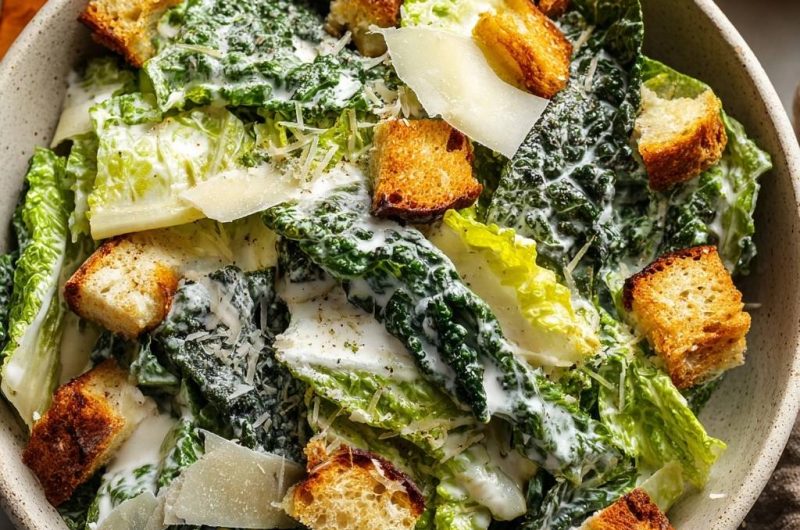
- The Golden Crust: Heat 2 tablespoons of olive oil in a large skillet over medium heat. Add the sourdough chunks. Season with garlic powder and a pinch of salt. Toast in the pan, turning frequently, until the edges are deeply browned and crispy (as seen in the image). Transfer to a paper towel to cool completely. Never add warm croutons to the salad, as the steam will wilt the greens.
- The Base Layer: Place the chilled, bone-dry greens in a large, cold mixing bowl. Drizzle the remaining olive oil over the leaves and toss lightly; this creates a thin hydrophobic barrier that prevents the dressing from making the leaves soggy.
- The Dressing Application: Add the creamy Caesar dressing. Use large tongs to gently fold the greens until every crevice of the textured kale and romaine is coated.
- The Flavor Seal: Sprinkle the finely shredded Parmesan and cracked black pepper over the dressed leaves and toss once more. The fine cheese sticks to the dressing, locking in the flavor.
- The Final Assembly: Transfer to a chilled serving bowl. Top generously with the large shaved Parmesan flakes and the pan-seared croutons. Serve immediately to maintain the contrast between the creamy dressing and the ultra-crunchy elements.
Notes
- The secret to maximum crunch is cold-curing the greens in the refrigerator and ensuring croutons are completely cool before adding them to avoid steaming the leaves.