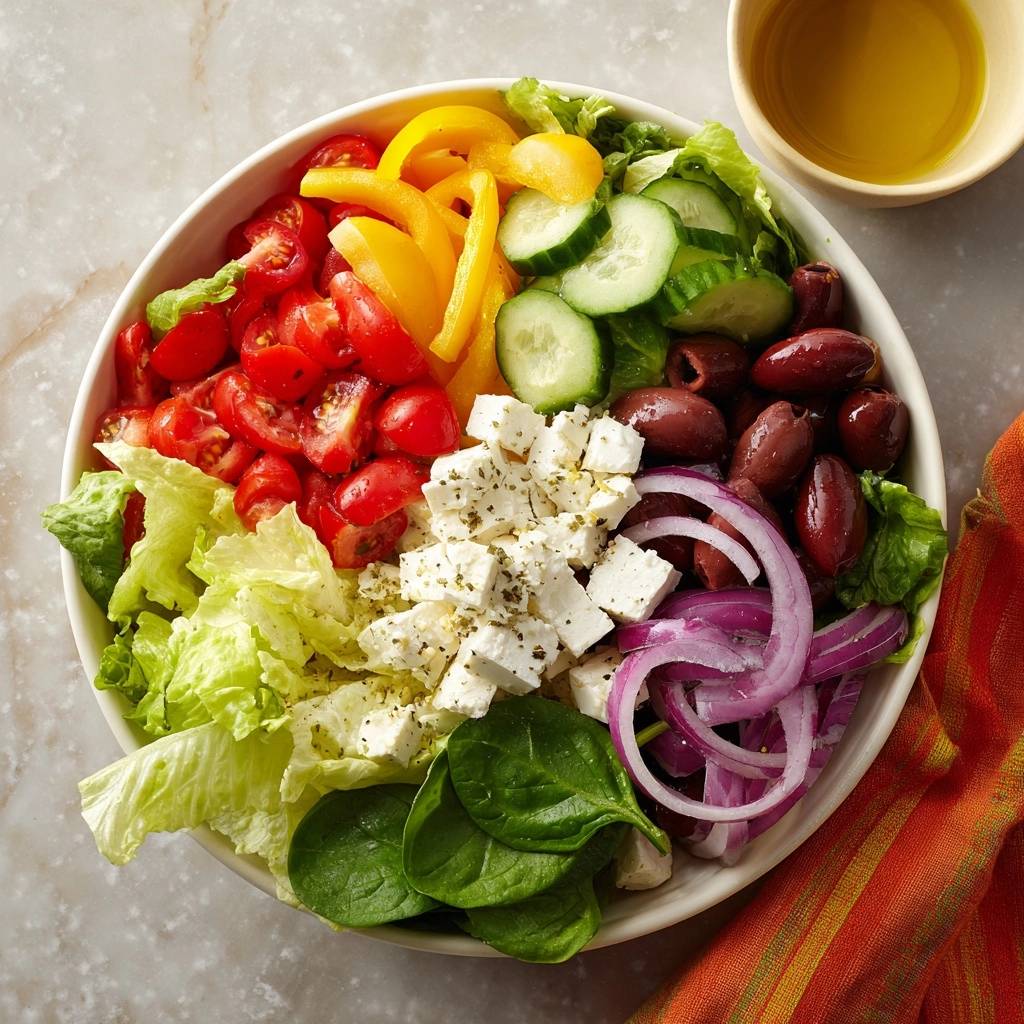
Why This Vibrant Greek Salad Stays Crisp
Picture this: you chop up fresh tomatoes and cucumbers for a vibrant Greek salad, only to watch it turn into a watery mess by the time guests arrive. That frustrating sogginess happens because juicy veggies release hidden moisture that drowns everything. However, this foolproof method fixes it upfront with a simple salting trick.
Here’s why it works so well. You toss the cut veggies with salt in a colander for 10 minutes. Osmosis pulls out excess water, so your zesty Greek salad stays crisp and vibrant for hours. In addition, rinsing and patting dry locks in that fresh texture without losing flavor.
The real expertise comes in chilling those drained veggies right after patting. This step firms them up, preventing any wilt even if you prep ahead. You’ll get Mediterranean freshness that beats every restaurant version, all in about 10 minutes of active time.
Common Soggy Pitfalls Exposed
Tomatoes and cucumbers burst with water that leaches out when dressed too soon. Traditional vibrant Greek salads skip this, so they puddle fast. However, our salting draws it out first for lasting crunch.
Imagine before: limp leaves swimming in juice. After: every bite pops with crisp peppers and firm cukes. Therefore, this method transforms potential disaster into perfection.
Health Boost from Fresh Crunch
Olives pack antioxidants that fight inflammation, while feta adds calcium for bones. Bell peppers and spinach bring vitamin C for immunity. This low-cal vibrant Greek salad clocks under 300 calories per serving.
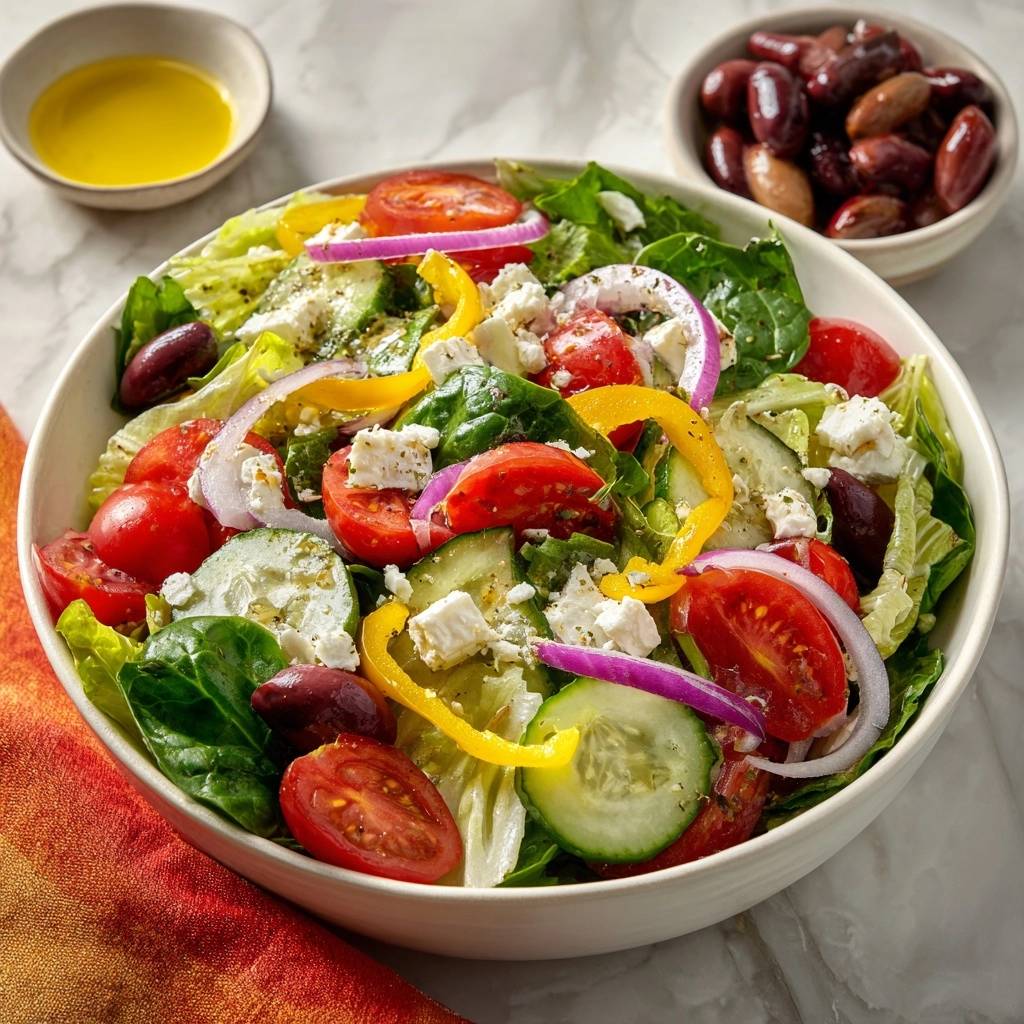
Compare that to creamy dressings loaded with mayo. In addition, extra virgin olive oil delivers heart-healthy fats. You get vibrant nutrition without the heaviness.
Core Elements for Vibrant Greek Salad
Start with ripe, quality produce for the best vibrant Greek salad components. Cherry tomatoes halved perfectly release less juice post-salting. Cucumbers sliced thin absorb salt evenly, staying snappy.
Extra virgin olive oil shines here; its fruity bite coats without overpowering. Kalamata olives bring briny punch, pitted for easy eating. Romaine and spinach form a sturdy base that holds up.
Feta crumbles add creamy tang, and oregano ties it all with earthy aroma. Therefore, these picks ensure balanced, fresh flavors in every zesty Greek salad forkful.
Romaine and Spinach Base Duo
This combo beats iceberg for superior crunch and nutrition. Romaine’s ribs add structure, while spinach boosts iron. Chop into even 1-inch pieces for uniform layers.
Avoid bruising by using a sharp knife. In addition, it creates volume that supports toppings perfectly.
Vegetable Stars: Tomatoes to Peppers
Halve cherry tomatoes for sweet bursts that salt drains best. Slice cucumbers 1/4-inch thin to maximize crisp edges. Yellow and red bell peppers add color and vitamin A pop.
Thinly slice red onion into rings; it mellows with salting. Therefore, these stars keep your vibrant Greek salad visually stunning.
Olives, Feta, Oregano Finishing Touches
Pitted kalamata olives deliver intense brine without pits to dodge. Crumble feta into pea-sized bits for even melt-in-mouth distribution. Dried oregano packs more potency than fresh here.
Sprinkle it last for aroma that wafts up. In addition, it clings better to dry veggies.
Mastering the Crisp Texture Technique
The heart of this vibrant Greek salad crisp method is salting to extract moisture. Toss halved tomatoes, sliced cucumbers, bell peppers, and onion rings with 1 tsp salt in a colander. Let it sit 10 minutes; you’ll see liquid pool below.
Rinse lightly under cold water to remove excess salt. Pat dry with paper towels until no moisture remains, then chill. This keeps everything firm and dressing-ready.
Pro tip: don’t skip the chill. It sets the texture, so your zesty Greek salad shines even at room temp for 30 minutes.
Salting to Extract Hidden Moisture
Sprinkle 1 tsp salt evenly over prepped veggies in the colander. Osmosis pulls water out through cell walls, preventing sogginess. Wait exactly 10 minutes for best results.
Shake gently midway. Therefore, no watery dressing surprise later.
Rinse, Pat, and Chill Sequence
Rinse under cold water for 10 seconds to neutralize salt. Press paper towels firmly to absorb every drop. Spread on a plate and fridge for 15 minutes.
This firms them up beautifully. In addition, it enhances natural sweetness.
Layering Your Vibrant Greek Salad
Grab a large bowl and start with chopped romaine and spinach as the base. Spread evenly for a sturdy foundation. Then artfully arrange drained veggies on top.
Scatter olives and feta crumbles next, clustering for appeal. Sprinkle oregano evenly. Build like this to keep layers distinct until the toss.
Pro tip: layer loosely so dressing reaches every leaf without compacting.
Greens Foundation Layer
Chop romaine into bite-sized pieces and toss with whole baby spinach. Spread flat to cover the bowl bottom. This avoids bruising and maximizes volume.
Handle gently for peak freshness.
Topping Arrangement for Visual Appeal
Scatter drained veggies in colorful sections. Dot feta generously and group olives. It looks restaurant-worthy and eats evenly.
Therefore, your vibrant Greek salad wows before the first bite.
Dressing the Vibrant Greek Salad Right
Drizzle 1/2 cup extra virgin olive oil just before serving. Season with black pepper and a pinch of salt if needed. Toss gently to coat without wilting.
No vinegar or acid early; it softens greens fast. The oil clings to dry veggies perfectly. Serve right away for ultimate crunch.
This simple approach makes your zesty Greek salad unforgettable.
Extra Virgin Olive Oil Selection
Choose a fruity extra virgin olive oil; 1/2 cup dresses 6 servings generously. Pour in a slow circle from height for even coverage. It pairs with feta’s tang ideally.
Fresh-pressed tastes brightest.
Gentle Toss for Even Coating
Use two spoons or clean hands to lift and turn lightly. Grind pepper fresh for punch. Stop when everything glistens without mashing.
In addition, it preserves those crisp layers.
Flavor Variations for Vibrant Greek Salad
Keep the crisp method but add artichoke hearts drained well for earthiness. Chickpeas boost protein without sogginess if patted dry first. These tweaks elevate your vibrant Greek salad.
Swap oregano for dill if you like herbal brightness. A pinch of sumac adds lemony zip. Always salt new veggies to maintain texture.
Pro tip: grill veggies lightly post-drain for smoky depth, then chill again.
Protein-Packed Greek Twists
Add rinsed, dry chickpeas or diced grilled chicken atop layers. Pat proteins thoroughly to avoid moisture. They integrate seamlessly post-toss.
Perfect for hearty meals.
Herb and Spice Greek Enhancements
Tear fresh mint or dill over feta for cooling contrast. Sprinkle sumac for citrus tang without liquid. These keep flavors vibrant and crisp.
Use sparingly for balance.
Perfect Pairings for Vibrant Greek Salad
Serve as meze with warm pita and hummus for dipping. It balances grilled fish or lamb skewers perfectly. Sparkling cranberry juice cuts through richness nicely.
Ideal for summer BBQs; its freshness refreshes heavy mains. Therefore, it shines at any gathering.
Main Dish Greek Salad Companions
Pair with souvlaki skewers or shaved gyro meat. Assemble salad last to stay crisp alongside hot proteins. The contrast delights.
Feeds 4-6 easily.
Bread and Dip Greek Sides
Tear warm pita into triangles for scooping. Tzatziki’s cool yogurt dips contrast the salad’s crunch. Simple and satisfying.
Dip veggies right in.
Avoiding Mistakes in Vibrant Greek Salad
Over-salting makes it bland post-rinse, so measure precisely. Warm veggies wilt greens fast; always chill first. Dress too early and crunch vanishes.
Store smart: cover loosely to breathe. Pro tip: revive day-old salad by re-draining and re-tossing with fresh oil.
Salting and Draining Errors
Under-salt leaves it soggy; over-rinse washes flavor. Pat extra dry if towels saturate. Skip no steps for success.
Therefore, crispness guaranteed.
Serving and Storage Pitfalls
Room-temp sitting wilts it quick; serve cold. Fridge lasts 24 hours max covered. No freezing; veggies turn mushy.
Toss leftovers gently before eating.
Origins of Vibrant Greek Salad Tradition
Horiatiki started in rural Greek villages with simple shepherd finds: tomatoes, cucumbers, feta, olives. Onion added bite for hardworking days. No fancy dressing; just olive oil.
Modern versions adapt for crispness worldwide. In addition, romaine boosts volume without tradition loss. It captures that cultural vibrancy today.
Rustic Horiatiki Village Beginnings
Core was chunky veggies, feta chunks, onion slices from farms. Eaten family-style with bread. Pure, honest flavors ruled.
Still inspires our method.
Modern Twists on Greek Classic
US kitchens add romaine for crunch base. Global tweaks like our salting keep it crisp. Therefore, tradition evolves deliciously.
Fresh as ever.
Troubleshooting Vibrant Greek Salad Issues
Why is my vibrant Greek salad still soggy?
It happens if you skip full patting dry or use warm veggies. Always rinse briefly, press with fresh paper towels until no moisture sticks, and chill 15 minutes. In addition, halve tomatoes smaller next time for better draining. This keeps every zesty Greek salad crisp.
How do I store leftovers of this vibrant Greek salad?
Store undressed components separately in airtight containers in the fridge for up to 24 hours. Toss with oil just before eating to revive crunch. Don’t freeze; watery veggies like cukes and tomatoes get grainy and lose texture completely.
Can I make a vegan version of vibrant Greek salad?
Yes, swap feta for crumbled firm tofu marinated in olive oil, lemon, and oregano, or use vegan feta. Keep the salting method for all veggies. It maintains that authentic briny kick and crisp vibrancy without dairy.
How do I scale this vibrant Greek salad for 10 people?
Double all ingredients exactly, but salt in two colander batches to avoid overcrowding. Use a huge bowl for layering. Prep veggies ahead; it holds crispness well for crowds. Yields about 2 quarts dressed.
What if my feta tastes too salty in the vibrant Greek salad?
Rinse crumbled feta briefly under cold water and pat dry before adding. Choose a milder block feta soaked in brine. Balance with extra olive oil and pepper. Therefore, it melts into harmony without overpowering.
Is this vibrant Greek salad nut-free and gluten-free?
Absolutely, no nuts or gluten in the core recipe. All veggies, olives, feta, and oil are naturally safe. Double-check labels on store-bought feta or olives for cross-contamination if allergies are severe.
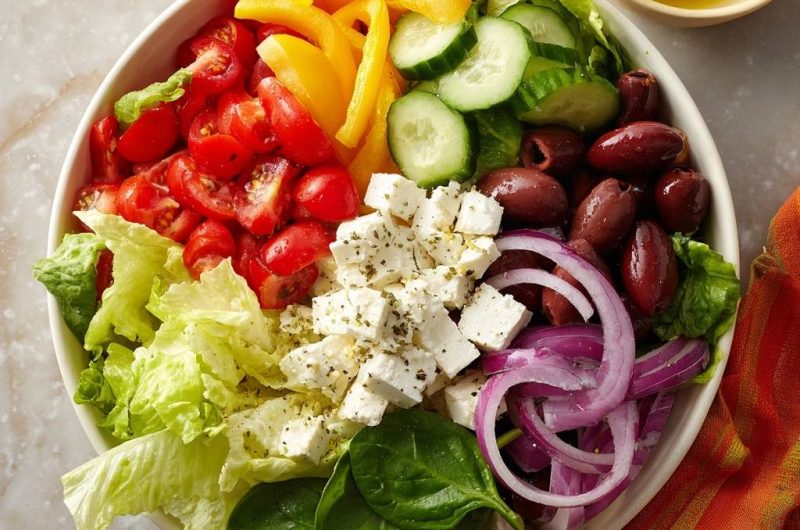
Vibrant Greek Salad
Course: SaladCuisine: GreekDifficulty: easy6
servings20
minutes30
MinutesGreek
Ingredients
1 head romaine lettuce, chopped
2 cups baby spinach leaves
1 pint cherry tomatoes, halved
2 cucumbers, sliced
1 yellow bell pepper, sliced
1 red bell pepper, sliced
1 red onion, thinly sliced into rings
1 cup kalamata olives, pitted
8 oz feta cheese, crumbled
2 tsp dried oregano
1/2 cup extra virgin olive oil
Salt and black pepper to taste
Directions
- Fix the watery problem upfront: In a colander, toss halved tomatoes, sliced cucumbers, bell peppers, and onion rings with 1 tsp salt. Let sit 10 minutes to draw out moisture. Rinse lightly under cold water, pat dry thoroughly with paper towels, and chill in fridge. This locks in crisp texture by removing hidden water that drowns salads.
- In a large bowl, layer chopped romaine and spinach leaves.
- Arrange drained veggies, olives, and crumbled feta on top. Sprinkle with oregano.
- Just before serving, drizzle with olive oil, season with pepper, and toss gently. The dry veggies ensure dressing clings without sogginess. Serve immediately for peak crunch.
Notes
- Salting and rinsing the veggies removes excess water for maximum crunch. Best served immediately after dressing.