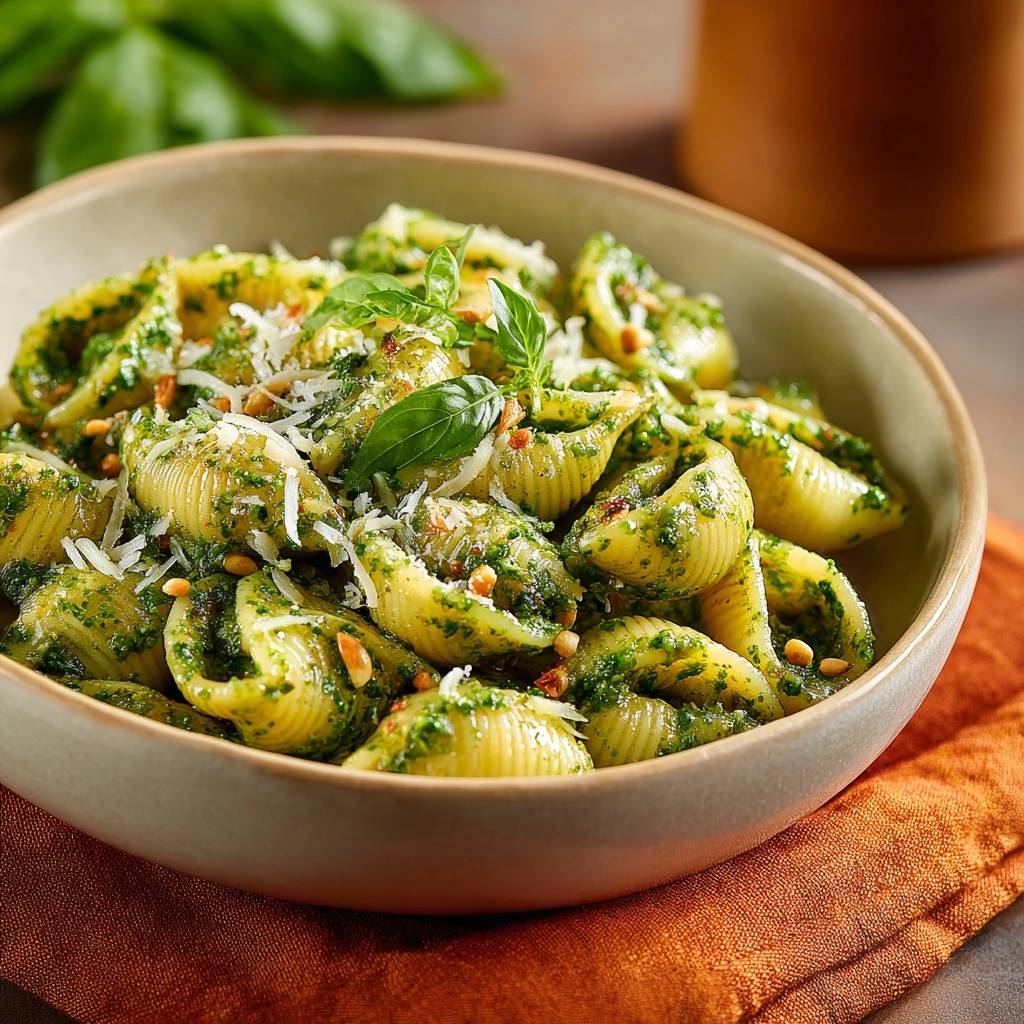
Ever whipped up fresh pesto only to watch it turn that sad, murky brown before dinner’s even on the table? You’re not alone. This 5-Ingredient Pesto Pasta Shells recipe fixes that heartbreak with a genius blanching trick that keeps the sauce brilliantly green for hours.
Therefore, you get restaurant-quality color without fancy equipment. In addition, it comes together in just 20 minutes using stuff you likely have on hand. Oh man, those shells trap the pesto perfectly, delivering nutty, herby bursts in every bite.
Here’s the expertise kicker: that exact 5-second blanch in boiling water, followed by an ice bath, deactivates the enzymes causing oxidation. No more dull pesto ruining your plate. You’ll taste the fresh basil punch and see the vibrant glow that makes this dish irresistible.
Why Blanching Transforms Pesto Pasta Shells
The Oxidation Enemy in Fresh Pesto
Basil leaves pack chlorophyll that gives them that vivid green hue. However, enzymes like polyphenol oxidase kick in the moment you chop or expose them to air. They react with oxygen, turning your pesto brown fast.
Most home cooks skip this science and end up with dull sauce by serving time. In addition, heat from processing speeds it up. That’s why your basil pesto looks tired while restaurant versions stay popping green.
You avoid this by shocking the leaves quick. Therefore, the color locks in, and flavors stay bright. Trust me, the difference hits your eyes and taste buds hard.
Blanch-Shock Method for Lasting Color
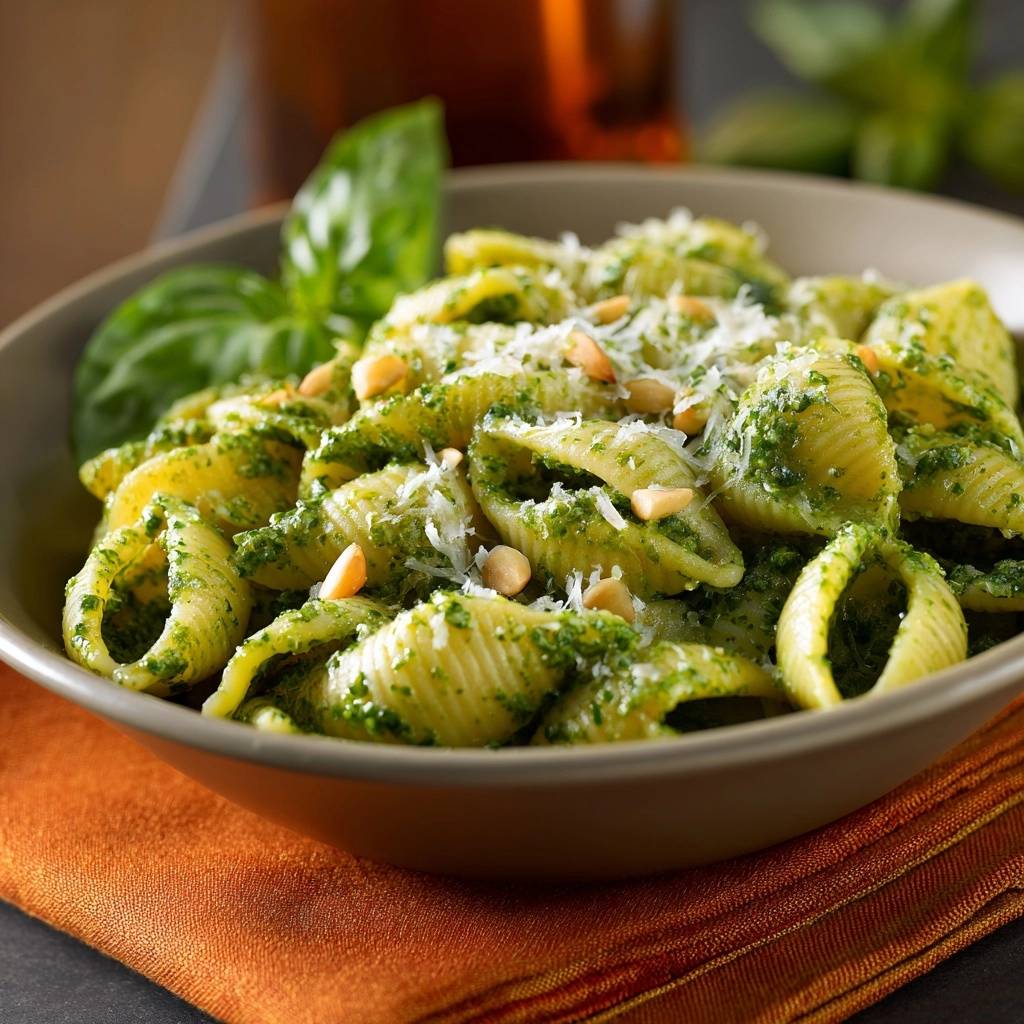
Start with boiling salted water, then dunk basil for precisely 5 seconds. Immediately plunge into an ice bath to halt cooking. This heat deactivates enzymes, while the cold stops any further breakdown.
Restaurants use similar tricks, often blanching in bigger batches. However, for home kitchens, this pH shift and rapid cooling keep pesto green for hours, not minutes. Pat dry super well afterward to prevent watery sauce.
In addition, it mildly tenderizes leaves for smoother blending. You’ll notice the sauce holds its emerald shade even tossed with hot pasta. Game-changer for 5-Ingredient Pesto Pasta Shells.
Core Ingredients for 5-Ingredient Pesto Pasta Shells
Shell Pasta’s Sauce-Trapping Design
Conchiglie shells have ridges and cups that grab pesto like champs. Unlike slippery spaghetti, they hold every bit of that vibrant sauce inside. Go for medium shells; they give the perfect al dente bite without sogginess.
Therefore, each forkful bursts with flavor. Brands like Barilla nail the texture, staying firm post-cook. You won’t lose sauce on the plate this way.
Fresh Basil vs Store-Bought for Pesto
Grab 2 packed cups of fresh basil leaves, stems removed for pure flavor. Genovese basil shines with its sweet, peppery punch over other types. Store-bought pesto lacks this vibrancy and turns brown quicker.
However, if basil’s scarce, arugula adds a peppery twist without messing up the 5-ingredient count much. Always choose bright, perky leaves; wilted ones dull the sauce. Fresh makes all the difference here.
Pine Nuts: Toasting for Nutty Depth
Divide your 1/3 cup pine nuts: toast 1/4 cup for aroma, save the rest raw for texture contrast. Toasting releases oils and creates those toasty, buttery compounds. Budget swap? Walnuts work toasted the same way.
In addition, shake the pan often to avoid bitterness. The nutty depth elevates simple 5-Ingredient Pesto Pasta Shells big time.
Parmesan and Olive Oil Emulsion Keys
Freshly grated Parmesan melts smooth, unlike pre-shredded with anti-caking agents that clump. Use 1/2 cup total, divided for layering. Extra-virgin olive oil’s fruity bite emulsifies everything into glossy perfection.
Therefore, drizzle it slow while pulsing. Add salt last to keep flavors sharp, not dull. This duo binds the pesto clingy for shells.
Mastering Blanching Technique for Pesto Pasta Shells
Setting Up Boiling Water and Ice Bath
Use a large pot with 1 tablespoon salt per gallon of water for boiling. Meanwhile, fill a bowl with ice cubes and cold water for the bath. This setup chills fast, shocking basil effectively.
Grab a slotted spoon for safe transfer; no burns here. In addition, the salted water seasons leaves subtly. Pro tip: have paper towels ready for patting dry.
Exact 5-Second Basil Dip Timing
Set a timer for 5 seconds max in the boil; leaves brighten instantly. Pull them out bright green, not limp. Dunk in ice right away, swirl for 30 seconds until cold.
Drain and pat super dry; moisture kills emulsion later. Reuse this water for pasta; it infuses subtle basil flavor. Therefore, your 5-Ingredient Pesto Pasta Shells taste deeper.
Toasting Pine Nuts Without Burning
Heat a dry skillet over medium; add 1/4 cup pine nuts. Shake every 20 seconds for 2-3 minutes till golden. You’ll smell that rich, nutty aroma before they brown too much.
However, watch close; they burn fast past golden. Spread on a plate to cool, stopping carryover cooking. This step adds crunch and depth without bitterness.
Food Processor Pesto Emulsification Guide
Pulsing Basil and Nuts First
Toss blanched basil, toasted pine nuts, and 1/3 cup Parmesan in the processor. Pulse to finely chop; aim for coarse grit, not puree. A standard 7-cup model handles this easy.
In addition, this order builds structure before oil. You’ll see it transform from leaves to vibrant paste quick.
Slow Drizzle for Perfect Emulsion
Run the motor and drizzle oil slow through the feed tube. It emulsifies into silky sauce; stop when glossy. Taste, then salt sparingly; over-salting mutes herbs.
Therefore, avoid over-processing; friction heats and browns. Pro tip: pulse in short bursts if it warms. Glossy means perfect cling for pasta.
Cooking and Tossing 5-Ingredient Pesto Pasta Shells
Al Dente Pasta in Basil-Infused Water
Boil 12 ounces shells in that reused basil water 10-11 minutes till al dente. Bite one; it should have a firm snap. Reserve 1/2 cup starchy water before draining.
This water’s gold for sauce silkiness later. In addition, shells cook evenly here, trapping flavor inside.
For a different take on a creamy sauce, try this orecchiette with pea pesto.
Low-Heat Toss for Clinging Sauce
Back in the warm pot over low heat, add hot pasta, pesto, and 1/4 cup pasta water. Toss 1 minute; sauce thickens and clings. Add more water if needed for creaminess.
The starch binds everything without separating. Therefore, serve hot for that fresh, vibrant bowl.
Avoiding Common Mistakes in Pesto Pasta Shells
Over-Blanching Basil Pitfalls
Go past 5 seconds, and leaves turn mushy, losing color fast. Fix undried basil by squeezing extra in towels; wet leaves make oily, separated pesto. Always ice bath fully.
However, under-blanch leaves oxidize anyway. Precision keeps it green.
Pesto Overheating in Processor
Continuous running builds friction heat, browning sauce. Pulse with breaks; chill the bowl if hot. Short bursts preserve that emerald hue.
Pasta Water Addition Errors
Too much water makes soupy mess; too little leaves dry clumps. Start with 1/4 cup, toss, add splashes. Starch acts like glue for perfect bind.
Fix soupy by simmering longer; dry by adding hot water bit by bit.
Flavor Variations for Pesto Pasta Shells
Nut-Free Sunflower Seed Swaps
Swap pine nuts for sunflower seeds, same 1/3 cup toasted. They bring earthy nuttiness without cost jump. Toast identical for aroma pop.
Lemon Zest and Garlic Boosts
Micro-grate lemon zest or mince garlic clove into pulsing step. Keeps 5-ingredient core but adds zing. Arugula-basil mix brightens further.
Vegan Parmesan Alternatives
Blend nutritional yeast with cashews for cheesy umami. Pulse fine for melt-like texture. Matches dairy closeness easy.
Perfect Pairings for 5-Ingredient Pesto Pasta Shells
white grape juice That Complement
sparkling grape juice’s acidity cuts through pesto herbs perfectly. Serve chilled to 45-50°F for max refresh. Sparkling cranberry juice pairs crisp too.
Simple Green Salads as Sides
Toss arugula with cherry tomatoes and balsamic vinaigrette. The peppery bite contrasts rich pesto. Keep portions light for balance.
Grilled Vegetable Companions
Grill zucchini spears and eggplant slices for smoky synergy. Char marks echo basil’s earthiness. Summer perfection alongside shells.
Make-Ahead Strategies for Pesto Pasta Shells
Blanched Basil Storage Tricks
Store blanched, dry basil in fridge up to 3 days in airtight container. For longer, freeze pesto in ice cube trays; pop out as needed. Top with thin oil layer to block air.
Frequently Asked Questions About 5-Ingredient Pesto Pasta Shells
Can I Use Dried Basil Instead?
No, dried basil lacks fresh oils and chlorophyll for color or flavor potency. It can’t blanch to stop oxidation, resulting in dull, weak pesto. Stick to 2 cups fresh leaves for vibrant 5-Ingredient Pesto Pasta Shells.
How Long Does Homemade Pesto Last?
Blanched pesto keeps in fridge 3-5 days airtight; drizzle oil on top to prevent browning. Freezes 3 months in cubes; thaw overnight. Avoid refreezing thawed batches for best texture.
How do I store leftovers? Fridge in airtight container up to 3 days; don’t freeze assembled pasta as shells get mushy. Reheat gently with splash pasta water.
Best Pasta Shape Substitutes?
Orecchiette or farfalle trap sauce well like shells. Avoid thin strands like angel hair; they slip off. Medium shapes hold pesto best for even flavor.
Scaling for Larger Crowds?
Double ingredients for 4-6 servings, but process pesto in batches to avoid overheating. Use bigger pot, reserve more pasta water proportionally. Toss in wide pan for even coating.
Gluten-Free Pesto Pasta Shells Work?
Yes, brown rice or quinoa shells work great. Their starch still binds sauce silky. Cook to al dente; they hold up without falling apart.
Why Did My Pesto Turn Brown Anyway?
Common culprits: skipping blanch, not drying basil fully, or processor heat. Ensure 5-second blanch, ice shock, and pulse breaks. Undried leaves cause separation too; pat extra dry.
Can I Substitute Pine Nuts?
Yes, toasted sunflower seeds or walnuts match volume and toasting method. They deliver nutty depth without overpowering basil. Avoid un-toasted for flat flavor.
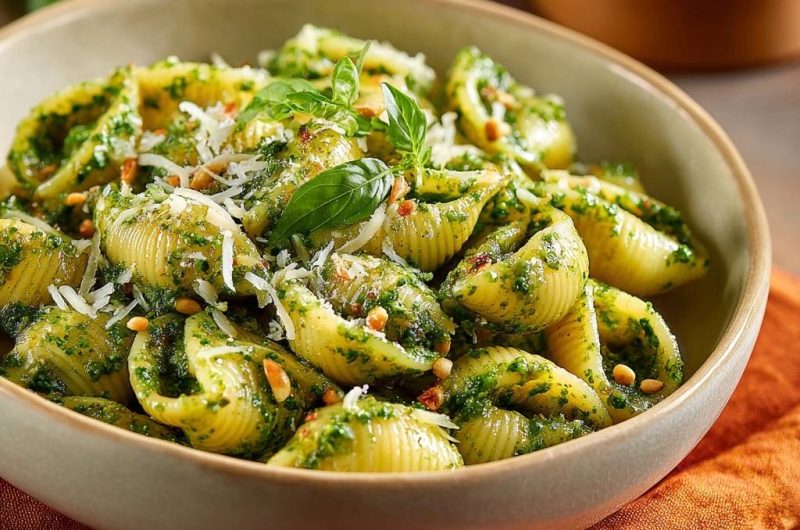
Pesto Pasta Shells
Course: Main CourseCuisine: ItalianDifficulty: easy4
servings15
minutes15
minutes550
kcal30
MinutesTired of vibrant basil pesto turning dull and brown minutes after making it? This recipe’s quick blanching trick shocks the basil to lock in that fresh green color for hours, solving the top pesto fail point for home cooks everywhere.
Ingredients
12 ounces shell-shaped pasta (conchiglie)
2 packed cups fresh basil leaves (stems removed)
1/3 cup pine nuts (divided)
1/2 cup grated Parmesan cheese (divided, plus more for serving)
1/2 cup extra-virgin olive oil
Salt to taste
Directions
- Bring a large pot of salted water to a boil. Prepare an ice bath in a bowl (ice cubes and cold water). Add basil leaves to boiling water for exactly 5 seconds, then immediately transfer to ice bath using a slotted spoon. Drain basil, pat very dry with paper towels. This blanch-and-shock method stops oxidation dead, keeping pesto brilliantly green.
- Toast 1/4 cup pine nuts in a dry skillet over medium heat for 2-3 minutes until golden, shaking pan often. Set aside.
- In a food processor, pulse blanched basil, toasted pine nuts, and 1/3 cup Parmesan until finely chopped. With motor running, slowly drizzle in olive oil until smooth and emulsified. Taste and add salt. Do not over-process to avoid heating and browning.
- Cook pasta in the same boiling water (reuse basil water for extra flavor) until al dente, about 10-11 minutes. Reserve 1/2 cup pasta water, then drain.
- In the warm pasta pot, toss hot pasta with pesto and reserved pasta water (start with 1/4 cup, add more if needed) over low heat for 1 minute until sauce clings perfectly.
- Divide into bowls, top with remaining pine nuts, Parmesan, and fresh basil leaves. Serve immediately for that restaurant-worthy green glow.
Notes
- Blanch basil for exactly 5 seconds to prevent browning. Toast pine nuts for extra flavor. Use pasta water to loosen sauce for perfect cling.