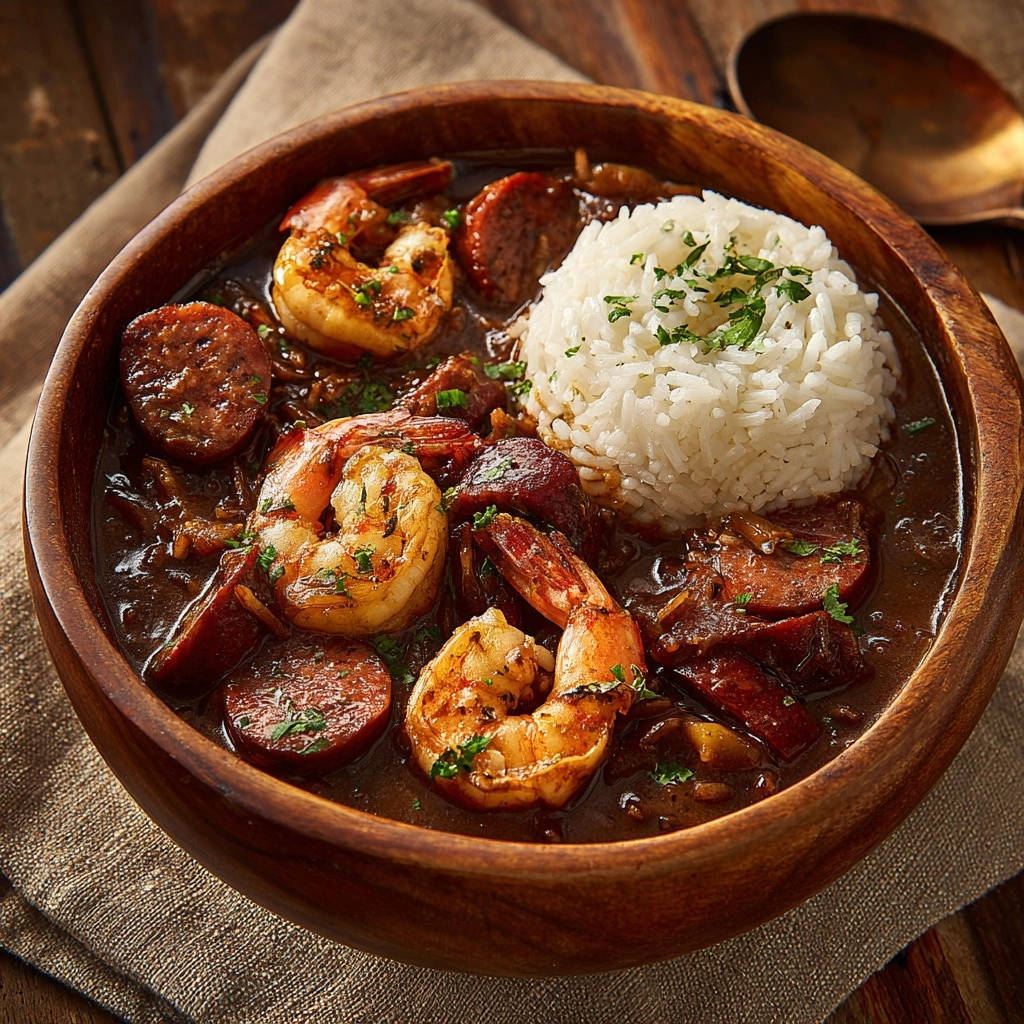
Making an Authentic Cajun Shrimp and Sausage Gumbo often hinges on the perfect dark roux, a crucial step many home cooks fear due to the high risk of burning.
If you’ve ever had a pot ruined by scorched flour, this guaranteed, low-and-slow method is specifically designed for you.
For richer complexity, explore the deep flavor in this hearty shrimp and sausage gumbo.
This technique eliminates the guesswork, ensuring you achieve that deep, gorgeous color and flavor depth every single time for a truly memorable gumbo.
Why This Gumbo Will Become Your Signature Dish
The Secret Weapon: Non-Scorching Dark Roux
The depth of true gumbo flavor comes exclusively from a dark chocolate roux, which imparts a wonderful nutty, earthy base.
Our slow cooking process manages the heat perfectly, eliminating the high-risk phase where the roux might suddenly transition from done to burnt.
Flavor Depth That Takes Time (But Is Worth Every Minute)
Allowing the gumbo base to simmer low and slow ensures the intense flavors of the smoked sausage and aromatic Holy Trinity fully meld into a rich, complex broth.
Beyond the Basics: Smoked Sausage and Shrimp Synergy
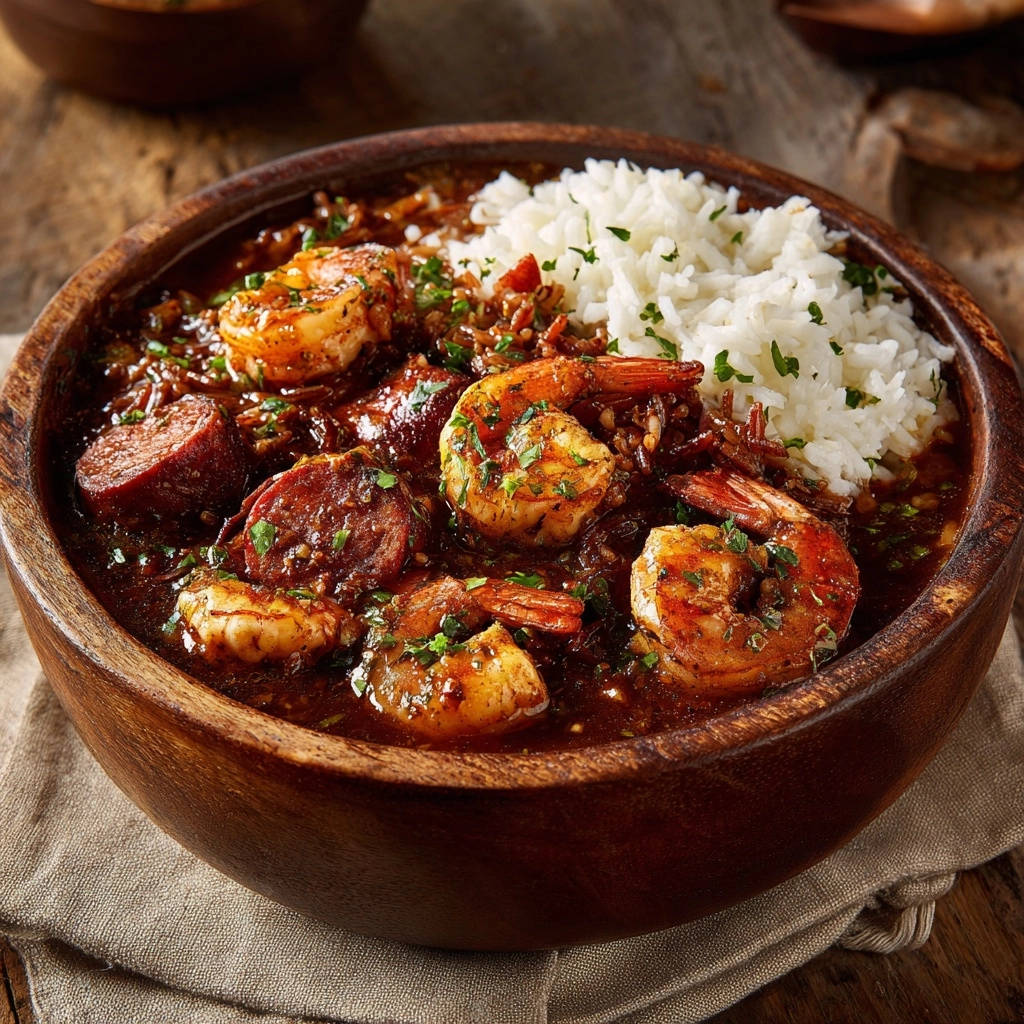
The combination of smoky, spicy sausage and sweet, delicate shrimp provides a perfect textural and flavor contrast in the finished dish.
Using the rendered fat from the sausage to start the roux immediately anchors the entire Authentic Cajun Shrimp and Sausage Gumbo in deep, traditional flavor.
Essential Components: Building the Foundation of Authentic Cajun Gumbo
The Holy Trinity: A Culinary Necessity
The role of diced onion, celery, and bell pepper is non-negotiable for true Cajun flavor.
Crucially, adding these cold vegetables immediately halts the cooking process of the hot roux, preventing scorching and preserving its rich color.
Mastering the Roux Ratio (Oil vs. Flour)
The 1:1 ratio of oil/fat to flour is key to achieving a smooth, glossy roux foundation.
Rendered sausage fat provides an immediate, deep layer of smoky flavor that vegetable oil alone cannot match.
Selecting the Right Smoked Sausage and Stock
Opt for a quality smoked sausage, like Andouille or a similar chicken/turkey variety, as it will hold its shape and release excellent flavor during the long simmer.
Using unsalted chicken stock gives you total control over the final seasoning of your rich gumbo base, a necessity for balancing deep flavors.
Achieving the Perfect Dark Roux: Your Non-Scorching Guarantee
Preparing the Fat Base and Initial Whisk
Browning the sausage slices first not only adds flavor but also guarantees the necessary rendered fat for the roux foundation.
When mixing the flour into the fat, ensure the heat is reduced significantly-low to medium-low-to begin the slow cook process safely and consistently.
Visual Cues: Tracking the Color Stages
Peanut Butter Stage (~15 minutes): The roux thickens, loses its raw flour smell, and is slightly tan. Keep stirring!
Copper Stage (~25 minutes): The color deepens noticeably and the smell becomes distinctly nutty, reminiscent of toasted bread.
Dark Chocolate Stage (~35-45 minutes): This is the target color-a deep, rich brown. At this stage, the gumbo base has achieved maximum flavor depth and should be pulled off the heat.
The Crucial Stopping Point: Adding the Trinity
Once the dark chocolate color is achieved, immediately add the diced onion, celery, and bell pepper.
Stirring them constantly for about 10 minutes softens them and, critically, drops the roux’s temperature instantly to prevent accidental burning while maximizing flavor extraction.
Crafting the Gumbo: Step-by-Step Directions
- Sauté Aromatics and Spice:
After the Trinity softens, add the minced garlic, smoked paprika, thyme, and cayenne pepper.
Cook for only one minute until the garlic is fragrant to avoid scorching the potent dried spices.
- Build the Stock Base:
Whisk in the chicken stock slowly, one cup at a time, ensuring the mixture remains completely smooth before adding more liquid.
This careful addition prevents lumps and helps the roux dissolve evenly into the liquid base.
- The Flavor Deepening Simmer:
Add the bay leaves and reserved sausage, bring the pot to a gentle simmer, cover, and cook for at least 30 minutes.
This low-and-slow simmer is necessary to allow the complex roux flavors to fully bloom and meld with the stock, truly creating the signature gumbo taste.
- The Final Seasoning Check:
Season the gumbo generously with salt and pepper just before the shrimp are added.
Tasting the base before adding the seafood ensures the flavor profile is perfect, as seasoning added too early can become concentrated during the long simmer.
Preventing Rubber Shrimp: The Final 5 Minutes of Cooking
The Timing Tactic: When to Add the Shrimp
Shrimp cook incredibly fast; they should be the absolute last ingredient added to the pot, right before serving.
Ensure the gumbo is only at a gentle simmer, not a vigorous boil, when the seafood is introduced.
Visual Cues for Perfection
Cook the raw shrimp for exactly 3 to 5 minutes, depending on their size, monitoring them closely for color change.
As soon as they curl into a C-shape and turn uniformly pink and opaque, they must be removed from the heat immediately to prevent the tough, rubbery texture of overcooked seafood.
Chef’s Secrets: Elevate Your Authentic Cajun Shrimp and Sausage Gumbo
Chill Your Trinity: Keep your diced Holy Trinity refrigerated until the moment you add it to the hot roux. The colder the vegetables, the faster they drop the roux’s temperature, stopping the cook instantly and securing your perfect dark color.
Use a Flat-Bottomed Spatula: When stirring the roux, use a wooden spoon or heatproof flat-bottomed spatula.
This allows you to scrape the entire surface of the pot, especially the corners where scorch spots love to hide, ensuring even cooking.
Make Ahead for Better Flavor: Gumbo is famously better the next day, as the flavors continue to deepen overnight.
If possible, make the base (stopping before the shrimp addition) 24 hours in advance, chilling it overnight and reheating gently before adding the seafood.
Beyond the Bowl: Serving and Storing the Gumbo
The Perfect Pairing: Rice and Garnish
Fluffy white rice is the traditional vehicle for gumbo, providing a neutral base that absorbs the rich broth perfectly.
Fresh chopped parsley is added at the end, providing a necessary burst of bright freshness that balances the deep, savory flavors.
Storage and Reheating Guidelines
Store leftover gumbo in an airtight container in the refrigerator for up to four days.
To reheat, do so gently on the stovetop. If freezing, note that shrimp texture can sometimes degrade, so flash freezing the base before adding the shrimp is often preferred.
Gumbo SOS: Troubleshooting Common Issues and FAQs
My Roux is Too Light (and I’m out of time!)
If your roux is only copper-colored but you are ready to move on, your gumbo will still taste good, just slightly less rich and nutty.
For a quick fix, stir in a spoonful of Kitchen Bouquet or brown gravy base for instant color and depth, although this is considered a shortcut over traditional methods.
The Gumbo Tastes Bitter
A bitter taste almost always means the roux was scorched during the cooking process. If it’s very bitter, the pot may be ruined and you must start over.
If it’s only mildly bitter, adding a pinch of sugar and ensuring adequate salt levels can sometimes mask the unpleasant flavor.
It’s Too Thin: How Do I Thicken Gumbo?
Never add raw flour directly to the simmering pot, as it will clump.
The best fix is to make a small, quick roux (a few tablespoons of flour and fat) in a separate pan, cook it to a light brown, and then whisk it slowly into the gumbo base until the desired consistency is achieved.
Can I Make This Authentic Cajun Shrimp and Sausage Gumbo Gluten-Free?
Yes. Simply substitute the all-purpose flour for a cup-for-cup gluten-free flour blend.
The process remains the same, though some gluten-free flours cook faster, so monitor the visual cues closely.
Share Your Masterpiece and Join the Cajun Conversation
Mastering the dark roux is the final gate to true Cajun cooking excellence. Now that you have the guaranteed method for this Authentic Cajun Shrimp and Sausage Gumbo, your days of scorching flour are over.
We invite you to share your results in the comments below! What sides did you serve with your stunning, deep-flavored gumbo?
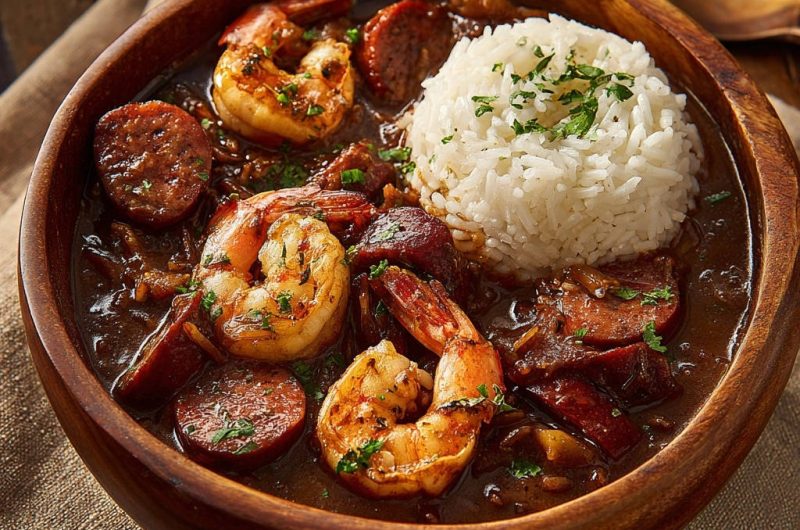
Shrimp and Sausage Gumbo
Course: Soups-StewsCuisine: AmericanDifficulty: medium6
servings25
minutes1
hour750
kcal120
minutesCrack the code to the perfect dark chocolate roux every time! This low-and-slow method guarantees a deep, authentic flavor for your homemade gumbo, loaded with shrimp, sausage, and the Holy Trinity.
Ingredients
1 cup vegetable oil (or rendered sausage fat)
1 cup all purpose flour
1 pound smoked chicken or turkey sausage, sliced
1 large yellow onion, diced (The Holy Trinity)
1 green bell pepper, diced (The Holy Trinity)
2 stalks celery, diced (The Holy Trinity)
4 cloves garlic, minced
1 quart unsalted chicken stock
1 teaspoon dried thyme
1 teaspoon smoked paprika
1/2 teaspoon cayenne pepper (adjust to heat preference)
2 bay leaves
1 pound large raw shrimp, peeled and deveined
Salt and black pepper to taste
Fresh parsley, chopped, for garnish
Cooked white rice, for serving
Directions
- Preparing the Sausage: In a large, heavy-bottomed Dutch oven or pot, brown the sausage slices over medium heat until slightly crisp. Remove the sausage with a slotted spoon and set aside, leaving the fat in the pot. If you have less than 1 cup of rendered fat, add vegetable oil until you reach 1 cup total fat/oil mixture.
- The Non-Scorching Roux Method: Reduce the heat to low to medium-low. Crucially, the heat must be low enough to allow a long, slow cook. Whisk in the 1 cup of flour completely until no dry lumps remain. This mixture should look like a thick, glossy paste.
- Developing the Dark Color (The Fix): Cook the roux constantly, stirring every 30 to 60 seconds with a heatproof spatula or wooden spoon, scraping the sides and bottom thoroughly. Do not stop stirring or step away. This is the only way to guarantee the bottom does not scorch. The roux will progress slowly from peanut butter colored (about 15 minutes) to copper, then to milk chocolate, and finally to a deep, dark chocolate color, which takes approximately 35 to 45 minutes total. Do not rush this process. When the roux is dark and smells nutty (like toasted bread), it is done.
- Building the Base: Immediately add the diced onion, bell pepper, and celery (the Holy Trinity) into the dark roux. Stir constantly for about 10 minutes until the vegetables are softened and translucent. The cooler temperature of the vegetables will stop the roux from continuing to cook and burning.
- Aromatic Layer: Add the minced garlic and cook for 1 minute until fragrant. Add the dried thyme, smoked paprika, and cayenne pepper. Stir well.
- Simmer and Thicken: Slowly whisk in the chicken stock one cup at a time until completely smooth. Add the bay leaves and reserved sausage. Bring the mixture to a simmer, then reduce the heat to low, cover, and let the gumbo cook for at least 30 minutes, stirring occasionally, allowing the flavors to deepen.
- Final Steps (Preventing Rubberiness): Season the gumbo generously with salt and pepper. Increase the heat slightly to maintain a gentle simmer. Add the raw shrimp to the pot. Cook the shrimp for only 3 to 5 minutes, depending on size, until they are pink, opaque, and just cooked through. Overcooked shrimp are tough, so watch them closely.
- Serve: Remove the bay leaves. Ladle the rich gumbo over scoops of fluffy white rice. Garnish immediately with fresh chopped parsley.
Notes
- The key to success is low heat and continuous stirring (35-45 min) during the dark roux development to prevent scorching.