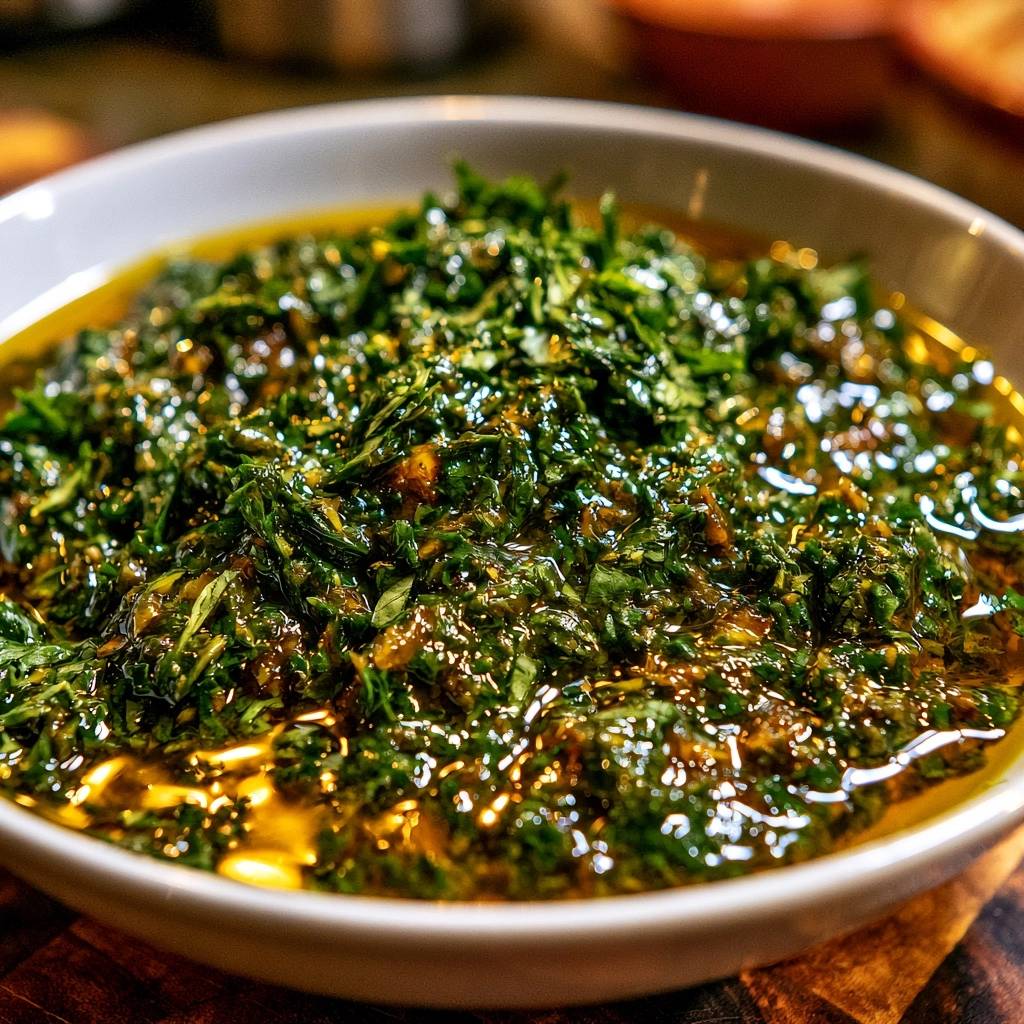
Imagine slicing into a perfectly seared steak and topping it with a sauce so vibrant it looks like liquid emeralds. That sharp, garlicky punch hits your tongue first, followed by the earthy freshness of parsley and a lingering warmth from red chili flakes. It’s the ultimate condiment, but so many home cooks end up with a muddy, brownish sludge that looks more like swamp water than a gourmet topping.
The frustration of watching your beautiful herbs turn gray within minutes is real. Most recipes tell you to toss everything into a blender, but that’s exactly where things go wrong. High-speed blades heat up the delicate leaves and bruise the cell walls, leading to rapid oxidation. This recipe focuses on a traditional hand-chopped method that preserves the integrity of every leaf for a sauce that stays bright and punchy.
The secret to that professional, long-lasting green color is all about the order of operations. You must coat your chopped herbs in oil before adding any acidic ingredients like vinegar. This creates a physical lipid barrier that protects the chlorophyll from the air. If you follow this specific sequence, your chimichurri will look just as stunning on the table as it did on the cutting board.
The Origins of Traditional Argentine Chimichurri
Chimichurri is the undisputed king of the Argentine asado, or barbecue culture. In the vast pampas of South America, gauchos perfected the art of grilling meat over open flames, and they needed a condiment that could cut through the rich, fatty flavors of high-quality beef. While many people think of it as a marinade, it’s traditionally served as a table sauce to be spooned over hot-off-the-grill meats.
The history of the name is shrouded in folklore and legend. One popular story suggests it’s a corruption of the name “Jimmy McCurry,” an Irishman who supposedly fought for Argentine independence and created the sauce. Others point to Basque settlers who brought a herb-based sauce called “tximitxurri,” which roughly translates to “a mix of several things.” Regardless of its linguistic roots, the soul of the dish remains the same.
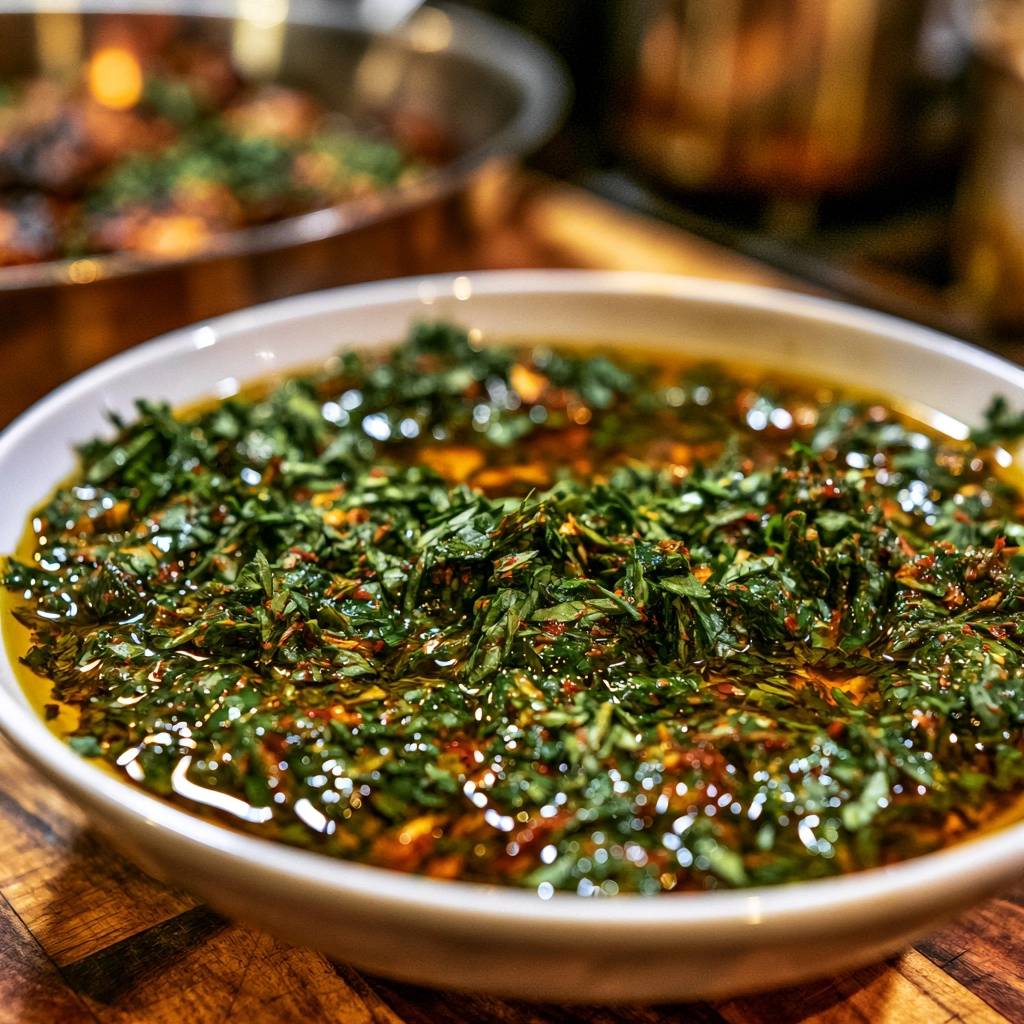
In an authentic Argentine kitchen, you’ll never find a food processor being used for this sauce. The texture is meant to be rustic and chunky, allowing you to see the individual bits of garlic and flecks of chili. It’s a sauce of patience and precision, where the quality of the knife work determines the quality of the final product. By hand-chopping, you ensure the sauce has a clean mouthfeel rather than a slimy, pureed consistency.
Why Most Homemade Herb Sauces Turn Brown
Science plays a massive role in why your herbs lose their luster. Chlorophyll, the pigment that gives parsley its green color, is incredibly sensitive to heat, oxygen, and acid. When you use a food processor, the friction of the blades generates heat that begins to “cook” the herbs instantly. Furthermore, the blades tear the leaves rather than slicing them, which releases enzymes that speed up the browning process.
Oxidation is the primary enemy here. Once the cell walls of the parsley are crushed, they are exposed to the air, and the vibrant green turns to a dull olive drab. This is why a sharp knife is your best friend in the kitchen. A dull blade acts like a hammer, smashing the herbs against the cutting board. A razor-sharp edge glides through the fibers, keeping the juices inside the leaf where they belong.
Essential Components for Authentic Fresh Herb Chimichurri
Since this is a raw sauce, there’s nowhere for mediocre ingredients to hide. You need the best of the best to make the flavors pop. Start with high-quality Extra Virgin Olive Oil. It shouldn’t just be a fat source; it should have its own peppery, fruity notes that complement the herbs. This oil also serves as your primary preservative, sealing the herbs away from the air.
Flat-leaf Italian parsley is the only way to go for this recipe. Curly parsley is often too tough and lacks the deep, herbaceous flavor required for a proper chimichurri. Fresh oregano is another heavy hitter. While dried oregano is common in many pantry-staple recipes, the fresh leaves provide a floral, citrusy undertone that dried versions simply can’t replicate. If you can’t find fresh oregano, use half the amount of dried, but the texture will be slightly different.
Selecting the Right Parsley and Oregano
When you’re at the market, look for herbs that are turgid and standing tall. If the leaves are drooping or have yellow edges, leave them behind. Once you get them home, wash them in cold water and—this is the most important part—dry them completely. Use a salad spinner or pat them down thoroughly with paper towels. Any water left on the leaves will prevent the oil from sticking, leading to a watery sauce that browns quickly.
The Role of Acid: Red Wine Vinegar vs. Lemon
Red wine vinegar is the traditional choice because it offers a complex, fermented tang that balances the heavy oil and garlic. Some modern versions use lemon juice, but the citric acid can be too aggressive and will actually bleach the green out of your herbs if left to sit too long. Red wine vinegar provides a more stable acidity that develops beautifully as the sauce macerates.
The “No-Processor” Method: Step-by-Step Technique
This method requires about ten minutes of focused knife work, but the results are worth every second. You’ll notice the difference in the very first bite. The sauce will feel light and fresh on the palate rather than heavy and oily.
Phase 1: The Dry Prep and Knife Work
Gather your dry parsley into a tight bundle on your cutting board. Using a very sharp chef’s knife, use a “one-pass” motion. This means you slice through the bundle once, move the knife slightly, and slice again. Avoid the temptation to pile the herbs up and hack at them repeatedly. Every time the knife hits the herb, it’s a chance for bruising. Aim for a fine mince that still has visible structure.
Phase 2: Creating the Garlic Paste
Don’t just toss chunks of garlic into the bowl. Mince your garlic cloves as finely as possible, then sprinkle a pinch of coarse sea salt over them. Use the flat side of your knife to scrape and mash the garlic against the board. The salt acts as an abrasive, turning the garlic into a smooth paste. This ensures the garlic flavor is evenly distributed throughout the oil so you don’t get a “garlic bomb” in one bite and nothing in the next.
Phase 3: The Oil-Seal Sequestration
Place your chopped herbs and garlic paste into a glass bowl. Immediately pour the olive oil over them. Use a spoon to gently fold the herbs into the oil until every single piece is coated. You are essentially “waterproofing” the herbs. By doing this before you add the vinegar or salt, you create a barrier that prevents the acid from reacting too quickly with the chlorophyll. This is the professional secret to a sauce that stays green for days.
Phase 4: The Maceration Period
Once the vinegar and spices are in, let the bowl sit on your counter for at least 20 to 60 minutes. This isn’t just “waiting” time; it’s a chemical process. The fat-soluble flavors in the chili flakes and garlic need time to dissolve into the oil. You’ll notice the oil itself starts to take on a beautiful, seasoned flavor. Never serve chimichurri immediately after mixing, or it will taste disjointed and overly sharp.
Troubleshooting Common Chimichurri Issues
If your sauce tastes unpleasantly bitter, you might have included too many parsley stems. While the thin tops are fine, the thick bottom stems contain bitter compounds that can overwhelm the sauce. Another culprit could be low-quality olive oil that has gone rancid. Always taste your oil before you start; it should taste clean and slightly peppery, not like old crayons.
If the sauce feels too oily, you likely didn’t have enough herbs. The ratio should be heavy on the greens, with just enough oil to bind everything together. If it still turns brown despite your best efforts, double-check your drying process. Moisture is the enemy of a long-lasting green sauce. Even a few drops of water on the leaves can cause the oil barrier to fail.
Flavor Variations and Herb Substitutions
While parsley is the star of the show, you can certainly play with the flavor profile. Adding a handful of fresh cilantro can give it a “Chimichurri Norteño” vibe, which pairs excellently with grilled shrimp or fish. Just ensure you follow the same hand-chopping rules for the cilantro, as it is even more delicate than parsley.
If you want more heat, swap the dried red chili flakes for a finely diced fresh Fresno pepper or a de-seeded jalapeño. This adds a bright, fruity heat and a nice pop of red color. For a smokier version, a tiny pinch of smoked paprika can add depth, though use it sparingly so you don’t mask the freshness of the herbs.
Optimal Pairings for Herb-Forward Sauces
While steak is the classic partner, this chimichurri is incredibly versatile. It’s a game-changer for grilled cauliflower steaks or roasted root vegetables like carrots and parsnips. The acidity of the vinegar and the bite of the garlic cut through the natural sweetness of roasted veggies perfectly. It also makes a fantastic marinade for chicken thighs—just reserve some fresh sauce to spoon over the top after cooking.
Try using it as a dressing for a cold pasta salad or drizzling it over a bowl of lentils. The bold flavors can wake up even the simplest grains. Because it’s so herb-heavy, it acts almost like a fresh salad topping rather than a heavy gravy, making it perfect for summer dining when you want something light yet satisfying.
Storage and Preservation: Keeping it Green
If you have leftovers, transfer them to a small glass jar. Use a spoon to press the herbs down so they are submerged. For extra protection, pour a very thin layer of olive oil over the top to create an “oil cap.” This prevents any air from touching the herbs while they sit in the fridge. It will stay fresh and green for about 3 to 5 days.
I don’t recommend freezing chimichurri. The freezing and thawing process breaks down the cell walls of the herbs completely, resulting in a mushy texture and a significant loss of that bright, fresh flavor. This sauce is so quick to whip up that it’s always better to make it fresh or in small batches that you can finish within a few days.
Expert Tips for Professional Results
Always use a glass or stainless steel bowl for mixing. Wooden bowls are porous and can absorb the olive oil and vinegar, which not only wastes your sauce but can also leave a lingering garlic scent in the wood forever. Glass is non-reactive and keeps the flavors pure.
Keep your oil at room temperature. If you store your olive oil in the fridge, it will solidify, making it impossible to mix a smooth sauce. Similarly, use coarse sea salt rather than fine table salt. The larger grains provide a nice textural contrast and don’t dissolve instantly, giving you little pops of seasoning as you eat.
If you’re eating leftovers the next day and the sauce looks a little dull, add a tiny splash of fresh red wine vinegar and a quick stir. This “wakes up” the flavors and restores the brightness that might have mellowed overnight in the refrigerator. It’s like a quick facelift for your sauce!
How long does fresh chimichurri last in the fridge?
When stored properly in an airtight glass jar, fresh chimichurri will stay vibrant and delicious for 3 to 5 days. To maximize its lifespan, always ensure the herbs are fully submerged in oil. You can even pour a thin “cap” of extra olive oil over the top to seal out oxygen. If the oil solidifies in the fridge, simply let the jar sit at room temperature for 15 minutes before serving.
Why is my chimichurri bitter?
Bitterness usually comes from two sources: the parsley stems or the olive oil. Make sure you are using mostly the leaves and very tender upper stems of the flat-leaf parsley. Additionally, some extra virgin olive oils have a naturally high polyphenol count which can taste bitter. If your oil is bitter on its own, it will be bitter in the sauce. Try a milder “light” olive oil if you prefer a softer flavor profile.
Can I use a blender if I’m in a hurry?
While you can use a blender, the result will not be an authentic chimichurri. It will become a bright green puree or paste rather than a textured sauce. If you must use a machine, pulse it only a few times and add the oil by hand afterward. However, the heat from the blades will likely cause the sauce to turn brown much faster than the hand-chopped version.
What is the best substitute for red wine vinegar?
If you’re out of red wine vinegar, apple cider vinegar is the best substitute. It has a similar fruity tang and acidity level. White wine vinegar also works well. Avoid using balsamic vinegar, as its sweetness and dark color will completely change the profile and appearance of the sauce. Lemon juice can work in a pinch, but use it sparingly as it can dull the green color over time.
Why should I add the oil before the vinegar?
This is the most important step for maintaining color. Oil is a lipid that coats the herb’s surface, creating a waterproof and airproof barrier. Vinegar is an acid that can break down chlorophyll. By coating the herbs in oil first, you protect them from the acid and from oxidation, ensuring the sauce stays emerald green throughout your meal and into the next day.
Is chimichurri spicy?
Traditional chimichurri has a mild to medium warmth from the red chili flakes, but it shouldn’t be “blow-your-head-off” spicy. The goal is to complement the meat, not overwhelm it. You can easily control the heat by increasing or decreasing the amount of chili flakes. If you want zero heat, you can substitute the flakes with finely minced red bell pepper for color without the burn.
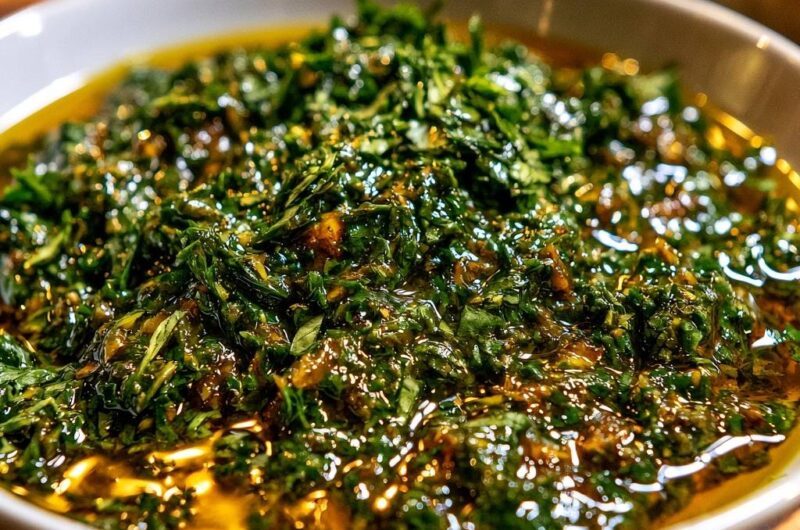
Authentic Fresh Herb Chimichurri
Course: Sauces and CondimentsCuisine: ArgentinianDifficulty: easy8
servings10
minutes10
Minutes125
kcalArgentinian
Ingredients
1 large bunch fresh flat-leaf parsley (approx. 2 cups firmly packed)
4 cloves garlic, minced into a fine paste
2 tablespoons fresh oregano leaves, finely chopped
1/2 cup extra virgin olive oil
2 tablespoons red wine vinegar
1 teaspoon red chili flakes
1/2 teaspoon coarse sea salt
1/4 teaspoon cracked black pepper
Directions
- The secret to preventing browning is to avoid the food processor. Start by washing your parsley and patting it completely dry with paper towels. Any excess moisture will cause the herbs to wilt and discolor.
- Use a very sharp knife to finely mince the parsley and oregano. A dull blade crushes the cell walls of the herbs, leading to that unwanted brown tint. Chop them in one pass rather than hacking back and forth to maintain the structural integrity of the leaves.
- Place the minced garlic and chopped herbs into a small glass bowl.
- Immediately pour the extra virgin olive oil over the herbs and toss gently. The oil acts as a protective barrier, coating every piece of herb to lock out oxygen, which is the primary cause of oxidation and browning.
- Whisk in the red wine vinegar. Adding the acid after the oil coating helps maintain the bright green chlorophyll while still providing the necessary tang.
- Stir in the red chili flakes, salt, and pepper.
- Let the sauce sit at room temperature for at least 20 minutes before serving to allow the flavors to meld. The oil seal will keep it bright green and fresh throughout your entire dinner service. Store any leftovers in a jar with a thin extra layer of oil on top to maintain the color.
Notes
- Store leftovers in a jar with a thin extra layer of oil on top to maintain the vibrant green color and prevent browning.