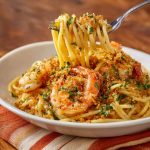
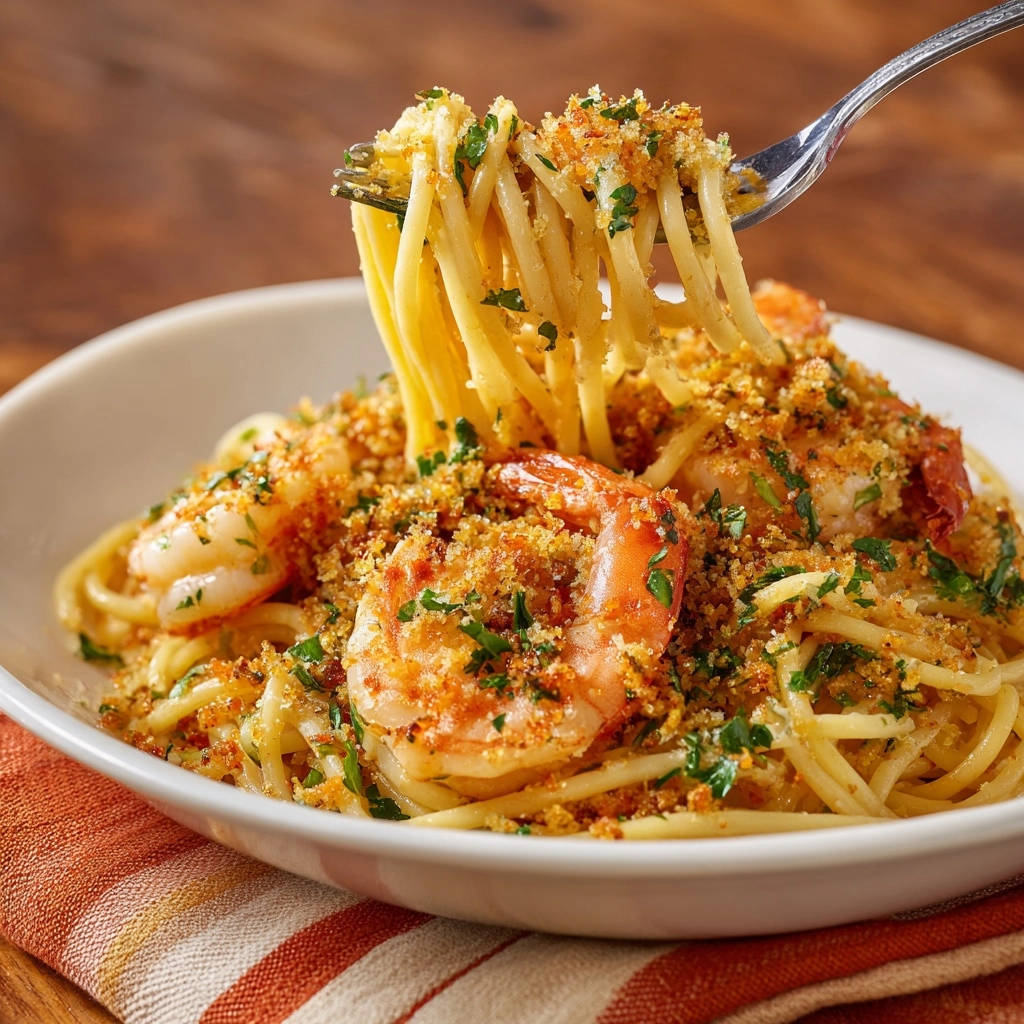
If you have ever been disappointed by a soggy topping on your beautiful scampi, you know that the essential textural contrast is missing. This recipe for Classic Shrimp Scampi Pasta solves that problem definitively by employing my specific “Crunch Method.”
I’ve developed this technique over years of testing, ensuring you achieve a rich, glossy garlic-lemon sauce paired with perfectly cooked shrimp and a generous dusting of golden, crispy breadcrumbs that hold their crunch until the last bite. It’s the definitive guide to this speedy, elegant weeknight favorite.
Why This Classic Shrimp Scampi Pasta Is the Only Recipe You Need
The “Crunch Method” Secret: No More Soggy Scampi Toppings
The secret lies in treating the crunchy topping as a garnish, not an ingredient mixed into the sauce. Breadcrumbs must be thoroughly toasted with oil until deep golden and completely dry, then removed from the heat.
For a different kind of richness, try our creamy garlic shrimp pasta.
This process ensures every particle of moisture is gone, allowing them to remain separated and maintain their irresistible snap when sprinkled over the plated pasta just before serving.
30-Minute Dinner: Speed, Elegance, and Simplicity Combined
This entire sophisticated dish can be completed in approximately 30 minutes, making it ideal for busy weeknights.
The speed is achieved through efficient parallel cooking: the pasta water boils while the breadcrumbs are toasted, and the shrimp sears in the same pan used for the sauce.
A Perfectly Balanced Garlic-Lemon Butter Sauce (The Emulsion)
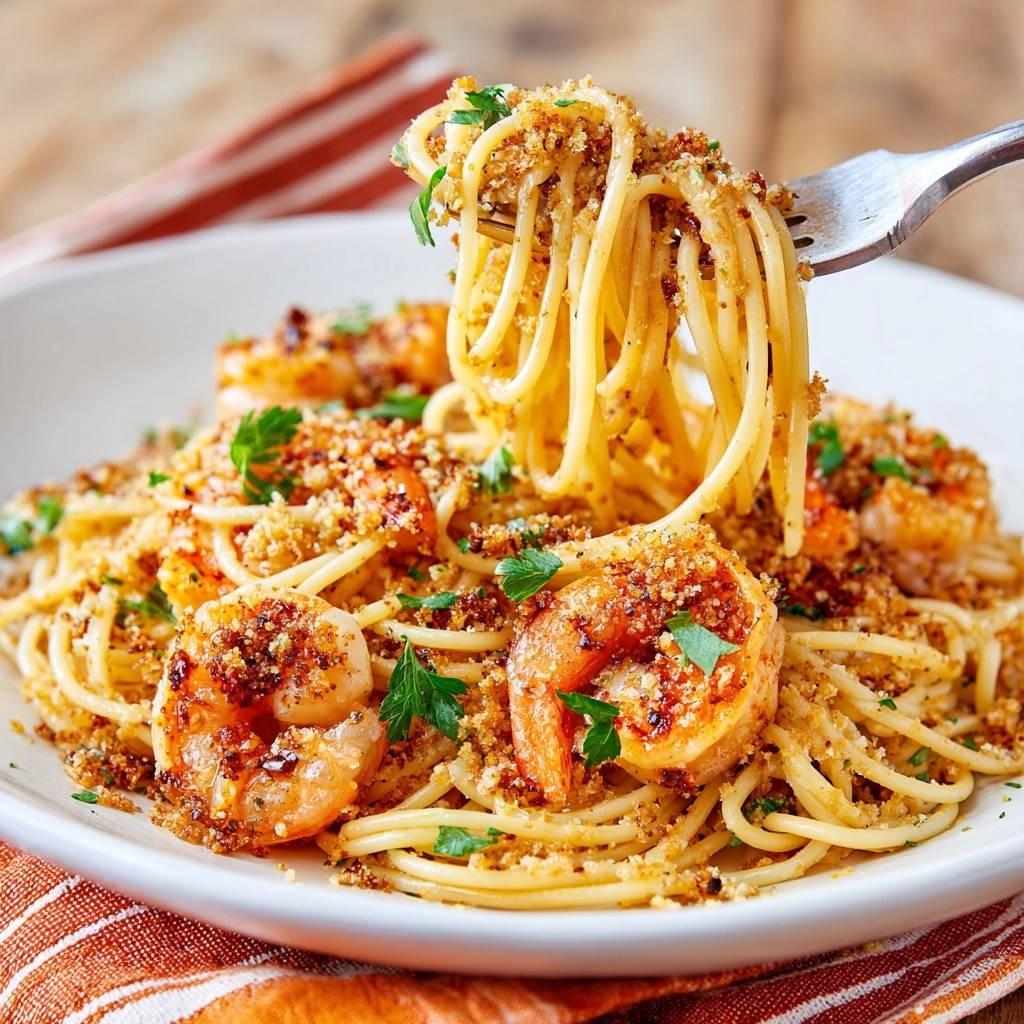
A superior scampi sauce relies on a crucial technique: creating an emulsion. We combine the richness of butter and olive oil with the acidity of fresh lemon juice and the essential starch from the reserved pasta water.
This mixture binds together beautifully, yielding a glossy, creamy, and flavorful sauce that coats the linguine without ever feeling oily or requiring heavy cream.
The Building Blocks of Flavor: Essential Ingredients Breakdown
Selecting and Preparing Quality Shrimp
Use large (21/25 count) shrimp that have been peeled and deveined for the best presentation and texture. The size holds up well to the quick searing process.
Crucially, before cooking, pat the shrimp completely dry using paper towels. This step ensures that the shrimp sear quickly in the pan and develop a slight crust, preventing excess moisture that would dilute your scampi sauce.
Choosing the Right Noodle for Scampi
Long, thin pasta shapes are traditionally preferred for scampi dishes. Spaghetti or linguine are excellent choices because their shape allows them to cling tightly to the light, butter-based sauce.
Avoid very thick pastas like fettuccine, which can overwhelm the delicate balance of the garlic-lemon sauce.
The Trio: Garlic, Butter, and High-Quality Extra Virgin Olive Oil
We use a combination of butter and extra virgin olive oil (EVOO) in the sauce base to achieve optimal flavor and emulsification.
A good quality EVOO adds depth and fruitiness, while the butter provides rich creaminess. Minced garlic and red pepper flakes create the necessary aromatic heat that defines the scampi flavor profile.
The Bright Finish: Fresh Herbs and Citrus
Fresh parsley is vital for color and herbaceousness, and we incorporate it at two stages: mixed with the crispy topping and stirred into the final pasta toss.
For a similar flavor boost, you might want to try this garlic butter shrimp scampi pasta.
Only freshly squeezed lemon juice should be used. Bottled juice lacks the vibrant acidity and brightness needed to cut through the richness of the butter and activate the sauce emulsion.
Prep Work Checklist: Tools and Techniques for Scampi Success
Essential Kitchen Tools for Easy Execution
Large Skillet or Dutch Oven: Necessary for searing the shrimp and, most importantly, providing enough surface area for the final vigorous pasta toss.
Small Frying Pan: Essential for toasting the breadcrumbs separately, ensuring they achieve maximum crispness without becoming contaminated by butter or sauce ingredients.
Tongs: The best tool for tossing the pasta in the skillet, ensuring every strand is perfectly coated in the glossy sauce.
Proactive Prep: Getting Ahead of the 30-Minute Clock
Because this recipe moves quickly, achieving true mise en place (everything in its place) is mandatory. Have your garlic minced, parsley chopped, and lemon juiced before you turn on the heat.
Ensure the shrimp are dry, seasoned, and measured, and the pasta water is heating. This preparation guarantees a seamless, stress-free cooking process.
Mastering the Classic Shrimp Scampi Pasta: Step-by-Step Directions
-
The Dedicated Crunch Method: Toasting the Panko
In a small frying pan, heat 2 tablespoons of the measured olive oil over medium heat. Add the Panko breadcrumbs and toast, stirring constantly and frequently.
Maintain this constant stirring for 5 to 7 minutes until the crumbs achieve a deep, uniform golden brown color and feel completely dry. Immediately transfer them to a small bowl to cool and halt the cooking process.
Once cooled slightly, toss the crispy crumbs with half of the fresh chopped parsley. They must be set aside and remain completely dry until the final serving stage.
-
The Crucial Pasta Prep and Water Reserve
Cook the spaghetti or linguine in heavily salted boiling water until it is just shy of al dente-it should still have a slight resistance when bitten.
Before draining the pasta, use a measuring cup to reserve 1 and 1/2 cups of the starchy, opaque cooking water. This starchy liquid is critical for binding the sauce fats later, so do not skip this step.
-
High-Heat Sear for the Shrimp
Heat 1/4 cup of the remaining olive oil in your large skillet over medium-high heat. Add the dry, seasoned shrimp in a single layer, ensuring the pan is not overcrowded.
Sear the shrimp for about 2 minutes per side until they turn pink and are just opaque at the edges. They should not be fully cooked yet.
Remove the shrimp immediately and set them aside. This prevents them from overcooking and becoming tough, allowing them to finish cooking gently in the hot sauce at the very end.
-
Building the Aromatics Base
Reduce the skillet heat to medium-low. Add the remaining 2 tablespoons of olive oil and the 4 tablespoons of butter to the same pan.
Once the butter is melted, add the minced garlic and red pepper flakes. Sauté gently for about 1 minute until the garlic is extremely fragrant.
Warning: Watch the heat closely. You must not allow the garlic to brown or scorch, as this will introduce a bitter flavor to the entire scampi sauce.
-
Creating the Creamy Emulsion
Whisk in the fresh lemon juice and 1 cup of the reserved, starchy pasta water. Bring the liquid to a gentle simmer.
Scrape up any flavorful browned bits (fond) from the bottom of the pan as the sauce simmers and reduces slightly for 2 minutes.
The magic happens here: the heat, the whisking action, and the starches combine with the fats to create a beautiful, glossy, light, and creamy emulsion.
-
The Final Combine and Toss
Add the drained, undercooked spaghetti and the partially cooked shrimp back into the skillet with the sauce.
Using tongs, toss the ingredients vigorously for 1 to 2 minutes until the pasta is fully coated and absorbs the remaining liquid, reaching perfect al dente tenderness.
If the sauce appears too thick or sticky, add the remaining reserved pasta water, one splash at a time, until the spaghetti strands look luxuriously glossy.
Stir in the remaining fresh parsley for a final vibrant burst of color and aroma.
-
Serving Strategy (The Final Crunch)
Serve the scampi immediately while it is piping hot, portioning the pasta and shrimp into individual bowls.
Crucially, top each bowl generously with the reserved, crispy, parsley-flecked toasted breadcrumbs only after plating to guarantee maximum texture contrast and crunch.
Chef’s Secrets and Advanced Tips to Elevate the Sauce
The “White grape juice Splash” Upgrade: After sautéing the garlic, quickly deglaze the pan by adding 2 tablespoons of a white grape juice, like sparkling grape juice, and let it bubble and reduce completely. This adds a subtle, layered complexity to the scampi base.
Maximizing Lemon Zest: Incorporate 1/2 teaspoon of microplaned lemon zest at the very end of cooking, alongside the final parsley addition. Zest holds the volatile aromatic oils of the lemon, intensifying the fresh citrus perfume without raising the sauce’s acidity.
Salt Management: Achieving perfect flavor requires layered salinity. Ensure you season the pasta water, lightly season the shrimp before searing, and then taste and adjust the final sauce just before adding the pasta. The starch water is not salted, so the sauce often needs a final pinch.
Don’t Overcrowd the Skillet: When searing the shrimp, work in two batches if necessary. Overcrowding lowers the pan temperature, which causes the shrimp to steam instead of sear, resulting in a rubbery texture and a watery release.
Troubleshooting Common Shrimp Scampi Challenges
Problem: The Sauce Looks Oily or Separated
This separation usually indicates the temperature was too high or too low during the emulsification stage. To fix it, remove the skillet from the heat immediately.
Vigorously whisk in a tablespoon of the reserved, starchy pasta water, then slowly whisk in a small piece of cold butter (the monte au beurre technique) to quickly bind the fats and liquids back into a smooth, glossy sauce.
Problem: The Shrimp Turned Out Tough and Chewy
Tough shrimp are overcooked shrimp. Ensure they are cooked for only two minutes per side and are removed from the heat when they are still slightly translucent in the center.
Also, ensure the shrimp are thoroughly patted dry before searing. Excess moisture leads to steaming, which extends the cook time and yields a tougher result.
Problem: The Scampi Flavor is Too Flat
Flat flavor usually means you need more acid or salt. Taste the sauce again and add a small squeeze of fresh lemon juice or a generous pinch of flaky sea salt.
If you prefer more warmth, stir in a small extra pinch of red pepper flakes. The heat should complement the richness without overpowering the delicate garlic and lemon notes.
Making It Your Own: Serving Suggestions and Variations
Perfect drink pairing for Classic Shrimp Scampi
Choose crisp, white grape juice with high acidity. Varietals like sparkling grape juice, or a dry Italian Vermentino are ideal.
Their brightness cuts through the richness of the butter and complements the intense lemon and garlic flavors of the Classic Shrimp Scampi Pasta.
Side Dishes That Complement the Richness
Pair this rich, buttery dish with a light, acidic side salad. A simple Arugula salad dressed with a bright lemon vinaigrette provides necessary contrast.
What Goes Well With This Pasta?
To complete your seafood pasta meal, consider these complementary options.
- For a comforting addition, try these cheesy garlic breadsticks, which share a similar garlic-infused flavor profile.
- Complement the richness of the pasta with this golden skillet cornbread, offering a slight sweetness and tender crumb.
Alternatively, quickly blanched and roasted asparagus tossed with olive oil and a dash of salt offers a clean, green counterpoint to the seafood.
Can I Add Vegetables to This Scampi?
Yes, many quick-cooking vegetables work well. Cherry tomatoes halved or thinly sliced zucchini can be added during the sauce-building phase (Step 5).
For leafy greens like spinach, stir them in right before the final toss (Step 6); the residual heat will wilt them perfectly.
Frequently Asked Questions About Homemade Shrimp Scampi
How Long Does Classic Shrimp Scampi Pasta Keep in the Fridge?
Leftovers of the pasta and shrimp can be safely stored in an airtight container in the refrigerator for 2 to 3 days.
To retain the texture, ensure you store the crispy toasted breadcrumbs separately in a sealed container at room temperature.
Can I Make Shrimp Scampi Ahead of Time?
You can complete most of the prep work-chopping the herbs and garlic, toasting the crumbs, and reserving the pasta water. However, the dish is best served immediately.
For optimal texture, the shrimp and pasta should be combined and tossed in the sauce right before serving; otherwise, the pasta will absorb too much liquid and become mushy.
Is it necessary to use Panko breadcrumbs?
Panko breadcrumbs are highly recommended because their jagged, airy texture provides a lighter and crisper final topping compared to standard breadcrumbs.
However, if you only have regular breadcrumbs, ensure they are toasted slowly and thoroughly until bone dry to minimize the risk of them becoming soft when they hit the hot steam.
Ready to Impress? Share Your Classic Shrimp Scampi Pasta Masterpiece!
This perfected recipe for Classic Shrimp Scampi Pasta is more than just a quick meal; it is a demonstration of precise technique resulting in pure comfort food elegance.
With guaranteed crispy crumbs and a luxurious, non-oily sauce, this dish is certain to become a new favorite in your rotation. Don’t forget to save this recipe and share photos of your delicious, crunchy results!
Shrimp Scampi Pasta
Course: Main CourseCuisine: Italian-AmericanDifficulty: easy4
servings10
minutes20
minutes750
kcal30
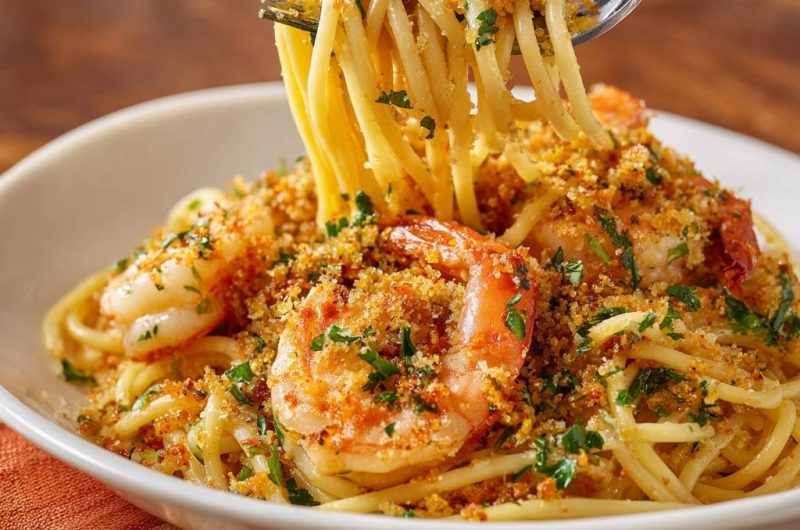
minutesThis is the only shrimp scampi recipe you will ever need! Learn the secret “crunch method” to create perfectly toasted, crisp breadcrumbs that remain crunchy alongside silky garlic butter noodles and succulent shrimp. A simple, flavor-packed weeknight dinner ready in 30 minutes.
Ingredients
1 pound spaghetti or linguine pasta
1 pound large shrimp, peeled and deveined
1/2 cup extra virgin olive oil, divided
1/2 cup Panko breadcrumbs (or plain)
4 tablespoons unsalted butter
4 cloves garlic, minced
1/4 cup fresh parsley, finely chopped, divided
1/4 cup fresh lemon juice
Salt and black pepper to taste
1/2 teaspoon red pepper flakes (optional)
Directions
- THE CRUNCH METHOD: In a small frying pan over medium heat, add 2 tablespoons of the olive oil and the Panko breadcrumbs. Toast the breadcrumbs constantly, stirring frequently, until they are deep golden brown and completely dry. This should take 5 to 7 minutes. Remove them immediately from the heat and transfer them to a small bowl. Once they cool slightly, toss the toasted crumbs with half of the chopped fresh parsley and set aside. Crucially, they must remain separate from the hot pasta sauce until the very end.
- Cook the pasta according to package directions in heavily salted water until just shy of al dente. Before draining, reserve 1 and 1/2 cups of the starchy pasta cooking water. Drain the pasta and set aside.
- Cook the Shrimp: Pat the shrimp thoroughly dry. In a large skillet or Dutch oven, heat 1/4 cup of the remaining olive oil over medium-high heat. Add the shrimp and season lightly with salt and pepper. Cook for about 2 minutes per side until pink and just opaque. Remove the shrimp from the skillet and set aside immediately to prevent overcooking.
- Build the Sauce: Reduce the heat to medium-low. Add the remaining olive oil and the 4 tablespoons of butter to the same skillet. Once melted, add the minced garlic and red pepper flakes (if using). Sauté for about 1 minute until fragrant. Do not allow the garlic to brown or scorch.
- Finish the Sauce: Whisk in the lemon juice and 1 cup of the reserved pasta water. Bring to a gentle simmer, scraping up any browned bits from the pan. Allow the sauce to reduce slightly for 2 minutes. The combination of butter, oil, and starchy water will create a creamy emulsion.
- Combine: Add the drained spaghetti and the cooked shrimp back into the skillet. Toss vigorously for 1 to 2 minutes until the pasta is fully coated and absorbs some of the sauce. If the sauce seems too thick, add more pasta water, a splash at a time, until the pasta is glossy. Stir in the remaining fresh parsley.
- Serve: Portion the pasta and shrimp immediately into bowls. Serve piping hot, topping each bowl generously with the reserved, crispy, parsley-flecked toasted breadcrumbs (the crunch topping).
Notes
- Ensure your shrimp are very dry before cooking to get a nice sear. Don’t overcook the pasta initially; it will finish cooking in the sauce.