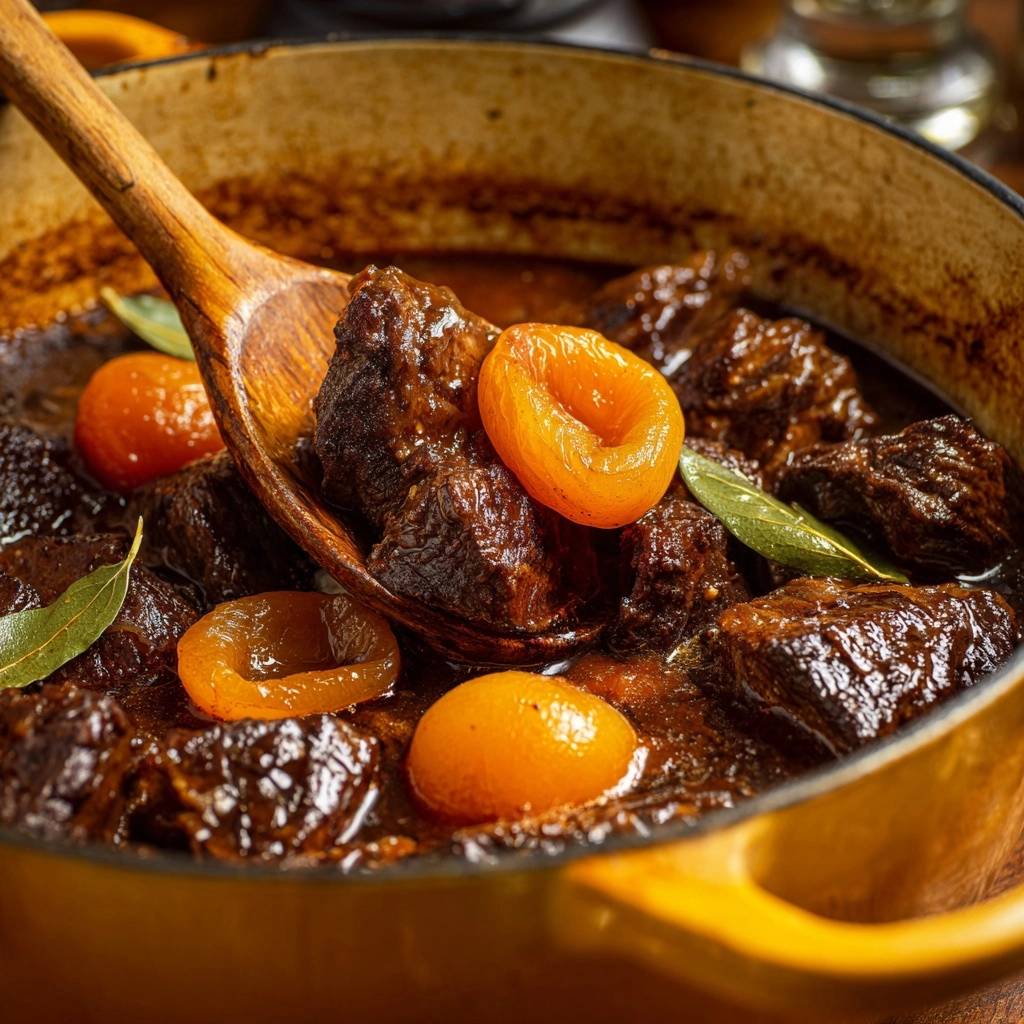
Few things in the kitchen are as frustrating as spending hours on a beef stew only to end up with meat that feels like chewing on a rubber band. Most home cooks struggle with stringy, dry beef because they treat the cooking process too aggressively. This Slow-Braised Beef and Apricot Stew solves that problem by focusing on a gentle, honeyed transformation that turns humble ingredients into a rich, glossy masterpiece.
The real beauty of this dish lies in the sensory contrast between the deeply savory, salt-crusted beef and the plump, jammy sweetness of Turkish apricots. As the meat breaks down, it releases savory juices that mingle with warm cinnamon and ginger, creating a sauce so thick and dark it looks like velvet. It is a comforting, sophisticated meal that feels special without requiring a professional degree to execute.
The secret to success here is the “low and slow” philosophy, specifically using an oven rather than a stovetop burner. By surrounding the heavy pot with consistent, moderate heat, you prevent the bottom from scorching while the connective tissue melts into pure silk. If you’ve ever had a stew where the meat was tough despite being “cooked,” it’s likely because the liquid was boiling too hard, which actually tightens the muscle fibers instead of relaxing them.
The Science of Tenderness in Beef Braising
To understand why this recipe works, you have to understand collagen. Beef chuck is packed with this tough connective tissue, which acts like a tight spring. If you boil the meat at 212°F, those fibers seize up and squeeze out all their moisture, leaving you with dry, gray chunks. However, when you maintain a gentle environment around 300°F in the oven, a magical biochemical transformation occurs.
Over the course of three hours, that tough collagen slowly dissolves into gelatin. This gelatin is what gives the stew its “lip-smacking” quality and makes the beef feel incredibly moist, even though it has been cooking for a long time. The oven provides ambient, 360-degree heat that a stovetop simply cannot match. This steady temperature ensures the liquid stays at a lazy simmer, which is the sweet spot for breaking down fibers without toughening them.
Patience is your most important ingredient during this phase. You cannot rush the conversion of collagen to gelatin by turning up the heat. If you try to boil it to finish faster, you will ruin the texture. Trust the process and let the gentle heat do the heavy lifting while you relax.
Essential Components for a Rich Braising Base
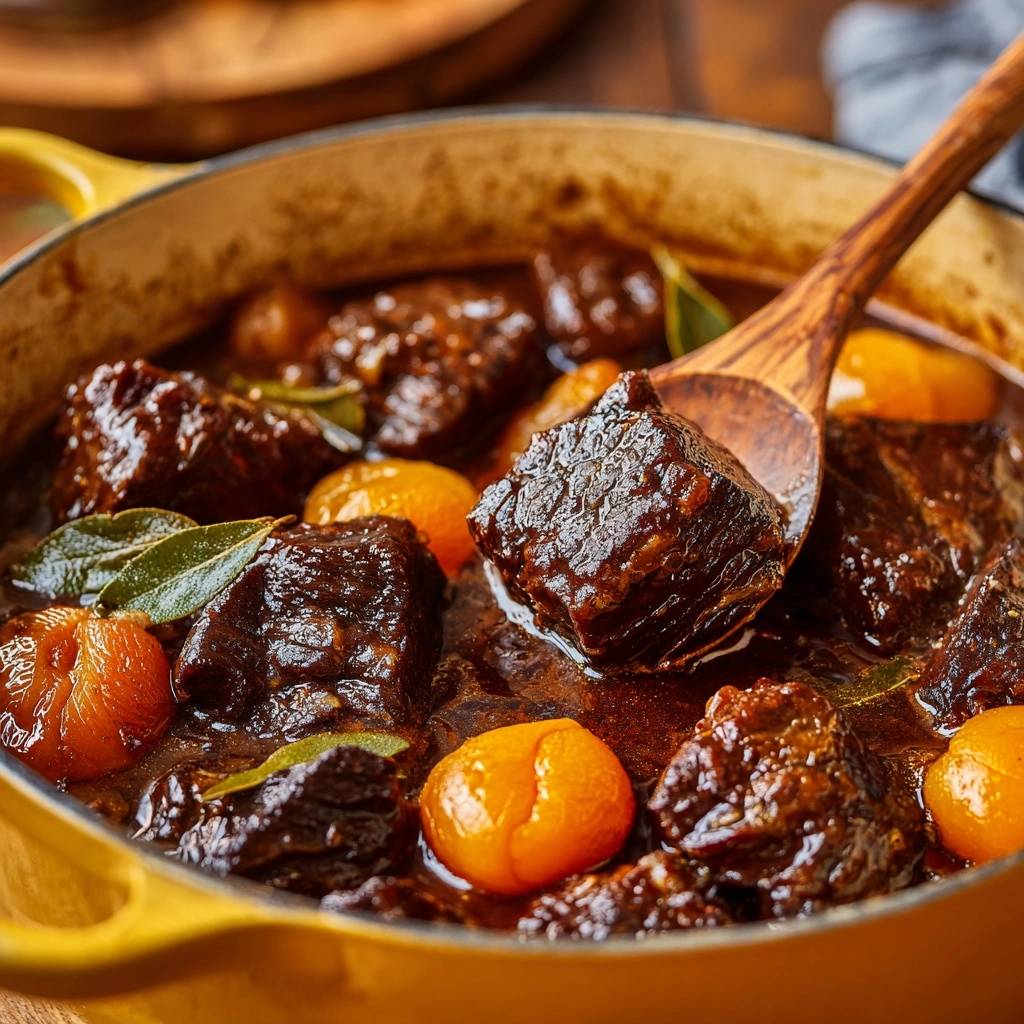
The foundation of any great braise starts with the right cut of meat. I always recommend beef chuck roast because it has the perfect fat-to-lean ratio. Unlike leaner cuts like sirloin, which go dry and chalky, chuck has internal marbling that bastes the meat from the inside out as it cooks. When you cut it into generous 2-inch cubes, you provide enough surface area for a great sear while keeping the center juicy.
Aromatics like yellow onion and garlic are equally vital. They shouldn’t just be tossed in; they need to be softened until they are translucent and sweet. This creates a foundational layer of flavor that supports the heavier spices. Using a high-quality beef bone broth also adds a layer of richness and body to the sauce that plain water or standard stock just can’t provide.
Selecting the Best Dried Apricots
When you’re at the grocery store, look specifically for Turkish apricots. These are usually sun-dried whole and have a much deeper, honey-like sweetness and a plumper texture than California apricots. California varieties tend to be more tart and are often sliced, which means they can disintegrate into mush during the final hour of cooking.
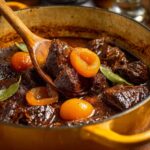
Turkish apricots hold their shape beautifully while absorbing the savory braising liquid. By the time the stew is finished, they should look like glowing jewels nestled among the beef. They provide a burst of acidity and sugar that cuts right through the richness of the beef fat, balancing every single bite.
The Role of Warm Spices and Aromatics
Cinnamon and ginger might sound like they belong in a cookie, but in a savory beef stew, they are transformative. These warm spices bridge the gap between the earthy, umami-rich beef and the sweet fruit. They add a North African-inspired depth that makes the dish feel exotic yet deeply familiar and cozy.
For a similar depth of flavor with a different focus, see this recipe for slow-simmered braised beef and onions.
The ginger provides a very subtle back-end heat, while the cinnamon adds an aromatic woodiness. When these spices hit the hot oil and tomato paste, they “bloom,” releasing oils that permeate the entire pot. It creates a complex flavor profile that tastes like it took days to develop, even though it only took a few hours.
Preparation: Setting the Stage for Success
Before you even turn on the stove, you need to practice “mise en place,” which just means having everything ready. The most critical step is taking the beef out of the fridge about 20 minutes early to take the chill off. Cold meat hitting a hot pan causes the temperature to drop instantly, which prevents a good crust from forming.
You must also pat the beef cubes completely dry with paper towels. If the meat is damp, the heat of the pan will turn that moisture into steam. Steamed meat turns gray and rubbery. Dry meat, however, undergoes the Maillard reaction, which is the chemical process that creates that beautiful, flavorful brown crust we’re looking for.
Step-by-Step: Achieving the Perfect Sear
Searing is where the flavor is born. Heat your oil until it’s shimmering, then add the beef in batches. If you crowd the pan, the meat will release its juices and boil in its own liquid. You want enough space between the cubes so the steam can escape, allowing the edges to get dark and caramelized.
As you sear, you’ll notice brown bits sticking to the bottom of the Dutch oven. Don’t panic! This is called “fond,” and it is essentially concentrated flavor. When you later add your onions and liquid, these bits will dissolve into the sauce, giving it a professional, deep-tasting finish. This is why a heavy-bottomed pot is so important; it holds the heat and prevents these precious bits from burning.
Building the Braising Liquid and Glaze
Once the meat is seared and the onions are soft, it’s time to “bloom” the tomato paste. Stir it into the onions and spices, cooking it for a few minutes until it turns from bright red to a dark brick color. This removes the raw metallic taste and adds a savory sweetness that anchors the sauce.
When you add the broth and a touch of honey, you’re setting the stage for a spectacular glaze. The honey doesn’t just sweeten the dish; it provides the sugar necessary to create a thick, glossy reduction. As the liquid evaporates in the oven, it transforms from a thin soup into a rich gravy that clings to the back of a spoon.
The Low-Heat Method for Melt-in-Your-Mouth Beef
After bringing the pot to a very gentle simmer on the stove, cover it with a tight-fitting lid and move it to the oven. A tight lid is non-negotiable because it traps the steam inside, creating a self-basting environment. If your lid is a bit loose, you can place a piece of parchment paper or foil between the pot and the lid to create a better seal.
At the two-hour mark, the beef should be starting to soften but still hold its shape. This is the perfect time to check the liquid levels. You want the meat to be mostly submerged but not drowning. The kitchen should smell incredible at this point, with the scent of spiced beef filling the air.
Integrating Apricots for Maximum Texture
Timing is everything when it comes to the fruit. If you add the apricots at the beginning, they will dissolve into the sauce, losing their identity. By adding them for the final 45 to 60 minutes, they have just enough time to soak up the braising liquid like little sponges without falling apart.
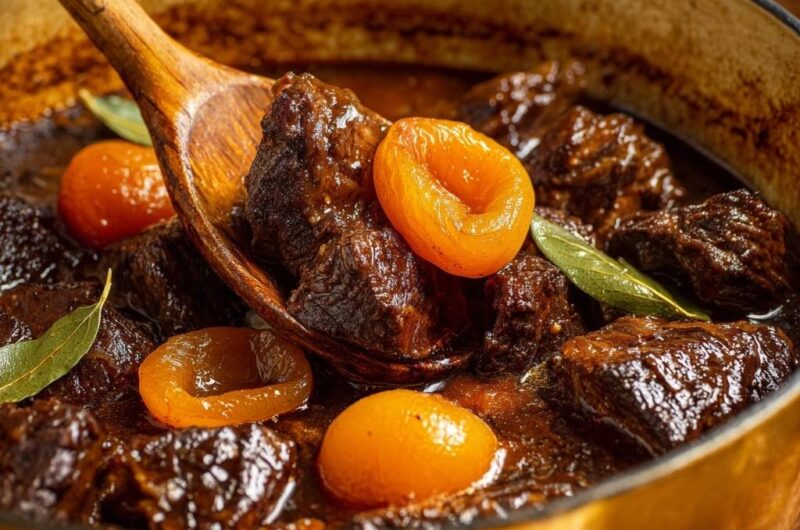
When the stew is done, the apricots should be plump and tender, yielding easily to a fork. They should have a dark, translucent look, having swapped some of their sugar for the savory spices of the beef broth. This creates a “sweet and sour” effect that is the hallmark of a great fruit-based meat stew.
Troubleshooting Common Braising Obstacles
If you pull the pot out after three hours and the meat is still tough, don’t worry. It simply means the collagen hasn’t finished melting yet. Every cow is different, and some cuts just need an extra 30 minutes. Just put the lid back on and keep going; you can’t really overcook a braise at 300°F as long as there is liquid in the pot.
If your sauce looks too thin, remove the lid for the last 15 minutes of cooking. This allows the excess moisture to evaporate, concentrating the flavors and thickening the glaze. If it’s too salty, a tiny splash of water or a little extra honey can help balance the palate. Always taste the sauce before serving to make sure the seasoning is exactly where you want it.
Complementary Dishes
Enhance your slow-braised beef and apricot stew with these comforting accompaniments.
- For a classic pairing that catches every bit of that rich stew, serve it alongside creamy mashed potatoes with rich gravy.
- To add another layer of savory goodness, consider preparing thyme beef stuffing, which echoes the hearty flavors of the stew.
Optimal Side Dishes for Beef and Apricot
You need a side dish that can act as a vehicle for that incredible sauce. Fluffy couscous is a traditional and excellent choice, as the tiny grains soak up the glaze perfectly. If you prefer something heartier, buttery mashed potatoes or even a simple bowl of white rice will work beautifully to balance the richness of the meat.
To round out the meal, consider something with a bit of crunch or bitterness. A simple side of roasted carrots or a salad of bitter greens like arugula or kale can cut through the honeyed sweetness of the apricots. And of course, a piece of crusty sourdough bread is mandatory for swiping up every last drop of sauce from your plate.
Storage, Reheating, and Make-Ahead Strategies
This is one of those rare dishes that actually tastes better the next day. As the stew sits in the fridge, the spices continue to marry and the beef absorbs even more flavor. If you’re making this for a dinner party, I actually recommend making it a full day in advance. Just let it cool completely before covering and refrigerating.
When reheating, do it gently on the stovetop over medium-low heat. You might need to add a splash of broth or water to loosen the sauce, as the gelatin will cause it to set into a thick jelly when cold. Avoid the microwave if possible, as it can heat the meat unevenly and make it feel rubbery. This stew also freezes beautifully for up to three months in an airtight container.
Expert Tips for Professional Results
For the best heat distribution, always use a heavy-bottomed cast iron Dutch oven. These pots hold heat more consistently than thin stainless steel, which prevents hot spots that can burn your sauce. It’s an investment that pays off in every stew you make.
For a similarly hearty and slow-simmered dish, explore this savory beef stew.
Don’t forget to remove the bay leaves before you serve the dish. While they add a wonderful herbal note during the long braise, biting into one is unpleasant and they can become bitter if left in the leftovers too long. Finally, always do a final “fork test” before calling it done. The meat should flake apart with almost no pressure; if you have to saw at it with a knife, it needs more time!
Frequently Asked Questions
How should I store leftovers and does this freeze well?
Store any leftover stew in an airtight container in the refrigerator for up to 4 days. This dish freezes exceptionally well because the high gelatin content protects the meat from freezer burn. You can freeze it for up to 3 months. When you’re ready to eat, thaw it overnight in the fridge and reheat it slowly on the stove with a splash of water to bring the sauce back to its glossy consistency.
Why is my beef still tough after 3 hours of cooking?
If the beef is still tough, it almost always means it needs more time. Braising is not a race; it’s a physical transformation of collagen into gelatin. Some cuts of chuck roast are more stubborn than others. Simply put the lid back on and continue cooking at 300°F for another 30 minutes. As long as there is still liquid in the pot, the meat will eventually give in and become tender.
Can I use a different fruit if I don’t have apricots?
Yes, you can substitute dried prunes or dried figs for the apricots. Both offer a similar jammy texture and sweetness that pairs well with beef. However, avoid using fresh fruit, as it contains too much water and will turn into a watery mush during the long cooking process. Dried fruit is essential because it acts like a sponge, soaking up the savory braising liquid.
What can I use instead of beef broth?
If you’re out of beef broth, you can use chicken broth or even vegetable broth in a pinch. While the flavor won’t be quite as deep and “beefy,” the aromatics and spices in the recipe will still create a delicious sauce. Avoid using just water, as you’ll lose the foundational savory notes that make the glaze so rich. If you must use water, add an extra tablespoon of tomato paste and a bit more salt.
Do I have to use a Dutch oven for this recipe?
While a heavy Dutch oven is the gold standard for braising because of its superior heat retention, you can use any deep, oven-safe pot with a very tight-fitting lid. If your lid isn’t perfectly tight, cover the pot with a layer of heavy-duty aluminum foil before putting the lid on. This ensures the moisture stays inside the pot to keep the meat from drying out during the long oven stay.
Can I make this in a slow cooker instead?
You can, but you will lose some of the flavor depth. If using a slow cooker, you must still sear the beef and sauté the onions/spices in a separate pan first to develop the “fond.” Transfer everything to the slow cooker and cook on low for 7-8 hours. Add the apricots during the last hour. Note that the sauce won’t reduce into a thick glaze as effectively in a slow cooker, so you may need to thicken it with a cornstarch slurry at the end.
Slow-Braised Beef Stew
Course: Main CourseCuisine: AmericanDifficulty: medium6
servings20
minutes3
hours510
kcal200
MinutesA savory and sweet beef stew that uses a specific braising technique to ensure the meat is never tough. The addition of dried apricots and warm spices like cinnamon and ginger creates a complex, glossy sauce.
Ingredients
3 pounds beef chuck roast, cut into 2-inch cubes
1.5 cups dried apricots, whole (Turkish apricots preferred for plumpness)
3 cups beef bone broth
3 tablespoons tomato paste
3 bay leaves
2 tablespoons vegetable oil
1 large yellow onion, diced
4 cloves garlic, minced
1.5 teaspoons salt
1 teaspoon black pepper
1 teaspoon ground cinnamon
1/2 teaspoon ground ginger
1 tablespoon honey or brown sugar (to achieve the dark, glossy glaze shown)
Directions
- Pat the beef cubes completely dry with paper towels. This is the first step to preventing tough meat; moisture on the surface steams the meat instead of searing it. Season generously with salt and pepper.
- Heat the oil in a heavy Dutch oven over medium-high heat. Sear the beef in small batches. Do not crowd the pan. Brown each side deeply until a dark, caramelized crust forms. Remove the beef and set aside.
- Lower the heat to medium. Add the onion and garlic to the pot, scraping up the brown bits (fond) from the bottom. Stir in the tomato paste, cinnamon, and ginger, cooking for 3 minutes until the paste turns a deep brick red.
- Return the beef and any accumulated juices to the pot. Pour in the beef broth until the meat is just covered. Stir in the honey/sugar and add the bay leaves.
- To solve the tough meat problem, bring the liquid to a very gentle simmer, then immediately reduce the heat to the lowest setting. Cover with a tight-fitting lid. For the best results, place the covered Dutch oven in a 300°F (150°C) oven to ensure even, surround-heat that prevents the bottom from scorching.
- Braise for 2 hours.
- After 2 hours, stir in the whole dried apricots. The apricots will absorb the braising liquid, becoming plump and tender as seen in the image.
- Cover and continue to simmer or bake for another 45 to 60 minutes.
- Remove the lid for the final 15 minutes of cooking to allow the sauce to reduce into a thick, dark glaze that coats the meat. The stew is ready when the beef flakes apart easily with a spoon. Remove the bay leaves before serving.
Notes
- To prevent tough meat, ensure the liquid stays at a gentle simmer rather than a boil. Searing the meat in small batches is essential for a deep, caramelized flavor.