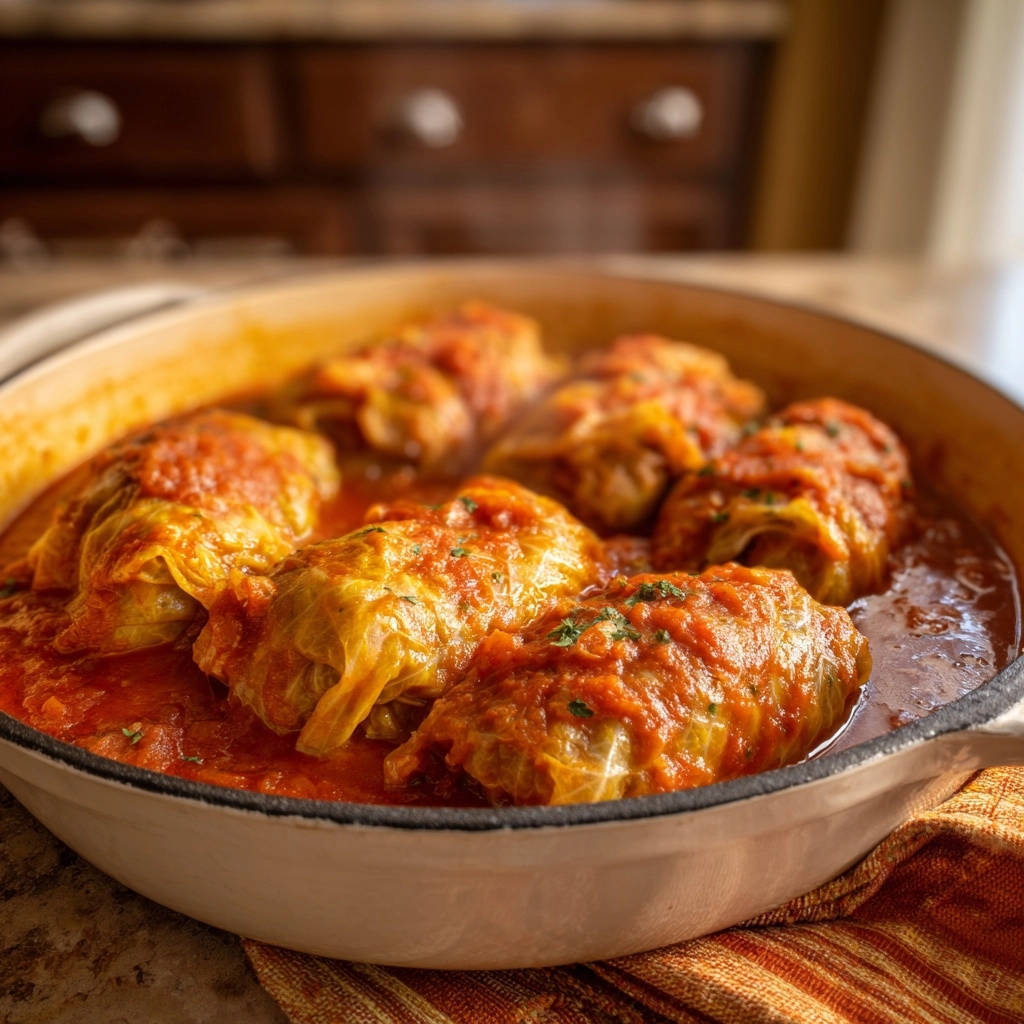
I distinctly remember the frustration of seeing my carefully rolled Classic Stuffed Cabbage Rolls unravel in the pot, despite all my efforts. That’s why I’m thrilled to share my perfected method, ensuring your rolls stay beautifully intact from oven to plate every single time. This recipe delivers a comforting, deeply flavorful meal, solving the common unraveling problem with ingenious yet simple techniques.
Why This Recipe Will Change Your Cabbage Roll Game
The “No-Unraveling” Guarantee: How We Cracked the Code
Many home cooks struggle with cabbage rolls falling apart during their long cooking journey. This recipe specifically tackles that issue head-on.
Through precise rolling and, more importantly, a critical tight packing method in the braising liquid, we create a secure structure. Your rolls will emerge perfectly shaped, holding every bit of their delicious filling.
For a similar result that stays together, try classic beef stuffed cabbage rolls.
Comfort in Every Hearty Bite: A Timeless Classic Perfected
There’s an undeniable warmth and nostalgia associated with a pan of tender Classic Stuffed Cabbage Rolls. This rendition elevates that classic comfort.
Every bite combines silky cabbage, a rich, savory beef and rice filling, and a balanced tomato sauce. It’s a truly satisfying dish that will transport you back to cherished family meals.
Flavor That Deepens with Every Hour (and Stays Put!)
The beauty of this dish lies in its slow, gentle braise. This extended cooking time allows the flavors to meld and deepen beautifully.
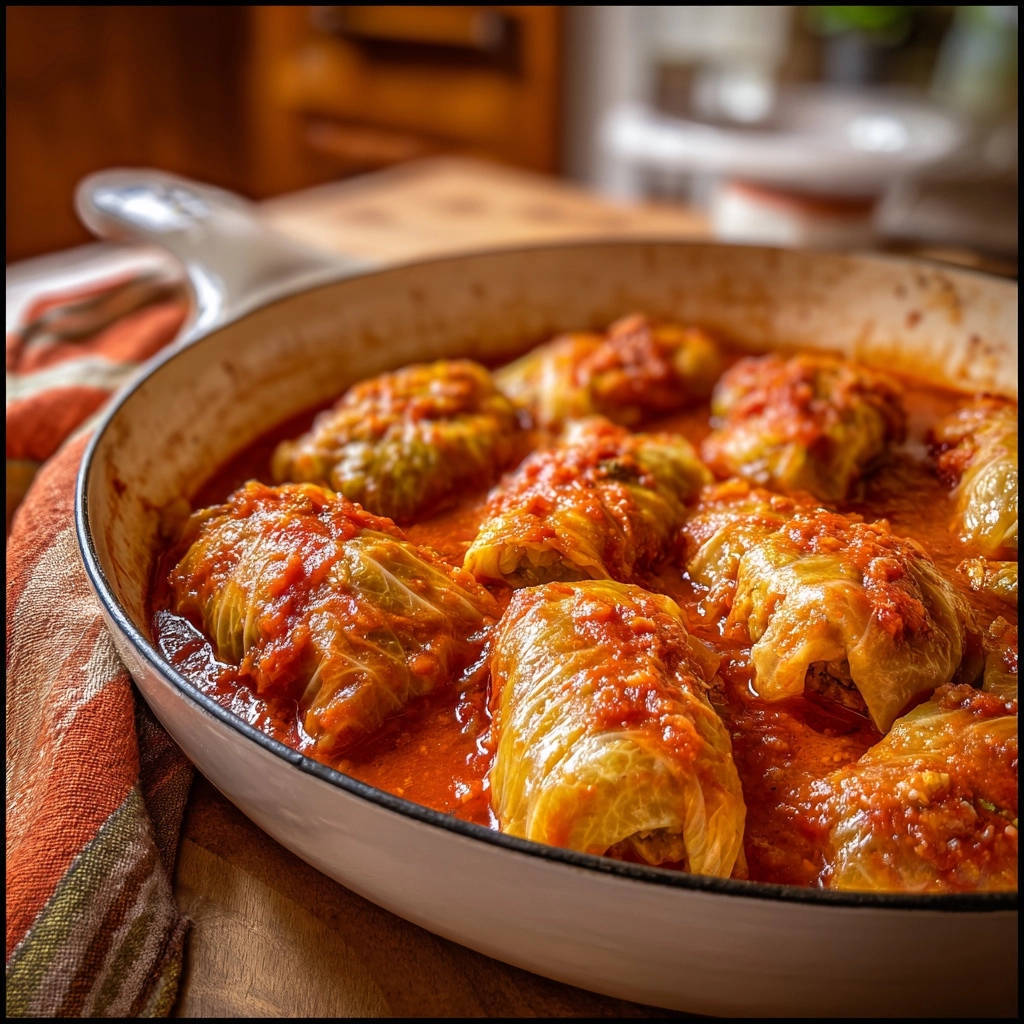
The careful structural design means you get all that incredible depth without any of the worry. Your filling remains encapsulated, ensuring maximum flavor with zero loss.
Behind the Layers: Essential Ingredients for Flavor
The Humble Cabbage: Choosing Your Wrapper
A large head of fresh green cabbage is essential. Look for one that feels heavy for its size and has crisp, vibrant leaves.
Properly softening the cabbage leaves is crucial for flexibility, preventing tears during rolling and ensuring a tender finished product.
The Heart of the Roll: Crafting a Savory Filling
For the filling, 85/15 ground beef offers the perfect balance of flavor and moisture. Avoid excessively lean beef, which can lead to a dry filling.
Cooked white rice adds bulk and absorbs the delicious juices, while finely minced yellow onion provides aromatic depth. Thyme, salt, and pepper round out the savory profile.
The Tangy-Sweet Braising Sauce: Our Secret to Richness
Crushed tomatoes and tomato sauce form the foundation of our rich braising liquid. Vegetable or beef broth adds another layer of umami.
The crucial ingredient here is brown sugar. It perfectly balances the acidity of the tomatoes, creating a harmonious sweet and savory sauce that permeates the rolls.
Gather Your Gear: Tools for Stuffed Cabbage Success
The Pot for Perfection: Your Dutch Oven is Key
A large Dutch oven or heavy-bottomed pot (at least 5 quarts) is non-negotiable for this recipe. Its even heat distribution and tight-fitting lid are essential.
This ensures your cabbage rolls braise uniformly, becoming incredibly tender without burning on the bottom.
Handy Prep Tools: Making the Process Smooth
A sharp paring knife is indispensable for carefully coring the cabbage and shaving down the thick ribs of each leaf. This precision prevents tearing and makes rolling easier.
Large mixing bowls are needed for combining the filling ingredients. Having everything prepped makes the assembly process smooth and enjoyable.
From Cabbage to Comfort: A Masterclass in Rolling & Braising
Prepping Your Cabbage Wrappers with Precision
Begin by coring the large cabbage head, cutting deeply around the stem. Then, place the entire cored head into a large pot of boiling water, core-side down.
Cook for 10 to 15 minutes, carefully peeling off the outer leaves as they soften. Aim for 12 to 14 pliable leaves. With a small paring knife, shave down the thick center rib of each leaf, making it thin and flexible without cutting through.
Crafting the Hearty Filling: Don’t Overmix!
In a spacious bowl, gently combine the ground beef, cooked rice, finely minced onion, dried thyme, salt, and black pepper.
Use your hands to mix these ingredients thoroughly until just combined. Overmixing the meat can compact the proteins and lead to a tough, dry filling, so be gentle.
The No-Fail Rolling Technique: Securing Your Rolls (Our First Secret!)
Lay a softened cabbage leaf flat on your work surface. Place about 1/4 to 1/3 cup of the filling near the thickest end of the leaf closest to you.
Fold the sides of the leaf (the left and right edges) inward over the filling. Then, starting from that thick, folded end, roll the leaf tightly away from you until you reach the tip. The inward side folds and firm rolling are absolutely crucial for preventing any unraveling.
Building the Flavorful Braising Sauce: A Sweet & Savory Base
In your large Dutch oven or heavy pot, combine the crushed tomatoes, tomato sauce, vegetable or beef broth, brown sugar, and olive oil. Stir everything well to integrate.
Bring the sauce to a gentle simmer over medium heat, allowing the flavors to begin marrying before adding the rolls. This step ensures an even distribution of heat and taste.
The Crucial Tight Packing Method: Our Unraveling Solution
Turn off the heat under the simmering sauce. This is where the magic happens for structural integrity.
Carefully place your prepared cabbage rolls directly into the sauce, seam-side down. The warm, thick sauce helps to “glue” the seam shut immediately. Pack the rolls very tightly against one another in the pot, using the pot’s sides and other rolls for maximum structural support.
If you need multiple layers, ensure each layer is packed just as tightly. The rolls should be submerged at least three-quarters of the way in the sauce, creating a snug environment that prevents any shifting or unraveling during cooking.
Slow Braising for Tender Perfection: The Patience Pays Off
Cover the pot tightly with its lid. Place it in a preheated oven at 325 degrees F. Braise for a full 2 hours and 30 minutes.
This long, slow cooking time is vital. It allows the tough collagen in the ground beef to break down and become incredibly tender, while the cabbage transforms into a silky, yielding wrapper. The tight packing ensures this entire process occurs without any structural compromise.
For that perfect texture, consider trying these classic stuffed cabbage rolls.
Serving Your Culinary Masterpiece: A Grand Reveal
Once braised, remove the Dutch oven from the oven and let it rest, covered, for 15 minutes. This resting period allows the juices to redistribute and the rolls to settle.
Serve the Classic Stuffed Cabbage Rolls directly from the Dutch oven, spooning extra luscious sauce over each perfectly intact roll. Enjoy your impressive, no-fail creation!
Unlocking Next-Level Flavor: Expert Tips & Tricks
Choosing the Best Cabbage for Rolls
While green cabbage is traditional, savoy cabbage offers a slightly softer texture and frillier leaves, which can be easier to roll. Avoid red cabbage, as its color bleeds significantly during cooking.
Always select a head that is firm and heavy, without any yellowing or blemishes. Fresher cabbage yields more pliable leaves.
Pre-browning the Ground Beef (Optional for Deeper Flavor)
For an even richer, more complex flavor profile, you can lightly brown the ground beef before mixing it with the other filling ingredients.
Drain off any excess fat after browning, then let the beef cool slightly before combining. This step adds a delicious depth of savory notes, especially if you enjoy a more robust meat flavor.
Make-Ahead Magic: Saving Time Without Sacrificing Taste
Classic Stuffed Cabbage Rolls are fantastic for meal prepping. You can prepare the filling and the sauce a day in advance and store them separately in the refrigerator.
Alternatively, assemble the entire dish in the Dutch oven, cover it tightly, and refrigerate for up to 24 hours before baking. Just add about 30 minutes to the baking time if cooking from cold.
Freezing for Future Feasts: Storage & Reheating
These cabbage rolls freeze beautifully. Once completely cooled, transfer them to freezer-safe containers with plenty of sauce, ensuring they are submerged.
They can be frozen for up to 3 months. To reheat, thaw overnight in the refrigerator, then warm gently in a covered pot on the stove or in the oven until heated through.
Troubleshooting Your Cabbage Rolls: Common Issues Solved
Problem: My Cabbage Rolls Are Falling Apart!
This is the most common issue, but one we’ve completely addressed in this recipe! The primary culprits are loose rolling and insufficient packing in the pot.
Ensure you fold the sides of the cabbage leaf inward before rolling, and roll it as tightly as possible. Most importantly, pack your rolls incredibly snugly in the Dutch oven; they should support each other and barely have room to move.
Problem: The Filling is Dry and Tough.
A dry or tough filling usually stems from overmixing the ground beef, using too lean a meat, or not braising for long enough.
Remember to mix the filling only until just combined. Use an 85/15 ground beef for optimal moisture. The 2 hours 30 minutes of slow braising is essential for tenderizing the meat and allowing it to absorb moisture from the sauce.
Problem: The Sauce Tastes Too Tangy or Too Sweet.
The balance of tanginess and sweetness is key to a great cabbage roll sauce. If it’s too tangy, you can stir in a small pinch more brown sugar, tasting as you go.
If it’s too sweet, a tiny splash of apple cider vinegar or lemon juice can brighten it. Sometimes, a tiny pinch of baking soda (literally a 1/4 teaspoon) can also mellow excessive acidity if needed, but add sparingly.
Beyond the Pot: Serving & Pairing Ideas
Classic Side Dishes to Complement Your Meal
Classic Stuffed Cabbage Rolls pair wonderfully with simple, comforting sides. Creamy fluffy mashed potatoes are a perfect match, soaking up all the delicious sauce.
Round Out Your Meal
To complement your stuffed cabbage rolls, explore these other satisfying dishes.
- For a comforting bake that also features cabbage, consider this easy savory cabbage and potato cake, perfect for a hearty addition.
- If you enjoy potato dishes, this crispy potato pancakes recipe offers a delightful texture contrast.
A slice of crusty rye bread or a dollop of sour cream also makes for a delightful accompaniment, adding contrasting texture and flavor.
Creative Toppings & Garnishes
A sprinkle of fresh dill or parsley adds a bright, herbaceous note that cuts through the richness of the dish. For a touch of color and a mild bite, consider a light dusting of smoked paprika.
Some even enjoy a small dollop of plain Greek yogurt or sour cream on top for a creamy, tangy finish.
Grape juice & Drink Pairings for a Complete Experience
For a refreshing option, a medium-bodied red grape juice like a sparkling grape juice complements the savory beef and tomato sauce beautifully. Their fruit notes and moderate tannins balance the dish without overpowering it.
For non-alcoholic options, a sparkling cider or even a chilled unsweetened iced tea can provide a refreshing contrast to the hearty meal.
Your Classic Stuffed Cabbage Rolls Questions, Answered!
Can I Use a Different Type of Meat for the Filling?
Absolutely! While ground beef is traditional, a mixture of ground beef and ground lamb (50/50) creates an even richer, more succulent filling. You can also use ground chicken or turkey for a leaner option, though they may require a bit more seasoning and fat to prevent dryness. For more hearty beef inspiration, explore our recipe for classic beef and mushroom stew.
How Can I Make This Recipe Vegetarian?
Making this recipe vegetarian is simple and delicious! Substitute the ground beef with a hearty plant-based ground “meat” alternative, cooked lentils, or a finely chopped mushroom mixture (sautéed first to remove moisture). Ensure your broth is vegetable-based.
Can I Cook Classic Stuffed Cabbage Rolls in a Slow Cooker?
Yes, you can! After assembling and packing the rolls tightly in your slow cooker, pour the simmering sauce over them. Cook on low for 6-8 hours or on high for 3-4 hours, or until the cabbage is very tender and the filling is cooked through.
How Long Do Leftover Cabbage Rolls Last in the Fridge?
Leftover Classic Stuffed Cabbage Rolls are fantastic! Store them in an airtight container in the refrigerator, submerged in their sauce, for up to 3-4 days. They often taste even better the next day as the flavors continue to meld.
Ready to Impress? Share Your Culinary Triumph!
Now you have all the tools and secrets to master Classic Stuffed Cabbage Rolls, confidently creating a dish that’s both deeply satisfying and beautifully presented. Forget the frustration of unraveling rolls – this method guarantees perfection every time.
Don’t forget to tag us on social media or leave a comment below with your experience. Happy cooking!
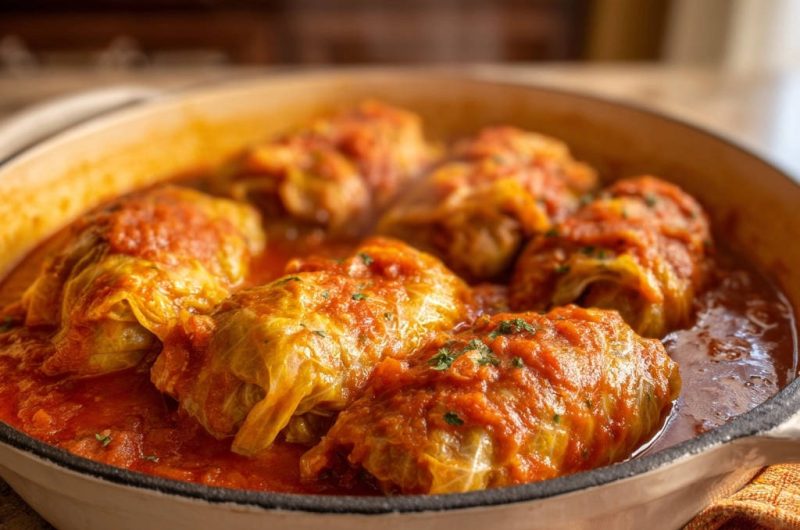
Stuffed Cabbage Rolls
Course: Main CourseCuisine: Eastern EuropeanDifficulty: medium6
servings45
minutes2
hours350
kcal180
minutesDiscover the secret to perfectly intact stuffed cabbage rolls with a unique tight-packing method. This comforting recipe delivers hearty beef and rice filling encased in tender cabbage, bathed in a rich tomato sauce, without any unraveling.
Ingredients
1 large head of green cabbage (about 3 pounds)
1 pound ground beef (85/15 recommended)
1 cup cooked white rice
1 large yellow onion, finely minced
1 teaspoon dried thyme
1 teaspoon salt
1/2 teaspoon black pepper
1 tablespoon olive oil
2 (28 ounce) cans crushed tomatoes
1 (15 ounce) can tomato sauce
1 cup vegetable or beef broth
1/4 cup brown sugar (to balance acidity)
Directions
- Prepare the Cabbage Leaves: Core the cabbage head by cutting deeply around the core. Place the whole head into a large pot of boiling water, core-side down. Cook for 10 to 15 minutes, carefully peeling off the outer leaves as they soften. You should aim for 12 to 14 usable, pliable leaves. Once peeled, use a small paring knife to carefully shave down the thick center rib of each leaf so it is thin and flexible, but do not cut through the leaf entirely. Set aside.
- Create the Filling: In a large bowl, combine the ground beef, cooked rice, minced onion, thyme, salt, and pepper. Use your hands to thoroughly mix the ingredients until just combined. Overmixing can lead to tough filling.
- The Rolling Technique (The No Unraveling Secret): Lay a prepared cabbage leaf flat. Place about 1/4 to 1/3 cup of the filling near the thick end of the leaf. Fold the sides of the leaf (the left and right edges) inward over the filling. Starting from the thick end, roll the leaf tightly away from you until you reach the tip. The folds on the sides secure the filling and the tight rolling ensures the roll holds its shape.
- Prepare the Sauce and Pan: In a large Dutch oven or heavy bottom pot (at least 5 quarts), combine the crushed tomatoes, tomato sauce, broth, brown sugar, and olive oil. Stir well and bring the sauce to a gentle simmer over medium heat. Cook until no pink remains and it reaches 160°F (71°C).
- THE UNRAVELING SOLUTION: The Tight Packing Method: This is the critical step for structure. Turn off the heat under the sauce. Carefully place your prepared cabbage rolls directly into the sauce seam-side down. This is crucial as the simmering sauce acts as glue, cementing the seam shut during cooking. Layer the rolls very tightly against one another in the pot, using the sides of the pot and other rolls for structural support. If you have multiple layers, ensure the top layer is packed just as tightly. The rolls should be submerged at least 3/4 of the way in the sauce.
- Braise to Perfection: Cover the pot tightly with a lid. Place in a preheated oven at 325 degrees F. Braise for 2 hours and 30 minutes. The long, slow cooking allows the tough collagen in the meat to tenderize and the cabbage to become silky soft, while the tight packing ensures zero shifting or unraveling.
- Serve: Remove from the oven and let rest for 15 minutes before serving directly from the Dutch oven, spooning extra sauce over the perfectly intact rolls.
Notes
- The tight packing method ensures rolls stay secure during the long braising time.