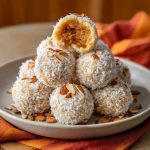
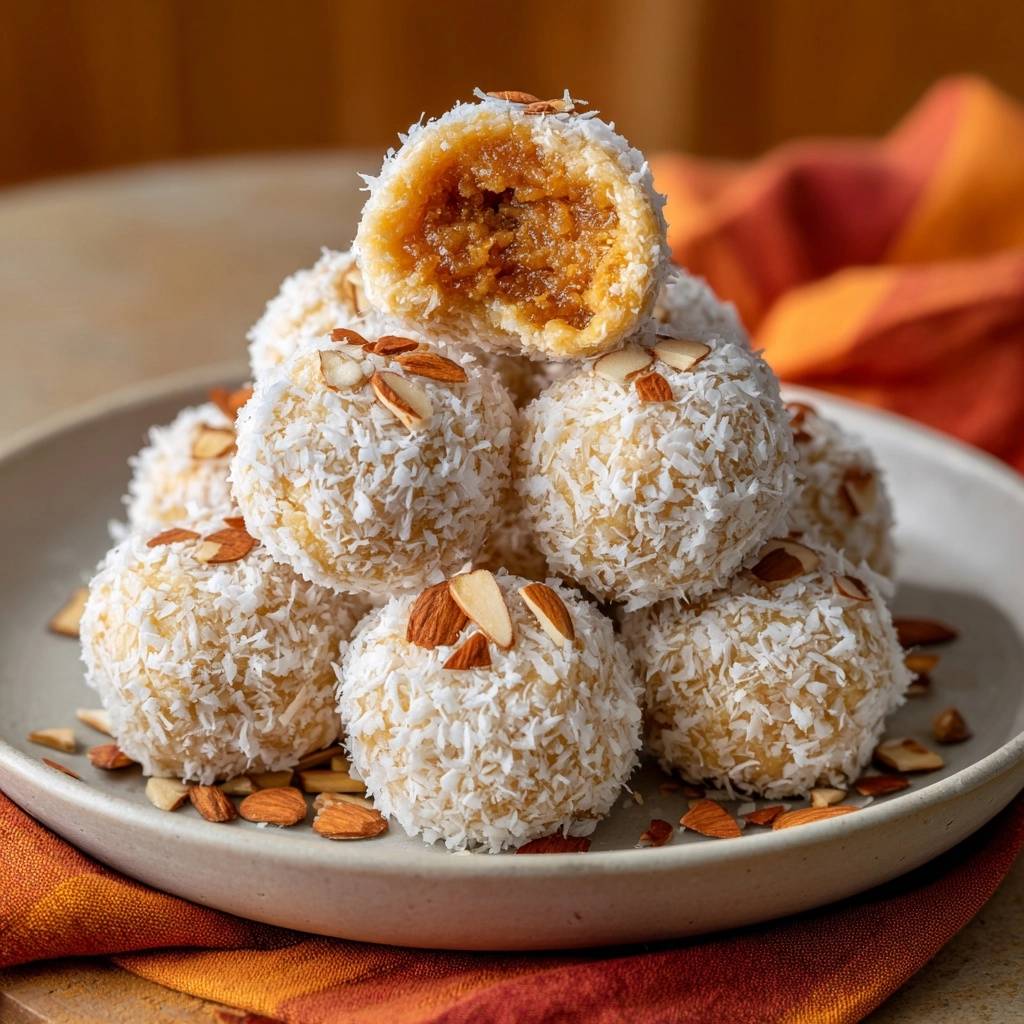
Ever end up with carrot halwa that’s a soggy mess, refusing to form balls that hold together? This recipe fixes that frustration with a simple evaporation technique. You get dry, firm filling every time, perfect for rolling into golden bites that stay intact. In just 30 minutes, you’ll have about 20 balls bursting with nutty aroma and coconut crunch.
Traditional gajar halwa often turns watery because cooks rush the drying step. However, this method uses low heat and constant stirring to evaporate moisture completely. Therefore, your mixture pulls away from the pan cleanly, ready to shape without crumbling.
For a different kind of sweet treat, explore this crunchy candied mixed nuts recipe.
The secret lies in the press test during reduction. Press a bit of the mixture; if it holds firm without oozing, you’re golden. That one check prevents undercooking and guarantees balls that don’t fall apart.
Core Ingredients for Coconut Carrot Halwa Balls
Grated Carrots: Moisture Management Foundation
Finely grated carrots form the base of these Coconut Carrot Halwa Balls. You need 2 cups because they release juices predictably, allowing controlled evaporation. Freshly grated ones beat bagged shreds; they retain beta-carotene for that vibrant orange hue and nutrition boost.
Grate them super fine, almost like a microplane. Coarser shreds trap water, leading to soggy results. In addition, this size softens quickly, speeding up your cook time.
Ghee and Sugar: Binding Sweetness Duo
Ghee, at 2 tablespoons, coats the carrots perfectly in a wide pan. It prevents sticking and adds a rich, nutty flavor that oil can’t match. Meanwhile, 1/2 cup granulated sugar brings sweetness and absorbs moisture as it caramelizes.
Add sugar after the initial sauté to avoid clumping. The 1:4 carrot-to-sugar ratio keeps flavors balanced. Therefore, you get firm texture without overpowering sweetness.
Desiccated Coconut Layers and Almond Crunch
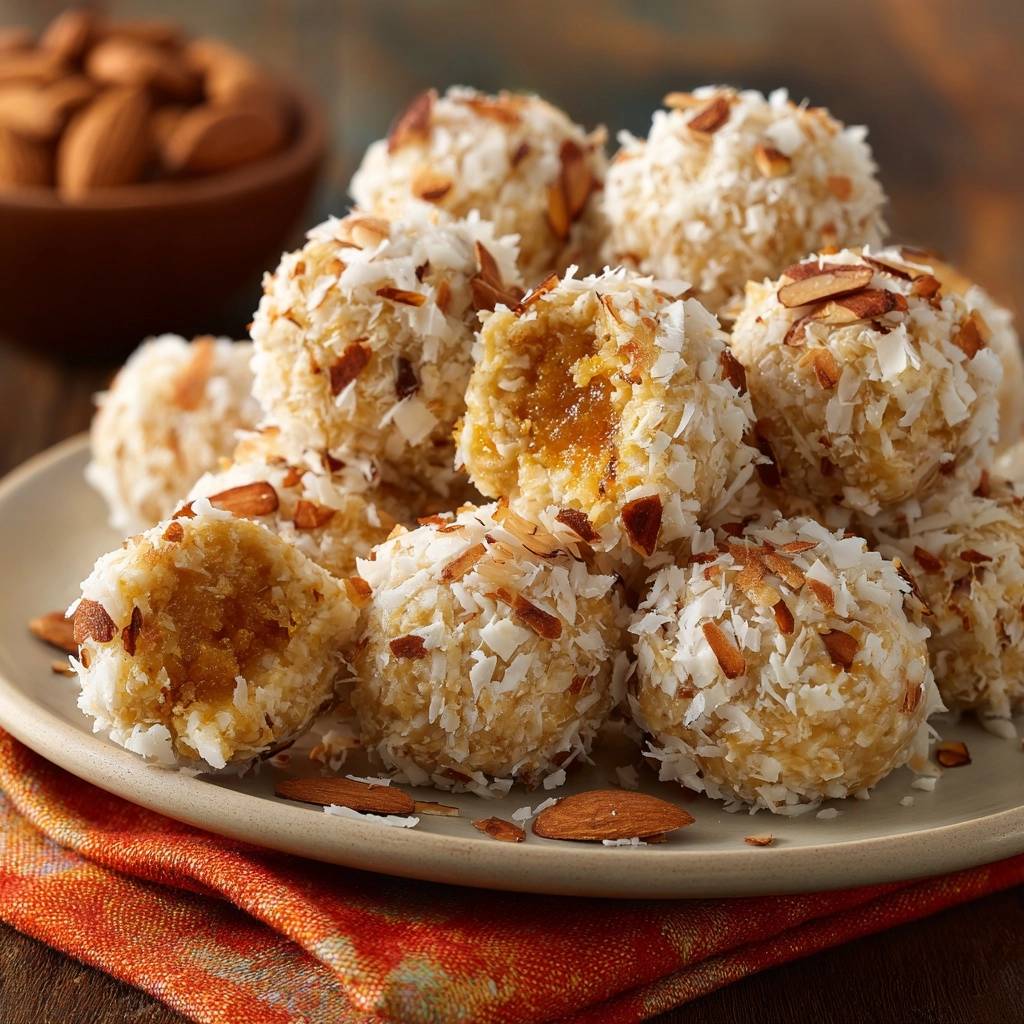
Divide 1 1/2 cups desiccated coconut: 1/2 cup mixes in for binding, while 1 cup coats the outside. It adds chew and locks in moisture without sogginess. Slivered almonds, 1/4 cup plus extra, deliver crunch that contrasts the soft center.
Opt for unsweetened coconut to control sugar levels. Ground cardamom, at 1/2 teaspoon, deepens aroma if you like; grind it fresh for potency. These elements make every bite addictive.
Evaporation Technique: Drying Coconut Carrot Halwa Balls Filling
Initial Sauté in Wide Non-Stick Pan
Start with ghee in a wide non-stick pan over medium heat. Add 2 cups grated carrots and stir to coat. Cook for 5 minutes, stirring often, until they soften and release moisture; you’ll smell sweetness and see color shift from bright to muted orange.
Wide pans boost surface area for faster evaporation. Stir frequently to dodge hotspots. If carrots stick early, lower the heat a touch.
Sugar Melt and Low-Heat Reduction Phase
Stir in sugar and cardamom. The mixture bubbles as sugar melts. Reduce to low heat, cook uncovered 15-20 minutes, stirring every 30 seconds; liquid evaporates, it thickens, pulls from pan sides, and turns golden-brown.
Test by pressing: it should hold firm, no ooze. Remove heat right away to avoid drying out. This step nails the dry filling that makes perfect balls.
Pro tip: If it seems too wet at 15 minutes, keep going. Patience here prevents mushy disasters.
Cooling and Mix-In for Moldable Dough
Cool the mixture 10 minutes until warm and moldable. Stir in 1/2 cup coconut and almonds; they bind without sogginess. Knead gently by hand for even texture, like pliable playdough.
Too hot, and balls crack; too cool, it hardens. This window is key. You’ll feel the transformation to a dough that’s easy to shape.
Science of Firm Coconut Carrot Halwa Balls Texture
Moisture Evaporation vs. Overcooking Risks
Carrots’ pectin gels with sugar and heat, trapping flavors as 80% water evaporates. Low simmer drives this off safely. High heat risks scorching via Maillard reaction, turning edges bitter.
Sugar lowers pH, aiding preservation. Therefore, your balls stay firm longer. Balance time and temp for golden perfection, not char.
Role of Fats and Fibers in Binding
Ghee emulsifies fats for smoothness. Coconut fibers absorb moisture, while almonds add structure. No eggs needed; starch gelatinizes for vegan cohesion.
Humidity affects coconut’s absorbency, so store it dry. In addition, fibers prevent crumbling during rolling.
Shaping and Coating Coconut Carrot Halwa Balls
Scooping, Rolling Smooth Surfaces
Scoop 1-tablespoon portions for 1-inch balls, yielding 18-22. Warm your hands to prevent sticking, roll firmly for seamless shapes. Uneven pressure causes lumps; roll between palms evenly.
Pro tip: If it sticks, dust hands with coconut. Smooth surfaces look pro and hold coating better.
Even Coconut Coating Application
Spread 1 cup coconut on a plate. Roll balls in it, press gently to embed. Top with almond slivers for pop.
Chill 15 minutes to set crisp exterior. Even coating means no bare spots after storage.
Origins and Evolution of Coconut Carrot Halwa Balls
From Traditional Gajar Halwa to Bite-Size Innovation
Gajar halwa traces to Mughal-era India, a festive staple with carrots, milk, and nuts. Modern balls make it portable for festivals and tea time. Coconut fuses South Indian style, ditching milk for drier texture.
Regional twists swap khoya for coconut. Therefore, these balls honor tradition while innovating for easy snacking. Perfect for Diwali or everyday treats.
Why Balls Beat Loose Halwa Every Time
Balls offer portion control and no post-plate sogginess. They’re shelf-stable for gifting. Evolution from rolled sweets like khandvi makes them genius.
You avoid scooping messes. Plus, they travel well.
Avoiding Pitfalls in Coconut Carrot Halwa Balls
Fixing Soggy or Cracked Results
Soggy? Extend low-heat phase and test firmness. Cracks mean wrong cooling; reheat gently if needed, add a splash of warm milk. Grate finer next time to release water fully.
Microplane grater prevents coarse traps. These fixes save batches.
Pan and Stirring Mistakes to Skip
Narrow pans trap steam, keeping it wet. Non-stick is essential; infrequent stirring scorches edges. Don’t over-sugar, or carrot flavor fades.
Stir every 30 seconds religiously. Wide pan changes everything.
Storage and Make-Ahead for Coconut Carrot Halwa Balls
Chilling, Refrigeration, Freezing Lifespan
Chill 15 minutes to firm up. Store airtight in fridge up to 5 days. Freeze up to 1 month; thaw at room temp and sprinkle fresh coconut to revive.
Pro tip: Layer with wax paper to prevent sticking.
Batch Scaling and Gifting Prep
Double ingredients easily; cook in two pans if needed. Freeze pre-rolled balls for quick assembly. Package in tins with wax paper layers for holidays.
Ideal for gifting; they stay fresh longer than loose halwa.
Flavor Twists on Coconut Carrot Halwa Balls
Nutmeg or Saffron Infusions
Swap cardamom for 1/4 teaspoon nutmeg for warmth. Add 5-6 saffron threads steeped in warm water for luxury color and aroma. Stir in during sugar phase.
These elevate without overpowering carrots.
Nut-Free and Low-Sugar Adaptations
Use sunflower seeds for almonds. Coconut sugar halves glycemic load while keeping texture. Reduce to 1/3 cup if you prefer less sweet.
Health swaps maintain firmness.
Pairing Coconut Carrot Halwa Balls Perfectly
Tea-Time and Dessert Board Matches
Masala chai cuts richness perfectly. Pair on boards with fresh fruits or mild cheeses. Coffee balances the sweetness too.
They shine at tea time.
Festive Spread Companions
Serve with laddoos or barfi on platters. Kid-friendly for snack spreads. They add color and crunch to any Diwali table.
Troubleshooting Coconut Carrot Halwa Balls Issues
Why Won’t Mixture Hold Shape?
Usually insufficient evaporation or overcooling. Reheat gently on low, knead in extra coconut. Test press again before rolling.
Coating Falls Off After Chilling?
Press wasn’t firm enough or high humidity. Dampen balls lightly and re-coat. Chill immediately after.
Balls Too Dry or Dense?
Over-evaporated; stir less next time. Add 1 teaspoon ghee to future batches for moisture.
Color Not Golden Enough?
Heat stayed too low too long. Bump to medium for last 2 minutes. Watch closely to avoid burn.
FAQ
How do I store Coconut Carrot Halwa Balls and do they freeze well?
Chill balls 15 minutes first to set. Store in an airtight container in the fridge for up to 5 days; they stay firm without sogginess. For freezing, layer with wax paper in a freezer bag up to 1 month. Thaw at room temperature for 30 minutes, then sprinkle fresh coconut to refresh the coating. Avoid refreezing to maintain texture.
Why is my Coconut Carrot Halwa Balls filling still soggy?
Sogginess comes from incomplete moisture evaporation, often due to high heat scorching before drying or insufficient stirring. Extend the low-heat phase to 20-25 minutes, stirring every 30 seconds until it pulls from pan sides and passes the firm press test (no ooze). Use a wide non-stick pan next time for better steam escape, and grate carrots finely to release juices predictably.
Can I substitute ingredients in Coconut Carrot Halwa Balls?
Swap almonds with sunflower seeds for nut-free. Use coconut sugar for lower glycemic impact, reducing to 1/3 cup. No ghee? Coconut oil works but adds less nutty depth. Skip cardamom if unavailable; nutmeg or cinnamon gives similar warmth at 1/4 teaspoon. Avoid milk substitutes, as they add unwanted moisture.
Why do my Coconut Carrot Halwa Balls crack when rolling?
Cracks happen if the mixture is too hot (oils separate) or too cold (hardens). Cool exactly 10 minutes until warm and pliable, like playdough. If it cracks, knead in 1 teaspoon warm water or ghee gently. Warm your hands before rolling to prevent sticking and ensure smooth shapes.
How can I make Coconut Carrot Halwa Balls ahead for a party?
Prepare the filling and roll uncoated balls, then freeze on a tray before bagging up to 1 month. Thaw, coat in coconut, and chill 15 minutes before serving. Or make fully coated balls and fridge up to 3 days ahead; revive crispness by rolling in fresh coconut. Yields double easily for crowds.
What’s the best pan for perfect Coconut Carrot Halwa Balls texture?
A wide non-stick pan, at least 10-12 inches, maximizes surface area for fast evaporation without trapping steam. Avoid stainless steel, as carrots stick and burn easily. If yours is smaller, cook in batches. Always start with medium heat for sauté, then low for reduction to hit that golden, dry mass.
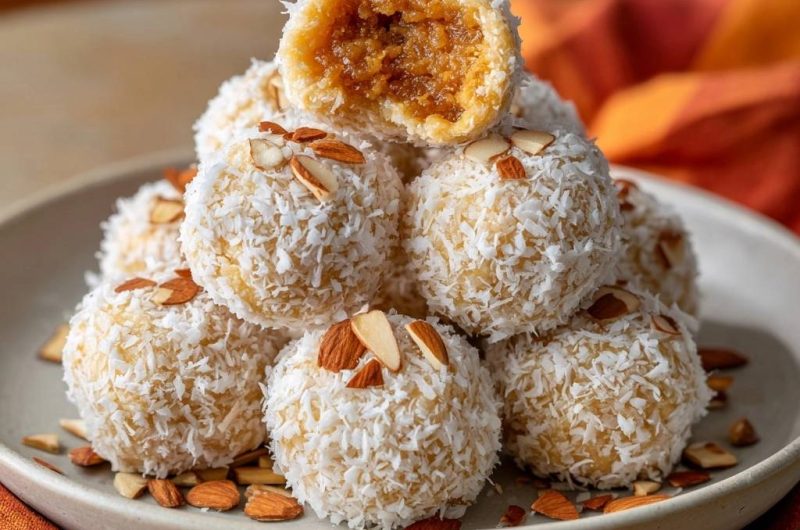
Carrot Halwa Balls
Course: DessertCuisine: IndianDifficulty: easy20
balls15
minutes25
minutes85
kcal55
MinutesStruggling with soggy carrot halwa? This recipe uses a key evaporation technique for firm, dry filling perfect for rolling into coconut-coated balls. No more watery disasters!
Ingredients
2 cups finely grated carrots
1/2 cup granulated sugar
2 tablespoons ghee
1 1/2 cups desiccated coconut, divided
1/4 cup slivered almonds, plus extra for garnish
1/2 teaspoon ground cardamom (optional for flavor depth)
Directions
- Heat ghee in a wide non-stick pan over medium heat. Add grated carrots and stir well to coat. Cook for 5 minutes, stirring frequently, until carrots soften and release moisture.
- Add sugar and cardamom if using. Stir continuously as sugar melts and mixture bubbles. Here’s the key to no more watery halwa: Reduce heat to low and cook uncovered for 15-20 minutes, stirring every 30 seconds. The magic happens when all liquid evaporates, mixture thickens dramatically, pulls away from pan sides into a single mass, and turns golden-brown without sticking. Test by pressing a bit; it should hold firm, not ooze. Remove from heat immediately to avoid drying out.
- Let mixture cool for 10 minutes until warm but moldable (too hot and balls crack; too cool and it hardens). Mix in 1/2 cup desiccated coconut and slivered almonds for binding and crunch.
- Spread remaining 1 cup desiccated coconut on a plate. Scoop 1 tablespoon of mixture, roll into smooth balls, then coat evenly in coconut. Press gently to stick. Garnish tops with extra almonds.
- Chill for 15 minutes to set. Store in airtight container up to 5 days. Enjoy firm, non-soggy perfection!
Notes
- Use a wide non-stick pan for even evaporation. Test doneness by pressing: it should hold firm without oozing. Chill to set for best texture. Stores up to 5 days.