We’ve all been there: you’re dreaming of a silky, restaurant-quality cream sauce, but it ends up as a greasy, clumpy mess the second it hits the pasta. It’s incredibly frustrating to watch expensive ingredients separate into an oily puddle. This recipe changes that by using a specific emulsification technique that locks the fats and liquids together for a velvet finish that stays smooth until the last bite.
The secret to this dish lies in the contrast between the deep, jammy sweetness of slow-cooked onions and the salty, smoky crunch of beef bacon. It’s a sophisticated flavor profile that feels like a high-end bistro meal made right in your own kitchen. You’ll get that perfect mouthfeel every single time without worrying about the sauce breaking or turning grainy.
The real trick to success here is the “starch bridge.” By reserving a bit of that cloudy pasta water and whisking it into your cream, you create a natural stabilizer. This simple step acts as a molecular glue, ensuring your sauce clings to every strand of fettuccine rather than sliding off into the bottom of the bowl. Once you master this, you’ll never fear a cream sauce again!
The Science of a Stable Emulsion
Understanding why cream sauces break is the first step to becoming a better cook. At a molecular level, a cream sauce is an emulsion of fat globules suspended in water-based liquids. When you apply too much heat, the proteins in the dairy tighten and squeeze out the fat, leading to that dreaded oily separation. Heavy cream is more stable than milk because of its high fat content, but it still requires gentle handling.
This is where the “Bridge” comes into play. When you boil pasta, it releases amylose starch into the water. This starch is a powerful stabilizer. When you whisk that starchy water into your simmering cream, the starch molecules physically get in the way of the fat droplets, preventing them from clumping together. It creates a smooth, uniform texture that can withstand the addition of cheese and the heat of the pasta.
Furthermore, keeping the temperature below a rolling boil is vital. High heat is the enemy of dairy proteins. By maintaining a gentle simmer, you allow the sauce to thicken naturally through evaporation without shocking the proteins. This patience results in a glossy, professional finish that looks as good as it tastes.
Essential Components for the Perfect Sauce
Quality ingredients are the backbone of this dish, starting with the onions. I always recommend large yellow onions over white or red varieties. Yellow onions have a higher sugar content and a more complex flavor profile, which allows them to transform into a rich, mahogany jam during the slow cooking process. They provide the essential sweetness that balances the savory elements of the sauce.
When it comes to the cheese, please skip the pre-shredded bags. Those products are coated in cellulose or potato starch to prevent clumping in the bag, but that same coating prevents the cheese from melting smoothly into your sauce. Freshly grated Parmesan is a must. It melts almost instantly into the warm cream, contributing to that velvet texture rather than creating gritty lumps.
The beef bacon provides a specific savory depth that you just can’t get from other proteins. It has a robust, meaty flavor and a distinct smokiness that cuts through the richness of the heavy cream. Because we render the fat from the beef bacon and use it to sauté our aromatics, that smoky essence is infused into every single bite of the final dish.
Selecting the Right Fettuccine
While you can use fresh pasta if you have it, a high-quality dried fettuccine works beautifully here. The wide, flat shape of the noodle provides a large surface area, making it the ideal “vessel” for a heavy cream sauce. Unlike thin strands like angel hair, which can get weighed down and clump together, fettuccine has the structural integrity to hold up against the thick, luxurious sauce and the heavy toppings of bacon and onions.
The Role of Aromatics and Herbs
Rosemary and thyme are the perfect partners for caramelized sugars. We use a whole sprig of fresh rosemary to infuse the cream with its earthy, pine-like aroma without actually leaving the needles in the sauce. This allows you to capture the flavor while maintaining a perfectly smooth texture. The dried thyme adds a subtle floral note that lingers in the background, elevating the dish from a simple pasta to a gourmet experience.
Mastering the 35-Minute Onion Caramelization
Caramelizing onions is a lesson in patience, but the payoff is massive. This process relies on the Maillard reaction, where heat transforms the natural sugars and amino acids into hundreds of different flavor compounds. You must resist the temptation to turn up the heat to speed things up. High heat will burn the edges of the onions, making them bitter rather than sweet and jammy.
Start with a mix of butter and olive oil over medium-low heat. As the onions cook, they will release moisture and eventually turn a pale golden color. Keep going until they reach a deep mahogany brown. If you notice the bottom of the pan getting too dark or the onions looking dry, add a teaspoon of water. This “deglazing” trick lifts the flavorful brown bits (the fond) from the pan and coats the onions in even more flavor.
By the end of the 35 minutes, the onions should be soft enough to spread like butter. They will have shrunk significantly in size, but their flavor will be incredibly concentrated. This “onion jam” is the heart of the recipe, providing a sweet counterpoint to the salty beef bacon and the rich, savory cream sauce.
Step-by-Step: Building the Velvet Base
The first phase of the sauce begins with rendering the beef bacon. You want to cook it until it’s deeply browned and the fat has melted into the pan. This rendered fat is liquid gold; it carries all the smoky flavor that will season your garlic and thyme. Once the bacon is crispy, remove it so it stays crunchy, but keep that flavorful fat in the skillet for the next step.
Timing is everything when it comes to the pasta. You want to drop your fettuccine into the boiling water just as you start building the cream base. Aim to pull the pasta out when it is “just shy” of al dente. It will finish cooking in the sauce, absorbing the cream and starch rather than just sitting on top of it. This ensures the flavor penetrates the noodle itself.
For a similar creamy experience, explore our creamy Swedish meatballs for your next meal.
As the cream and milk simmer, remember the “Gentle Simmer” rule. You should see small bubbles around the edges, but never a violent boil. Once you whisk in that starchy pasta water, the sauce will begin to look glossy. This is your cue to add the cheese. Add it one handful at a time, whisking constantly. If you dump it all in at once, the temperature of the sauce will drop too quickly, and the cheese might clump.
Finally, toss the hot pasta directly from the water into the skillet. Don’t worry if a little extra water hitches a ride; it only helps the emulsion. Fold in half of your onions and bacon, saving the rest for the top. This ensures you get flavor in every bite while maintaining those distinct textures that make the dish so satisfying to eat.
Avoiding Common Cream Sauce Mistakes
If your sauce looks too thick once you add the pasta, don’t panic. This is exactly why we reserve a full cup of pasta water. Add it a tablespoon at a time until the sauce reaches your desired consistency. The starch in the water will keep the sauce creamy even as it thins out. It’s much better to start thick and loosen it up than to have a watery sauce that won’t stick to the noodles.
If the sauce starts to look oily or “broken,” you can often save it by whisking in a splash of cold milk or a tiny bit more pasta water. The goal is to re-introduce moisture and agitation to bring the fats back into the fold. Usually, a vigorous whisking over very low heat will pull the emulsion back together and restore that velvet shine.
One of the biggest mistakes you can make is rinsing your pasta. Never, ever rinse the fettuccine after boiling. Rinsing washes away the very starch we need to make the sauce stick. You want those noodles to be hot and starchy when they hit the cream. That natural coating is what creates the bond between the pasta and the sauce, ensuring a cohesive dish.
Optimal Pairings for Rich Pasta Dishes
Because this fettuccine is so rich and decadent, it pairs best with sides that offer a bit of acidity or bitterness. A simple arugula salad tossed in a sharp lemon vinaigrette is the perfect companion. The peppery bite of the arugula and the zing of the lemon cut right through the heavy cream and the sweetness of the onions, refreshing your palate between bites.
Roasted balsamic Brussels sprouts are another fantastic option. The slight bitterness of the charred sprouts and the tang of the balsamic glaze provide a great contrast to the savory beef bacon. If you want to keep it simple, even a side of steamed broccolini with a squeeze of fresh lemon juice will do the trick. The goal is to balance the plate so the richness of the pasta doesn’t become overwhelming.
Storage and Reheating Without Separation
Cream sauces are notoriously difficult to reheat because the emulsion often breaks in the microwave, leaving you with a puddle of oil and dry noodles. If you have leftovers, the best way to revive them is on the stovetop. Place the pasta in a small skillet over low heat and add a splash of milk or a tablespoon of water. This extra liquid helps “loosen” the fats and proteins as they warm up.
Gently toss the pasta as it heats, being careful not to let it boil. The low and slow approach allows the sauce to become creamy again without separating. It might take a few minutes longer than the microwave, but the texture will be infinitely better. You’ll find that the flavors of the caramelized onions actually deepen after a day in the fridge, making the leftovers quite a treat.
I do not recommend freezing this dish. Dairy-based sauces often undergo a textural change when frozen and thawed, resulting in a grainy or “broken” consistency that is almost impossible to fix. This pasta is truly at its best when served fresh, but it will hold up well in an airtight container in the refrigerator for up to three days.
Expert Troubleshooting and Preparation Tips
Can I use half-and-half instead of heavy cream?
You can, but you need to be extra careful. Half-and-half has a much lower fat content than heavy cream, which makes it significantly more prone to curdling or breaking under heat. To compensate for the lower fat, I recommend whisking a teaspoon of flour into the melted butter before adding the liquid to create a light roux. This provides extra stability and helps achieve a similar thickness to heavy cream.
How do I prevent the garlic from burning?
Garlic is delicate and can turn bitter in seconds if it burns. The best way to handle it is the “30-second rule.” After you’ve crisped the bacon and removed it, let the pan cool for just a moment before adding the minced garlic. Sauté it only until it becomes fragrant—usually about 30 to 60 seconds—and then immediately pour in your cream and milk. The liquid will stop the garlic from cooking further and prevent it from browning.
Why is my sauce grainy even with starch?
If your sauce is grainy, it’s usually a temperature issue with the cheese. If the cream base is too hot (near boiling) when you add the Parmesan, the proteins in the cheese will seize and clump together rather than melting smoothly. To fix this, pull the pan off the heat entirely for about 30 seconds before you start whisking in the cheese. The residual heat is more than enough to melt the Parmesan into a glossy sauce.
Can this recipe be made ahead of time?
While the final assembly should happen right before serving, you can definitely use a “Mise en Place” strategy to save time. You can caramelize the onions and crisp the beef bacon up to 24 hours in advance. Store them in separate containers in the fridge. When you’re ready to eat, just warm the onions slightly and proceed with boiling the pasta and building the cream sauce. This cuts your active cooking time down to about 15 minutes.
What is the best substitute for beef bacon?
If you can’t find beef bacon, smoked turkey bacon is a solid alternative, though it has less fat to render. You may need to add an extra tablespoon of butter to the pan to compensate. For a more gourmet twist, salt-cured duck breast sliced thin can provide a similar rich, savory profile. The key is to use something smoky and salty to balance the sweetness of the onions and the richness of the dairy.
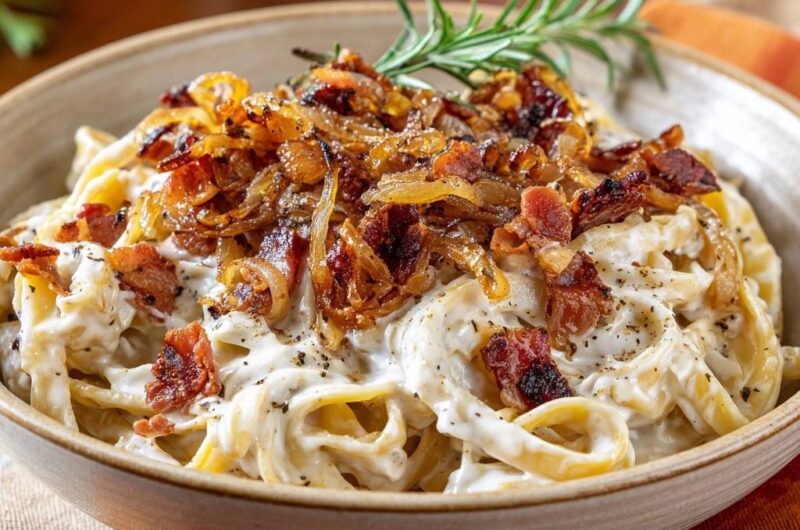
Caramelized Onion Fettuccine
Course: Main CourseCuisine: AmericanDifficulty: medium4
servings15
minutes45
minutes620
kcal60
MinutesThis recipe features deeply caramelized onions and crispy beef bacon tossed in a velvet cream sauce. It utilizes a specific technique with starchy pasta water to ensure a stable, smooth emulsion that never breaks or turns greasy.
Ingredients
1 pound fettuccine pasta
2 large yellow onions, thinly sliced
6 strips beef bacon, chopped
1.5 cups heavy cream
1/2 cup whole milk
1 cup freshly grated parmesan cheese
2 tablespoons unsalted butter
1 tablespoon olive oil
2 cloves garlic, minced
1 sprig fresh rosemary (plus extra for garnish)
1/2 teaspoon dried thyme
Salt and coarse cracked black pepper to taste
1 cup reserved starchy pasta water
Directions
- Caramelize the Onions: Heat olive oil and butter in a large skillet over medium-low heat. Add the onions and a pinch of salt. Cook slowly for 30 to 35 minutes, stirring occasionally. If they look dry, add a teaspoon of water. Once they are deep mahogany brown and jammy, remove from the skillet and set aside.
- Crisp the Bacon: In the same skillet, fry the chopped beef bacon over medium heat until deeply browned and crispy. Remove the bacon bits with a slotted spoon and drain on paper towels, leaving about one tablespoon of the rendered fat in the pan.
- Boil the Pasta: Bring a large pot of heavily salted water to a boil. Add fettuccine and cook until just shy of al dente (usually 1-2 minutes less than package directions).
- Build the Emulsion: While the pasta cooks, add minced garlic and dried thyme to the skillet with the bacon fat and cook for 1 minute until fragrant. Pour in the heavy cream and milk. Add the rosemary sprig. Bring to a gentle simmer over medium-low heat. Do not let it reach a rolling boil, as extreme heat breaks the cream’s protein structure.
- The Stabilizer: Before draining the pasta, scoop out 1 cup of the cloudy, starchy pasta water. Slowly whisk 1/2 cup of this water into your simmering cream. The starch acts as a natural bridge between the fats and liquids.
- Incorporate Cheese: Reduce heat to low. Remove the rosemary sprig. Gradually whisk in the parmesan cheese one handful at a time, whisking constantly until the sauce is glossy and thick.
- Combine: Toss the hot pasta directly into the sauce. Add half of the caramelized onions and half of the bacon into the pasta, tossing to coat every strand. If the sauce is too thick, add the remaining pasta water a tablespoon at a time.
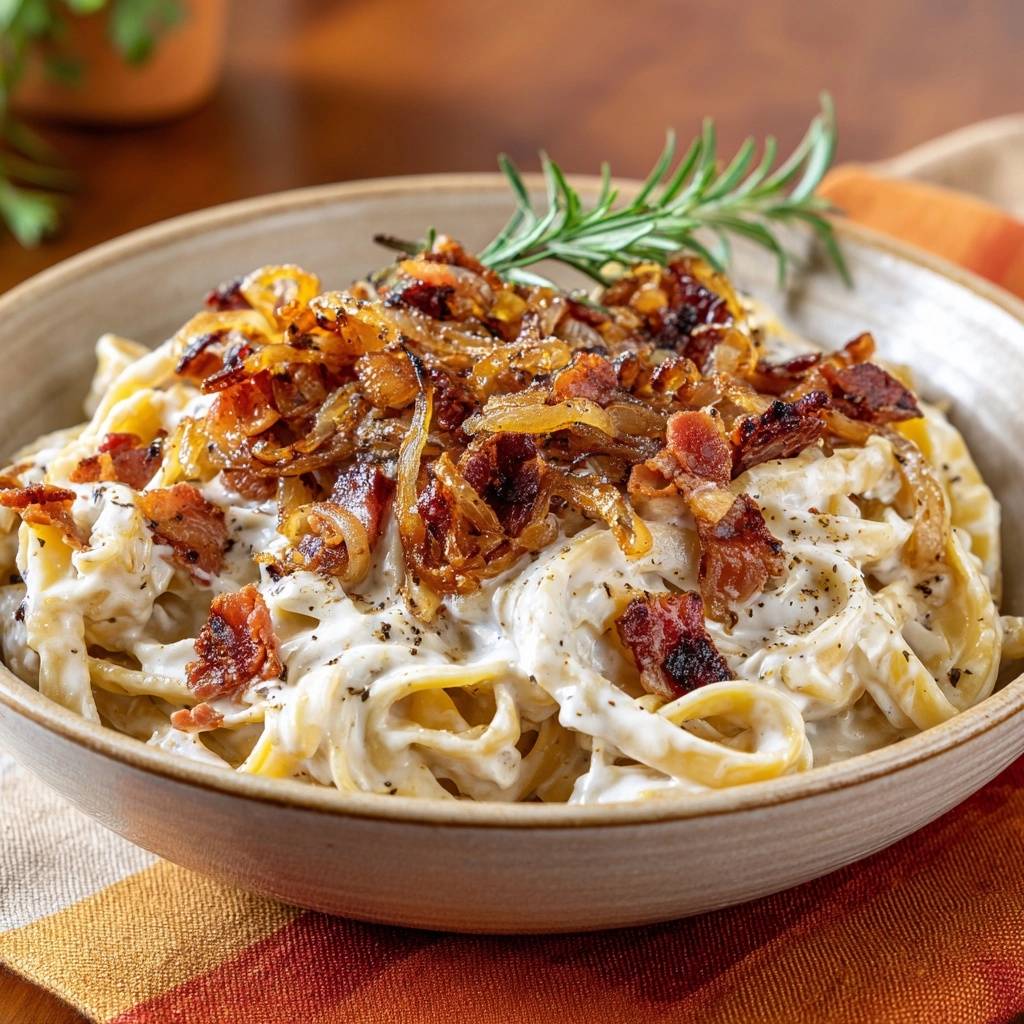
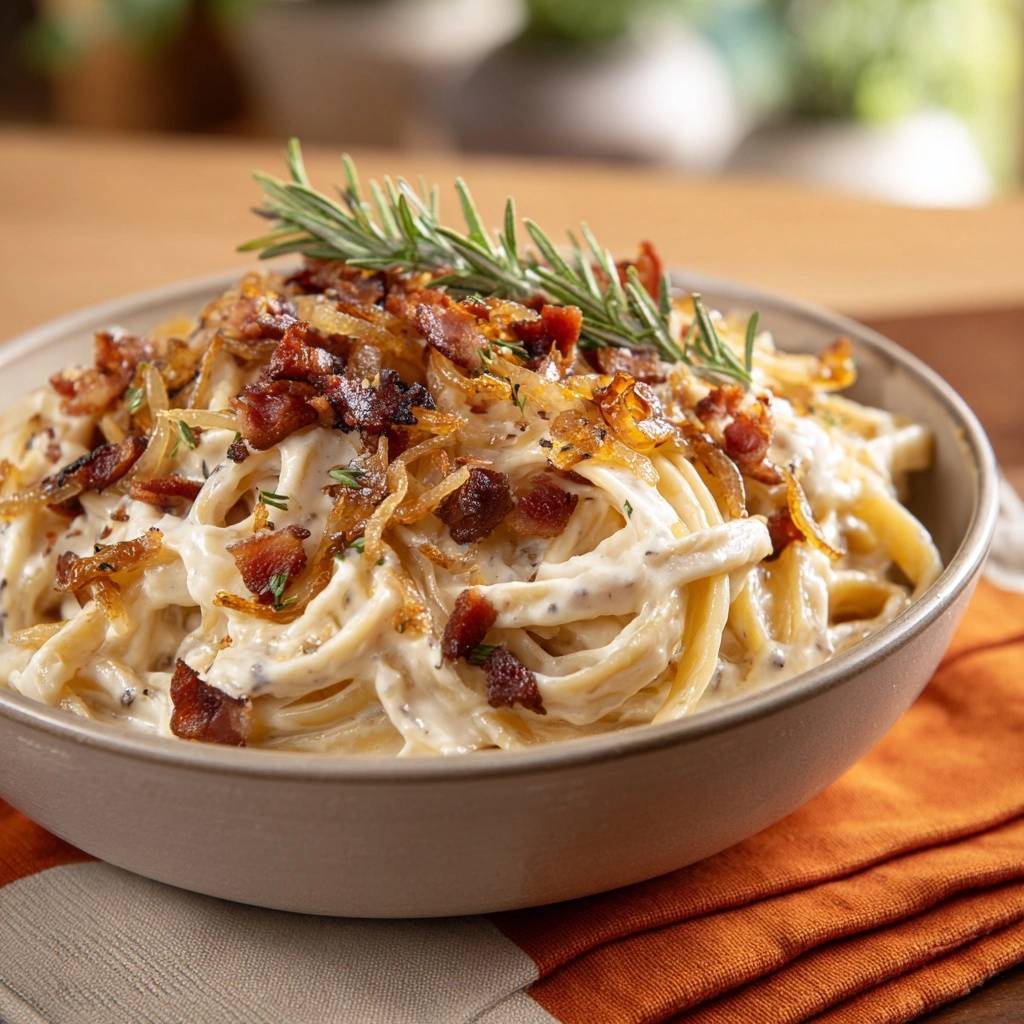
- Plating: Transfer to bowls. Top each serving with a generous mound of the remaining caramelized onions and crispy bacon (as shown in the image) to maintain their texture. Garnish with a fresh rosemary sprig and a heavy dusting of coarse cracked black pepper. Serve immediately.
Notes
- To prevent the sauce from breaking, ensure the cream does not reach a rolling boil and always use freshly grated parmesan rather than pre-shredded varieties.