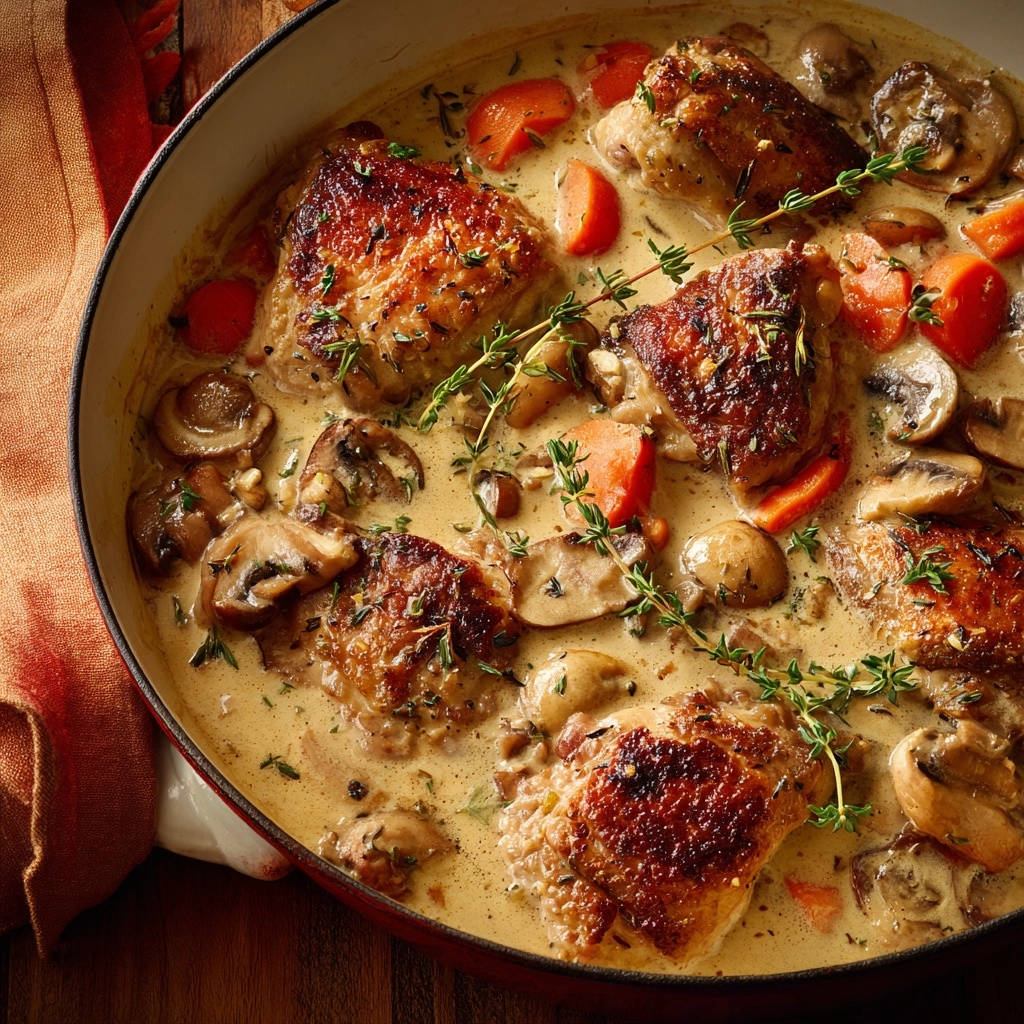
I spent years frustrated by grainy, broken sauces in comfort dishes-a textural flaw that ruins an otherwise perfect meal.
The secret to mastering the perfect, luxurious texture lies in one simple technique, which transforms this Creamy Skillet Chicken with Mushrooms & Thyme into a weeknight masterpiece.
This method guarantees a velvety, smooth sauce that is rich, flavorful, and will never curdle or separate.
For another take on achieving that same sauce magic, explore creamy sun-dried tomato and mushroom chicken.
Beyond Basic Skillets: Why This Creamy Chicken Dish is Superior
This is more than just a quick dinner; it’s a commitment to texture and flavor that elevates the entire dining experience.
We combine deep searing techniques with careful sauce preparation to deliver maximum impact with minimal fuss.
Say Goodbye to Grainy Sauces: The Guaranteed Texture
Nothing ruins a decadent meal faster than a sauce that separates or curdles due to high heat and temperature shock.
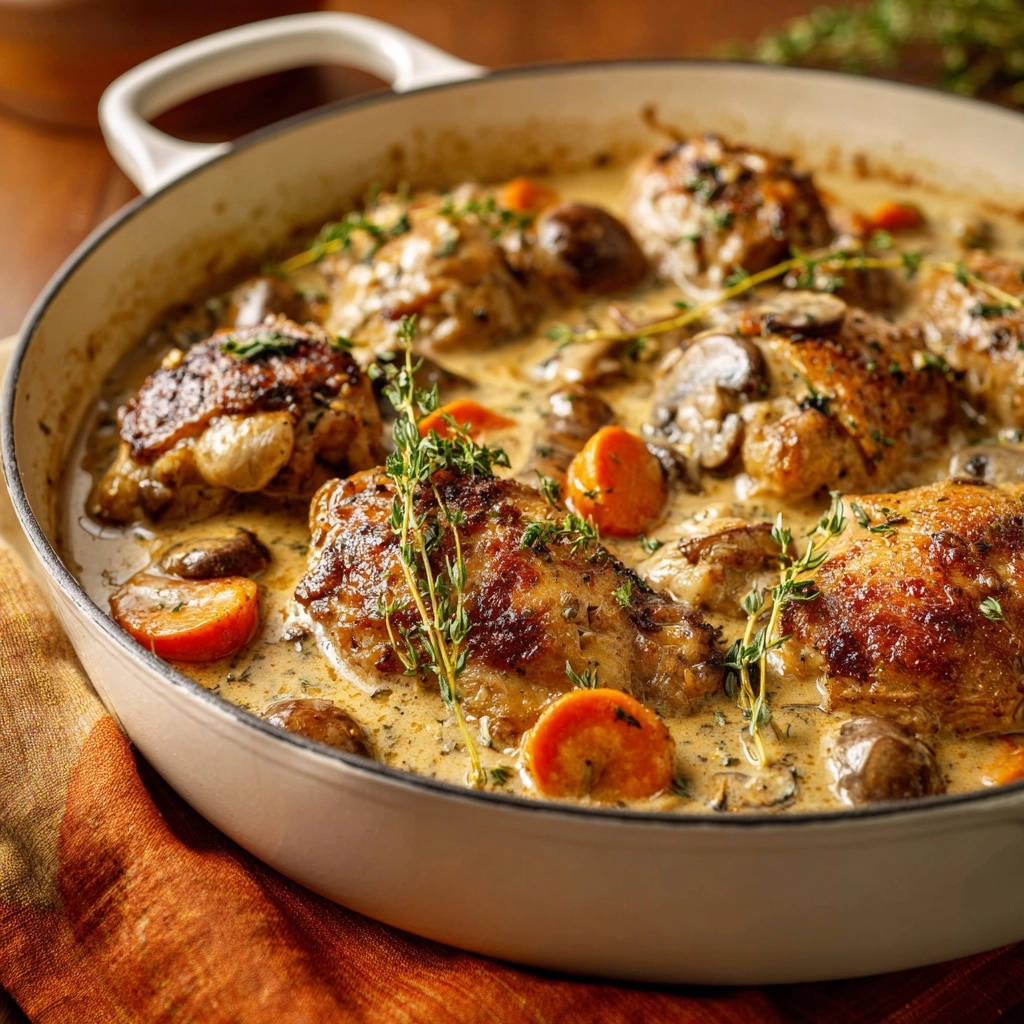
This recipe incorporates two crucial stabilization techniques-a flour roux and gentle cream incorporation-to ensure a uniformly creamy sauce that locks in the rich flavor of the chicken and mushrooms.
Deep Comfort Flavor, Minimal Hands-On Time
Using bone-in, skin-on chicken thighs ensures maximum moisture retention and deep flavor infusion during the braising process.
While the total time is under 50 minutes, most of that is passive simmering, making this rich comfort dish an achievable goal for busy evenings.
Key Ingredients for Unforgettable Flavor
The quality of your aromatics matters intensely in a simple skillet dish like this, providing the complex foundation for the final sauce.
We rely on earthy cremini mushrooms, sharp shallots, and fragrant fresh thyme to build layers of savory flavor.
The Anti-Curdle Protocol: Securing a Silky, Luxurious Sauce
Achieving a silky sauce requires understanding the basic principles of emulsion; once you know the science, you can conquer any cream-based dish.
Understanding Temperature Shock and Stabilization
Cream is an unstable emulsion of fat and water; when cold cream is suddenly added to a simmering hot sauce base, the sudden temperature change causes the fats and proteins to separate rapidly.
This rapid separation is what we perceive as curdling or breaking, giving the sauce an unpleasant, grainy texture.
Why the Roux is Non-Negotiable for Creamy Sauces
A roux-equal parts butter and flour cooked together-serves two critical functions: thickening the liquid and acting as a powerful emulsifier.
By stabilizing the chicken broth base with the roux before the cream is added, we build a cohesive structure that significantly reduces the chance of separation later on.
The Crucial Step: Warming the Heavy Cream
Before introducing the heavy cream to the skillet, lightly warm it, either in a separate pan or a quick 20 seconds in the microwave.
This simple step minimizes the thermal gradient between the sauce and the cream, which is the single most important factor in guaranteeing a flawless, velvety finish.
Always turn the skillet heat down to its absolute lowest setting before adding the warmed cream, stirring gently to incorporate.
Building Maximum Flavor: Ingredient Deep Dive
Choosing the Right Cut: Skin-On, Bone-In Thighs
Bone-in, skin-on thighs are mandatory for this recipe because they contain enough fat and connective tissue to handle the braising time without drying out, unlike leaner chicken breasts.
The bone contributes essential savory depth to the broth as it simmers, and the skin provides a crucial textural contrast when properly seared.
The Aromatic Foundation: Mushrooms, Shallots, and Garlic
Slicing the 8 ounces of cremini mushrooms ensures maximum surface area for browning, which is necessary to develop a deep, nutty flavor via the Maillard reaction.
We cook the mushrooms until they release and re-absorb their moisture for ultimate flavor concentration before adding the other aromatics.
Shallots require slightly more time to soften and sweeten than garlic, so we add them in sequence to prevent the minced garlic from burning and imparting a bitter taste to the sauce base.
Thyme and the Braising Liquid
Always use fresh thyme sprigs rather than dried thyme for this dish, as the fresh herb provides a clean, earthy scent that infuses the entire braising liquid beautifully.
The sprigs are easily removed before serving, leaving behind only the concentrated herbal notes.
Use a high-quality, low-sodium chicken broth, as the liquid reduces during the braise and concentrates the flavor dramatically, forming the entire backbone of the final creamy skillet chicken sauce.
Essential Tools for Skillet Excellence
Before beginning your Creamy Skillet Chicken with Mushrooms & Thyme, ensure you have the correct equipment to manage the sear and the braise.
- Dutch Oven or Deep Skillet: Choose a pan that is large enough to sear the chicken without crowding and is oven-safe (if finishing in the oven) or has a tight-fitting lid (for stove-top braising).
- Wisk and Wooden Spoon: Critical for properly incorporating the flour and the broth during the roux stage to ensure a smooth, lump-free sauce base.
- Paper Towels: Absolutely essential for drying the chicken before searing; achieving a crispy crust depends entirely on removing surface moisture.
Sear, Braise, and Finish: Your Detailed Cooking Guide
- Achieving the Ultimate Dry Sear:
Pat the chicken thighs absolutely dry using paper towels and season aggressively with salt and pepper. Moisture is the enemy of crispy skin, so take an extra minute here for the best result.
Sear the chicken undisturbed, skin-side down, in the hot oil and butter mixture over medium-high heat for 6 to 8 minutes until a deep golden crust forms. Remove the chicken and set aside, reserving all the remaining fat in the pan.
- Building the Vegetable Base:
Reduce the heat to medium. Add the remaining butter, chopped carrots, and sliced mushrooms to the pan. Cook for 5 to 7 minutes until the mushrooms have released their liquid and browned slightly, concentrating their flavor.
Add the diced shallots and cook for 2 minutes, then stir in the minced garlic for 1 minute more until fragrant. Cooking them in sequence prevents the garlic from burning and turning bitter.
- Creating the Flavor Lock (The Roux):
Sprinkle the 2 tablespoons of flour directly over the cooked vegetables and stir continuously for 1 minute to cook out the raw, chalky taste of the flour.
Slowly pour in the chicken broth, whisking constantly and vigorously to prevent lumps from forming. Continue whisking until the mixture is smooth and begins to thicken slightly.
- The Gentle Braise:
Return the chicken to the skillet, placing the thighs skin-side up so the liquid comes up to just below the skin line. We want the meat to cook in the flavorful broth while the skin stays above the surface.
Bring the liquid to a simmer, then reduce heat to low, cover the pan, and cook for exactly 15 minutes. This gentle braise tenderizes the meat perfectly.
- Finishing the Silky Sauce (Temperature Protocol):
Remove the lid and discard the thyme sprigs. Take the crucial step of warming the heavy cream slightly in a separate small bowl or briefly in the microwave.
Turn the skillet heat down to the absolute lowest setting. Slowly incorporate the warmed cream, pouring in a steady stream while stirring gently.
The minimized temperature difference prevents the thermal shock that causes curdling, guaranteeing a flawless texture for your creamy skillet chicken.
- Rest and Serve:
Allow the finished sauce to gently simmer for 2 to 3 minutes to fully reheat the cream through and thicken slightly.
Garnish generously with fresh thyme and serve immediately over your chosen starch, ensuring the crispy skin remains intact.
What to Serve Alongside
To complement your Creamy Skillet Chicken, consider these flavorful additions.
- For a deeply satisfying mushroom side, try the Roasted Garlic Mushrooms & Onions, which share earthy notes with the chicken’s thyme.
- Add a comforting texture with these Savory Herb Dumplings, designed to soak up any extra sauce from your chicken.
Elevating the Dish: Chef’s Secrets and Flavor Twists
Ensuring Maximum Crispiness on the Skin
Use Bone-In Thighs: They have thicker skin that renders fat better than chicken breast skin. Press down firmly when searing to maximize contact with the hot surface.
Post-Braise Finish: If your skin loses crispness during the braise, you can pop the uncovered skillet under a high broiler for 1 to 2 minutes immediately before adding the cream. Watch closely to avoid burning.
Flavor Variations: Grape juice, Spice, and Herbs
A Splash of Acidity: After the roux step, deglaze the pan with 1/4 cup of white grape juice (like sparkling grape juice) before adding the chicken broth.
Let the grape juice reduce by half to concentrate its flavor, which adds a beautiful complexity and brightness to the final sauce.
Herb Swap: Swap the thyme for rosemary and sage for a deeper, more autumnal flavor profile that pairs wonderfully with the earthy mushrooms.
Making it Gluten-Free
Flour Substitute: For the roux, replace the all-purpose flour with a measured amount of cornstarch mixed with cold water to form a slurry.
Alternatively, you can use a high-quality gluten-free all-purpose flour blend during the roux stage, cooking it for the same 1 minute.
Fixing Common Skillet Sauce Issues (Troubleshooting)
Problem: My Sauce is Too Thin
Solution: If the sauce hasn’t thickened sufficiently after adding the cream, mix 1 teaspoon of cornstarch with 2 teaspoons of cold water in a small bowl to create a slurry.
Whisk this slurry into the simmering sauce and cook for 1 minute until the sauce thickens to your desired consistency.
Problem: My Chicken Skin Isn’t Crispy Enough
Solution: The chicken must be extremely dry before searing, and the fat must be hot enough to hiss immediately upon contact.
If the sear was good but the braise softened it, remove the chicken before adding the cream and place it on a baking sheet. Broil on high until re-crisped (about 1 minute) while you finish the sauce.
Problem: The Sauce Broke or Curdled
Solution: This usually means the cream was added too quickly or the heat was too high during incorporation. Remove the chicken and take the pan off the heat.
Whisk a teaspoon of Dijon mustard or 1/2 teaspoon of lemon juice into the broken sauce. The added acidity can often help re-emulsify a separated sauce base.
Perfect Pairings and Storage Solutions
What to Serve Alongside Creamy Skillet Chicken
- Creamy polenta or garlic mashed potatoes are perfect starches for soaking up every drop of the luxurious mushroom sauce.
- A bright, acidic green salad dressed with a simple lemon vinaigrette provides a necessary contrast to cut through the dish’s richness.
- Simple steamed asparagus or green beans sautéed with a pinch of red pepper flakes add freshness, texture, and color.
Storing Leftovers and Reheating
Store leftovers in an airtight container for up to 3 days in the refrigerator. Note that the sauce will thicken considerably once chilled due to the roux.
To reheat, do so gently on the stovetop over low heat, adding a splash of milk, water, or broth to thin the sauce back to its original consistency.
Stir constantly during reheating to prevent the sauce from boiling rapidly, which could risk a second separation.
Ready to Impress? The Ultimate Comfort Dish Awaits
The quest for a perfectly smooth, rich, and flavorful Creamy Skillet Chicken with Mushrooms & Thyme ends here.
For a similar rich and never watery sauce, check out these creamy mushroom chicken cutlets.
By mastering the simple temperature control and roux protocol, you can guarantee a luxurious result every time you make this classic comfort dish.
Now that you have the secret to achieving that irresistible silky sauce, it’s time to make this foolproof skillet chicken a mainstay in your weeknight rotation.
We invite you to try this recipe and leave a comment below letting us know how quickly it disappeared at your dinner table!
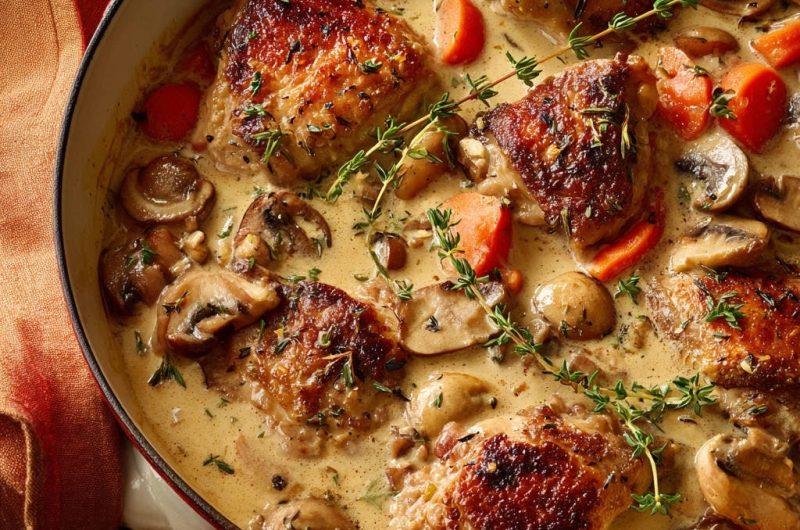
Creamy Skillet Chicken
Course: Main CourseCuisine: InternationalDifficulty: medium4
servings15
minutes35
minutes550
kcal50
minutesSay goodbye to broken sauces! This comfort dish features perfectly seared chicken thighs braised in a luxurious, silky-smooth cream sauce with savory mushrooms and thyme. Learn the simple trick for ensuring your sauce finishes perfectly smooth every single time.
Ingredients
4 skin-on, bone-in chicken thighs
1 teaspoon kosher salt, divided
1/2 teaspoon black pepper, divided
2 tablespoons olive oil
4 tablespoons unsalted butter, divided
8 ounces cremini mushrooms, sliced
1 cup carrots, roughly chopped
1 large shallot, finely diced
2 cloves garlic, minced
2 tablespoons all-purpose flour
2 cups chicken broth
2 sprigs fresh thyme, plus more for garnish
1/2 cup heavy cream
Directions
- Prepare the Chicken: Pat chicken thighs completely dry using paper towels. Season aggressively on both sides with 3/4 teaspoon of the salt and 1/4 teaspoon of the pepper. This dryness is key for a great sear.
- Sear the Chicken: In a large, oven-safe Dutch oven or deep skillet, heat the olive oil and 2 tablespoons of butter over medium-high heat. Once the oil shimmers, place the chicken thighs skin-side down and sear undisturbed for 6 to 8 minutes until the skin is deep golden brown and crispy. Remove chicken and set aside, leaving the remaining fat in the skillet.
- Saute Vegetables: Reduce heat to medium. Add the remaining 2 tablespoons of butter, sliced mushrooms, and chopped carrots to the pan. Cook for 5 to 7 minutes until the mushrooms have browned and softened. Add the diced shallot and cook for 2 minutes, then stir in the minced garlic and cook for 1 minute more until fragrant.
- The Anti-Curdle Trick: This is where we lock in the texture! Sprinkle the 2 tablespoons of flour directly over the vegetables and stir continuously for 1 minute to cook out the raw flour taste (creating a roux). Slowly pour in the chicken broth, whisking constantly until the mixture is smooth and begins to thicken slightly. Stir in the remaining salt, pepper, and the thyme sprigs.
- Braise: Return the chicken thighs to the skillet, placing them skin-side up so the liquid comes up to just below the skin line (do not submerge the skin). Bring the liquid to a simmer, then reduce heat to low, cover the pan, and cook for 15 minutes. The chicken is done when it reaches 165°F (74°C) in the thickest part.
- Finish the Sauce: Remove the lid and discard the thyme sprigs. In a small, separate bowl, warm the heavy cream slightly (either microwave briefly or let sit at room temp while braising). Turn the heat in the skillet down to its lowest setting. Slowly pour the warmed heavy cream into the simmering sauce, stirring gently to incorporate. Warming the cream beforehand prevents a drastic temperature change, guaranteeing the sauce will remain smooth and won’t curdle or break.
- Serve: Allow the sauce to gently simmer for 2 to 3 minutes to reheat the cream through. Garnish with fresh thyme and serve immediately over rice or egg noodles.
Notes
- Warming the heavy cream slightly before adding it to the simmering sauce prevents temperature shock and guarantees a smooth, unbroken finish.