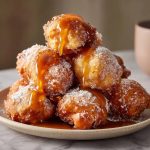
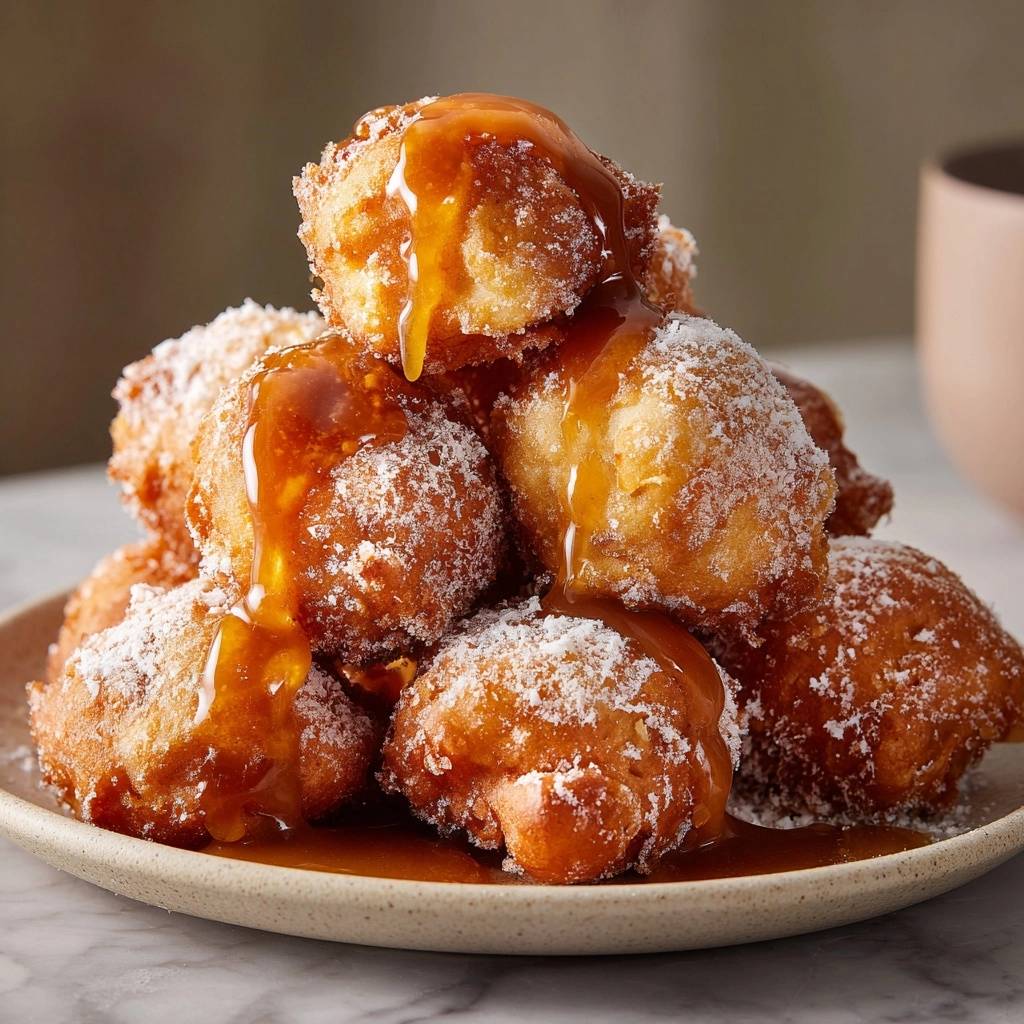
Ever bitten into a beignet that’s all chew and no air? Most home versions flop because they skip the double-rise trick. This recipe changes that. You’ll get pillowy, hollow centers that puff like cafe magic, with a golden crunch outside and silky caramel weaving through every bite.
For perfectly puffy fried dough, try these cinnamon sugar donut bites next.
Therefore, the frustration ends here. You control the fluff with two smart rises that trap yeast bubbles for lightness. No more dense disappointments. Imagine that first warm, sugar-dusted bite melting on your tongue, caramel pulling sweet strings.
Here’s the expertise edge: Activate yeast in exactly 110F water. It foams strong, guaranteeing lift that fights heaviness. That’s your fluff foundation.
Essential Ingredients for Fluffy Beignets
Start with the dough basics. You’ll need 3/4 cup warm water at 110F, 1/4 cup granulated sugar, and 2 1/4 teaspoons active dry yeast. Warm water wakes the yeast perfectly, while sugar feeds it for max bubbles. In addition, 1/2 cup warmed evaporated milk adds tenderness regular milk can’t match, thanks to its proteins.
Next, grab 1 large beaten egg, 3 tablespoons melted unsalted butter, 1 teaspoon salt, and 3 1/2 to 4 cups all-purpose flour. The egg and butter bring richness without weight. However, unsalted butter lets you control salt for balance.
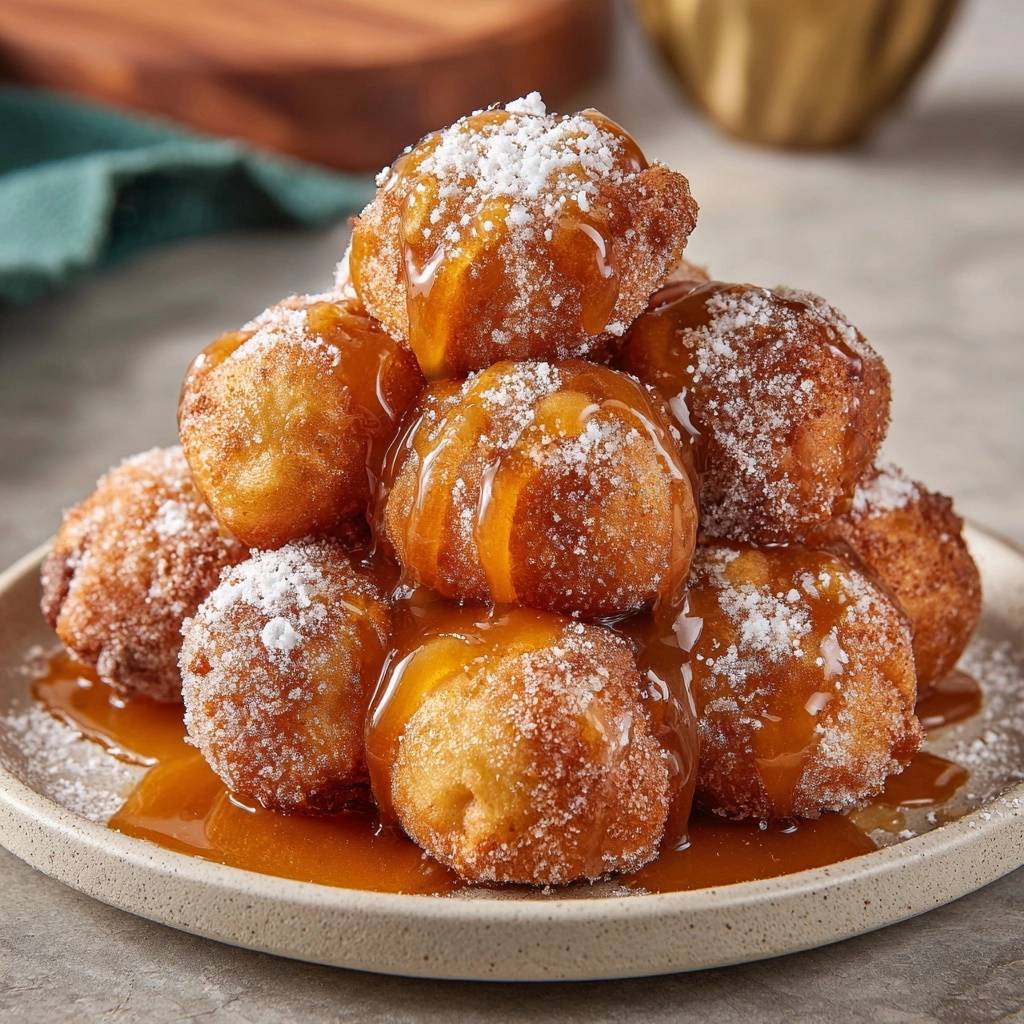
For frying, use vegetable oil, and dust with powdered sugar. Caramel drizzle calls for 1 cup granulated sugar, 6 tablespoons unsalted butter, 1/2 cup heavy cream, 1/2 teaspoon vanilla extract, and a pinch of salt. Fresh cream emulsifies smoothly for that glossy pour.
Warm Liquids: Yeast Activation Keys
Precision matters with liquids. Hit 110F water exactly, or yeast sleeps and dough stays flat. Therefore, warm evaporated milk too. It boosts structure without shocking the yeast. No lukewarm guesses here.
Flour and Fat Balance for Airy Texture
Use 3 1/2 to 4 cups all-purpose flour gradually. Too much toughens it. Melt butter first for even fat distribution. This keeps gluten soft, preserving air pockets for fluff.
Science of Double-Rise for Hollow Centers
Yeast ferments sugar into CO2 bubbles during the first rise. That builds your fluff base over 1 to 1 1/2 hours. However, single-rise beignets collapse in oil, turning chewy.
The second rise after shaping locks those bubbles in. Hot oil turns them to steam, exploding the centers hollow. Light kneading limits gluten, so dough stays tender. Warm spots at 75-85F speed it reliably.
Humidity stretches rise times a bit. Think bubbles like tiny balloons, doubled then sealed. That’s your no-fail lightness.
First Rise: Building the Fluff Foundation
Grease a bowl, place dough in, and cover with a damp cloth. Let it double in a warm spot. Poke test: It springs back slowly when ready. This sets strong structure.
Second Rise: Locking in Lightness
After gentle punch-down, shape and cover loosely on parchment. Puff up in 30 to 45 minutes. Loose cover allows airflow, preventing sticking. Air pockets stay trapped for fry-time magic.
Step-by-Step: Crafting Fluffy Beignets
Follow these for cafe results. Each step builds on the last, with sensory checks to guide you.
Yeast Bloom and Dough Assembly
Stir warm water, sugar, and yeast. Wait 5 minutes for creamy foam, proving it’s alive. Mix in milk, egg, butter, salt. Add flour gradually till soft. Knead lightly 3 to 4 minutes on floured board. Sticky is good; it keeps bubbles intact.
Shaping Squares for Even Frying
Roll dough to 1/4-inch thick. Cut 2-inch squares. Space on parchment trays. Cover and rise till puffy. Even size fries uniformly golden.
Precise Frying for Golden Crisp
Heat 3 inches oil to 360F in a deep pot. Fry 2 to 3 at a time, 1 to 2 minutes per side. Flip for even gold. Drain on towels. Crisp seals the fluff.
Caramel Drizzle Preparation
Melt sugar to amber over medium, 8 to 10 minutes. Off heat, whisk in butter till smooth. Slowly stir cream, vanilla, salt. It turns silky. Drizzle warm over hot beignets.
Equipment Choices for Perfect Results
A deep pot holds oil steady at 3 inches. Candy or oil thermometer clips on for constant 360F reads. Drops below mean greasy, dense bites. Digital scale weighs flour exactly, dodging overpacks.
Parchment trays prevent stick during rise. Slotted spoon lifts beignets cleanly. Heavy saucepan for caramel resists scorching. These tools fix uneven fails every time. No thermometer? Test with bread cube; it browns in 60 seconds.
Thermometer: Oil Temperature Guardian
Clip-on beats instant-read for steady monitoring. Calibrate in boiling water first. Fry small batches; overcrowd and temp crashes, soaking oil in.
Saucepans for Stable Caramel
Light-colored shows amber clearly. Skip nonstick; it hides hot spots. Heavy bottom evens melt for smooth sauce.
Avoiding Dense Beignet Pitfalls
Over-kneading builds tough gluten. Cold ingredients stall yeast. Low oil soaks up grease. Single rise lets air escape. Heavy rolling squashes bubbles. Fix with this method’s light touches and temps.
Under-proofed dough sinks in oil. Signs: No puff, slow spring-back. Rest between batches keeps heat true.
Over-Kneading and Gluten Traps
Knead just till smooth, 3 to 4 minutes. Sticky dough traps more air. Overdo it, and chewiness wins.
Frying Temp Drops and Fixes
Limit to 2 to 3 pieces. Wait 30 seconds between batches. Oil rebounds fast, frying crisp every time.
Flavor Twists on Classic Beignets
Keep the double-rise core. Dust with cinnamon sugar instead of plain. Fold lemon zest into dough post-mix for bright pop. Chocolate caramel? Stir 2 tablespoons cocoa into cream step.
Coconut cream swaps heavy cream nut-free. Test vegan: Aquafaba for egg, oat milk for evaporated. Rises hold. Top with seasonal berries under drizzle for fresh contrast.
Citrus-Infused Dough Upgrades
Zest 1 lemon or orange into wet ingredients before flour. It perfumes without weighing down fluff. Rise unaffected.
Chocolate Caramel Drizzle Swap
Whisk 2 tablespoons cocoa with cream before adding. Prevents lumps. Rich, fudgy twist on silky base.
Ideal Pairings for Beignets
Dark roast coffee cuts through caramel richness. Chicory adds earthy depth. Fresh berries brighten the sweet fry. Stack with whipped cream for breakfast luxury.
Iced herbal tea refreshes. Sorbet scoop beside makes dessert. These balance the indulgence perfectly.
Coffee Pairings Enhancing Caramel
Dark roast amplifies toffee notes. Chicory brings nutty cafe vibe. Hot or iced, it tempers the drizzle’s pull.
Storage and Reheating Fluff Revival
Store airtight up to 1 day. Reheat at 350F for 2 minutes. Oven crisps outside, steams center fluffy again. Skip microwave; it sogs them.
Freeze raw dough post-first rise. Thaw overnight, second rise, then fry. Caramel keeps in fridge 1 week; warm gently. Best fresh, but this saves the magic.
Frequently Asked Questions on Fluffy Beignets
Why Are My Beignets Dense?
Density hits from skipping double-rise, over-kneading tough gluten, or oil below 360F absorbing grease. Activate yeast fully, knead lightly, and monitor temp. Double-rise traps air for hollow puff every time.
Can I Bake Instead of Fry?
Yes, air fryer at 375F for 8 to 10 minutes works. Spray oil for crisp. Less golden than fry, but fluff holds with double-rise. Oven 400F on parchment flips midway.
How to Fix Seized Caramel?
If grainy, whisk off heat vigorously. Slowly add hot cream 1 tablespoon at a time. It smooths out. Prevent by pouring cream gradually after butter melts fully.
Gluten-Free Fluffy Beignets Possible?
Swap all-purpose for 1:1 gluten-free blend plus 1 teaspoon xanthan gum. Double-rise still works for lift. Dough handles sticky; expect slight texture change but airy results.
Scale Recipe for Larger Batches?
Double all ingredients easily. Fry in more small batches to hold 360F. Dough rises same time. Make caramel triple for crowds; it stores well.
Beignets
Course: DessertCuisine: AmericanDifficulty: medium24
beignets30
minutes30
minutes40
kcal120
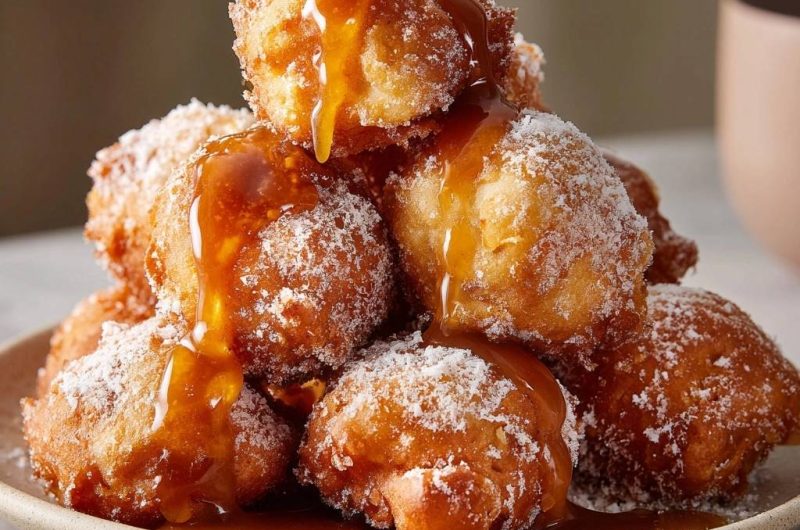
MinutesTired of dense beignets? This recipe uses a double-rise method to guarantee fluffy, hollow interiors every time. Golden outside, drizzled with silky caramel, they’re a cafe treat at home.
Ingredients
Dough:
3/4 cup warm water (about 110F)
1/4 cup granulated sugar
2 1/4 teaspoons active dry yeast
1/2 cup evaporated milk, warmed
1 large egg, beaten
3 tablespoons unsalted butter, melted
1 teaspoon salt
3 1/2 to 4 cups all-purpose flour
Vegetable oil, for frying
Powdered sugar, for dusting
Caramel Drizzle:
1 cup granulated sugar
6 tablespoons unsalted butter
1/2 cup heavy cream
1/2 teaspoon vanilla extract
Pinch of salt
Directions
- Activate yeast: In a large bowl, stir warm water, granulated sugar, and yeast. Let sit 5 minutes until foamy. This ensures strong lift to fight density.
- Make dough: Mix in warm evaporated milk, beaten egg, melted butter, and salt. Gradually add 3 1/2 cups flour, stirring until a soft dough forms. Knead on a floured surface 3 to 4 minutes, adding flour 1 tablespoon at a time if sticky. Knead lightly to preserve air bubbles, avoiding tough, dense results.
- First rise: Place dough in a greased bowl, cover with a damp cloth, and let rise in a warm spot 1 to 1 1/2 hours until doubled. This builds initial fluff base.
- Shape and second rise (the no-dense secret): Punch down dough gently. Roll to 1/4-inch thick on floured surface. Cut into 2-inch squares or rounds. Place on parchment-lined trays, cover loosely, and let rise 30 to 45 minutes until puffy. The double-rise locks in air pockets for hollow, fluffy centers, preventing the common dense failure.
- Heat oil: In a deep pot, heat 3 inches vegetable oil to 360F. Use a thermometer for precision, overcrowding causes temp drop and density.
- Fry: Fry 2 to 3 beignets at a time, 1 to 2 minutes per side until golden. Flip once for even puff. Drain on paper towels. The hot oil + double-rise combo seals fluffiness inside.
- Dust and drizzle: Dust hot beignets generously with powdered sugar.
- Make caramel: In a saucepan over medium heat, melt sugar, stirring until amber (8 to 10 minutes). Remove from heat, whisk in butter until smooth. Slowly add cream, vanilla, and salt; stir until silky. Cool slightly. Drizzle over beignets. Serve warm.
- Store leftovers airtight up to 1 day; reheat in 350F oven 2 minutes to restore fluff.
Notes
- Double-rise technique locks in air for fluffiness. Use a thermometer for oil at 360F. Store airtight up to 1 day; reheat in 350F oven for 2 minutes to restore crispness.