The Secret to Unforgettable Tender Beef and Cabbage Soup
There’s nothing quite like a steaming bowl of homemade soup on a chilly day. The deep aromas filling your kitchen, the anticipation of that first spoonful – it’s pure comfort.
However, the common pitfall with beef soups is often the beef itself, turning out dry and rubbery. This recipe specifically tackles that challenge head-on.
By focusing on proper searing and a deliberate, slow simmer, we unlock the secret to succulent, fall-apart beef.
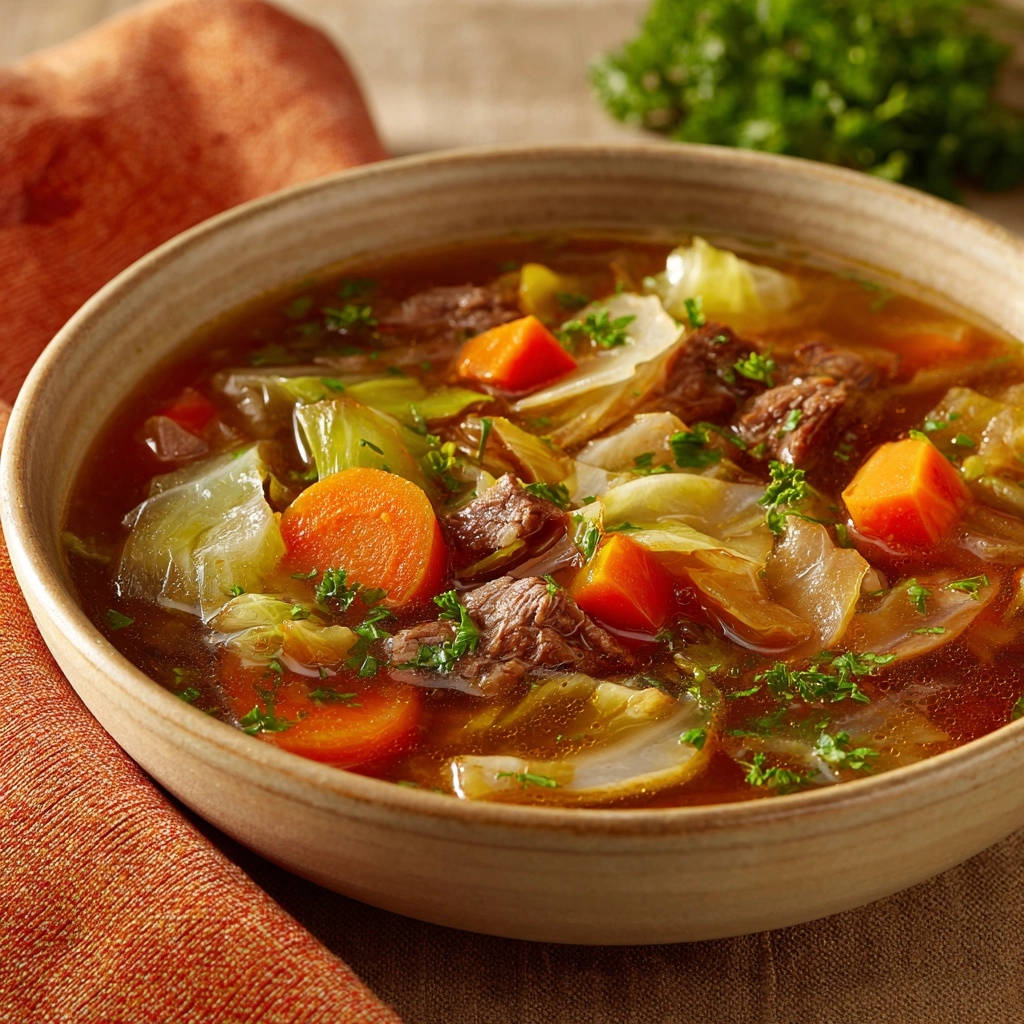
Paired with tender-crisp cabbage and sweet carrots in a rich, savory broth, this is truly a deeply satisfying and wholesome meal.
Gather Your Gear: Essential Kitchen Tools for Beef and Cabbage Soup
The Right Pot Makes All the Difference
A large, heavy-bottomed pot or a Dutch oven is undeniably the MVP for this recipe.
Its substantial construction ensures even heat distribution, which is absolutely crucial for achieving that perfect, deep sear on the beef without burning.
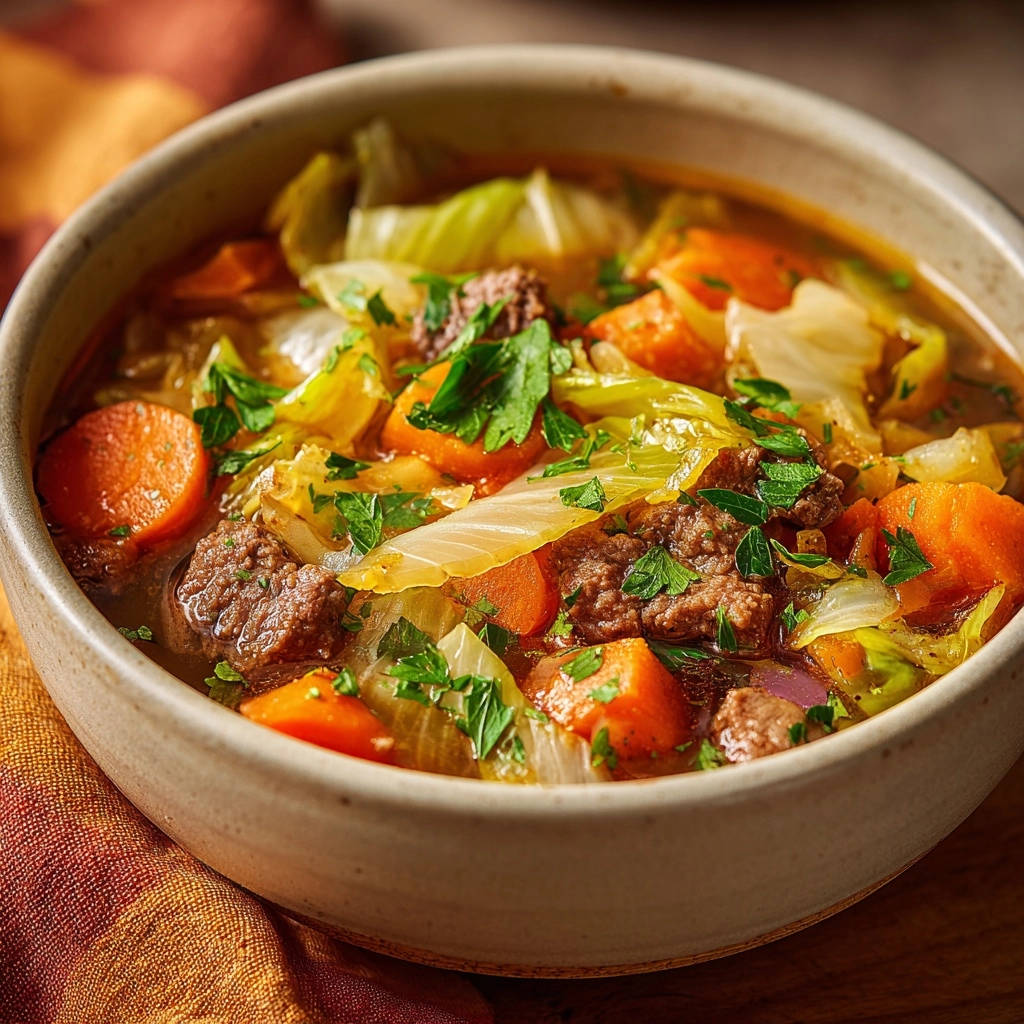
Furthermore, its ability to retain heat steadily is vital for the long, slow simmering process, consistently breaking down tough fibers to yield incredibly tender beef.
Beyond the Pot: Other Helpful Instruments
While your main pot does the heavy lifting, a few other tools will make the cooking process smooth and efficient.
Wooden Spoon: Essential for scraping up those incredibly flavorful browned bits (fond) from the bottom of your pot after searing.
Sturdy Cutting Board and Sharp Knife: For safely and uniformly preparing your beef and vegetables.
Measuring Cups and Spoons: For accurate ingredient quantities, ensuring balanced flavors.
Ladle: For gracefully serving your delicious creation into bowls.
Flavor Foundations: Key Ingredients for Your Hearty Beef and Cabbage Soup
The Star: Choosing and Prepping Your Beef Stew Meat
Selecting good quality beef stew meat, such as chuck, is paramount for a flavorful and tender soup.
Chuck meat is inherently tough but becomes incredibly tender and flavorful with slow cooking.
Cut the beef into uniform 1-inch cubes to ensure even cooking throughout the simmering process.
Most critically, pat the beef thoroughly dry with paper towels before seasoning and searing. This dryness is absolutely essential for achieving a deep, flavorful crust and prevents the meat from steaming in the pot.
Broth, Water, and the Hearty Liquid Base
High-quality beef broth forms the backbone of this Hearty Beef and Cabbage Soup, contributing rich, umami depth.
A touch of water helps to balance the intensity of the broth without diluting its core flavors.
Initial seasoning with salt and black pepper sets the foundational taste profile for the entire dish.
Vegetable Power: Cabbage and Carrots
Green cabbage is the traditional choice for its mildly sweet flavor and robust texture.
Make sure to core and cut it into 1-inch pieces, allowing it to tenderize beautifully while still holding its shape.
Carrots, peeled and sliced into 1/2-inch rounds, add a touch of natural sweetness and vibrant color.
The goal is tender vegetables that retain a slight bite, avoiding any mushy textures.
Finishing Touches: Seasoning and Fresh Garnish
Adjusting the seasoning with extra salt and pepper at the end is crucial for perfecting the soup’s taste.
This allows you to tailor it precisely to your preference before serving.
A generous sprinkle of fresh chopped parsley not only adds a burst of freshness but also provides a beautiful visual contrast, elevating the soup’s presentation.
Crafting Your Hearty Beef and Cabbage Soup: A Detailed Method for Tender Results
- Prepare and Season the Beef:
Pat the beef stew meat thoroughly dry with paper towels; this is crucial for achieving a proper sear.
Season the dried beef generously all over with salt and black pepper.
- The Searing Secret:
Heat the vegetable oil in a large, heavy-bottomed pot or Dutch oven over medium-high heat until it shimmers.
Add about half of the beef cubes to the pot, ensuring not to overcrowd it. Sear the beef on all sides until deeply browned, approximately 3-4 minutes per side. This browning develops incredible depth of flavor through the Maillard reaction and initiates the tenderizing process.
Remove the browned beef to a plate and repeat with the remaining beef, ensuring each batch gets that essential sear.
- Deglaze for Flavor Depth:
Once all the beef is browned and removed, carefully pour in the beef broth and water into the hot pot.
Immediately scrape the bottom of the pot with a wooden spoon to loosen any browned bits. These bits, known as “fond,” are packed with concentrated flavor and will dissolve into the broth, enriching the soup.
- The Tenderizing Simmer Begins:
Return all the browned beef to the pot. Bring the liquid to a gentle boil, then reduce the heat significantly to low.
Cover the pot tightly and let it simmer for at least 1 hour and 30 minutes. This long, slow simmer is the non-negotiable secret to breaking down the tough connective tissues in the beef, making it incredibly tender and fall-apart.
For a deeper dive into slow-simmered beef, explore savory beef stew secrets.
- Adding the Carrots:
After the initial simmering time for the beef, add the sliced carrots to the pot.
Continue to simmer, covered, for another 30 minutes, or until the carrots are tender when pierced with a fork.
- The Cabbage Finale:
Finally, add the cabbage pieces to the pot. Increase the heat slightly if needed to maintain a gentle simmer.
Cook for another 15-20 minutes, or until the cabbage is tender but still retains some texture. You absolutely want to avoid mushy cabbage!
- Final Seasoning and Serve:
Taste the soup and adjust seasoning with additional salt and pepper as needed to perfect the flavor profile.
Ladle the hearty soup into bowls, garnish generously with fresh chopped parsley for a bright finish, and serve hot.
Mastering Your Hearty Beef and Cabbage Soup: Expert Tips & Tricks
Don’t Skip the Dry Pat and Sear: This isn’t just a suggestion; it’s foundational. A dry surface is critical for the Maillard reaction, which creates those deeply flavorful browned crusts and contributes significantly to the beef’s final tender texture.
Batch Browning is Your Friend: Overcrowding the pot lowers the temperature, causing the beef to steam rather than sear. Work in batches to maintain high heat and achieve that desirable, rich brown crust on every piece.
Patience with the Simmer: The long, slow simmer is where the magic happens for stew meat. Resist the urge to rush this step; the extended, gentle heat is essential for breaking down collagen and achieving that truly tender, melt-in-your-mouth quality.
Timing Your Vegetables: Adding vegetables in stages ensures each cooks to perfection. Carrots, being firmer, require more time than the more delicate cabbage, which would turn mushy if added too early.
Cabbage Texture Matters: Pay close attention to the cabbage during its cooking phase. You want it tender but still with a slight structural integrity, not completely limp or overcooked. Taste frequently towards the end.
Taste and Adjust Liberally: Your palate is the ultimate judge. Always taste the soup before serving and don’t hesitate to add more salt, pepper, or other seasonings to bring the flavors into perfect balance.
Beyond the Bowl: Serving, Storing, and Enjoying Your Soup
Perfect Pairings: What to Serve With Your Hearty Beef and Cabbage Soup
This Hearty Beef and Cabbage Soup is a complete meal on its own, but certain accompaniments elevate the experience.
If you’re craving more comforting side dishes, try our slow-simmered pot roast.
A crusty loaf of sourdough bread is perfect for soaking up every last drop of the savory broth.
What Else to Make?
Round out your meal with these dishes that complement your hearty beef and cabbage soup.
- For a crisp counterpoint to the soup’s richness, consider this apple red cabbage slaw, offering a refreshing crunch.
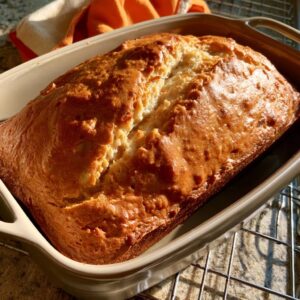
- If you’re looking for something to soak up any extra broth, try this dill zucchini carrot bread, perfect for dipping with its tender crumb.
For an even more substantial meal, consider serving it alongside a scoop of creamy mashed potatoes or a simple, crisp green salad with a vinaigrette to cut through the richness.
Make-Ahead & Meal Prep Brilliance
This comforting soup is an ideal candidate for make-ahead meals and meal prepping.
Like many stews, its flavors deepen and meld beautifully overnight, often tasting even better the next day.
Prepare a large batch at the start of the week for effortless, delicious lunches or dinners.
Storing Your Leftovers Safely
To store leftovers, allow the soup to cool completely before transferring it to airtight containers.
It will keep beautifully in the refrigerator for up to 3-4 days.
This Hearty Beef and Cabbage Soup is also remarkably freezer-friendly; portion it into freezer-safe containers and freeze for up to 3 months for a convenient future meal.
Solving Soup Struggles: Common Issues and Quick Fixes
Why is My Beef Still Tough?
The most common reason for tough beef is insufficient simmering time. Even if you’ve seared it beautifully, the connective tissues need a long, low simmer to break down.
Ensure your heat is truly at a low simmer, barely bubbling, and continue cooking until the beef is fork-tender.
Overcrowding the pot during searing can also lead to tough meat, as it steams rather than browns.
My Cabbage is Mushy!
Cabbage cooks relatively quickly, so mushiness is usually a sign it was added too early or cooked for too long.
For best results, always add cabbage towards the very end of the cooking process and monitor it closely, aiming for tender-crisp rather than overly soft.
The Soup Lacks Flavor.
A bland soup often stems from skipping or inadequately performing the initial searing of the beef.
Those deep brown bits (fond) scraped from the bottom of the pot after searing are pure flavor gold. Ensure they are fully incorporated.
Also, remember to taste and adjust the salt and pepper liberally at the end of cooking.
The Soup is Too Salty.
If you’ve over-salted, try adding a peeled, chopped potato to the simmering soup; it will absorb some of the excess salt.
Alternatively, dilute the soup with a little unsalted beef broth or plain water.
A small squeeze of lemon juice can also help to balance out excessive saltiness.
Your Questions Answered: Hearty Beef and Cabbage Soup FAQs
Can I make this Hearty Beef and Cabbage Soup in a slow cooker?
Yes, absolutely! For the best flavor, still sear the beef on the stovetop first.
Then, combine the seared beef, broth, water, carrots, and seasonings in your slow cooker. Cook on low for 6-8 hours or on high for 3-4 hours.
Add the cabbage during the last 30-60 minutes of cooking, ensuring it becomes tender without overcooking.
What if I don’t have beef stew meat?
You can successfully use other cuts that benefit from slow cooking, such as chuck roast, bottom round, or even short ribs, cut into 1-inch cubes.
Be prepared to adjust the simmering time as needed, as tougher cuts may require slightly longer to reach optimal tenderness.
Can I add other vegetables to this soup?
Absolutely! This Hearty Beef and Cabbage Soup is wonderfully versatile.
Consider adding chopped potatoes (with the carrots), celery (sautéed with onions before adding broth if you’re including them), or even green beans or peas towards the end of cooking.
Is this Hearty Beef and Cabbage Soup freezer-friendly?
Yes, it freezes wonderfully for convenient future meals, holding its quality for up to 3 months.
Allow the soup to cool completely before transferring it to airtight freezer-safe containers.
Be aware that upon thawing and reheating, the cabbage might become slightly softer than when freshly made, but the flavor will remain excellent.
How can I make this soup gluten-free?
This recipe is naturally gluten-free as written, which is great news!
For those with severe sensitivities, simply ensure that your chosen beef broth is certified gluten-free, as some brands may contain hidden gluten ingredients.
Your Next Comfort Food Classic Awaits! Share Your Masterpiece!
Now that you’re armed with the secrets to perfectly tender beef and a truly satisfying broth, it’s time to create your own unforgettable Hearty Beef and Cabbage Soup.
Experience the difference that proper technique makes and discover your new favorite cold-weather comfort food.
I encourage you to try this recipe, savor every spoonful, and share your delicious results! What twists or personal touches did you add to make this Hearty Beef and Cabbage Soup uniquely yours? I’d love to hear about it!
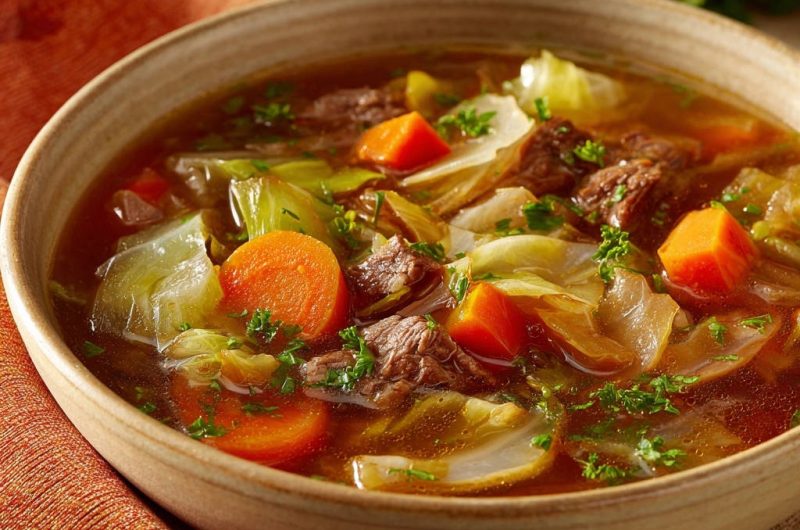
Beef and Cabbage Soup
Course: Soups-StewsCuisine: AmericanDifficulty: medium6
servings20
minutes2
hours350
kcal140
minutesDiscover the simple trick for perfectly tender beef in this hearty and warming beef and cabbage soup. This classic recipe guarantees succulent meat every time, making it a comforting and satisfying meal for any occasion. Say goodbye to tough, chewy beef!
Ingredients
2 pounds beef stew meat, cut into 1-inch cubes
2 tablespoons vegetable oil
6 cups beef broth
2 cups water
2 large carrots, peeled and sliced into 1/2-inch rounds
1 medium head of green cabbage, cored and cut into 1-inch pieces
1 teaspoon salt, or to taste
1/2 teaspoon black pepper, or to taste
Fresh parsley, chopped, for garnish
Directions
- Pat the beef stew meat thoroughly dry with paper towels. This step is critical for a good sear and helps lock in juices. Season the dried beef generously with salt and pepper.
- Heat the vegetable oil in a large heavy-bottomed pot or Dutch oven over medium-high heat until shimmering. Add about half of the beef cubes to the pot, making sure not to overcrowd it. Sear the beef on all sides until deeply browned, about 3-4 minutes per side. Browning creates incredible flavor and starts the tenderizing process. Remove the browned beef to a plate and repeat with the remaining beef.
- Once all the beef is browned and removed, carefully pour in the beef broth and water into the pot. Scrape the bottom of the pot with a wooden spoon to loosen any browned bits; these bits are full of flavor and will dissolve into the broth.
- Return all the browned beef to the pot. Bring the liquid to a gentle boil, then reduce the heat to low, cover the pot, and let it simmer for at least 1 hour and 30 minutes. This long, slow simmer is the secret to breaking down the tough fibers in the beef, making it incredibly tender and fall-apart.
- After the initial simmering time, add the sliced carrots to the pot. Continue to simmer, covered, for another 30 minutes, or until the carrots are tender.
- Finally, add the cabbage pieces to the pot. Increase the heat slightly if needed to maintain a gentle simmer. Cook for another 15-20 minutes, or until the cabbage is tender but still retains some texture. You don’t want mushy cabbage!
- Taste the soup and adjust seasoning with additional salt and pepper as needed. Ladle the hearty soup into bowls, garnish with fresh chopped parsley, and serve hot. Enjoy your perfectly tender beef!
Notes
- The key to incredibly tender beef lies in proper searing and a long, slow simmer, ensuring a succulent bite every time.