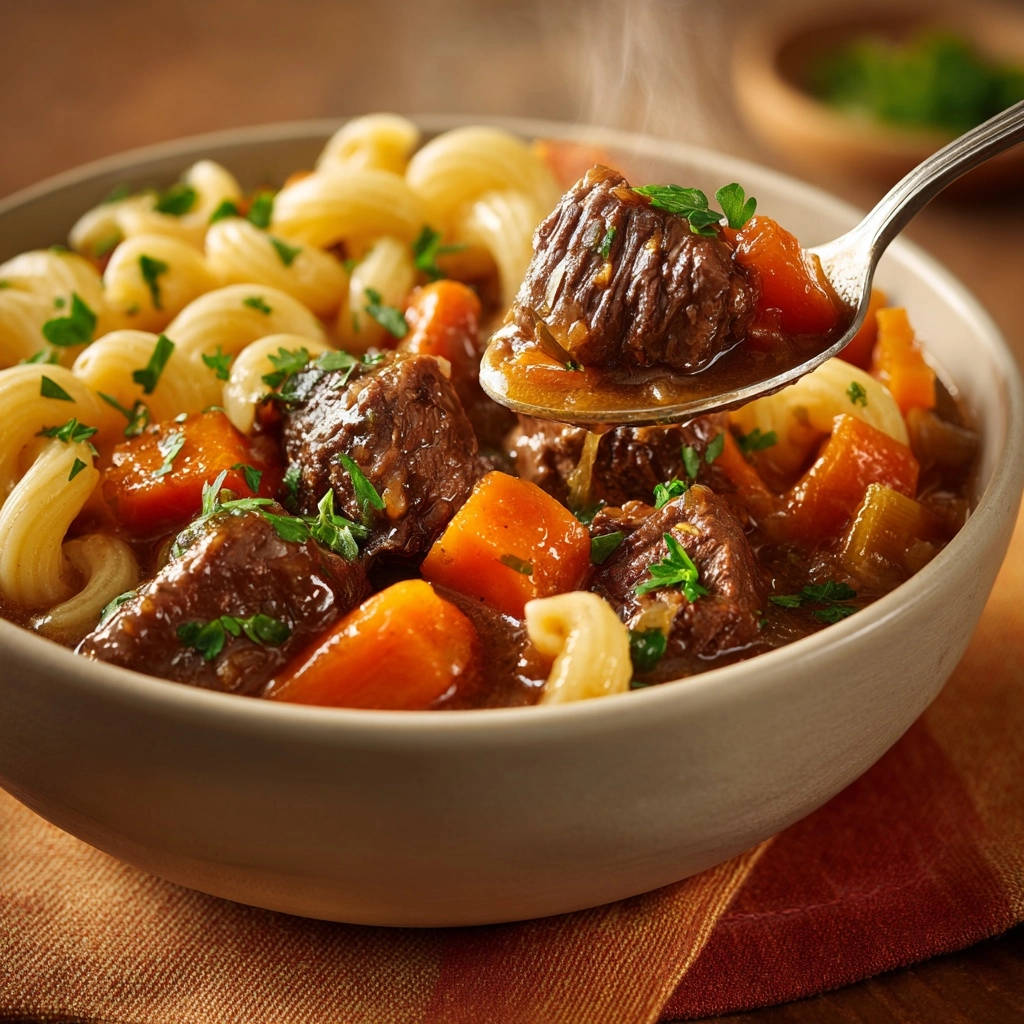
There’s nothing quite as comforting as a warm bowl of stew, but the heartbreak of tough beef can quickly ruin the experience. After years of perfecting, I’m thrilled to share my ultimate Hearty Beef and Noodle Stew recipe, guaranteed to deliver fall-apart tender beef that melts in your mouth with every savory bite.
This isn’t just a meal; it’s a comforting classic designed to bring warmth and joy to your table, refined for impeccable texture and flavor. Get ready for a truly exceptional stew experience.
Why This Hearty Beef and Noodle Stew Will Become Your Family’s Favorite
The “Never-Tough” Beef Pledge: Our Secret to Tenderness
Forget dry, chewy beef. This Hearty Beef and Noodle Stew specifically emphasizes a long, slow braise. This method gently breaks down the connective tissues in the beef, transforming it into incredibly tender, melt-in-your-mouth pieces that are a delight in every spoonful.
Layers of Rich, Deep Flavor in Every Spoonful
From the crucial step of deeply browning the beef to toasting the tomato paste and scraping up the flavorful fond, every stage of this recipe is designed to build unparalleled depth. These foundational techniques ensure a complex, savory taste that elevates the entire dish.
A Comfort Classic, Perfected for Your Table
This recipe takes a beloved classic and refines it, ensuring a harmonious balance of flavors and textures. It’s the kind of hearty, satisfying meal that brings everyone together, perfect for chilly evenings or a special family gathering.
Your Recipe Roadmap: Prep, Cook, & Servings At A Glance
Effortless Prep Time: Getting Started Quickly
You’ll only need about 25 minutes of active preparation time to get this stew going. Simple steps like cutting vegetables and browning the beef are straightforward, setting you up for success.
The Low & Slow Cook: Unlocking Deep Flavor
The total cook time is approximately 2 hours and 45 minutes. This extended, gentle simmering is absolutely essential for achieving that signature fall-apart beef and allowing all the flavors to meld beautifully.
Generous Servings for Family & Friends
This Hearty Beef and Noodle Stew recipe yields a generous 6 servings. It’s ideal for a hearty family dinner, entertaining guests, or ensuring you have delicious leftovers for the week.
Gather Your Gear: Essential Tools for Stew Success
The Mighty Dutch Oven: Your Braising Best Friend
A heavy-bottomed pot or Dutch oven is indispensable for this recipe. Its even heat distribution is crucial for achieving a deep, consistent sear on the beef and maintaining a gentle simmer for the long braising process.
Beyond the Basics: Other Kitchen Helpers
You’ll also need a sturdy wooden spoon for scraping up flavorful browned bits, reliable measuring cups and spoons for accuracy, and a sharp chef’s knife for efficient vegetable prep.
The Heart of the Stew: Ingredients Breakdown
Choosing the Best Beef: Cut & Prep for Tenderness
Beef stew meat, typically chuck, is ideal for its rich flavor and ability to become incredibly tender with slow cooking. Cutting it into 1-inch cubes ensures even cooking, and patting it thoroughly dry is crucial for achieving a perfect sear.
Aromatic Foundations: Onion, Garlic, Celery & Carrots
Yellow onion, garlic, and celery form the foundational ‘mirepoix’ that builds the savory base of the stew. Carrots add a touch of sweetness and vibrant color, becoming tender during the final cooking stage.
The Flavor Base: Rich Beef Broth & Tomato Paste
Quality beef broth provides the liquid and a significant savory foundation for the stew. Tomato paste, when toasted, adds a concentrated, umami-rich sweetness that deepens the overall flavor profile.
Seasoning for Depth: Thyme, Bay Leaf, Salt & Pepper
Dried thyme and a bay leaf infuse the stew with classic herbaceous notes. Salt and black pepper are essential for seasoning, enhancing all the other ingredients and bringing the flavors into balance.
The Noodle Star: Cavatappi and Creative Alternatives
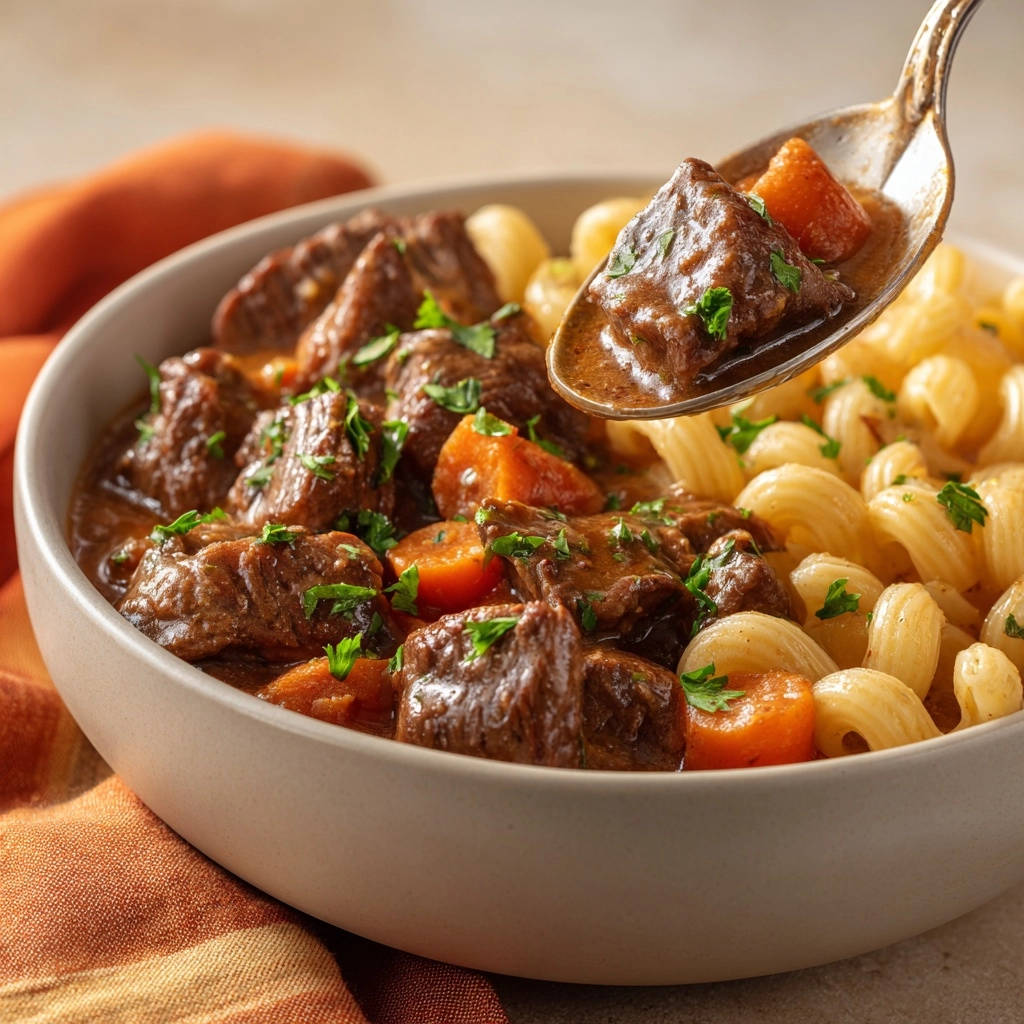
Cavatappi pasta, with its corkscrew shape, is excellent for catching and holding the rich stew sauce. Other sturdy pasta shapes like egg noodles, penne, or rigatoni would also work beautifully, offering slightly different textures.
The Finishing Touch: Fresh Parsley
Fresh chopped parsley isn’t just a garnish; it adds a vibrant pop of color and a refreshing, herbaceous brightness that cuts through the richness of the stew, elevating its overall appeal.
Step-by-Step Perfection: Your Hearty Beef and Noodle Stew Recipe
- Prepare the Beef:
Pat the beef stew meat thoroughly dry with paper towels. In a shallow bowl, toss the beef cubes with the flour until evenly coated.
Drying the beef ensures a better sear, and the flour coating will help create a rich crust while also slightly thickening the stew later.
- Brown the Beef:
Heat the vegetable oil in a large heavy-bottomed pot or Dutch oven over medium-high heat. Add the floured beef in a single layer, working in batches if necessary to avoid overcrowding the pot.
Brown the beef on all sides until a deep, rich crust forms, about 5-7 minutes per batch. This crucial step creates deep flavor and helps lock in moisture. Remove the browned beef to a plate and set aside.
- Sauté Aromatics:
Reduce the heat to medium. Add the chopped onion to the pot and cook, stirring occasionally, until softened, about 5 minutes. Add the minced garlic and cook for another minute until fragrant.
Cooking these ingredients slowly builds the foundation of the stew’s savory taste and aroma.
- Toast Tomato Paste & Spices:
Stir in the tomato paste, dried thyme, bay leaf, salt, and pepper. Cook for 2 minutes, stirring constantly, to toast the tomato paste and deepen its flavor.
Toasting the tomato paste caramelizes its sugars, removing any raw flavor and enhancing its natural sweetness and umami.
For even more depth, explore the techniques for slow-braised beef in this complementary stew.
- Combine & Simmer:
Return the browned beef to the pot. Pour in the beef broth, scraping the bottom of the pot with a wooden spoon to release any browned bits.
Bringing it to a gentle simmer before covering ensures even heating and kickstarts the tenderizing process, dissolving all those flavorful bits from the pot bottom.
- The Long, Slow Braise (Secret Step):
Once simmering, reduce the heat to low, cover the pot tightly, and let the stew cook for 2 hours. Do not rush this process.
This long, slow braise is the secret for tenderness; it gently breaks down the connective tissue in the beef, making it incredibly tender and melt-in-your-mouth.
For incredibly tender beef, learn more about slow-simmered beef stew techniques.
- Add Remaining Vegetables & Finish Braise:
After 2 hours, stir in the carrots and celery. Recover the pot and continue to simmer on low heat for an additional 45 minutes, or until the beef is fork-tender and the vegetables are cooked through. Remove the bay leaf before serving.
Adding vegetables later prevents them from becoming mushy, ensuring they retain their texture and vibrant color.
- Cook the Pasta:
While the stew finishes cooking, prepare the cavatappi pasta according to package directions. Drain well.
Cooking the pasta separately allows for perfect al dente texture without it becoming overcooked or absorbing too much liquid in the stew.
- Serve & Garnish:
To serve, ladle the hearty beef stew over or alongside the cooked pasta. Garnish with fresh chopped parsley.
The fresh parsley adds a burst of color and a refreshing herbaceous note that brightens the entire dish, complementing the rich stew perfectly.
Unlock Maximum Flavor: Expert Tips & Tricks for Your Stew
The Power of Browning: Why It’s Non-Negotiable
The deep, dark crust achieved during browning isn’t just for looks; it creates layers of flavor through the Maillard reaction that forms the backbone of a truly great stew. Don’t rush this step!
Don’t Rush the Braise: The True Secret to Fall-Apart Beef
Patience is key for tender beef. The two-hour minimum simmering time (before adding the last veggies) at a low, gentle heat allows connective tissues to slowly break down, resulting in that coveted melt-in-your-mouth texture.
Toasting Tomato Paste: A Simple Step, Big Flavor Impact
Cooking the tomato paste for a couple of minutes before adding liquids deepens its color and flavor, removing any metallic tang and bringing out its rich, sweet, and savory notes.
The Scrape-Up: Maximizing Flavor from the Pot Bottom
When you add the beef broth, use a wooden spoon to vigorously scrape up all the browned bits (fond) stuck to the bottom of the pot. These flavorful morsels dissolve into the liquid, adding incredible depth to your stew.
Perfectly Cooked Noodles: Timing is Everything
Cooking the pasta separately ensures it’s perfectly al dente and prevents it from absorbing too much liquid or becoming mushy in the stew. Add it right at serving time for best results.
Troubleshooting Your Stew: Common Challenges & Quick Fixes
“My Beef Isn’t Tender!”: What Went Wrong?
If your beef isn’t fork-tender after the recommended cooking time, simply continue to simmer, covered, on low heat for an additional 30-60 minutes, checking periodically. Toughness is almost always a sign it needs more time to break down connective tissues.
Stew Consistency: Too Thin or Too Thick?
If your stew is too thin, remove the lid and simmer gently for 15-30 minutes to allow some liquid to evaporate, thickening it naturally. If it’s too thick, stir in a little extra beef broth or water, a quarter cup at a time, until it reaches your desired consistency.
Boosting the Flavor: When Your Stew Needs a Lift
If your stew tastes a bit bland, consider a splash of Worcestershire sauce or balsamic vinegar for added depth. A pinch more salt and pepper, or a fresh sprinkle of herbs just before serving, can also awaken the flavors. For another way to infuse rich flavor into your meals, consider our Hearty Beef and Bean Soup, which shares similar principles for tender meat.
Preventing Mushy Vegetables: Timing Your Additions
To avoid mushy carrots and celery, make sure to add them during the last 45 minutes of cooking. If you’re adding softer vegetables like peas or green beans, stir them in during the last 10-15 minutes.
Serving Suggestions: Elevating Your Hearty Meal
Classic Pairings: What to Serve Alongside
A warm, crusty baguette is perfect for soaking up every last drop of the rich broth. A fresh, lightly dressed green salad provides a welcome contrast and brightness to the hearty meal.
Complementary Bites
Round out your meal with these satisfying additions.
- For a savory starter that complements the hearty stew, try these cheesy garlic pizza bombs, perfect for dipping.
- Add a fresh, crisp vegetable to your plate with these crispy garlic parmesan Brussels sprouts, offering a delightful contrast in texture.
Complementary Sides: Freshness & Texture
Consider serving this Hearty Beef and Noodle Stew with a side of fluffy mashed potatoes (if you’re serving the stew without the noodles) or a simple steamed vegetable to round out the meal and add varied texture.
Drink Pairings: Grape juice, sparkling water, & Non-Alcoholic Options
For a refreshing option, a medium-bodied red like a sparkling grape juice complements the beef beautifully. A dark sparkling water is also an excellent choice, while a sparkling cider offers a refreshing non-alcoholic option.
Make Ahead & Storage: Enjoying Your Stew Longer
Refrigeration: Keeping Your Leftovers Fresh
Leftover Hearty Beef and Noodle Stew can be stored in an airtight container in the refrigerator for up to 3-4 days. The flavors often deepen and improve overnight, making it even more delicious the next day!
Freezing for Later: Your Future Self Will Thank You
This stew freezes beautifully. Allow it to cool completely, then transfer to freezer-safe containers or bags, leaving a little headspace. It can be frozen for up to 3 months. Thaw overnight in the refrigerator before reheating.
Reheating Tips: Maintaining Quality
Reheat thawed stew gently on the stovetop over medium-low heat, stirring occasionally, until warmed through. You may need to add a splash of beef broth or water to adjust consistency, especially if it was frozen with noodles.
Your Top Questions Answered: Hearty Beef and Noodle Stew FAQs
Can I Use a Slow Cooker or Instant Pot for This Recipe?
Yes, you can adapt this recipe! For a slow cooker, brown the beef and sauté aromatics on the stovetop first, then combine all ingredients (except pasta) in the slow cooker and cook on low for 6-8 hours or high for 3-4 hours. Add cooked pasta just before serving. For an Instant Pot, follow similar browning steps, then pressure cook for about 40-50 minutes with natural release, adding pasta at the end.
What Other Cuts of Beef Work Best?
While beef stew meat (often chuck) is ideal, other good options include boneless short ribs, beef round, or brisket. All require a similar low and slow cooking process to become tender, ensuring a rich and satisfying result.
Are There Gluten-Free Alternatives for the Flour and Noodles?
Absolutely! For the flour coating, you can use a 1:1 gluten-free all-purpose flour blend. For the noodles, choose your favorite gluten-free pasta (check labels for cooking instructions, as GF pasta can sometimes cook faster) for a delicious, accommodating meal.
How Can I Make This Stew Spicier or Milder?
To add a touch of heat, you can include a pinch of red pepper flakes with the aromatics or a dash of hot sauce at the end. For a milder stew, simply stick to the recipe as written, as the existing seasonings are well-balanced and not spicy.
Can I Add Other Vegetables to the Stew?
Certainly! Root vegetables like parsnips or potatoes (cut into 1-inch chunks) can be added with the carrots and celery. Softer vegetables like peas, corn, or chopped spinach should be stirred in during the last 10-15 minutes of cooking to prevent them from becoming overcooked.
Savor the Comfort: Your New Favorite Stew Awaits!
There’s a unique satisfaction in creating a dish that truly melts in your mouth and fills your home with irresistible aromas. This Hearty Beef and Noodle Stew is more than just a meal; it’s an experience in cozy comfort, perfected. We hope you and your loved ones enjoy every single, tender spoonful.
Don’t forget to share your creations with us! We love seeing your culinary triumphs. Tag us on social media or leave a comment below with your thoughts and any personal twists you added to this comforting beef and noodle stew.
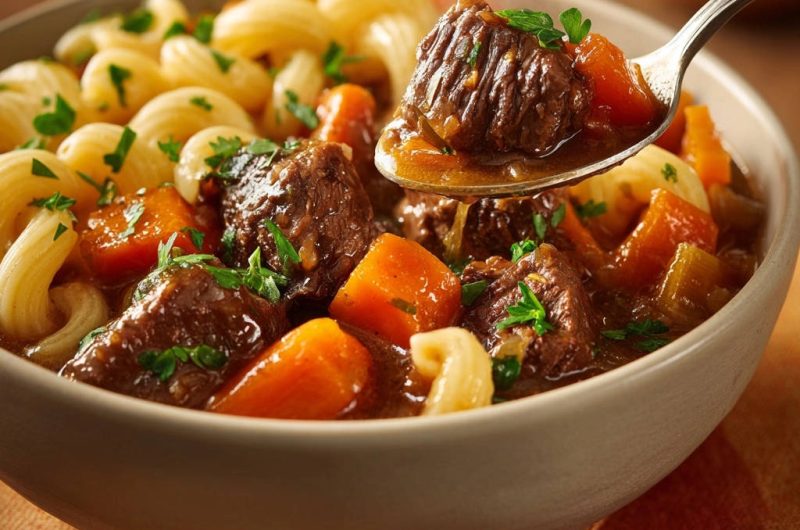
Beef and Noodle Stew
Course: Soups-StewsCuisine: AmericanDifficulty: medium6
Servings25
minutes2
hours550
kcal180
minutesAchieve truly fall-apart tender beef in this comforting stew, where every spoonful melts in your mouth. This classic recipe combines savory beef, aromatic vegetables, and hearty cavatappi pasta, perfected for a delicious meal.
Ingredients
2 pounds beef stew meat, cut into 1-inch cubes
1/4 cup all-purpose flour
2 tablespoons vegetable oil
1 large yellow onion, chopped
2 cloves garlic, minced
4 medium carrots, peeled and cut into 1-inch pieces
2 stalks celery, chopped
4 cups beef broth
1 (6 ounce) can tomato paste
1 teaspoon dried thyme
1 bay leaf
1 teaspoon salt
1/2 teaspoon black pepper
8 ounces cavatappi pasta
1/4 cup fresh parsley, chopped, for garnish
Directions
- Pat the beef stew meat thoroughly dry with paper towels. In a shallow bowl, toss the beef cubes with the flour until evenly coated.
- Heat the vegetable oil in a large heavy-bottomed pot or Dutch oven over medium-high heat. Add the floured beef in a single layer, working in batches if necessary to avoid overcrowding the pot. Brown the beef on all sides until a deep, rich crust forms, about 5-7 minutes per batch. This crucial step creates deep flavor and helps lock in moisture. Remove the browned beef to a plate and set aside.
- Reduce the heat to medium. Add the chopped onion to the pot and cook, stirring occasionally, until softened, about 5 minutes. Add the minced garlic and cook for another minute until fragrant.
- Stir in the tomato paste, dried thyme, bay leaf, salt, and pepper. Cook for 2 minutes, stirring constantly, to toast the tomato paste and deepen its flavor.
- Return the browned beef to the pot. Pour in the beef broth, scraping the bottom of the pot with a wooden spoon to release any browned bits. Bring the mixture to a gentle simmer.
- This is the secret for tenderness: Once simmering, reduce the heat to low, cover the pot tightly, and let the stew cook for 2 hours. Do not rush this process; the long, slow braise is what breaks down the connective tissue in the beef, making it incredibly tender and melt-in-your-mouth.
- After 2 hours, stir in the carrots and celery. Recover the pot and continue to simmer on low heat for an additional 45 minutes, or until the beef is fork-tender and the vegetables are cooked through. Remove the bay leaf before serving.
- While the stew finishes cooking, prepare the cavatappi pasta according to package directions. Drain well.
- To serve, ladle the hearty beef stew over or alongside the cooked pasta. Garnish with fresh chopped parsley.
Notes
- Remove bay leaf before serving.