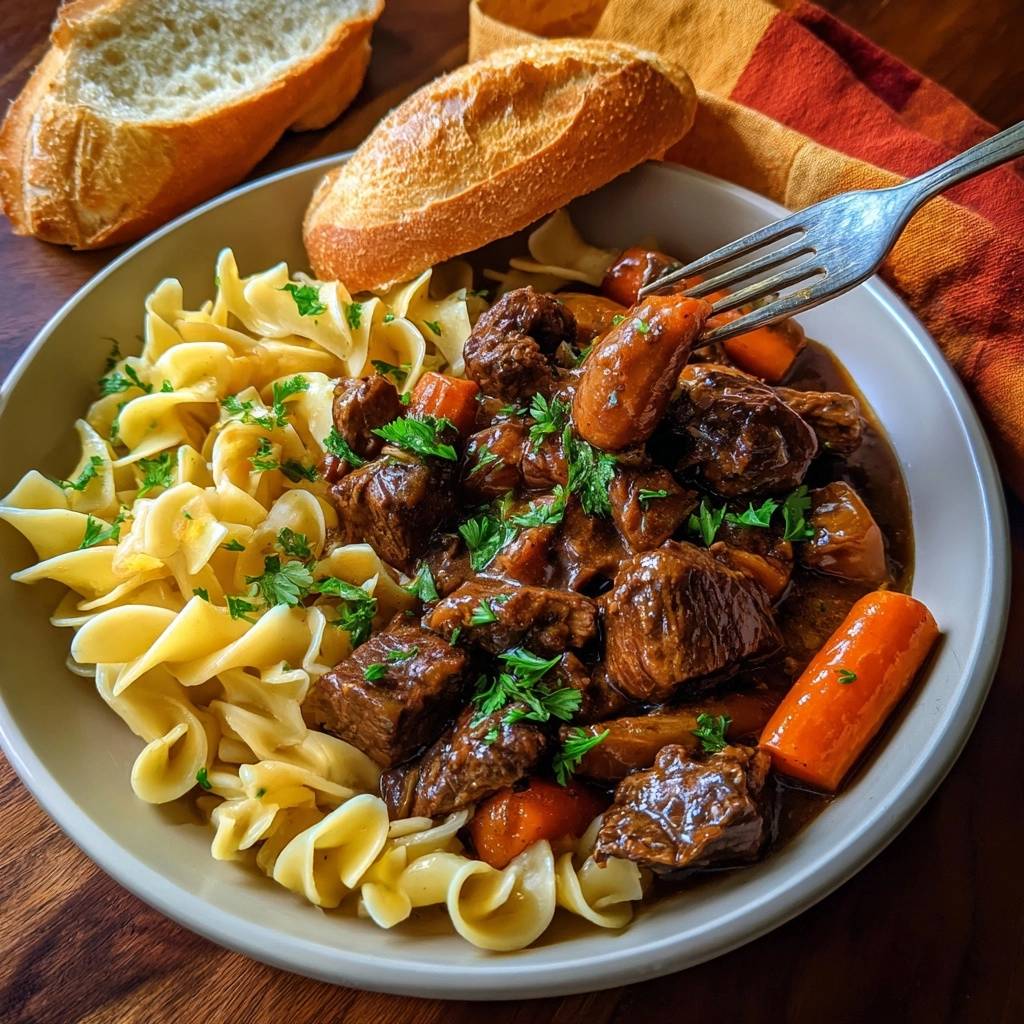
Nothing kills a beef stew vibe faster than chewy, stringy meat that fights your fork. You’ve been there, right? This hearty beef and noodles recipe fixes that with a double-sear and low-slow braise that turns tough 2-pound batches into melt-in-your-mouth goodness. No guesswork, just reliable tenderness for family dinners.
Here’s why it works so well. The double-sear builds deep flavor through the Maillard reaction, while the 2-hour braise breaks down collagen into silky gelatin. You’ll get that rich, beefy sauce coating wide noodles perfectly. In addition, it feeds 6-8 easily on a weeknight.
The real secret? Pat the beef dry before searing. Wet meat steams instead of browning, so this step creates the crust that locks in juices. Trust me, that shimmering oil and single-layer rule make all the difference.
Why Double-Sear Defines Hearty Beef and Noodles
The first sear triggers the Maillard reaction, browning proteins and sugars for nutty, caramelized depth. Most folks skip this or overcrowd, ending up with boiled-tasting beef. However, searing 1-inch cubes in a single layer at 375°F shimmering oil changes everything.
That crust traps juices inside. Then, the second sear amps up flavor without steaming. Single-sear methods fail because they don’t build enough fond, those browned bits that deglaze into pure gold. Boiling straight from raw? Gray and tough every time.
Therefore, you get a sauce bursting with beefy richness. Imagine scraping up those dark bits, they dissolve into broth for umami that takeout dreams of.
First Sear: Building Flavor Foundation
Pat 2 pounds of beef cubes dry with paper towels. Season with 1 teaspoon salt and 1/2 teaspoon pepper. Heat 1 tablespoon vegetable oil in a large Dutch oven over medium-high until it shimmers.
Sear half the beef in a single layer for 4-5 minutes, turning once for deep brown on all sides. The hot pot creates a crusty exterior. Remove to a plate, you’ll smell that savory aroma building.
Second Sear: Amplifying Beef Depth
Add the last tablespoon oil and sear the remaining beef the same way. Don’t crowd, or it steams and turns gray. Now you’ve got maximum fond stuck to the pot.
Transition right to deglazing. This double effort pays off in layers of flavor no single sear matches.
Key Ingredients for Tender Hearty Beef and Noodles
Start with 2 pounds beef stew meat, chuck is ideal for its fat and connective tissue that braise into tenderness. Four large carrots sliced into 1/2-inch rounds add natural sweetness and hold up without mush. Wide egg noodles, 12 ounces, cling to sauce better than thin pasta.
Four cups beef broth forms the base, choose low-sodium so you control seasoning. Fresh parsley, 1/4 cup chopped, brightens the richness at the end. A baguette sliced for serving soaks up every drop.
Pro tip: Freshly chopped parsley releases oils that cut through beefiness. In addition, broth over stock keeps it clearer and less gelatinous upfront.
Beef Stew Meat Selection Guide
Chuck or brisket work best, their marbling melts during braise. Cut into uniform 1-inch cubes for even cooking. Fat renders into sauce, keeping beef juicy.
Vegetables and Broth Balance
Slice carrots evenly so they soften without falling apart. Use low-sodium broth, then taste and adjust salt later. This prevents a too-salty finish.
Essential Gear for Flawless Beef and Noodles
A 6-8 quart enameled cast iron Dutch oven shines here. It retains heat evenly for searing, then braises low and slow without hot spots. The tight lid seals in moisture, preventing dry meat.
Instant Pots rush the process but miss sear depth. Test tenderness with a fork, it should shred at 195°F internal. Therefore, invest in cast iron for foolproof results.
Capacity matters too, it fits 2 pounds beef plus noodles without overflow.
Dutch Oven Advantages Explained
Thick walls distribute low heat steadily at 200-250°F. Holds 2 pounds beef, carrots, broth, and noodles comfortably. Lid lock keeps steam in for collagen magic.
Mastering the Braise in Hearty Beef and Noodles
Return all seared beef to the pot over medium heat. Add sliced carrots and 4 cups broth, scraping those browned bits loose. This deglazing melts fond into savory gold.
Bring to a simmer, then cover tightly and drop to low for 2 hours. Collagen turns to gelatin, beef shreds easily. If sauce reduces too much, add 1/2 cup water.
Moist heat beats dry roasting, it tenderizes without toughening. You’ll see the beef darken and soften through the glass lid.
Deglazing for Rich Sauce Base
Medium heat releases flavor compounds from fond as broth bubbles. Scrape every bit, they dissolve fully. Carrots start softening here too.
Low-Slow Braise Breakdown
Braise undisturbed 2 hours until fork-shreddable at 195°F. Moisture stays locked in. Peek once, but don’t stir much.
For another comforting meal, try this hearty beef carrot stew.
Cooking Noodles to Integrate with Beef
Boil 12 ounces wide egg noodles in salted water till al dente, about 8 minutes. Drain well, don’t rinse or you lose starch. Stir into beef mixture.
Simmer uncovered 5-10 minutes. Noodle starch thickens sauce naturally, coating every strand. Taste and add salt if needed.
This step absorbs flavors perfectly. Pro tip: Time noodles to finish as braise ends, avoiding mush.
Timing Noodles Precisely
Sync package directions with braise. Pull at al dente for best texture post-simmer. Fresh integration beats separate serving.
Avoiding Pitfalls in Beef and Noodles
Tough beef comes from skipping sear or high-heat braise. Watery sauce? Lid too loose or no final simmer. Bland taste means no fond scraping.
Overcrowding sear steams meat. Fixes include extra braise time or water tweaks. Therefore, follow the double-sear rule religiously.
Fixing Tough Connective Tissue
Double-sear plus 2+ hours low heat dissolves it. Test by shredding with fork. If not, simmer 30 minutes more.
Thickening Sauce Without Roux
Uncovered noodle simmer releases starch. Reduce gently for glossy coat. No flour needed.
Flavor Twists on Hearty Beef and Noodles
Add sliced mushrooms or onions post-sear for umami punch. Thyme or rosemary sprigs during braise bring earthiness. A teaspoon paprika adds subtle smoke.
Gluten-free noodles swap easily. Slow cooker? Sear first, then 4-6 hours low. Keeps it beef-forward and hearty.
These tweaks elevate without overpowering. Fresh herbs always finish strong.
Vegetable and Herb Enhancements
Toss in celery and garlic with carrots. Sub thyme for parsley if you like woodsy notes. Builds layers simply.
Make-Ahead Strategies for Beef and Noodles
Braise ahead, refrigerate up to 3 days, add fresh noodles later. Or freeze full dish in portions for 3 months. Thaw overnight in fridge.
Reheat low on stovetop with splash of broth to revive tenderness. Scales to 8 servings easily. Perfect for meal prep.
Freezing and Reheating Best Practices
Portion into freezer bags, flatten for quick thaw. Simmer gently covered, stir in noodles if separate. Retains fork-tenderness.
Pairing Sides with Hearty Beef and Noodles
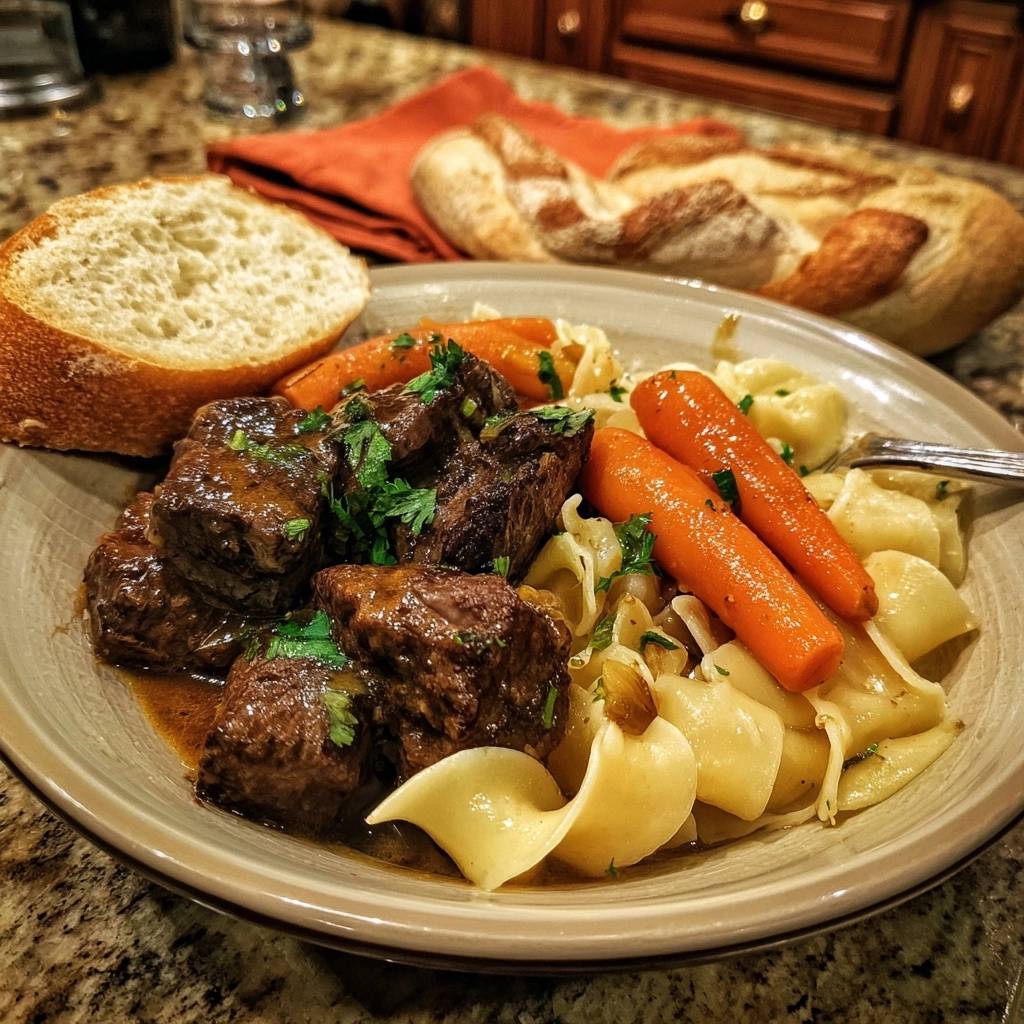
Crusty baguette slices sop up thickened broth like magic. A crisp green salad cuts the richness. Roasted root veggies echo the carrots.
Bread’s key, it catches every saucy drop. Sparkling cranberry juice refreshes alongside. Keeps the meal balanced and satisfying.
Crusty Bread Companion Ritual
Slice baguette thick, toast lightly. Dunk and swirl in bowls. Absorbs without sogginess.
Hearty Beef and Noodles: Common Queries
Substitution and Scaling Answers
Can I use round steak instead of stew meat?
Yes, round works but braise 2.5-3 hours longer since it’s leaner. Chuck’s fat makes it more forgiving. Halve everything for 4 servings: 1 pound beef, 2 cups broth, 6 ounces noodles.
Storage and Reheat Guidance
How do I store leftovers and can it freeze?
Store in an airtight container in the fridge up to 4 days. Freezes well for 3 months in portions; thaw overnight and reheat low with broth to prevent drying. Noodles hold texture better than in most stews.
Why is my beef still tough after cooking?
Usually underbraising or high heat. Ensure 2 full hours low at a bare simmer, test for fork-shred. Double-sear helps too; without it, collagen doesn’t fully break down.
Can I make this dairy-free or gluten-free?
It’s naturally dairy-free. Swap gluten-free wide noodles, they absorb sauce similarly. Use tamari if broth has trace gluten, but most beef broths are fine.
What’s a slow cooker version?
Sear beef first in skillet, then dump into cooker with carrots and broth. Low 4-6 hours till shreddable. Add noodles last 20 minutes uncovered. Matches stovetop tenderness.
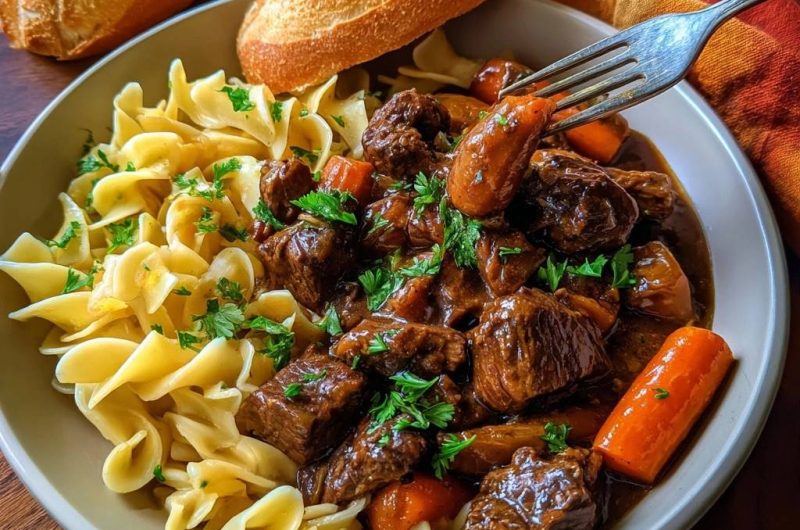
Beef and Noodles
Course: Main CourseCuisine: AmericanDifficulty: medium6
servings20
minutes2
hours650
kcal120
MinutesTired of chewy, stringy beef ruining your stew? This foolproof double-sear and low-slow braise method breaks down tough connective tissue for guaranteed fork-tender results every time, no guesswork needed.
Ingredients
2 pounds beef stew meat, cut into 1-inch cubes
4 large carrots, peeled and sliced into 1/2-inch rounds
12 ounces wide egg noodles
1/4 cup fresh parsley, finely chopped
4 cups beef broth
2 tablespoons vegetable oil
1 teaspoon salt
1/2 teaspoon black pepper
1 baguette, sliced for serving
Directions
- Pat beef cubes dry with paper towels. Season with salt and pepper. Heat 1 tablespoon oil in a large Dutch oven over medium-high heat until shimmering hot. Sear half the beef in a single layer for 4-5 minutes, turning once, until deeply browned on all sides. This crucial first sear locks in juices and starts flavor development. Remove to a plate. Repeat with remaining beef and oil.
- Reduce heat to medium. Return all beef to pot. Add carrots and beef broth, scraping up browned bits from the bottom. This deglazing step pulls rich flavor into the sauce. Bring to a simmer.
- Cover pot tightly and reduce heat to low. Braise undisturbed for 2 hours, until beef shreds easily with a fork. The magic happens here: low, moist heat slowly converts tough collagen to gelatin for melt-in-your-mouth tenderness. If sauce reduces too much, add 1/2 cup water.
- Meanwhile, cook egg noodles in salted boiling water according to package until al dente, about 8 minutes. Drain well.
- Stir noodles into beef mixture. Simmer uncovered 5-10 minutes to thicken sauce and coat noodles. Taste and adjust salt.
- Serve hot topped with chopped parsley. Pair with crusty baguette slices to soak up every drop.
Notes
- Pat beef dry before searing for best browning. Braise low and slow for melt-in-your-mouth tenderness. Serve with crusty baguette to soak up the sauce.