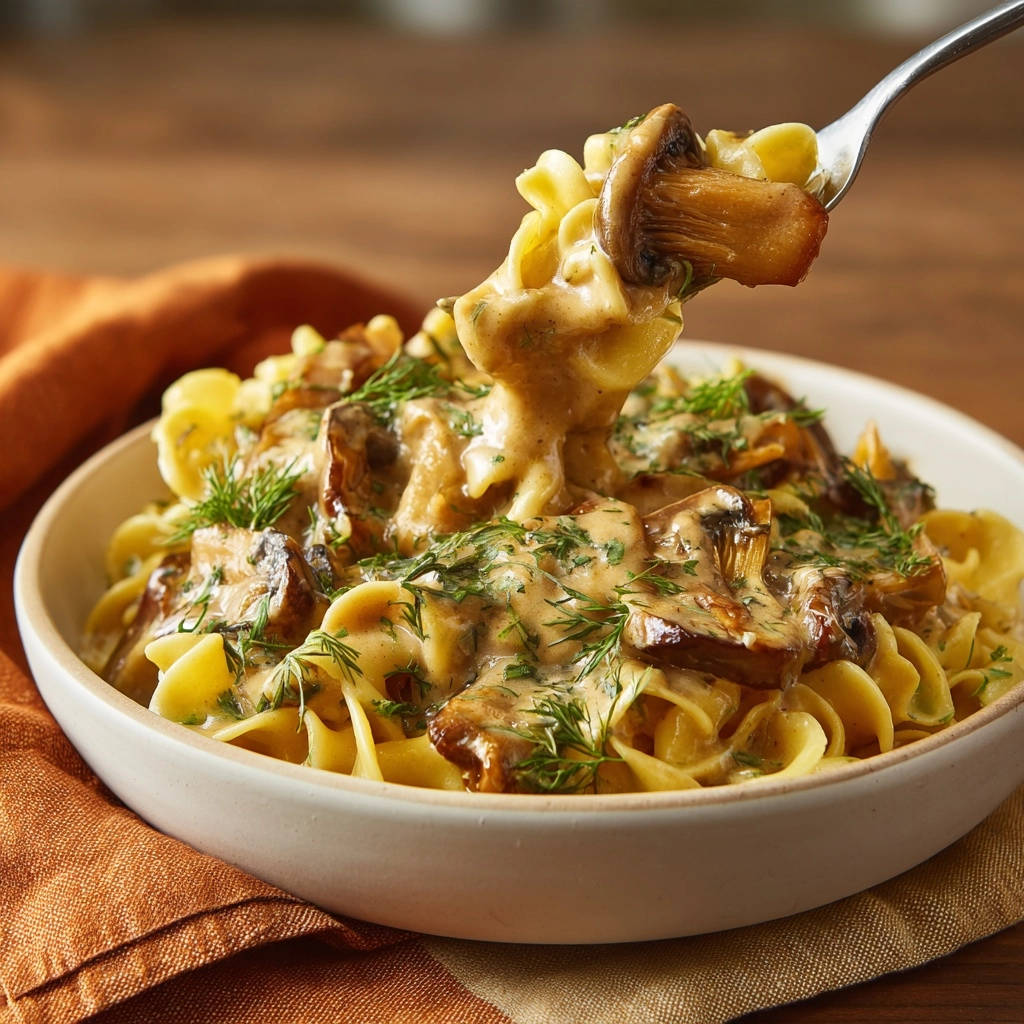
For years, I struggled with the classic creamy sauce collapsing into a curdled mess just when I needed that rich, velvety texture. Learning the secret to tempering the dairy changed everything, transforming my approach to comfort food.
This method ensures every batch of Hearty Mushroom Stroganoff Noodles is guaranteed to have a thick, luxurious, and perfectly stable sauce, solving the most common stroganoff disaster.
The Hearty Mushroom Stroganoff Noodles Recipe That Guarantees a Silky Finish
This particular recipe focuses on deeply developed savory flavor, achieved through a robust mix of fungi and slow-cooked aromatics.
The star of the show remains the unique technique used to incorporate the sour cream, which eliminates the risk of splitting, making this dish foolproof for even beginner cooks.
It balances richness with earthiness, satisfying cravings for deep comfort food while relying entirely on mushrooms for the “meatiness.”
Why This Recipe Solves the Split-Sauce Problem
Traditional stroganoff methods often call for adding cold sour cream directly into a hot liquid, which immediately shocks the dairy proteins and causes them to seize up, or “split.”
For a similar experience with a smooth, curdled-free sauce, explore classic beef stroganoff.
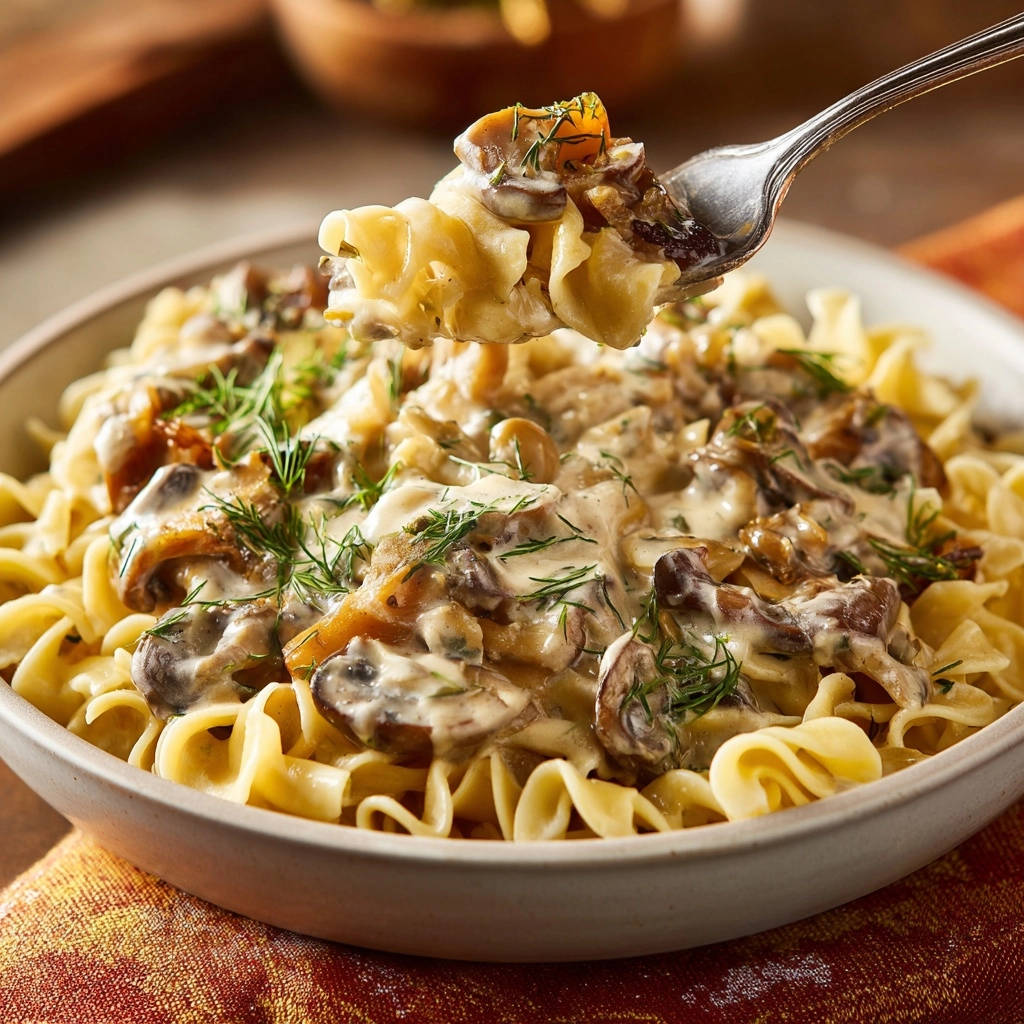
Our technique involves removing the sauce from the heat entirely and gradually warming the sour cream with a small amount of the sauce (tempering), ensuring a smooth, stable emulsion upon introduction.
Quick Comfort: Ready in Under 45 Minutes
Despite its luxurious taste, this recipe is designed for maximum efficiency. While the mushrooms sear, you can prep the onions and noodles, ensuring a fast transition between steps.
The active cook time is less than 30 minutes, qualifying this dish as a reliable, hearty weeknight meal that tastes like it simmered all day.
The Foundation of Flavor: Richness Without the Meat
We rely on meaty cremini and shiitake mushrooms, enhanced by the deep umami base they create when properly seared.
The inclusion of smoked paprika, dried thyme, and rich broth provides complex, savory notes that make this a deeply satisfying dish, perfect as a vegetarian main or a robust side dish.
Gathering Your Flavor Arsenal: Key Ingredients Breakdown
Selecting the Perfect Fungi Blend
Using a blend of mushrooms is essential for texture and flavor complexity.
If you’re looking for more mushroom magic, try this Creamy Mushroom Fusilli Bake.
Cremini provide the classic meatiness, while shiitake or oyster mushrooms add layers of intense umami depth, elevating the overall savory profile.
The Power of Wide Egg Noodles
Wide egg noodles are traditional in stroganoff because their flat, broad surface area holds the heavy, silky sauce beautifully.
They cook quickly and maintain a satisfyingly soft yet chewy texture that thinner pasta simply cannot replicate effectively.
The Dairy Stabilizer: Full-Fat Sour Cream
We require full-fat sour cream because it contains a higher percentage of fat, which acts as a protective buffer around the proteins.
Fat minimizes the chances of protein coagulation, which is the physical cause of a split sauce, making it the most stable choice.
Spices for Smoky Depth: Paprika and Thyme
Smoked paprika is crucial; it contributes a depth of warmth and a smoky flavor that usually comes from braised beef, ensuring the dish feels hearty and rich.
Mastering the Method: Your Path to Hearty Mushroom Stroganoff Noodles Perfection
-
Prepare the Noodles and Reserve Water:
Cook the egg noodles until perfectly al dente, saving at least 1 cup of the starchy cooking water.
This reserved water is non-negotiable; it helps adjust the sauce consistency and adds body later.
-
Achieving Deeply Seared Mushrooms:
Sear the mushrooms over medium-high heat, ensuring not to crowd the pan, which is crucial for browning instead of steaming.
Cook until all released moisture has evaporated and they are deep brown. This step builds significant depth of flavor (umami base).
-
Building the Aromatics and Roux Base:
Sauté the onions until translucent, then bloom the garlic, paprika, and thyme for 60 seconds.
The flour (roux) must cook for a full minute to eliminate the raw flour taste before adding any liquid.
-
Creating the Thickened Sauce:
Whisk in the broth slowly to ensure a smooth sauce base, simmering until significantly thickened and coating the back of a spoon.
-
The Critical Tempeing Step (No-Split Technique):
REMOVE the skillet completely from the heat source. This is the secret to a stable sauce.
Tempering involves whisking the warm sauce into the sour cream in a separate bowl to raise its temperature gently before introduction to the main pot.
-
Finishing the Silky Sauce:
Gently pour the tempered mixture back into the main sauce, stirring until uniform. NEVER return the sauce to boiling heat after this step.
-
Combining, Adjusting, and Serving:
Return the seared mushrooms and noodles to the sauce, using reserved pasta water if needed to reach the perfect, glossy consistency.
The No-Split Secret: Why Tempering Dairy Is Non-Negotiable
The fear of a split sauce often prevents home cooks from attempting rich, dairy-based sauces, but this simple technique removes all uncertainty.
Mastering tempering is a fundamental skill that applies to all recipes that incorporate sensitive dairy like sour cream, eggs, or yogurt into hot liquids.
Understanding the Science of Splitting
Dairy proteins, particularly casein, are delicate and prone to coagulation when subjected to rapid temperature changes, especially extreme heat.
When cold sour cream hits a simmering sauce, the proteins instantly tighten, expelling the fat and water, resulting in the grainy, curdled appearance known as “splitting.”
Off-Heat Tempeing: A Culinary Safety Net
By removing the main sauce from the stove, you immediately halt the rapid temperature flux, creating a safer environment for dairy incorporation.
Mixing the warm sauce into the cold sour cream incrementally warms the dairy, bridging the temperature gap and allowing the components to combine smoothly without stressing the proteins.
Full-Fat vs. Low-Fat Dairy in Stroganoff
We insist on full-fat sour cream because the higher fat content inhibits protein movement and coagulation, creating a more stable final product.
Low-fat alternatives contain more water and significantly less stabilizing fat, making them far more susceptible to splitting even if you employ the tempering technique.
Chef’s Secrets and Smart Planning: Elevating Your Dish
Maximizing Mushroom Flavor During the Sear
The key to maximizing flavor is patience: use high heat and resist the urge to stir the mushrooms for the first few minutes.
Allowing them to sit undisturbed encourages the Maillard reaction, forming deep brown crusts that lock in intense, savory flavor.
Herb Choice: The Essential Role of Fresh Dill
Fresh dill is a critical component that cuts through the richness of the cream sauce and complements the earthiness of the mushrooms.
Dried dill offers only a faint echo of the bright, essential flavor; use fresh dill generously, both stirred into the sauce and scattered as a vibrant garnish.
Make-Ahead and Reheating Best Practices
If preparing in advance, store the sauce and the cooked noodles separately to prevent the noodles from absorbing too much liquid and becoming soggy.
To reheat stroganoff, use very low heat on the stove, stirring gently, and often add a splash of milk or broth to restore moisture and the creamy consistency without risk of splitting.
Essential Side Dish Pairings
The richness of this dish pairs best with sides that offer texture contrast or acidity.
Here are a few classic pairings:
What to Pair with Your Stroganoff Noodles
To round out your meal with complementary flavors, consider these additional mushroom and vegetable dishes.
- For a deeper mushroom flavor, try these Roasted Garlic Mushrooms & Onions, offering a similar earthy taste.
- To add a fresh vegetable element, these Golden Zucchini Fritters provide a pleasant contrast in texture and flavor.
- Crusty Sourdough Bread (perfect for soaking up the remaining sauce).
- A Simple, Bright Green Salad (dressed lightly with vinaigrette to provide acidity).
- Steamed Green Beans or Asparagus (a fresh, crisp counterpoint).
Troubleshooting Your Stroganoff: Common Mistakes and Quick Fixes
Help! My Sauce is Too Thin or Watery
If the sauce seems too thin after the sour cream is added, you can stir in a small amount of cornstarch or tapioca slurry (1 tsp starch mixed with 1 tsp cold water) and heat briefly until thickened.
Alternatively, if you saved the pasta water, a ladle of that starchy liquid often adds enough body and gloss to correct the consistency.
My Mushrooms Were Soggy, Not Browned
This is almost always due to overcrowding the pan, which lowers the temperature and causes the mushrooms to steam in their own released moisture.
If necessary, cook the mushrooms in two or three separate batches to ensure proper high-heat searing.
Can I make this Hearty Mushroom Stroganoff Noodles gluten-free?
Absolutely. Swap the all-purpose flour for a measure-for-measure gluten-free flour blend or use cornstarch (ensure you create a cold slurry first) in the roux step.
Also, double-check that your egg noodles and the beef or vegetable broth are certified gluten-free.
How do I make this dish vegan?
Substitute the butter with a neutral oil or high-quality vegan butter and use rich mushroom broth instead of beef broth for the liquid base.
The sour cream can be replaced with a thick cashew cream or a commercial vegan sour cream, ensuring you still apply the critical off-heat tempering technique.
Remember that commercial vegan sour creams vary in stability; test a small amount for consistency before adding the full amount.
A Timeless Comfort Classic: Ready to Share Your Hearty Mushroom Stroganoff Noodles?
With the simple, scientific tempering technique, the days of disappointing, broken sauces are over, ensuring confidence in your kitchen.
This recipe delivers on its promise of rich, satisfying, perfectly creamy Hearty Mushroom Stroganoff Noodles every single time, making it a reliable fixture in your rotation.
Ready to try the secret technique for yourself? Go ahead, craft this decadent dish tonight, and share your success with us!
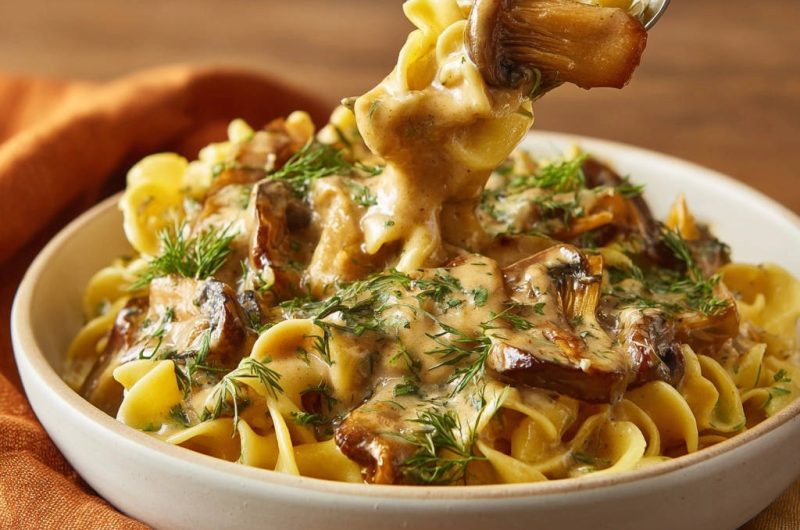
Mushroom Stroganoff
Course: Main CourseCuisine: InternationalDifficulty: medium4
servings15
minutes25
minutes650
kcal40
minutesAchieve a thick, luscious, and absolutely stable sour cream sauce every time with this simple tempering technique. This Hearty Mushroom Stroganoff, packed with savory mixed mushrooms and rich broth, guarantees comforting flavor. Serve over wide egg noodles for the ultimate meal.
Ingredients
1 pound wide egg noodles
1 1/2 pounds mixed mushrooms (cremini, shiitake, or button), sliced thick
1 tablespoon olive oil
3 tablespoons butter, divided
1 medium yellow onion, finely diced
2 cloves garlic, minced
2 tablespoons all purpose flour
3 cups rich beef or vegetable broth
1 teaspoon smoked paprika
1/2 teaspoon dried thyme
1/2 cup sour cream (full fat recommended)
1/4 cup chopped fresh dill, plus more for garnish
Salt and freshly ground black pepper to taste
Directions
- Prepare the Noodles. Cook the egg noodles according to package directions until al dente. Reserve 1 cup of the pasta cooking water, then drain the noodles and set aside.
- Sear the Mushrooms. Heat the olive oil and 1 tablespoon of butter in a large deep skillet or Dutch oven over medium-high heat. Add the sliced mushrooms and spread them into a single layer. Cook without stirring for 3 to 4 minutes until deep brown underneath. Stir and continue cooking until all the moisture has released and evaporated, and the mushrooms are browned and tender. Season lightly with salt and pepper. Remove the mushrooms from the skillet and set aside.
- Build the Flavor Base. Reduce the heat to medium. Add the remaining 2 tablespoons of butter to the skillet. Add the diced onion and cook for 5 to 7 minutes until softened and translucent. Add the minced garlic, paprika, and thyme and cook for 1 minute until fragrant.
- Create the Roux and Sauce Base. Sprinkle the 2 tablespoons of flour over the onion mixture and cook, stirring constantly, for 1 minute (this is your roux). Slowly whisk in the broth, ensuring there are no lumps. Bring the sauce to a gentle simmer, stirring frequently, until the sauce thickens significantly (about 5 minutes). Reduce the heat to low.
- Incorporate the Cream (The No-Split Technique). Remove the skillet completely from the heat source. In a separate small bowl, place the sour cream. Whisk in about 1/2 cup of the warm sauce into the sour cream (this is tempering the sour cream, bringing its temperature up gently).
- Finish the Sauce. Slowly pour the tempered sour cream mixture back into the main sauce in the skillet, stirring gently until fully combined and the sauce is uniform and silky smooth. Do not return the skillet to the direct heat or allow the sauce to boil after the sour cream is added, as this is the primary cause of splitting.
- Combine and Serve. Stir the reserved mushrooms and the chopped fresh dill into the sauce. Add the cooked egg noodles and toss to coat. If the sauce seems too thick, add a splash of the reserved pasta cooking water until the desired consistency is reached. Taste and adjust seasoning with salt and pepper. Serve immediately, garnished generously with fresh dill.
Notes
- The key to preventing the sour cream from splitting is tempering it off-heat before combining it with the main sauce.