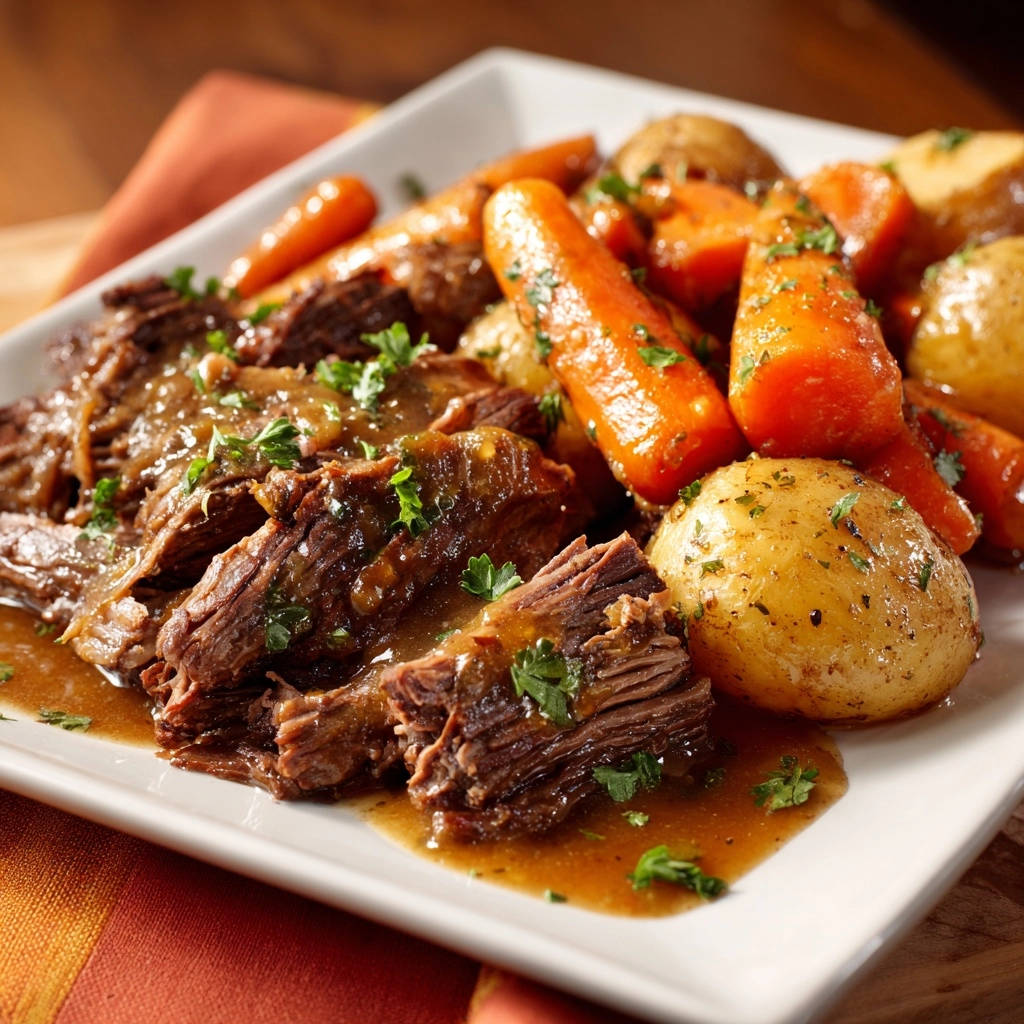
There’s nothing worse than planning a cozy dinner, only to end up with tough, dry meat. I’ve been there too many times, but I finally cracked the code to making an incredibly juicy and tender Hearty Pot Roast every single time.
This recipe provides a reliable solution to common pot roast woes, focusing on a crucial, yet simple, step that ensures melt-in-your-mouth perfection.
For an even more tender result, explore the secrets of rich slow-cooked pot roast.
Why This Hearty Pot Roast Will Be Your New Go-To
This isn’t just another pot roast recipe; it’s a meticulously crafted guide designed for guaranteed success. We tackle the common challenges head-on, ensuring a truly exceptional result that impresses without stress.
The “Never Dry” Promise: Unlocking Succulence Every Time
Our method prioritizes moisture retention above all else, ensuring your beef chuck roast emerges incredibly succulent. The secret lies in a strategic submersion during the slow braising process, preventing any chance of dryness.
This technique breaks down tough connective tissues into gelatin, leaving you with tender, flavorful meat.
Effortless Elegance: A Recipe Perfect for Any Skill Level
While the results are gourmet, the process is surprisingly straightforward. This recipe simplifies complex techniques, making it approachable for novice cooks and rewarding for seasoned chefs.
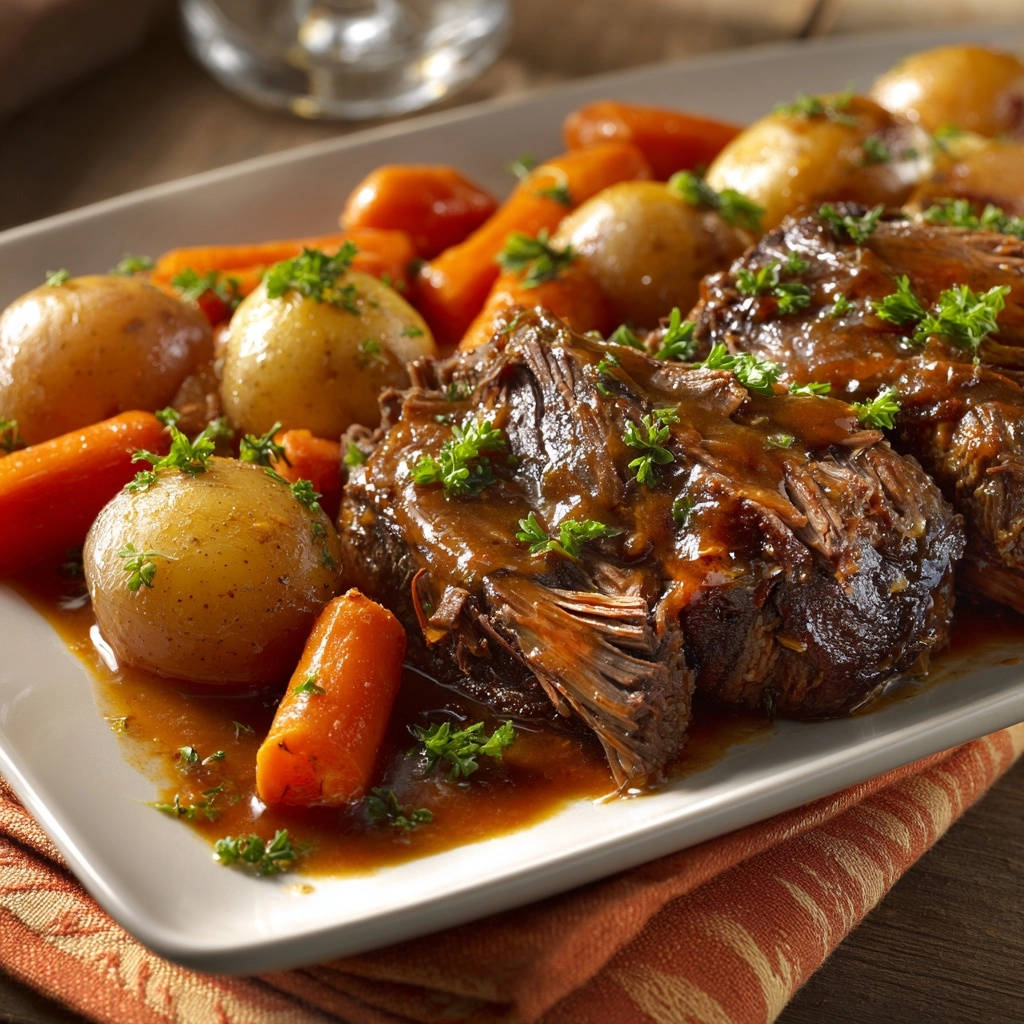
With clear instructions and integrated tips, you’ll confidently create a stunning dish with minimal fuss.
The Secret to Deep, Rich Flavor (It’s Simpler Than You Think!)
The foundation of an unforgettable pot roast is layered flavor. We achieve this through proper searing and deglazing, building an umami-rich base right from the start.
This initial effort creates a deep, complex braising liquid that infuses every bite of your Hearty Pot Roast with incredible taste.
Essential Tools for Your Pot Roast Journey
Having the right equipment makes a significant difference in the ease and success of your cooking. These tools are crucial for achieving the perfect Hearty Pot Roast.
The Power of a Dutch Oven (or Oven-Safe Pot)
Heavy-Bottomed Dutch Oven: This is your primary workhorse. Its heavy construction ensures even heat distribution, critical for consistent searing and gentle, slow cooking in the oven.
Tight-Fitting Lid: Essential for trapping steam and moisture, which is key to tenderizing the meat and preventing the braising liquid from evaporating too quickly.
Beyond the Basics: Other Helpful Utensils
Tongs: Indispensable for safely searing and maneuvering the roast in a hot pot without piercing the meat.
Sturdy Spatula or Wooden Spoon: Ideal for scraping up flavorful browned bits from the bottom of the pot during deglazing.
Cutting Board and Sharp Knife: For prepping vegetables and eventually shredding or slicing your tender pot roast.
The Building Blocks of Flavor: What You’ll Need
Crafting a truly memorable Hearty Pot Roast begins with selecting quality ingredients. Each component plays a vital role in building the dish’s incredible depth of flavor and texture.
Prep Time: 20 minutes
Cook Time: 3 hours 30 minutes
Total Time: 3 hours 50 minutes
Servings: 6
Your Flavor Foundation: The Perfect Beef Chuck Roast
3 pounds beef chuck roast: Opt for a well-marbled chuck roast. Marbling (the visible fat within the meat) renders during slow cooking, contributing immense flavor and keeping the meat incredibly moist.
2 tablespoons olive oil: Used for searing, olive oil helps create a beautiful brown crust on the beef, a crucial step for deep flavor development.
1 teaspoon salt & 1/2 teaspoon black pepper: Essential seasoning that penetrates the meat during cooking, enhancing its natural savory notes.
Aromatic Essentials: Onion, Garlic, and Fresh Herbs
1 large yellow onion, chopped: Onions provide a sweet, aromatic base that caramelizes beautifully, adding depth to the braising liquid.
4 cloves garlic, minced: Garlic adds pungent, savory notes that are fundamental to classic comfort food flavors, becoming mellow and sweet as it cooks.
2 tablespoons fresh parsley, chopped, for garnish: A sprinkle of fresh parsley at the end brightens the dish with a touch of color and herbaceous freshness.
The Heart of the Gravy: Beef Broth and Flour
4 cups beef broth: High-quality beef broth forms the luscious braising liquid, infusing the meat and vegetables with rich, savory flavor as they slowly cook.
1 tablespoon all purpose flour: Used to create a roux with the aromatics, this flour thickens the braising liquid into a wonderfully rich and satisfying gravy.
Hearty Additions: Potatoes and Carrots for a Complete Meal
1.5 pounds small new potatoes, halved: These add a tender, starchy element to the meal, absorbing all the delicious flavors of the braising liquid.
1 pound baby carrots: Sweet and tender, carrots complement the savory beef and add a touch of natural sweetness and vibrant color to the pot roast.
Mastering the Art of Melt-in-Your-Mouth Pot Roast: Step-by-Step
Follow these detailed steps carefully, paying attention to the ‘why’ behind each action, and you’ll achieve a truly exceptional Hearty Pot Roast.
Preparation & Initial Searing: Building the Base
- Prepare the Roast:
Pat the beef chuck roast completely dry with paper towels. Season generously all over with salt and black pepper. This initial dryness and seasoning are important for a good sear, contributing to a flavorful crust.
- Sear the Beef:
Heat the olive oil in a large Dutch oven or oven-safe pot over medium-high heat. Once the oil is shimmering, carefully place the beef roast into the pot. Sear on all sides until deeply browned, about 3-4 minutes per side. This browning step adds immense flavor (Maillard reaction) and helps create a crust that locks in juices during the slow cooking process.
Remove the seared roast from the pot and set aside.
Crafting the Flavorful Braising Liquid
- Sauté Aromatics:
Add the chopped onion to the pot, scraping up any browned bits (fond) from the bottom. Cook until softened, about 5 minutes. Add the minced garlic and cook for another minute until fragrant. This builds a rich aromatic foundation.
- Flour the Aromatics:
Sprinkle the flour over the onions and garlic, stirring to coat. Cook for 1 minute to lightly toast the flour. This creates a roux that will thicken the sauce and add depth.
- Deglaze with Broth:
Slowly pour in the beef broth, stirring constantly to prevent lumps. Bring the mixture to a simmer, scraping any remaining browned bits from the bottom of the pot. This deglazing step incorporates all the concentrated flavor into your sauce, creating a rich base for your gravy and aiding in tenderizing the meat.
The Slow Cook: Unlocking Ultimate Tenderness
- Return and Submerge the Roast (The Crucial Step!):
Return the seared beef roast to the pot. Ensure the meat is mostly submerged in the liquid. If not, add a little more broth or water until it is. This is the crucial step to prevent dryness: keeping the meat enveloped in moist, simmering liquid for an extended period allows for gentle cooking and incredible moisture retention.
- First Bake:
Cover the pot tightly with a lid and transfer it to a preheated oven at 300 degrees Fahrenheit. Cook for 2 hours.
- Add Vegetables:
After 2 hours, carefully remove the pot from the oven. Add the halved potatoes and baby carrots around the roast in the liquid. Gently stir to ensure they are partially submerged so they cook evenly and absorb flavor.
- Final Bake:
Return the covered pot to the oven and continue to cook for another 1 hour 30 minutes, or until the beef is incredibly fork-tender and easily shreds apart. This long, slow cooking allows the tough connective tissues in the chuck roast to break down completely, transforming it into melt-in-your-mouth perfection, never dry!
Resting, Thickening & Serving
- Rest the Meat:
Remove the pot from the oven. Carefully transfer the pot roast to a cutting board. Tent loosely with foil and let it rest for 10-15 minutes before shredding or slicing. This resting period allows the juices to redistribute throughout the meat, keeping it moist and tender.
- Thicken the Gravy (Optional):
While the meat rests, you can thicken the gravy if desired. Skim any excess fat from the surface of the liquid in the pot. Bring the liquid to a simmer on the stovetop and cook until it reaches your desired consistency. For an even thicker gravy, you can create a slurry of cornstarch and water and whisk it in.
- Serve and Garnish:
Serve the tender pot roast with the potatoes, carrots, and plenty of the rich gravy. Garnish generously with fresh chopped parsley for a burst of color and fresh flavor.
Chef’s Secrets for an Unforgettable Pot Roast
Elevate your Hearty Pot Roast with these expert tips, ensuring every aspect of your dish is exceptional.
Choosing the Best Cut: Beyond Chuck Roast for Pot Roast Perfection
While chuck roast is king for its marbling and connective tissue that breaks down beautifully, you can also use bottom round or short ribs. These cuts also benefit from the low and slow braising method.
Look for cuts with good marbling, which indicates a juicier and more flavorful end product.
The Art of Searing: Max Flavor, No Compromise
Ensure your meat is truly dry before searing. Moisture creates steam, which prevents browning. Pat it vigorously with paper towels.
Don’t overcrowd the pot. Sear the roast in batches if necessary to ensure a deep, even crust on all sides. This browning is where intense flavor (fond) develops.
Enhancing Your Braising Liquid: Herb, & Flavor Options
For an even richer flavor, add a bay leaf and a few sprigs of fresh thyme or rosemary to the braising liquid. Remove them before serving.
A dash of Worcestershire sauce or a teaspoon of tomato paste added with the onions can deepen the umami notes of your gravy.
Achieving Perfect Vegetable Tenderness
Cut larger potatoes into uniform sizes to ensure even cooking. Smaller potatoes can remain whole or halved.
Avoid adding vegetables too early, as they can become mushy. Our timing ensures they are tender but still hold their shape and texture.
Don’t Rush the Rest: Why Patience Pays Off
The resting period is non-negotiable. It allows the muscle fibers to relax and reabsorb juices that have been pushed to the center during cooking.
Skipping this step can result in juices running out when you cut the meat, leaving it dry and less flavorful.
Common Pot Roast Pitfalls & How to Avoid Them
Even seasoned cooks encounter challenges. Here’s how to troubleshoot and prevent common issues with your Hearty Pot Roast.
Problem: Dry, Tough Pot Roast
The most common culprit is insufficient liquid or cooking at too high a temperature. Ensure your roast is mostly submerged in liquid during the entire slow cooking process.
Always cook low and slow, giving the connective tissues ample time to break down, and never skip the resting period.
Problem: Flavorless Gravy
A lack of deep browning on the meat or incomplete deglazing often leads to a bland gravy. Ensure a vigorous sear and thoroughly scrape up all browned bits from the pot when deglazing with broth.
Using a high-quality beef broth and seasoning the braising liquid properly are also key.
Problem: Undercooked or Mushy Vegetables
Adding vegetables too early or unevenly sized pieces can cause problems. Follow the recommended timing for adding vegetables, ensuring they are cut to a consistent size for uniform cooking.
Avoid overcooking by checking their tenderness towards the end of the final bake time.
Problem: Too Much Fat in the Gravy
A fatty gravy can be unappetizing. After removing the roast, skim off any excess fat from the surface of the braising liquid using a ladle or spoon.
For an even cleaner gravy, you can chill the pot roast overnight; the fat will solidify on top, making it easy to remove before reheating.
Perfect Pairings: Serving Your Hearty Pot Roast
Your tender, slow-cooked Hearty Pot Roast is a complete meal on its own, but these simple additions can elevate the experience further.
Classic Companions for a Cozy Meal
Crusty Bread: Perfect for soaking up every last drop of the rich, flavorful gravy.
Simple Green Salad: A light, fresh salad with a tangy vinaigrette offers a refreshing contrast to the richness of the roast.
Unexpected Delights to Elevate Your Plate
Creamy Polenta: A smooth, creamy polenta can be a sophisticated alternative to potatoes, providing a velvety base for the pot roast.
Braised Greens: Hearty greens like collards or kale, simply braised with garlic, add a touch of bitterness and texture that complements the savory beef.
Storage & Make-Ahead Tips for Easy Meals
One of the best things about a Hearty Pot Roast is that it often tastes even better the next day, and it’s perfect for meal prepping.
Storing Leftovers Safely and Effectively
Allow the pot roast, vegetables, and gravy to cool completely before storing. Transfer everything to an airtight container and refrigerate for up to 3-4 days.
Reheat gently on the stovetop or in the oven, adding a splash of broth or water if needed to maintain moisture.
Can You Make Pot Roast Ahead of Time?
Absolutely! Pot roast is an excellent make-ahead meal. The flavors deepen overnight, making it even more delicious.
Prepare the entire dish as directed, then cool and refrigerate. Reheat slowly the next day until warmed through, adjusting gravy consistency as desired.
Your Top Pot Roast Questions, Answered
Here are answers to some common questions that arise when preparing a comforting Hearty Pot Roast.
Can I use a slow cooker instead of the oven for this recipe?
Yes, you can! Sear the beef and sauté the aromatics on the stovetop first, then transfer everything to your slow cooker. Cook on low for 6-8 hours or on high for 3-4 hours, adding vegetables during the last 2-3 hours.
What if my pot roast isn’t tender enough after the recommended cooking time?
Don’t panic! Tenderness varies based on the specific cut of beef and your oven. Simply return the covered pot to the oven and continue cooking for another 30-60 minutes, checking for tenderness.
It’s done when it easily shreds with a fork.
How can I make the gravy thicker without using flour?
For a gluten-free option, make a cornstarch slurry by whisking 1 tablespoon of cornstarch with 2 tablespoons of cold water until smooth. Slowly whisk this into the simmering gravy until it reaches your desired thickness.
Alternatively, you can just simmer the liquid longer to reduce and naturally thicken it.
Can I add other vegetables to my pot roast?
Absolutely! Parsnips, celery, mushrooms, or even pearl onions make wonderful additions. Add heartier root vegetables with the potatoes and carrots, and softer vegetables like mushrooms during the last 30 minutes of cooking.
How do I make a gluten-free version of this pot roast?
To make this recipe gluten-free, simply omit the all-purpose flour. Instead, you can thicken the gravy with a cornstarch slurry (as described above) at the very end.
Always ensure your beef broth is certified gluten-free as well.
Ready to Create Your Own Pot Roast Masterpiece?
With these detailed instructions and expert insights, you’re now equipped to create a truly exceptional Hearty Pot Roast that is guaranteed to be juicy, tender, and incredibly flavorful.
Gather your ingredients, embrace the process, and prepare to delight your family and friends with this timeless, comforting dish. We’d love to hear about your experience in the comments!
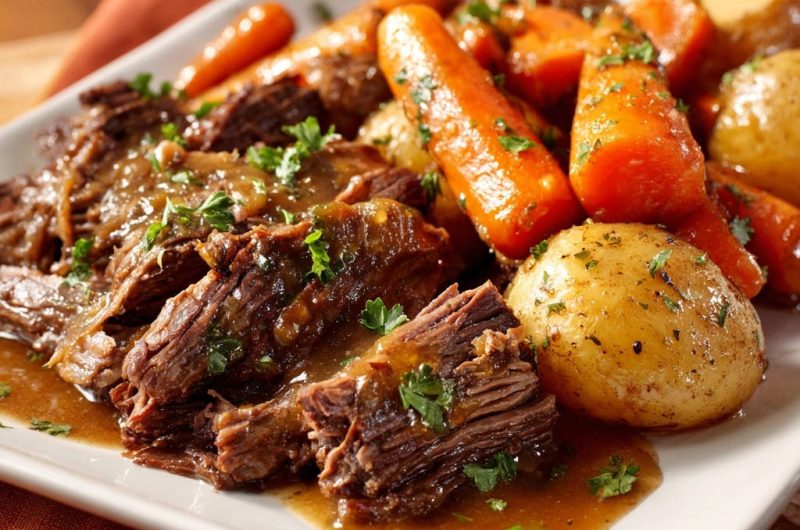
Pot Roast
Course: Main CourseCuisine: AmericanDifficulty: medium6
Servings20
minutes3
hours550
kcal200
minutesSay goodbye to tough, dry pot roast with this foolproof recipe. Learn the secret to achieving incredibly juicy, tender meat every single time, complete with rich gravy and vegetables.
Ingredients
3 pounds beef chuck roast
2 tablespoons olive oil
1 teaspoon salt
1/2 teaspoon black pepper
1 large yellow onion, chopped
4 cloves garlic, minced
4 cups beef broth
1 tablespoon all purpose flour
1.5 pounds small new potatoes, halved
1 pound baby carrots
2 tablespoons fresh parsley, chopped, for garnish
Directions
- Pat the beef chuck roast completely dry with paper towels. Season generously all over with salt and black pepper. This initial dryness and seasoning are important for a good sear.
- Heat the olive oil in a large Dutch oven or oven-safe pot over medium high heat. Once the oil is shimmering, carefully place the beef roast into the pot. Sear on all sides until deeply browned, about 3-4 minutes per side. This browning step adds immense flavor and helps create a crust that locks in juices during the slow cooking process. Remove the seared roast from the pot and set aside.
- Add the chopped onion to the pot, scraping up any browned bits from the bottom. Cook until softened, about 5 minutes. Add the minced garlic and cook for another minute until fragrant.
- Sprinkle the flour over the onions and garlic, stirring to coat. Cook for 1 minute to lightly toast the flour.
- Slowly pour in the beef broth, stirring constantly to prevent lumps. Bring the mixture to a simmer, scraping any remaining browned bits from the bottom of the pot. This creates a flavorful base for your gravy and helps tenderize the meat.
- Return the seared beef roast to the pot. Ensure the meat is mostly submerged in the liquid. If not, add a little more broth or water until it is. This is the crucial step to prevent dryness: keeping the meat enveloped in moist, simmering liquid for an extended period.
- Cover the pot tightly with a lid and transfer it to a preheated oven at 300 degrees Fahrenheit. Cook for 2 hours.
- After 2 hours, carefully remove the pot from the oven. Add the halved potatoes and baby carrots around the roast in the liquid. Gently stir to ensure they are partially submerged.
- Return the covered pot to the oven and continue to cook for another 1 hour 30 minutes, or until the beef is incredibly fork-tender and easily shreds apart. This long, slow cooking allows the connective tissues in the chuck roast to break down completely, transforming it into melt in your mouth perfection, never dry!
- Remove the pot from the oven. Carefully transfer the pot roast to a cutting board. Tent loosely with foil and let it rest for 10-15 minutes before shredding or slicing. This resting period allows the juices to redistribute throughout the meat, keeping it moist.
- While the meat rests, you can thicken the gravy if desired. Skim any excess fat from the surface of the liquid in the pot. Bring the liquid to a simmer on the stovetop and cook until it reaches your desired consistency.
- Serve the tender pot roast with the potatoes, carrots, and plenty of the rich gravy. Garnish with fresh chopped parsley.
Notes
- Ensure the beef chuck roast is mostly submerged in liquid during cooking for the most tender, juicy results.