Most home cooks have experienced the disappointment of a soup that looks great on the stove but turns into a thick, gummy porridge by the time it hits the bowl. It’s a common frustration with Italian Wedding Soup because the tiny pasta shapes act like sponges, soaking up every drop of precious broth. This version changes the game by focusing on a specific searing technique and a timed simmering method that keeps the orzo firm and the broth crystal clear.
The secret lies in the contrast between the deeply browned, savory turkey meatballs and the light, vibrant vegetables. Instead of a “dump and simmer” approach that results in gray meat and mushy starch, we’re building layers of flavor that stay distinct. You’ll get a restaurant-quality result that feels light enough for a spring lunch but hearty enough for a cozy dinner.
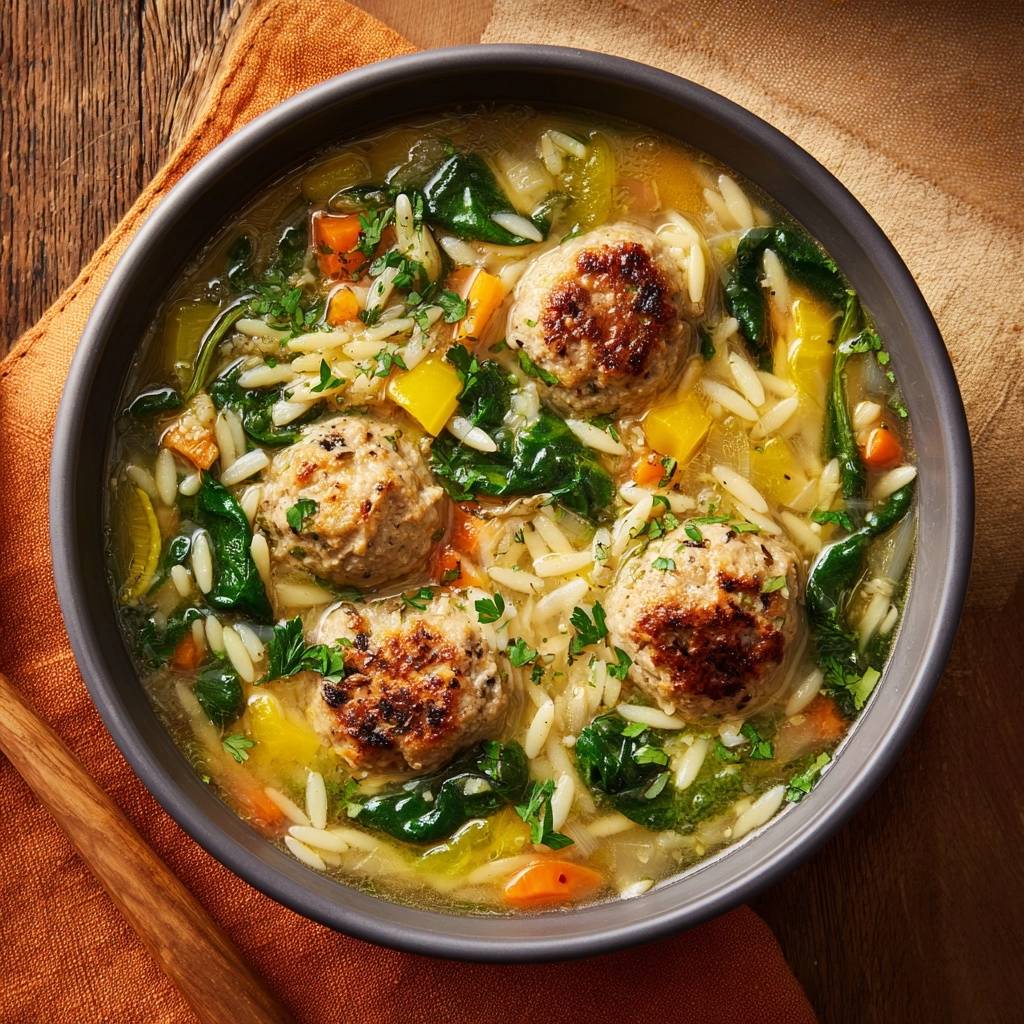
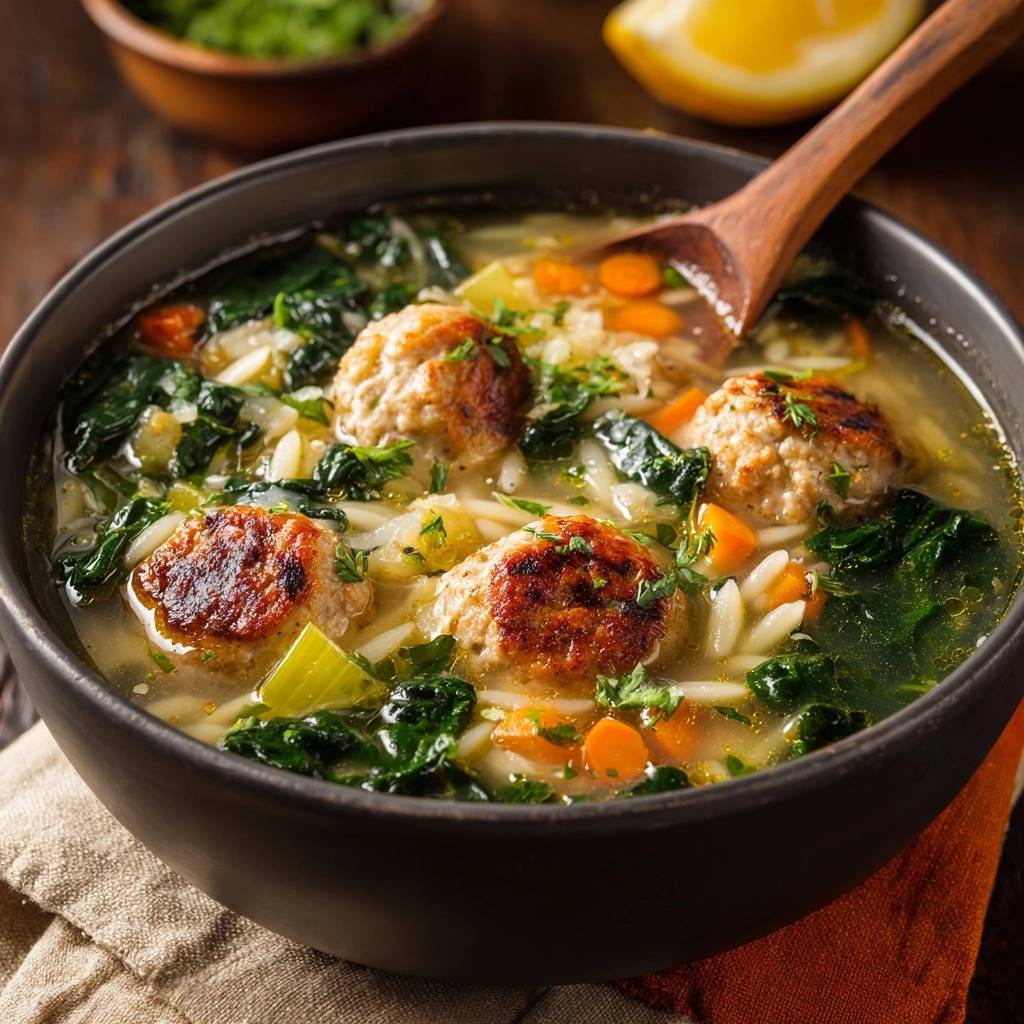
The real trick to success here is the “flavor crust” on the meatballs. By searing the turkey at a high heat before it ever touches the liquid, you lock in the juices and create a savory foundation for the entire pot. This step ensures your meatballs don’t just boil; they provide a rich, roasted depth that balances the bright notes of fresh spinach and parsley.
The Anatomy of a Non-Mushy Italian Wedding Soup
To keep this soup from becoming a starch-heavy mess, you have to think about the structural integrity of each ingredient. We use a “skyscraper” approach to building the dish, starting with a solid foundation of Maillard-reaction browning on the turkey. This creates a savory base that flavors the broth without requiring hours of simmering.
Following the meat, we build a vegetable fond by sautéing aromatics in the leftover oils. This process captures every bit of flavor from the bottom of the pot. Finally, the starch is added with surgical precision. By timing the orzo addition to the very end of the process, we ensure the pasta reaches the perfect al dente bite just as the soup is served.
Contrast this with traditional methods where the pasta boils alongside the meat for twenty minutes. In those cases, the pasta releases too much starch, clouding the liquid and losing its shape. Our method keeps the broth golden and translucent, allowing the colors of the carrots, peppers, and spinach to pop beautifully.
Essential Components for the Turkey Meatball Base
Choosing the right meat is the first step toward a better meatball. I always recommend 93% lean ground turkey because it offers the perfect balance. It has enough fat to stay moist during the sear but isn’t so greasy that it leaves an oily film on top of your soup. If you go too lean, the meatballs become rubbery; if you go too fatty, the broth loses its clean finish.
The binder is just as important as the meat. Panko breadcrumbs are superior to traditional fine crumbs here because they have a larger, airier texture. This creates “loft” inside the meatball, preventing it from becoming a dense, heavy lead ball. When combined with a beaten egg, the panko holds the moisture in place while keeping the texture light and tender.
Don’t skimp on the aromatics within the meat mixture itself. Freshly chopped parsley and high-quality, salty Parmesan cheese act as the primary seasoning pillars. Since turkey is naturally milder than beef or lamb, these ingredients provide the punchy, savory profile that defines a classic Italian Wedding Soup.
Selecting the Right Broth and Orzo
Since the broth is the star of the show, quality matters immensely. While standard chicken stock works, using a high-quality chicken bone broth provides a much silkier mouthfeel. The natural gelatin in bone broth gives the soup a body and richness that makes it feel like it’s been simmering on the stove all day long.
When it comes to the pasta, look for a high-protein semolina orzo. These varieties are more resilient and less likely to release excess starch into the liquid. This helps maintain that clear, golden appearance we’re aiming for. If you can find a bronze-cut orzo, even better, as it holds its shape beautifully during the final simmer.
Step-by-Step: Searing Turkey Meatballs for Maximum Flavor
When you’re ready to mix the meatballs, remember the “Cold Hands, Light Touch” rule. Turkey is stickier and more delicate than beef, so overworking the meat will lead to a tough, rubbery texture. Use your fingertips to gently toss the ingredients together until they’re just combined. If the meat starts to get warm from your hands, pop the bowl in the fridge for ten minutes.
Roll the mixture into small, one-inch spheres. Keeping them small is traditional for this soup, but it also ensures they cook through quickly during the final simmer. If you find the mixture sticking to your palms, lightly dampen your hands with cold water between every few meatballs to keep things moving smoothly.
The Importance of the Maillard Reaction
Heating your olive oil until it shimmers is vital before adding the meat. You want to hear a distinct sizzle the moment the turkey hits the pan. Don’t crowd the pot; if you add too many meatballs at once, the temperature will drop, and the meat will steam instead of sear. Work in batches if you need to.
You are looking for a deep, dark golden-brown crust on at least two sides of each meatball. This isn’t just about looks. That crust is the result of the Maillard reaction, which creates complex, savory flavors that a boiled meatball simply cannot match. This “flavor crust” will eventually season the broth as the meatballs finish cooking later on.
Building the Aromatic Base and Deglazing the Fond
Once the meatballs are seared and set aside, the bottom of your pot will be covered in brown bits called fond. This is concentrated flavor gold. Add your diced onion, carrots, and celery, but also include a yellow bell pepper. The pepper adds a subtle, unexpected sweetness that brightens the entire flavor profile of the soup.
As the vegetables cook, they release moisture. Use a wooden spoon to scrape up all those browned turkey bits from the bottom of the Dutch oven. This process, known as deglazing, incorporates the roasted meat flavor directly into the aromatic base. Continue sautéing until the onions are translucent and the carrots have softened slightly.
The Precision Simmer: Timing the Orzo and Spinach
This is the most critical phase of the recipe. Once your broth reaches a vigorous rolling boil, drop in the orzo and set a timer for exactly five minutes. This initial boil starts the cooking process for the pasta without allowing it to sit in the hot liquid long enough to become bloated. Keep the heat high during this window.
After five minutes, drop the heat to medium and return the meatballs to the pot, along with any juices that collected on the plate. Toss in the fresh baby spinach and simmer for just four more minutes. This specific timing allows the meatballs to reach a safe internal temperature and the spinach to wilt while the orzo finishes to a perfect al dente.
For consistently tender meatballs, check out this guide to classic meatballs.
Remove the pot from the heat immediately after those four minutes are up. Carry-over cooking is a real factor here; the soup is so hot that the pasta will continue to soften even after the flame is off. Serving it right away ensures the broth stays thin and the pasta maintains its bite.
Troubleshooting Common Italian Wedding Soup Pitfalls
If you find your soup has “Thirsty Pasta” syndrome—where the orzo has absorbed too much liquid after sitting—don’t panic. Simply add a splash of hot broth or water when reheating to loosen it back up. To avoid this entirely, only cook as much pasta as you plan to eat in one sitting.
If your meatballs are falling apart, it’s usually because they weren’t seared long enough or the mixture was too wet. Ensure your pan is hot enough to create that initial crust, which acts like a structural shell. If the broth tastes a bit flat, a pinch of salt or a tiny squeeze of lemon juice can wake up the flavors instantly.
Flavor Variations and Ingredient Swaps
While baby spinach is the classic choice for convenience, you can easily swap it for escarole or chopped kale. If you use kale, add it at the same time as the orzo, as it needs a few extra minutes to soften compared to delicate spinach. Escarole provides a lovely, slightly bitter edge that cuts through the richness of the Parmesan.
For those avoiding gluten, a gluten-free orzo or even pearl couscous can work well, though cooking times may vary. If you want a brighter, more Mediterranean vibe, whisk a teaspoon of fresh lemon zest into the meatball mixture. It adds a citrusy lift that pairs beautifully with the turkey and parsley.
Make-Ahead Strategies and Storage Logistics
If you are a meal prepper, the best way to handle this soup is to store the components separately. Cook the meatballs and the vegetable broth base as directed, but boil the orzo in a separate pot of water. Store the cooked pasta in its own container with a drizzle of olive oil to keep it from sticking.
When you’re ready to eat, combine a portion of the soup and a portion of the pasta in a bowl and microwave or heat on the stove. This prevents the orzo from sitting in the liquid for days and turning into mush. The meatballs themselves freeze beautifully on a baking sheet before being transferred to a freezer bag for up to three months.
What to Serve with Italian Wedding Soup
This soup is a complete meal on its own, but a few well-chosen sides can make it feel like a feast. A thick slice of toasted sourdough is perfect for soaking up the last bits of broth. The tanginess of the bread complements the savory turkey and salty cheese perfectly.
If you want something fresh, a bitter radicchio or arugula salad with a simple lemon vinaigrette provides a great textural contrast. Avoid serving this with heavy pasta dishes or rice, as the orzo already provides plenty of starch. Focus on items that offer crunch or acidity to balance the warm, comforting nature of the soup.
Expert Tips for Success
Firstly, a heavy-bottomed Dutch oven is your best friend for this recipe. It holds heat much better than thin stainless steel, which is essential for getting that deep sear on the turkey without burning the bottom of the pot. Even heat distribution means your vegetables will soften uniformly rather than scorching in the corners.
Secondly, try the “Ice Water” trick when rolling your meatballs. Keep a small bowl of ice water nearby and dip your fingers in it occasionally. The cold temperature prevents the turkey fat from melting and sticking to your skin, allowing you to roll perfectly smooth spheres every time without the mess.
Thirdly, never rinse your orzo before adding it to the soup. You want that tiny bit of surface starch to help the broth cling to the pasta, but you don’t want so much that it clouds the soup. Adding it dry directly to the boiling broth is the best way to control the final texture.
Finally, always finish each bowl with a drizzle of high-quality extra virgin olive oil. A “finishing oil” has a peppery, fruity flavor that disappears if you cook with it, but shines when drizzled over the hot soup. It adds a layer of luxury and a beautiful sheen to the surface of the broth.
Frequently Asked Questions
Can I use ground chicken instead of turkey?
Yes, ground chicken is an excellent substitute for turkey. However, try to find ground chicken that includes some dark meat rather than just 100% breast meat. Chicken breast can dry out very quickly during the searing process, whereas a blend will stay juicy and tender inside the soup.
Why is my broth cloudy?
Cloudy broth usually happens for two reasons: either the pasta was overcooked and released too much starch, or the meatballs weren’t seared properly. If you don’t get a good crust on the meat, the exterior can “slough off” into the liquid as it simmers. Stick to the timed boiling method to keep the liquid clear.
Can I cook the orzo separately?
You certainly can. Cooking the orzo in a separate pot of salted water and adding it to the individual serving bowls is the best way to ensure the broth stays perfectly clear. The only downside is that the pasta won’t absorb as much of the savory soup flavor, but it’s a great trade-off if you plan on having leftovers.
How do I keep the spinach vibrant green?
The key to bright green spinach is the 4-minute rule. Spinach turns a dull, olive-drab color when it is overcooked. By adding it at the very end and removing the pot from the heat quickly, you flash-cook the leaves so they stay tender but retain their beautiful, fresh color.
Is this recipe freezer-friendly?
The meatballs and the broth base freeze very well, but the orzo does not. If you want to freeze this soup, I recommend making the recipe up to the point of adding the broth and meatballs, but leave the orzo out. Freeze the soup, then add fresh orzo when you thaw and reheat it on the stove.
Italian Wedding Soup
Course: Main CourseCuisine: Italian-AmericanDifficulty: medium4
servings20
minutes25
minutes410
kcal45
MinutesThis recipe solves the common problem of mushy pasta in Italian Wedding Soup. By searing the turkey meatballs for a deep crust and timing the orzo addition perfectly, you achieve a restaurant-quality soup with firm textures and rich flavors.
Ingredients
1 pound ground turkey (93% lean)
1/2 cup panko breadcrumbs
1/4 cup grated parmesan cheese
1 egg, beaten
3 tablespoons fresh parsley, finely chopped (divided)
1 teaspoon garlic powder
1/2 teaspoon dried oregano
1 teaspoon salt
1/2 teaspoon black pepper
3 tablespoons olive oil (divided)
1 medium yellow onion, diced
2 carrots, diced
2 stalks celery, diced
1 yellow bell pepper, diced
6 cups high-quality chicken bone broth
1 cup orzo pasta
4 cups fresh baby spinach
Directions
- In a large bowl, combine ground turkey, breadcrumbs, parmesan, egg, 2 tablespoons of parsley, garlic powder, oregano, salt, and pepper. Mix gently by hand until just combined; do not overwork the meat.
- Roll the mixture into 1-inch meatballs.
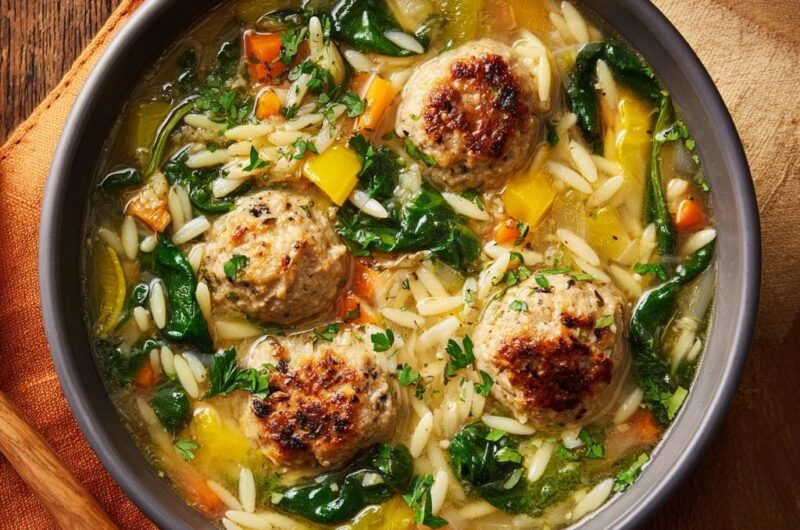
- Heat 2 tablespoons of olive oil in a large heavy-bottomed pot or Dutch oven over medium-high heat. Add the meatballs in a single layer (work in batches if necessary). Sear for 3-4 minutes per side until a deep, dark golden-brown crust forms. This “flavor crust” is essential for the visual and textural contrast shown in the image. Remove meatballs and set aside on a plate.
- In the same pot, add the remaining 1 tablespoon of olive oil. Add the onion, carrots, celery, and yellow bell pepper. Saute for 6-7 minutes, scraping the browned bits (fond) from the bottom of the pot until the vegetables are softened.
- Pour in the chicken broth and bring to a vigorous rolling boil.
- Add the orzo pasta to the boiling broth. Cook for exactly 5 minutes.
- Reduce the heat to medium. Return the seared meatballs (and any accumulated juices) to the pot and add the fresh baby spinach.
- Simmer for an additional 4 minutes. This specific window allows the meatballs to finish cooking through and the spinach to wilt into the broth without the orzo over-expanding or becoming mushy. The turkey is done when it reaches 165°F (74°C) in the thickest part.
- Remove from heat immediately. Garnish with the remaining tablespoon of fresh parsley and a drizzle of olive oil. Serve immediately to maintain the integrity of the broth and the firm texture of the pasta.
Notes
- To prevent the orzo from absorbing too much liquid, serve the soup immediately after the final simmer. Searing the meatballs is essential for the flavor crust and visual contrast.