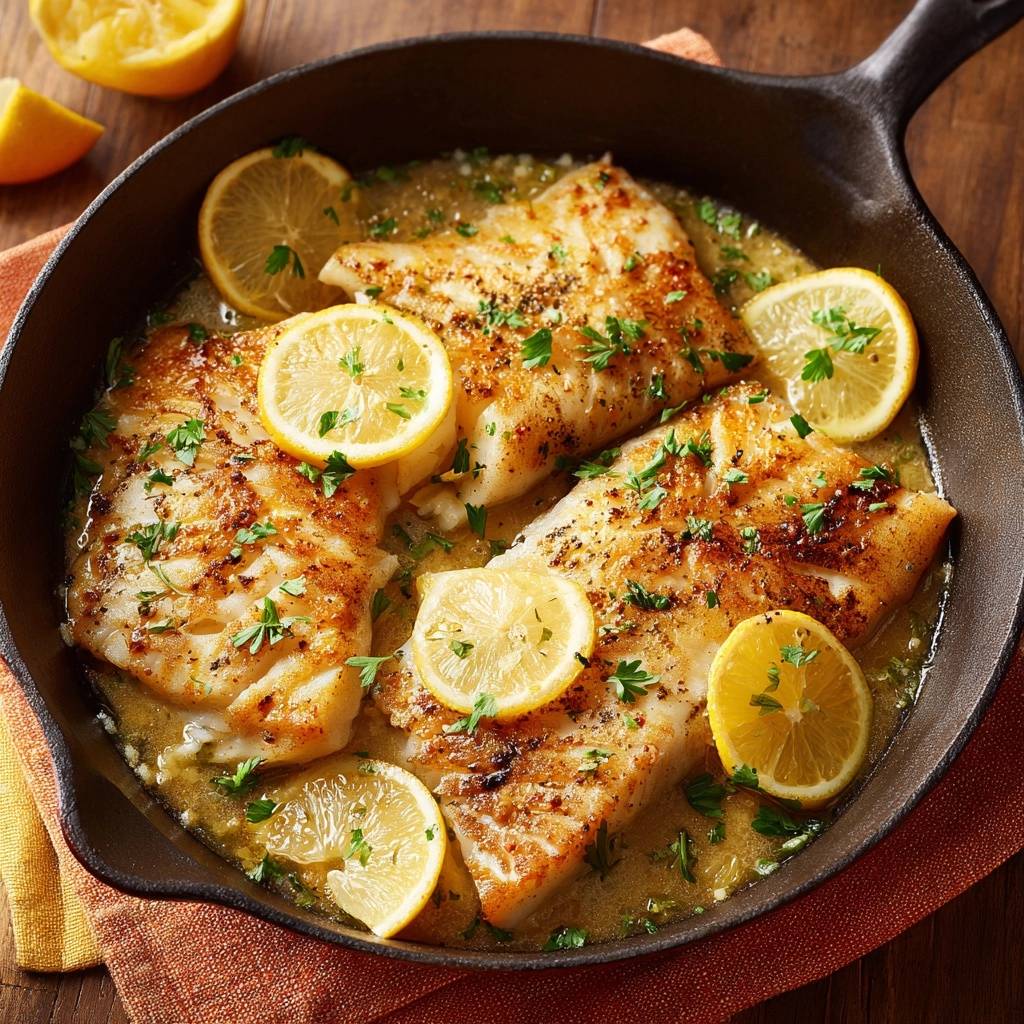
Why This Pan-Seared Cod Succeeds Every Time
Nothing ruins a good fish dinner faster than fillets tearing apart and sticking to the pan. You’ve been there, right? That frustrating tug where the cod breaks into flakes before it’s even cooked. But this lemon butter pan-seared cod flips the script with a screaming-hot skillet and bone-dry fish for crispy edges that release perfectly every time.
Therefore, you get restaurant-quality results in under 15 minutes. The glossy lemon butter sauce clings to flaky, golden cod without a hint of gluey mess. It’s fresh, bright, and so simple you’ll wonder why you ever ordered takeout.
Here’s the expertise kicker: pat the cod super dry before seasoning. That removes surface moisture, so the heat creates an instant non-stick vapor barrier. Oh man, the first bite melts in your mouth with that crisp exterior giving way to tender flakes.
Key Ingredients for Lemon Butter Pan-Seared Cod
Fresh cod fillets form the star, patted super dry to kick off the Maillard reaction for those crispy edges. In addition, unsalted butter lets you control the salt in the sauce, while it melts into a rich emulsion. Fresh parsley adds a herbaceous lift that dried versions just can’t match; chop it right before use for maximum brightness.
Olive oil handles the high smoke point for the initial sear. Meanwhile, one lemon’s juice brings sharp acidity to balance the cod’s mildness, and thin slices from the second infuse subtle flavor plus visual pop. Salt and pepper go on early so they penetrate via osmosis.
Grab wild-caught cod if you can; it tastes cleaner and firmer. Therefore, your pan sauce turns glossy and luxurious without breaking.
Selecting Fresh Cod Fillets
Look for 1-inch thick, skinless fillets around 6 ounces each. They cook evenly without curling. Press the flesh; it should spring back firm, and smell ocean-fresh, never fishy or ammonia-like.
Skinless works best here since it promotes even crisping. However, if yours has skin, score it lightly to prevent shrinking.
Butter and Citrus Precision
Add butter in cold pats after flipping; it melts steadily into the hot pan for a stable emulsion that coats without separating. Lemon juice cuts the richness, while thin rounds release flavor gradually and look stunning scattered around.
Fresh juice beats bottled for vibrant zing. Therefore, the cod stays moist and balanced.
Science of No-Stick Pan-Searing
The Leidenfrost effect rules here: a screaming-hot skillet turns the fish’s residual moisture into steam vapor, creating a barrier so nothing sticks. Dry cod ensures quick evaporation, leading to Maillard browning for nutty, crispy edges.
Proteins denature at 145°F, yielding flaky texture. Then, butter basting emulsifies with lemon juice into a glossy sauce via gentle agitation. It’s physics you can taste.
Picture water droplets dancing on the hot pan without touching; that’s your cod. Therefore, no tearing, just perfection.
Hot Skillet Physics Explained
Preheat cast iron on medium-high for 3 full minutes until it smokes faintly. Add oil and butter; they shimmer instantly, signaling the non-stick zone. Cast iron retains heat like a champ, unlike thin pans.
However, test with a drop of water; it should skitter. That’s your green light.
Drying Fish for Crisp Release
Pat with paper towels until no moisture transfers; this prevents steaming. Salt draws out more water via osmosis, tightening proteins for better sear.
Rest 5 minutes post-salting. In addition, it amps up flavor penetration.
Equipment Choices for Perfect Lemon Butter Cod
Cast iron skillet reigns supreme for even heat retention; non-stick pans fail at high temps and scratch easily. Grab a thin metal fish spatula for gentle lifts without breaking flakes.
An instant-read thermometer confirms 145°F doneness. For budget picks, a $20 Lodge skillet works wonders. Olive oil in a spritz bottle prevents excess pooling.
Therefore, you avoid soggy results every time.
Step-by-Step: Searing Lemon Butter Pan-Seared Cod
Follow these phases for foolproof results. You’ll smell the butter browning and see golden edges form. Safety first: use a splatter screen for hot oil pops.
Phase 1: Drying and Seasoning Cod
Pat fillets super dry with paper towels, pressing firmly. Season both sides generously with salt and pepper. Rest 5 minutes so flavors sink in.
Phase 2: Skillet Preheat Ritual
Heat cast iron over medium-high for 3 minutes till smoking. Swirl in olive oil and 2 tbsp butter; it shimmers with nutty aroma. You’re ready.
Phase 3: Crisping Presentation Side
Lay cod presentation-side down. Cook undisturbed 3-4 minutes. Check golden, crisp edges; lift gently. If it resists, wait 30 seconds more. No poking.
Phase 4: Flipping and Butter Baste
Flip carefully. Add remaining butter, lemon juice, half the parsley. Spoon hot sauce over fish 1-2 minutes till opaque and flaky at 145°F.
Phase 5: Lemon Slices and Plating
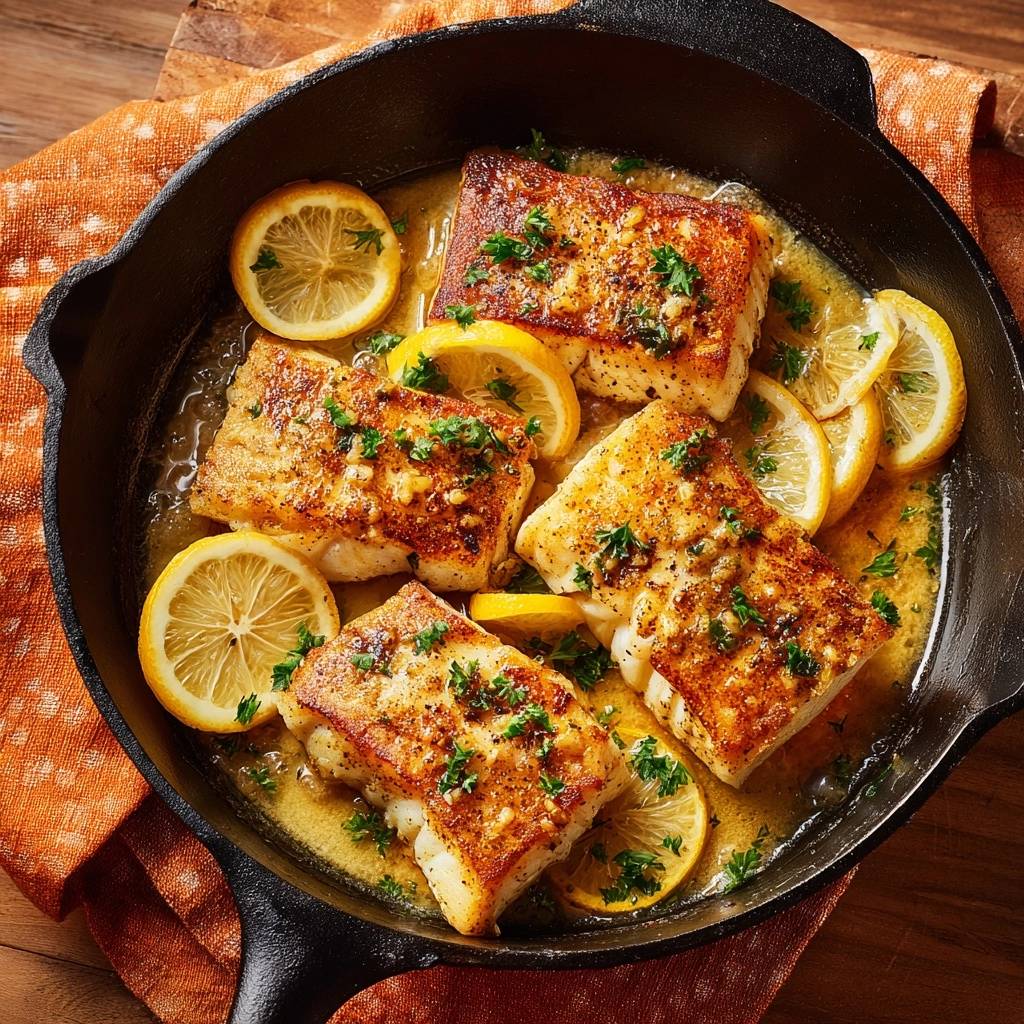
Scatter lemon rounds and parsley in the skillet. Swirl sauce to coat. Serve straight from the pan for rustic flair; rest 1 minute for juices to settle.
Avoiding Pitfalls in Pan-Seared Cod
Wet fish steams and tears; always pat dry first. Low heat causes sticking, so crank it high. Over-flipping breaks flakes, so commit to one turn.
For another great cod preparation, explore this recipe for crispy sesame crusted cod.
Under-season early, and it tastes bland. Therefore, salt generously upfront. Bust the myth: color doesn’t equal doneness; use 145°F.
Pro tip: if sauce splits, whisk in a splash of water off-heat.
Fixing Sticky Fillet Issues
Patience is key; wait for the easy lift after 30 seconds. If still stuck, drizzle more oil around edges. High heat fixes most woes.
Preventing Overcooked Dry Cod
Pull at 145°F; carryover heat finishes it to flaky perfection. Thick fillets need an extra minute per side. Thermometer trumps guesswork.
Flavor Twists on Lemon Butter Cod
Swap in garlic cloves for nutty depth; smash them before adding. Dill or thyme upgrades the herbs for earthier vibes. Capers bring briny pop without overpowering lemon.
Stir Dijon into the baste for silky emulsion. Dust with paprika post-sear for mild smoke. Vegan? Use plant-based butter; it works seamlessly.
Keep lemon central. Therefore, each twist stays fresh and bright.
For an even brighter citrus flavor, explore making lemon pepper fish.
Ideal Pairings for Lemon Butter Pan-Seared Cod
Crisp green beans steamed al dente cut through the richness. Roasted asparagus adds charry contrast. Quinoa pilaf soaks up that glossy sauce perfectly.
Garlic mashed potatoes make it hearty for four. Sauvignon Blanc’s acidity matches the lemon zing. Or try a simple arugula salad for peppery bite.
Round Out Your Meal
To complement your pan-seared cod, consider these dishes that bring out the best in simple, fresh flavors.
- For a touch of sweetness and warmth, try these candied sweet potatoes with pecans, offering a rich, comforting contrast.
- To add a different texture and hearty grain to your plate, prepare this golden skillet cornbread, using a method that keeps it from being crumbly.
One fillet per person leaves room for seconds.
Prep Ahead for Lemon Butter Cod
Dry and season fillets a day early; fridge them uncovered to firm up. Squeeze lemon juice fresh, but slice rounds just before cooking for zing.
Freeze raw cod airtight up to 3 months; thaw overnight in fridge. Reheat leftovers in a 350°F oven on a wire rack to crisp without sogginess. Batch sear for meal prep.
Pro tip: portion sauce separately to avoid mush.
Troubleshooting Lemon Butter Pan-Seared Cod
FAQ
How do I store leftovers of Lemon Butter Pan-Seared Cod?
Cool completely, then refrigerate in an airtight container up to 3 days. The flaky texture holds well. For freezing, wrap individual fillets in foil with sauce; thaw overnight in fridge and reheat gently in a 350°F oven for 10 minutes to restore crispness. Avoid microwaving; it turns cod rubbery.
Why did my cod stick to the pan?
Most likely, the fish wasn’t patted super dry or the skillet wasn’t hot enough. Moisture causes steaming instead of searing, gluing it down. Fix it next time by preheating 3 full minutes till smoking, and use paper towels aggressively. If it resists lifting, wait 30 seconds more; patience wins.
Can I substitute ingredients in Lemon Butter Pan-Seared Cod?
Swap cod for halibut or tilapia; just adjust cook time for thickness. No fresh parsley? Use 1 tbsp dried, but add it earlier. Vegan butter or olive oil works for the baste. Skip lemon slices if needed, but juice is key for balance; lime subs okay in a pinch.
Why is my cod dry or overcooked?
Pulling too late past 145°F dries it out, plus carryover cooking adds 5°F more. Use an instant thermometer in the thickest part. Thinner fillets cook faster, so check early. Basting keeps moisture in; under 2 minutes on the second side prevents toughness.
How do I know when the pan is hot enough?
After 3 minutes on medium-high, it smokes faintly and a water drop dances without evaporating instantly (Leidenfrost test). Oil and butter should shimmer and foam on contact. If not, wait; low heat leads to sticking and pale results.
Can I make the sauce thicker?
Whisk in an extra pat of cold butter off-heat or swirl longer to emulsify. A teaspoon of cornstarch slurry (mixed with lemon juice) thickens without dulling flavor. Reduce juice slightly next time for natural gloss.
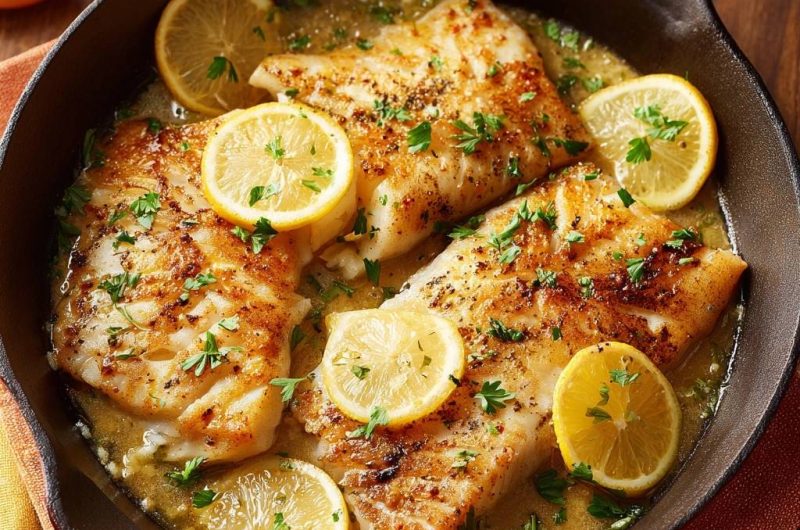
Pan-Seared Cod
Course: Main CourseCuisine: AmericanDifficulty: easy4
servings5
minutes10
minutes350
kcal15
MinutesSick of delicate fish fillets tearing apart or gluing to the pan? This dead-simple technique uses a screaming-hot skillet and dry fish for a perfect release every time, yielding crispy-edged, flaky cod in lemon butter sauce.
Ingredients
4 cod fillets (6 oz each), patted super dry
4 tbsp unsalted butter, divided
2 lemons (juice one, slice the other into thin rounds)
1/4 cup fresh parsley, chopped
1 tsp black pepper
Salt to taste
1 tbsp olive oil
Directions
- Pat cod fillets completely dry with paper towels. This removes moisture that causes sticking. Season both sides generously with salt and pepper.
- Heat a cast iron skillet over medium-high for 3 full minutes until smoking hot. Add olive oil and 2 tbsp butter; swirl to coat. The high heat creates a non-stick barrier as fat shimmers.
- Place cod presentation-side down. Cook undisturbed for 3-4 minutes until edges crisp and golden and fish releases easily (lift gently with spatula; if it resists, wait 30 seconds). The dry fish + hot fat combo guarantees no sticking.
- Flip carefully. Add remaining 2 tbsp butter, lemon juice, and half the parsley. Baste fish 1-2 minutes until opaque and flaky (internal temp 145F).
- Scatter lemon slices and remaining parsley over and around the fish in the skillet. Swirl the glossy pan sauce to coat everything. Serve directly from the skillet for a rustic presentation.
Notes
- Pat fish super dry and use a screaming-hot skillet for guaranteed no-stick results. Serve directly from the skillet for rustic presentation.