
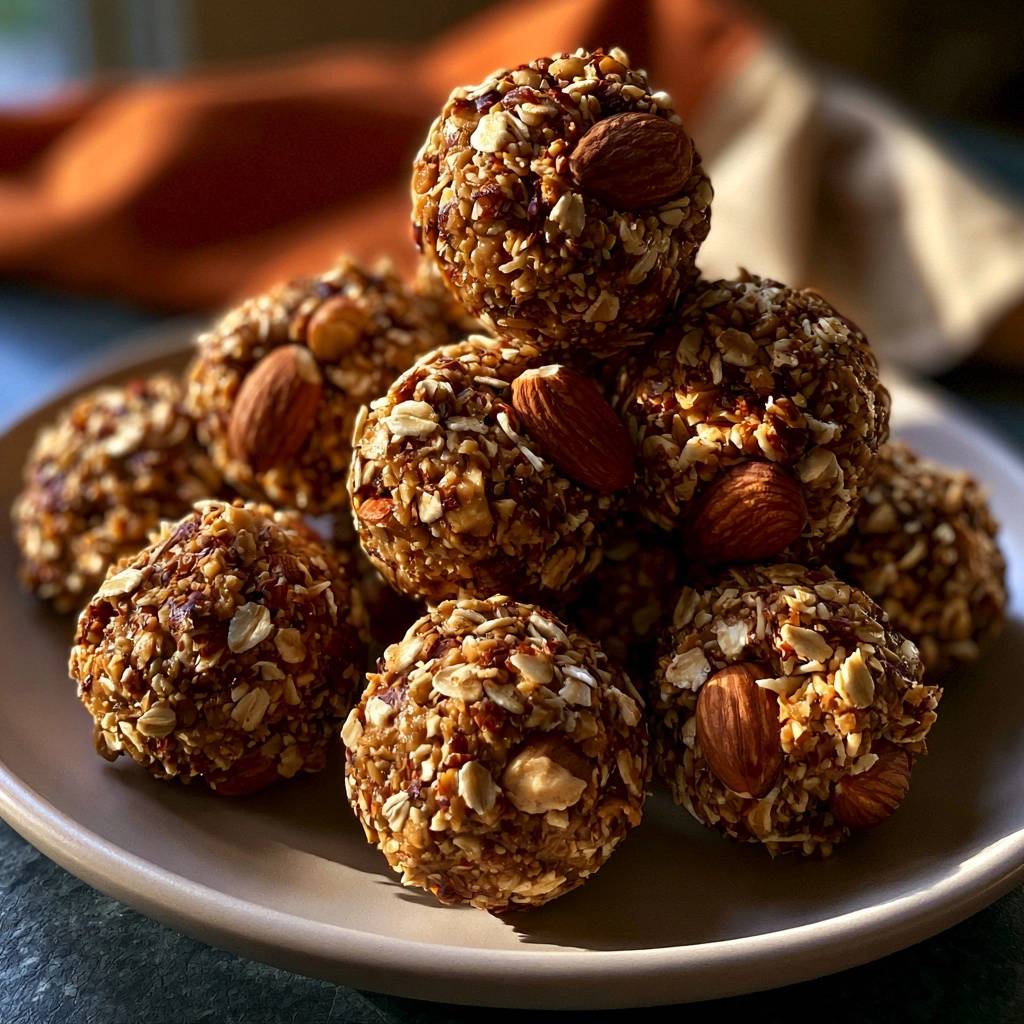
We’ve all been there. You spend fifteen minutes mixing up a batch of healthy snacks, only to have them disintegrate into a pile of dry oats the moment you take a bite. It’s frustrating when a recipe looks great in a photo but acts like loose granola in your hand. Most homemade energy bites fail because the dry oats act like tiny sponges, sucking every drop of moisture out of the binders until the whole thing turns into a brittle mess.
The secret to a snack that actually holds its shape lies in the specific binding ratio of dates to nut butter. You aren’t just looking for flavor; you’re looking for structural integrity. By using a combination of fiber-rich dates and creamy almond butter, you create a dense, chewy matrix that stays firm even when you’re on the go. It’s the difference between a crumbly disappointment and a professional-grade snack.
I’ve found that the real trick to success is the “double-bind” method. While many recipes rely solely on liquid sweeteners, this version uses minced Medjool dates to act as a natural, sticky glue. This creates a heavy dough that grips the oats rather than just coating them. If you’ve struggled with bites that fall apart, this specific ratio of wet-to-dry ingredients is your new best friend.
The Science of Structural Integrity in No-Bake Snacks
Creating a no-bake snack is essentially an exercise in food physics. You’re dealing with “tack,” which is the ability of a substance to stick to a surface upon contact. In this recipe, the almond butter and honey provide initial stickiness, but they lack the long-term grip needed to hold heavy oats together. As the oats sit, they undergo a process called hydration, where they pull moisture from their surroundings. If your binder is too thin, the oats will win the tug-of-war, leaving the mixture dry and prone to shattering.
To combat this, we build a “sticky matrix.” This is a dense environment where the binders are thick enough to resist being fully absorbed by the oats. By incorporating minced dates, you’re adding long-chain sugars and fiber that create a physical web around the dry ingredients. This web remains flexible enough to be chewy but strong enough to maintain a spherical shape under pressure. It’s about balancing the hydrophilic nature of the oats with a fat-heavy, sugar-dense adhesive.
Why Dates and Almond Butter are Non-Negotiable
Medjool dates are the MVP of the snack world because they function as a natural, whole-food glue. Unlike honey or maple syrup, which are purely liquid, dates contain fruit solids that provide “grip.” When you mince them into a paste, they create a tacky foundation that liquid sweeteners simply can’t match. They offer a structural density that keeps the bites from feeling oily or slippery in your hands.

Almond butter plays a different role. It provides the healthy fats that stabilize the mixture at room temperature. Because almond butter is semi-solid when cool, it acts as a mortar between the “bricks” of oats and chopped nuts. When you combine the fibrous stickiness of dates with the creamy stability of almond butter, you get a snack that feels substantial and stays put.
The Role of Ground Flaxseed as a Moisture Regulator
Ground flaxseed is often overlooked, but it’s the secret weapon for texture control. Flax is highly hydrophilic, meaning it loves to soak up liquid. In this recipe, it acts as a secondary binder that catches any excess oil from the almond butter. This prevents the bites from feeling greasy on your fingers while simultaneously helping the oats stay hydrated without becoming mushy.
Think of flaxseed as the stabilizer. It fills the tiny gaps between the larger oat flakes, creating a more solid internal structure. Without it, the almond butter might seep to the bottom of the bite, leading to an uneven texture. With it, every mouthful is consistent, dense, and perfectly balanced between moisture and crunch.
Essential Components for Almond Oat Energy Bites
Quality matters when you aren’t cooking the ingredients. Since there’s no heat to mellow out flavors or change textures, what you put in the bowl is exactly what you’ll taste. You want ingredients that offer a variety of textures—soft, chewy, and crunchy—to keep the palate engaged. Choosing the right version of each staple ensures the bites don’t just taste good, but also hold their form during a busy commute.
Selecting the Right Oats: Rolled vs. Instant
You must use old-fashioned rolled oats for this recipe. They provide the “skyscraper” texture—a sturdy, reliable framework that gives the bites their height and bite. Rolled oats have been steamed and flattened, but they retain enough structure to stay distinct within the dough. They offer a satisfying chew that makes the snack feel like a real meal rather than a soft paste.
Avoid instant oats at all costs. They are processed to be thin and porous, which means they’ll turn into a gummy, mushy paste the moment they touch the almond butter. On the other end of the spectrum, steel-cut oats are far too hard. They’re like eating pebbles if they aren’t boiled first. Stick to rolled oats for that perfect balance of softness and structural strength.
Nut Butter Consistency and Oil Separation
Natural almond butter is fantastic, but it often comes with a thick layer of oil on top. Before you measure it out, you must stir that oil back in completely. If you use the dry, chalky butter from the bottom of the jar, your bites will be crumbly. If you use the oily stuff from the top, they’ll be a greasy mess that won’t hold a shape. The goal is a smooth, emulsified consistency.
If you prefer a “no-stir” variety, that works too, as it usually contains stabilizers that keep the texture consistent. However, natural almond butter often has a deeper, roasted flavor that shines through the honey and cinnamon. Just ensure it’s creamy and pourable before it hits the mixing bowl to guarantee the binding ratio stays exactly where it needs to be.
Medjool vs. Deglet Noor Dates
Medjool dates are the gold standard here because they are soft, jammy, and easy to mash. They have a high moisture content that makes them blend seamlessly into the almond butter. Deglet Noor dates are smaller and significantly firmer. If you use them, you’ll likely end up with hard chunks in your bites rather than a smooth adhesive base.
If your dates feel a bit tough or have been sitting in the pantry for a while, don’t worry. You can revive them by soaking them in warm water for about ten minutes. Pat them dry thoroughly before mincing. This extra step ensures they are pliable enough to integrate into the dough, providing that essential “tack” that keeps the oats from falling away.
Step-by-Step: Building the Perfect Almond Oat Matrix
Making these bites is a tactile experience. You aren’t just tossing things in a bowl; you’re building a composite material. The order in which you combine ingredients determines whether the final product is a cohesive snack or a bowl of loose debris. Pay attention to how the mixture feels at each stage, as your hands are the best judge of when the dough is ready.
Phase 1: Creating the Primary Adhesive Base
Start by mashing the almond butter, honey, minced dates, vanilla, and cinnamon together. Don’t rush this part. You want to use a sturdy spatula or even the back of a large spoon to work the dates into the liquids. You’re looking for a thick, dark, and incredibly sticky paste. This is your structural tack, the foundation that will hold everything else in place.
If you see large lumps of dates, keep mashing. The more homogenous this base is, the more evenly the oats will be coated. You’ll know it’s ready when the mixture looks like a thick caramel and offers significant resistance when you try to stir it. This concentrated stickiness is what prevents the “crumbly mess” syndrome later on.
Phase 2: Incorporating Solids and Hydrating the Oats
Once your base is ready, fold in the rolled oats, chopped almonds, and ground flaxseed. This is where the dough becomes heavy. You’ll need to use a bit of muscle to ensure every single oat flake is touched by the adhesive base. If you see any white, dry patches of oats, keep folding. The flaxseed will immediately start absorbing excess moisture, making the dough feel even thicker.
The dough should feel slightly tacky to the touch but shouldn’t leave a thick residue on your fingers. It should be resistant to the spatula, almost like a very stiff cookie dough. If it feels too loose or falls apart when you try to clump it together with the spatula, you may need to mix it for another minute to ensure the flax and oats are properly integrated.
Phase 3: The Critical Stabilization Chill
This is the step most people skip, and it’s why their bites fail. Place the bowl in the refrigerator for at least 20 minutes. During this time, the fats in the almond butter begin to seize and firm up. Simultaneously, the oats and flaxseed continue to hydrate, softening slightly while locking into the binder. This rest period stabilizes the entire matrix.
When you take the dough out, it should feel much firmer than when it went in. This chill makes the rolling process significantly cleaner. Instead of the dough sticking to your palms and creating a mess, it will hold its shape, allowing you to create smooth, tight spheres. It’s a small time investment that pays off in professional-looking results.
Technique: The “Squeeze and Roll” Method
Shaping the bites is about more than just making them round. You want to eliminate any internal air pockets that could cause the bite to split when you sink your teeth into it. A dense bite is a stable bite. By using the right hand mechanics, you ensure the ingredients are compressed into a solid unit that can withstand being tossed into a gym bag or lunchbox.
Compressing the Dough for Maximum Density
Don’t start by rolling. First, scoop about two tablespoons of dough and squeeze it firmly in your closed fist. You should feel the ingredients compress. This action forces the air out and pushes the sticky binder into every nook and cranny of the oats. It’s the most important movement for ensuring the bites don’t crumble later.
After you’ve squeezed it into a rough lump, then you can roll it between your palms to smooth out the edges. You’ll notice that the bite feels much heavier and more solid than if you had just rolled it loosely. This density is what gives the snack its satisfying, fudge-like texture and keeps it from falling apart mid-bite.
Embedding the Whole Almond Garnish
Adding the whole almond on top isn’t just for looks; it adds a final hit of crunch. To make sure it stays put, use the “pressure-set” technique. Instead of just resting the almond on top, press it firmly into the side or top of the ball. You want the almond to be slightly recessed into the oat matrix, which increases the surface area contact with the sticky binder.
As you press the almond in, the surrounding dough might bulge slightly. Just give the ball a quick, gentle roll to smooth it back out. This ensures the almond is essentially “locked” into the structure. Once the bites chill and the sugars set, that almond won’t be going anywhere, providing a perfect visual and textural finish.
Customizing Your Almond Oat Energy Bites
Once you’ve mastered the base recipe, you can start experimenting with different flavors. The key is to maintain the dry-to-wet ratio. If you add something dry, you must remove an equal amount of oats or nuts. If you add something wet, you’ll need more flaxseed to compensate. As long as you keep the “sticky matrix” intact, the possibilities are endless.
Texture Swaps: Seeds and Cacao Nibs
If you want a different kind of crunch, try replacing the half-cup of chopped almonds with chia seeds, hemp hearts, or cacao nibs. Cacao nibs add a sophisticated bitterness that pairs beautifully with the sweetness of the dates. Chia seeds add a tiny, poppy crunch and even more binding power, though they will make the bites slightly thirstier, so you might need an extra teaspoon of honey.
Just remember to keep the total volume of “add-ins” the same. If you go overboard with seeds and nibs without increasing the almond butter or dates, the bites will lose their structural integrity. Balance is everything. A mix of chopped walnuts and mini chocolate chips is another fantastic variation that keeps the kids happy while maintaining that dense, chewy bite.
Natural Flavor Enhancements
You can change the entire profile of these bites with just a few pinches of dry spices. A bit of sea salt is highly recommended, as it cuts through the richness of the almond butter and makes the dates taste more like caramel. A teaspoon of espresso powder can turn these into a morning pick-me-up, providing a deep, roasted flavor that complements the almonds perfectly.
For a brighter note, try adding fresh orange zest. The oils in the zest provide a massive hit of flavor without changing the moisture content of the dough. Avoid using liquid extracts other than vanilla, as too much liquid can break down the “tack” of the dates. Stick to dry spices or zests to keep your structural integrity at its peak.
Storage Solutions and Portability Tips
How you store these bites is just as important as how you make them. Because they rely on fats and sugars to stay together, temperature plays a huge role in their texture. A bite that is perfectly firm in the fridge might become a bit soft if left in a hot car. Understanding how to “cure” and store them will ensure they are always ready when hunger strikes.
The Final Set: Why One Hour Matters
After you’ve shaped your bites, they need one final chill in the refrigerator for at least an hour. Think of this as the “curing” process. The sugars in the honey and dates settle, and the almond butter fully firms up around the oats. This final set is what transforms the dough from a soft mixture into a solid, portable snack.
If you try to eat them right away, they might feel a bit tacky or soft. Giving them that hour to rest allows the flavors to meld and the texture to reach its peak density. Once they’ve set, they become much more resilient to temperature changes, making them much easier to pack for a hike or a long day at the office.
Freezing for Long-Term Meal Prep
These bites freeze exceptionally well, making them perfect for bulk meal prep. To prevent them from sticking together, flash-freeze them on a tray for an hour before transferring them to a silicone bag or airtight container. They will stay fresh in the freezer for up to three months, though they rarely last that long once people find out where they’re hidden.
You can actually eat them straight from the freezer if you like a very firm, almost candy-like texture. If you prefer them softer, just take one out and let it sit at room temperature for ten minutes. They won’t get soggy as they thaw because there’s very little water content in the recipe, ensuring the crunch of the almonds remains perfectly intact.
Troubleshooting Common Texture Issues
Even with a perfect recipe, variables like the humidity in your kitchen or the specific brand of almond butter can affect the outcome. Don’t panic if the dough doesn’t look exactly right on the first try. Most texture issues are easily fixed with a quick adjustment. The goal is always to return to that “tacky, heavy dough” state before you start rolling.
What to Do if the Mixture is Too Brittle
If your dough is crumbling and won’t hold a ball shape even after squeezing, it’s likely too dry. This can happen if your dates were a bit old or your almond butter was from the bottom of the jar. To fix this, add a teaspoon of warm water or an extra drizzle of honey. Work it in thoroughly with your spatula.
Add moisture very slowly—one teaspoon at a time. You want just enough to restore the “tack” without making the dough sticky. Usually, a tiny bit of extra liquid is all it takes to get the oats to behave. Once the dough feels heavy and sticks to itself, you’re ready to proceed with the chilling and rolling steps.
Fixing a Greasy or Overly Soft Dough
If the dough feels oily or won’t hold its shape even after the 20-minute fridge rest, you have too much moisture or fat. This often happens with very runny, natural almond butters. The solution is to add a tablespoon of additional ground flaxseed or a few tablespoons of oat flour (just pulse some oats in a blender).
These dry additions will act like a sponge, pulling in the excess oil and firming up the matrix. Mix it in and let it sit for five minutes to allow the new ingredients to hydrate. You’ll see the dough transform from a soft paste into a workable, dense material that rolls beautifully without leaving a greasy film on your hands.
Preventing the Whole Almond from Falling Off
If your decorative almonds are popping off after the bites have chilled, it’s usually because they weren’t pressed in deep enough. Next time, try the “dimple” method. Use your thumb to create a small indentation in the ball before you place the almond. Then, nestle the nut into that dimple and squeeze the ball slightly to lock it in.
This increases the surface area of the almond that is in contact with the sticky dough. You can also try lightly dampening the almond with a tiny drop of honey before pressing it in, which acts as an extra bit of glue. With the right pressure, that almond will stay perfectly embedded, providing that signature look and crunch in every single bite.
How long do these energy bites stay fresh?
When stored in an airtight container in the refrigerator, these bites will stay fresh and maintain their ideal texture for up to two weeks. The fats in the almond butter and the sugars in the dates act as natural preservatives. If you leave them at room temperature, they are best consumed within 3 to 5 days, as they may become softer over time. For the best experience, keep them chilled until you’re ready to head out the door.
Why are my energy bites falling apart?
The most common reason for crumbling is a lack of “tack” or insufficient compression. If you skipped the Medjool dates or used a very dry nut butter, there isn’t enough glue to hold the large oat flakes together. Additionally, you must squeeze the dough firmly in your fist before rolling it into a ball. This compression removes air pockets and forces the binders to coat every surface. If they are still falling apart, try adding one teaspoon of honey or warm water to the mix.
Can I use a different nut butter?
Yes, you can substitute the almond butter with peanut butter, cashew butter, or even sunflower seed butter for a nut-free option. However, keep in mind that the consistency of the butter matters more than the flavor. Ensure whatever substitute you use is creamy and well-stirred. If using a very thick, processed peanut butter, you might need a tiny bit more liquid sweetener to keep the dough pliable enough to roll without cracking.
Can I make these without dates?
While you can technically use more honey or maple syrup, the dates provide a specific structural fiber that liquids lack. If you must skip the dates, I recommend replacing them with a half-cup of raisins or dried cranberries that have been pulsed in a food processor until they form a paste. This maintains the “sticky matrix” required to keep the oats from becoming a pile of crumbs. Without a fruit paste, the bites will be significantly more prone to falling apart.
Are these energy bites freezer-friendly?
Absolutely! These are perfect for long-term storage. Flash-freeze them on a baking sheet for one hour so they don’t stick together, then transfer them to a freezer-safe bag. They will last for up to three months. You don’t even need to thaw them; many people prefer the extra-firm, chewy texture they have straight from the freezer. If you do want them softer, just five to ten minutes on the counter is plenty of time for them to reach the perfect consistency.
Can I use steel-cut or instant oats instead?
It is highly recommended to stick with old-fashioned rolled oats. Steel-cut oats are unprocessed and extremely hard; they will feel like eating small rocks in a no-bake recipe. Instant oats are too thin and powdery, which will turn your energy bites into a soft, gummy paste rather than a textured snack. Rolled oats provide the perfect middle ground, offering a satisfying chew and the structural strength needed to keep the bites round and firm.

Almond Oat Energy Bites
Course: SnackCuisine: AmericanDifficulty: easy12
bites15
minutes15
Minutes165
kcalAmerican
Ingredients
1 cup old fashioned rolled oats
1/2 cup creamy almond butter
1/4 cup honey or maple syrup
1/2 cup finely chopped raw almonds
1/2 cup Medjool dates, pitted and finely minced (or pulsed in a food processor)
1/4 cup ground flaxseed
1 teaspoon vanilla extract
1/2 teaspoon cinnamon
12 whole raw almonds for topping
Directions
- In a large mixing bowl, combine the almond butter, honey, minced dates, vanilla, and cinnamon. Use a sturdy spatula to mash and mix these together until they form a thick, sticky paste. The dates are essential for the structural “tack” shown in the image.
- Stir in the rolled oats, chopped almonds, and ground flaxseed. The flaxseed acts as a secondary binder, absorbing excess moisture to prevent the bites from becoming brittle or oily.
- Mix until the dough is heavy and well combined. If the mixture feels too soft to hold a shape, place the bowl in the refrigerator for 20 minutes. This allows the oats to hydrate and the fats to stabilize.
- Once chilled, scoop approximately two tablespoons of the mixture. Squeeze the mixture firmly in your fist first to compress the air out, then roll it between your palms into a tight, smooth ball.
- Press one whole almond firmly into the side/top of each ball. The pressure ensures the almond stays embedded in the dense oat matrix.
- Place the finished bites on a tray and refrigerate for at least one hour before serving. This final chill sets the almond butter and date sugars, guaranteeing a perfect, solid texture that won’t fall apart when you take a bite.
Notes
- The minced dates and ground flaxseed are essential binders in this recipe. Squeezing the mixture firmly before rolling helps compress the air out for a denser texture.