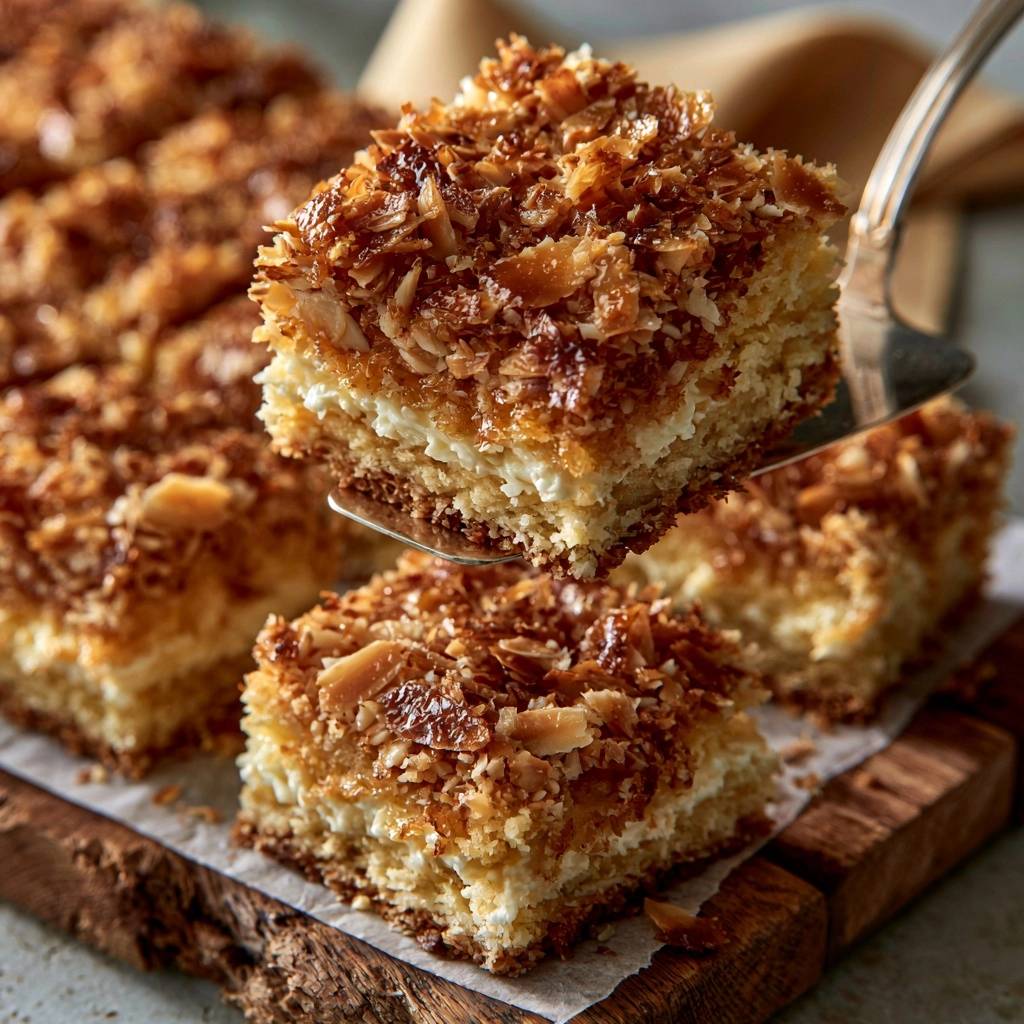
The traditional Bienenstich, or Bee Sting Cake, is a legendary German confection that captures the perfect balance of crunch and cloud-like softness. However, many home bakers struggle with the classic version because the heavy honey-almond topping often sinks into the raw batter, creating a gummy, unappealing mess. This recipe solves that heartbreak by using a specific par-baking technique to ensure the base stays light and airy while the crust remains a distinct, shattered layer of gold.
You are looking for a specific sensory experience here: the audible crack of deeply caramelized almonds followed by the cool, velvety embrace of a stabilized cream filling. Therefore, we’ve moved away from the finicky yeast doughs of the past in favor of a sturdy, buttery cake base. This version provides the structural integrity needed to support that iconic mahogany topping without sacrificing the melt-in-your-mouth quality you crave.
The secret to this “Anti-Soggy” method lies in creating a thermal skin on the cake before the topping ever touches it. By baking the base for exactly twelve minutes, you create a firm foundation that allows the honey and butter to bubble and caramelize on top rather than soaking through the crumb. It’s a small change that makes a massive difference in the final texture of your pastry.
The Anatomy of a Perfect Honey-Almond Crust
The topping is the soul of this cake, and achieving that “shattered glass” texture requires a precise chemical balance between honey, butter, and sugar. When you boil these ingredients together, the honey acts as an invert sugar, preventing the granulated sugar from crystallizing into a gritty mess. Instead, it creates a pliable yet crisp caramel that snaps beautifully when bitten.
In addition, the choice of almonds is vital for the mouthfeel of the crust. You must use almonds that are shaved thin rather than thick-sliced or slivered. Thinly shaved almonds provide more surface area for the caramel to cling to, ensuring every bite is packed with toasted flavor. If the almonds are too thick, they become chewy and dense, which fights against the delicate nature of the cream filling below.
Essential Components for the Bee Sting Base
To support a heavy, caramelized crust, your cake base needs a tight, uniform crumb structure. This starts with high-quality, softened unsalted butter. When you cream the butter with sugar, you’re actually beating tiny air pockets into the fat, which provides the lift needed for a plush texture. If your butter is too cold, it won’t trap that air; if it’s melted, the cake will be greasy and heavy.
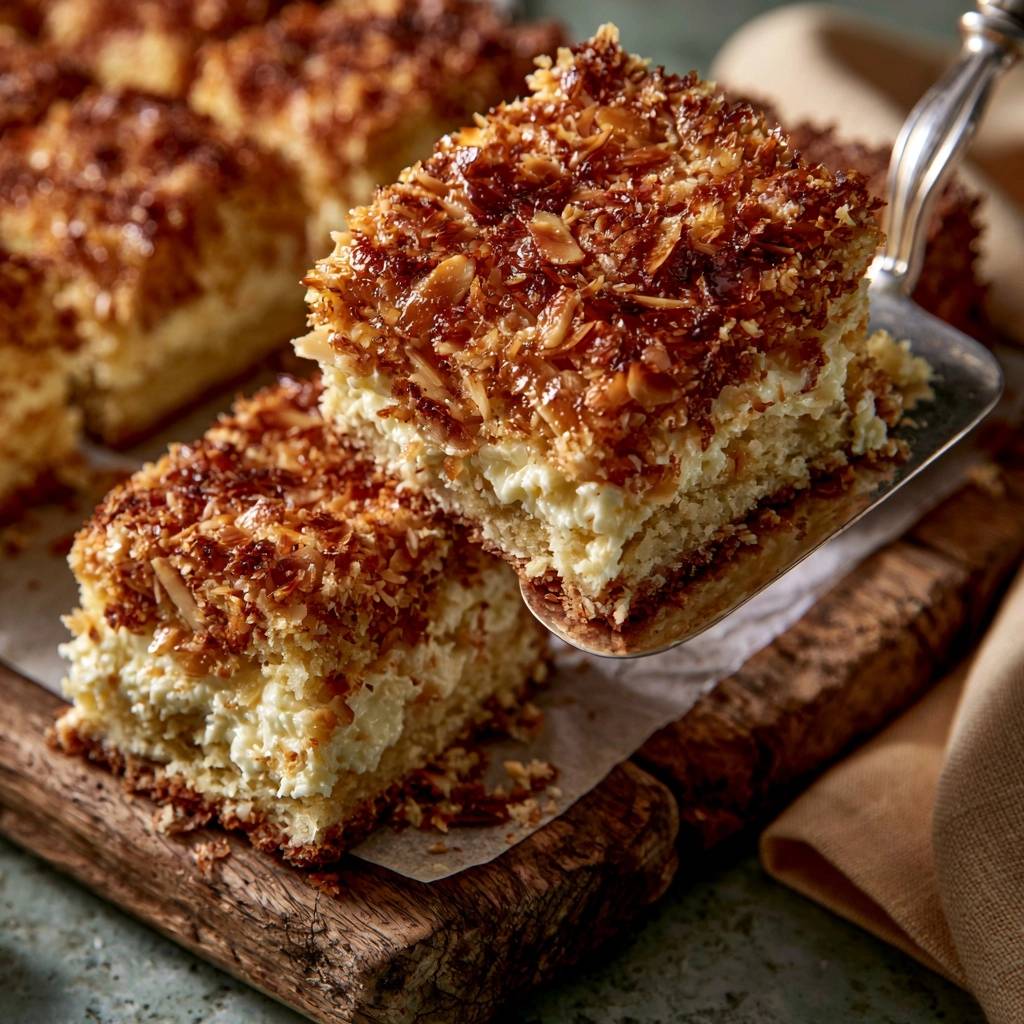
Furthermore, whole milk is a non-negotiable ingredient for this specific bake. The fat content in whole milk provides the necessary richness to balance the sweetness of the honey topping. In addition, you must sift your dry ingredients—flour, baking powder, and salt—together before adding them to the wet mix. This prevents clumps of leavening agent from creating uneven holes in your cake, ensuring a flat, stable surface for the almonds.
Stabilizing the Filling: Why Mascarpone is Mandatory
A common failure in Bee Sting Cakes is the “ooze factor,” where the filling squishes out the sides the moment you try to take a bite. Standard whipped cream is simply too fragile to hold up the weight of a caramelized almond crust. Therefore, we use mascarpone cheese as a stabilizing agent to give the filling structural integrity.
Mascarpone has a high fat content and a dense, creamy texture that, when whipped with heavy cream, creates a filling that is both light and sturdy. It allows the cake to maintain a clean, two-inch-high profile even after it’s sliced. If you can’t find mascarpone, softened cream cheese works as a substitute, though it will add a slight, pleasant tang to the flavor profile.
The Par-Baking Strategy for Structural Integrity
The “Skin Technique” is the skyscraper-level value-add of this recipe. Most recipes tell you to pour the raw almond mixture directly onto the raw cake batter. However, the weight of the nuts and the moisture in the honey almost always cause the topping to dive into the center of the cake. By par-baking the base for 12 minutes, you create a solid barrier.
This short stint in the oven sets the top layer of proteins and starches, creating a “skin” that can support the heavy almond mixture. Consequently, the hot honey-butter sauce stays on the surface, bubbling away to create a crisp candy coating rather than a soggy middle. This ensures that every slice has a clear definition between the golden cake and the dark mahogany crust.
Step-by-Step: Crafting the Caramelized Almond Bee Sting Cake
Creating this masterpiece requires a bit of timing, but the process is incredibly rewarding. You’ll start by building the foundation, then move to the high-heat caramel work, and finally assemble the layers once everything has cooled. Patience is your best friend here, especially during the cooling phase, as the caramel needs time to set into its signature brittle state.
Phase 1: Aerating the Cake Batter
Begin by creaming your softened butter and sugar until the mixture looks pale and noticeably fluffy. This should take about 3 to 5 minutes with a hand mixer. You’ll then add your eggs one at a time, ensuring each is fully incorporated before adding the next. This prevents the emulsion from breaking, which would result in a grainy cake.
When adding the dry ingredients and milk, use the “alternating method.” Start with a third of the flour, then half the milk, and repeat, ending with the flour. This technique prevents the batter from curdling or becoming over-mixed. You want a smooth, thick batter that spreads easily into your lined 9×9 pan without being runny.
Phase 2: Achieving the Mahogany Caramel Topping
While the base is in its initial par-bake, combine the butter, honey, sugar, and cream in a small saucepan. Bring it to a rolling boil—this means the bubbles shouldn’t disappear when you stir it. Simmer the mixture for about 3 to 4 minutes. You are looking for a light amber color and a slightly thickened consistency before you fold in the shaved almonds.
Once you spread this mixture over the par-baked cake, return it to the oven. Watch for the transformation from golden brown to a deep, dark mahogany. This color change indicates that the sugars have reached the “hard crack” stage, which is essential for that shattered glass texture. If you pull it out too early, the topping will be sticky and difficult to chew.
Phase 3: The Horizontal Slice and Filling
You must let the cake cool completely in the pan. If you try to remove it while warm, the caramel will be soft and the cake will likely crack. Once cold, the topping will be firm and brittle. Lift the cake out using the parchment paper handles and prepare for the “butterfly” cut. Use a long serrated knife, like a bread knife, to saw through the middle of the cake horizontally.
Take your time with this step, keeping the knife level to ensure two even layers. Set the top almond-crusted layer aside carefully. Now, whip your cold heavy cream with the softened mascarpone and powdered sugar. You want very stiff peaks—the mixture should look thick enough to hold its shape on a spoon without drooping. Spread this evenly over the bottom cake layer.
The Professional Secret to Clean Cake Slices
The biggest mistake people make with Bee Sting Cake is trying to slice the fully assembled cake. If you press a knife through that hard almond crust into the soft cream, the pressure will cause the filling to burst out the sides. To avoid this, you must use the “Pre-Cut” method. It’s a simple trick that makes your dessert look like it came from a high-end bakery.
Before you place the top layer onto the cream, take your serrated knife and slice the almond-crusted top into 12 individual squares. Then, gently place each square onto the cream filling in its original position. Now, when you go to serve the cake, your knife only has to pass through the soft bottom layer and the cream. This ensures every serving is perfectly square and the cream stays exactly where it belongs.
Troubleshooting the Caramelized Almond Bee Sting Cake
If your topping ends up too sticky or tacky, it usually means the caramel didn’t boil long enough in the saucepan. The sugar needs to reach a specific temperature to harden properly. However, you can often fix this by popping the sliced cake into the fridge for an hour; the cold will help firm up the honey mixture. Just be aware that the crunch won’t be as sharp as a properly boiled caramel.
On the other hand, if your cake feels dry, you might have over-baked it during the second phase. Every oven is different, so start checking for doneness at the 18-minute mark during the second bake. The topping should be bubbling, but the cake underneath should just be set. If your cream filling looks grainy, it’s likely because the mascarpone was too cold when you added it to the cream. Always ensure the mascarpone is at room temperature while the heavy cream remains ice-cold.
Equipment: Tools for a Flawless Bake
While you might be tempted to use a round cake pan, a 9×9 inch square pan is actually superior for this recipe. Square pans offer better edge-to-center heat distribution, which is crucial when you’re dealing with a heavy topping that needs to caramelize evenly. It also makes the “Pre-Cut” method much easier to execute, as you’re working with straight lines rather than wedges.
Parchment paper is also a non-negotiable tool here. You need to create a “sling” by letting the paper hang over two sides of the pan. This allows you to lift the entire heavy, brittle cake out of the pan in one motion. Without a sling, trying to flip the cake or dig it out with a spatula will almost certainly result in the beautiful almond crust cracking into pieces.
Make-Ahead Logistics and Storage Standards
This cake actually benefits from a little bit of “rest” time in the refrigerator. Chilling the assembled cake for about an hour allows the mascarpone filling to set firmly against the cake layers, making it even easier to handle. However, keep in mind that humidity is the enemy of caramel. If you leave the cake in the fridge for more than 24 hours, the almond crust will eventually start to soften as it absorbs moisture.
If you need to make it ahead of time, you can bake the cake layers a day early and store them at room temperature in an airtight container. Whip the cream and assemble the cake on the day you plan to serve it. If you have leftovers, store them in the fridge in a sealed container for up to three days. The crust might lose its “shatter,” but the flavors will remain absolutely delicious.
Expert Troubleshooting and Baker’s FAQ
Why did my almond topping sink into the cake?
This usually happens if the 12-minute par-bake was skipped or if the oven temperature was too low. The par-bake creates a necessary structural “skin” on the batter. If the topping is added to raw, liquid batter, gravity will pull the heavy almonds and honey into the center of the cake. Ensure your oven is fully preheated to 350°F before the cake goes in.
Can I substitute the honey for maple syrup?
It is not recommended to swap honey for maple syrup in this recipe. Honey has a specific viscosity and sugar profile that allows the caramel to become “tacky” and then harden into a brittle crust. Maple syrup is much thinner and has a different water content, which will likely result in a runny topping that never sets properly, leading to a soggy cake.
How do I prevent the mascarpone from becoming grainy?
The key is the temperature differential between your ingredients. Your mascarpone must be softened to room temperature so it can blend smoothly, but your heavy whipping cream must be ice-cold to hold air. Start by beating the softened mascarpone with the sugar until smooth, then very slowly pour in the cold cream while whisking. This gradual incorporation prevents the fat in the mascarpone from clumping into grains.
What is the best way to store leftovers?
Store any leftover slices in an airtight container in the refrigerator. Because of the dairy in the filling, it cannot stay at room temperature for more than two hours. While the refrigerator will eventually soften the almond crust due to the moisture, the cake will stay fresh and tasty for up to 3 days. For the best texture, try to eat it within 24 hours of assembly.
Caramelized Almond Bee Sting Cake
Course: DessertCuisine: GermanDifficulty: easy12
servings25
minutes35
minutes60
Minutes380
kcalGerman
Ingredients
For the Cake Base:
2 cups all-purpose flour
1/2 cup granulated sugar
2 teaspoons baking powder
1/2 teaspoon salt
1/2 cup unsalted butter, softened
2 large eggs
1/2 cup whole milk
1 teaspoon vanilla extract
For the Caramelized Almond Topping:
1/2 cup unsalted butter
1/3 cup honey
1/3 cup granulated sugar
2 tablespoons heavy cream
1/4 teaspoon salt
2 cups sliced almonds (shaved thin for maximum crunch)
For the Stabilized Cream Filling:
1 cup heavy whipping cream, cold
4 oz mascarpone cheese or cream cheese, softened (to prevent the cream from collapsing)
1/2 cup powdered sugar
1 teaspoon vanilla extract
Directions
- Preheat your oven to 350°F (175°C). Grease a 9×9 inch square baking pan and line with parchment paper, ensuring the paper hangs over the edges for easy removal.
- In a large bowl, cream together the softened butter and sugar until pale and fluffy. Beat in the eggs one at a time, then stir in the vanilla.
- Sift together the flour, baking powder, and salt. Gradually add the dry ingredients to the butter mixture, alternating with the milk. Mix until just combined. Spread the batter evenly into the prepared pan.
- Par-bake the cake base alone for 12 minutes. This creates a “skin” on the cake that prevents the heavy almond topping from sinking into the crumb.
- While the base par-bakes, prepare the topping. In a small saucepan, combine butter, honey, sugar, cream, and salt. Bring to a rolling boil over medium heat. Simmer for 3-4 minutes until the mixture turns a light amber color. Stir in the sliced almonds to coat thoroughly and remove from heat.
- Remove the cake from the oven. Carefully drop spoonfuls of the warm almond mixture over the top and spread gently to the edges. Return to the oven and bake for another 20-23 minutes. The topping should be bubbling and a deep, dark mahogany brown.
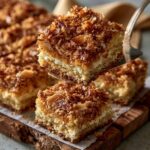
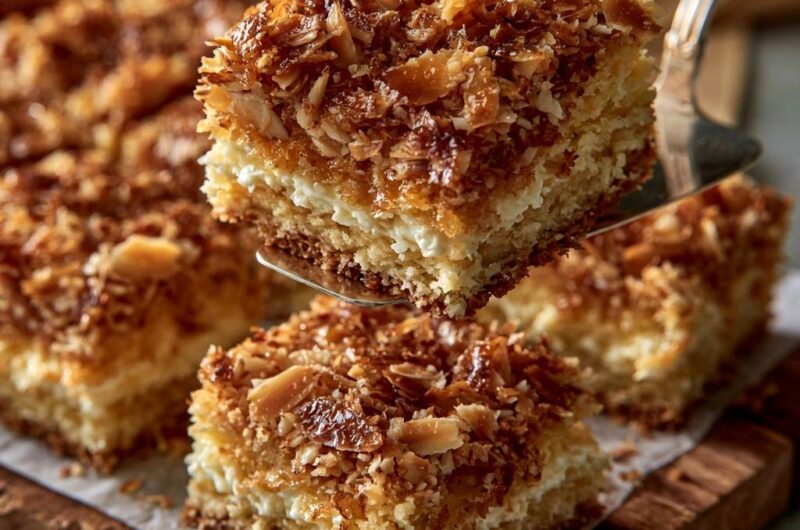
- Let the cake cool completely in the pan. This is vital; the sugar must harden to create the “shattered” glass texture seen in the image.
- Once cold, lift the cake out. Using a long serrated knife, slice the cake horizontally into two layers. Set the top almond layer aside.
- Make the filling: In a chilled bowl, beat the heavy cream, mascarpone, powdered sugar, and vanilla until very stiff peaks form. The mascarpone ensures the filling is thick enough to support the heavy top layer without oozing out.
- Spread the cream filling evenly over the bottom cake layer.
- CRITICAL STEP FOR CLEAN CUTS: Slice the top almond-crusted layer into 12 individual squares before placing them onto the cream. This prevents the pressure of the knife from squishing the cream out of the sides. Arrange the pre-cut squares on top of the cream. Serve immediately or chill for 1 hour to set.
Notes
- Pre-slicing the top almond layer is a critical step to prevent the cream from oozing out when serving. Ensure the cake is completely cold before slicing to achieve the shattered glass texture.