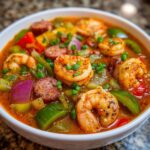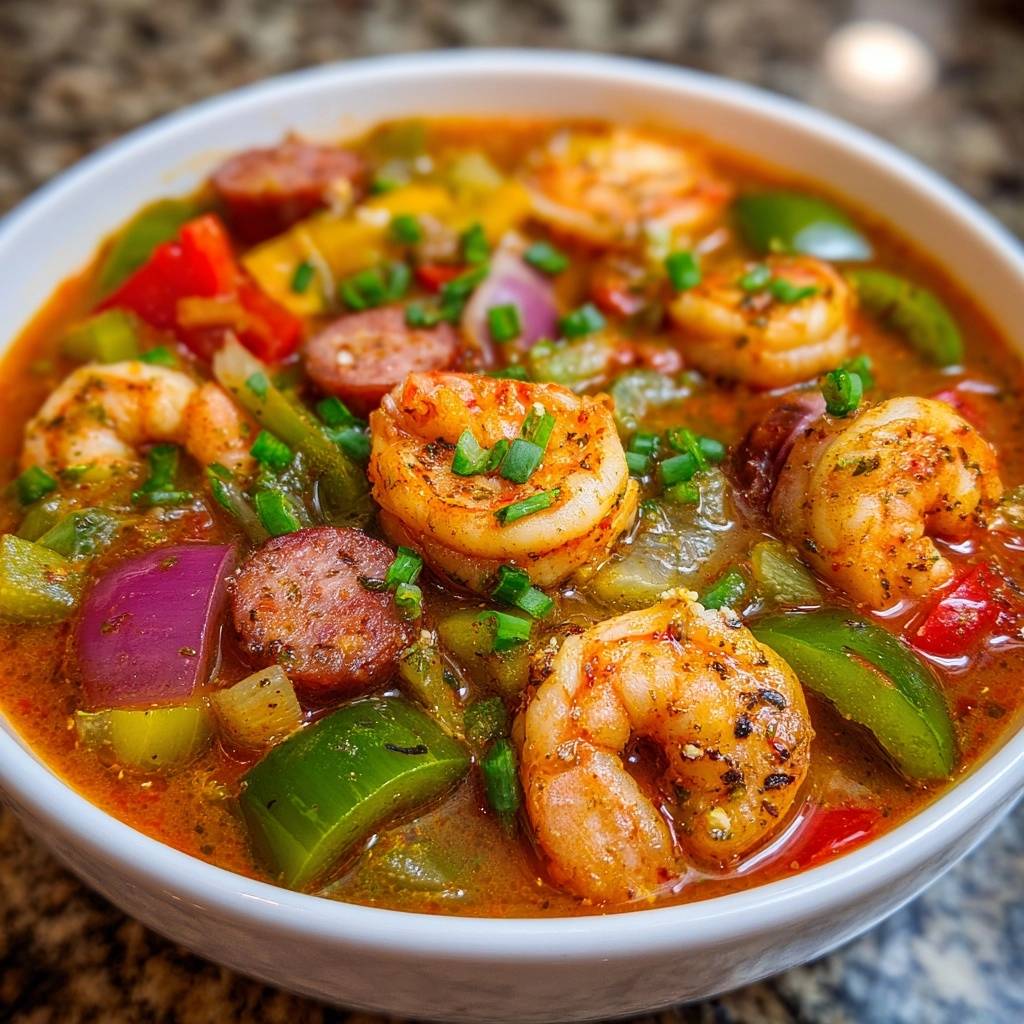
Imagine a bowl of deep, mahogany-colored broth steaming on your table, packed with the smoky aroma of seared sausage and the bright scent of the Cajun “Holy Trinity.” Most people hesitate to make gumbo at home because they fear the dreaded rubbery shrimp. You know the ones—those tiny, curled-up circles that feel like chewing on a pencil eraser. This recipe changes that narrative entirely by focusing on a specific texture-first approach.
The secret to this incredible dish lies in the “sear-and-steep” method. Instead of boiling the life out of your seafood, we treat the shrimp with the respect they deserve. We start with a high-heat sear to lock in flavor and finish with a gentle steep in the residual heat of the broth. This ensures every bite is buttery-soft and bursting with juice, rather than tough and dry.
I’ve found that using a heavy-bottomed pot is the absolute key to success here. A Dutch oven or a thick stainless steel pot holds onto heat much better than thin aluminum. This thermal mass is what allows the shrimp to finish cooking perfectly even after you’ve turned the burner off. It’s a professional technique that guarantees a restaurant-quality result in your own kitchen every single time.
The Chemistry of the Perfect Gumbo Base
When you drop that sliced sausage into a hot pot, you’re initiating the Maillard reaction. This isn’t just about browning; it’s a chemical transformation that creates hundreds of different flavor compounds. As the fat renders out of the andouille or beef sausage, it picks up the spices and creates a flavorful oil that coats the vegetables later on.
Those brown bits stuck to the bottom of your pot are called “fond,” and they are culinary gold. When you pour in the chicken broth, you’ll scrape those bits up, dissolving that concentrated umami back into the liquid. This creates a foundational depth that usually takes hours to develop in a traditional slow-simmered stew.
In this version, we use tomato paste to provide body and a rich, dark color. While a traditional Cajun gumbo relies on a flour-and-oil roux, tomato paste offers a faster way to achieve that savory thickness and vibrant hue. It acts as a natural thickener that bridges the gap between the smoky meat and the sweet, acidic vegetables, giving the broth a velvety mouthfeel without the 45-minute workout of stirring a roux.
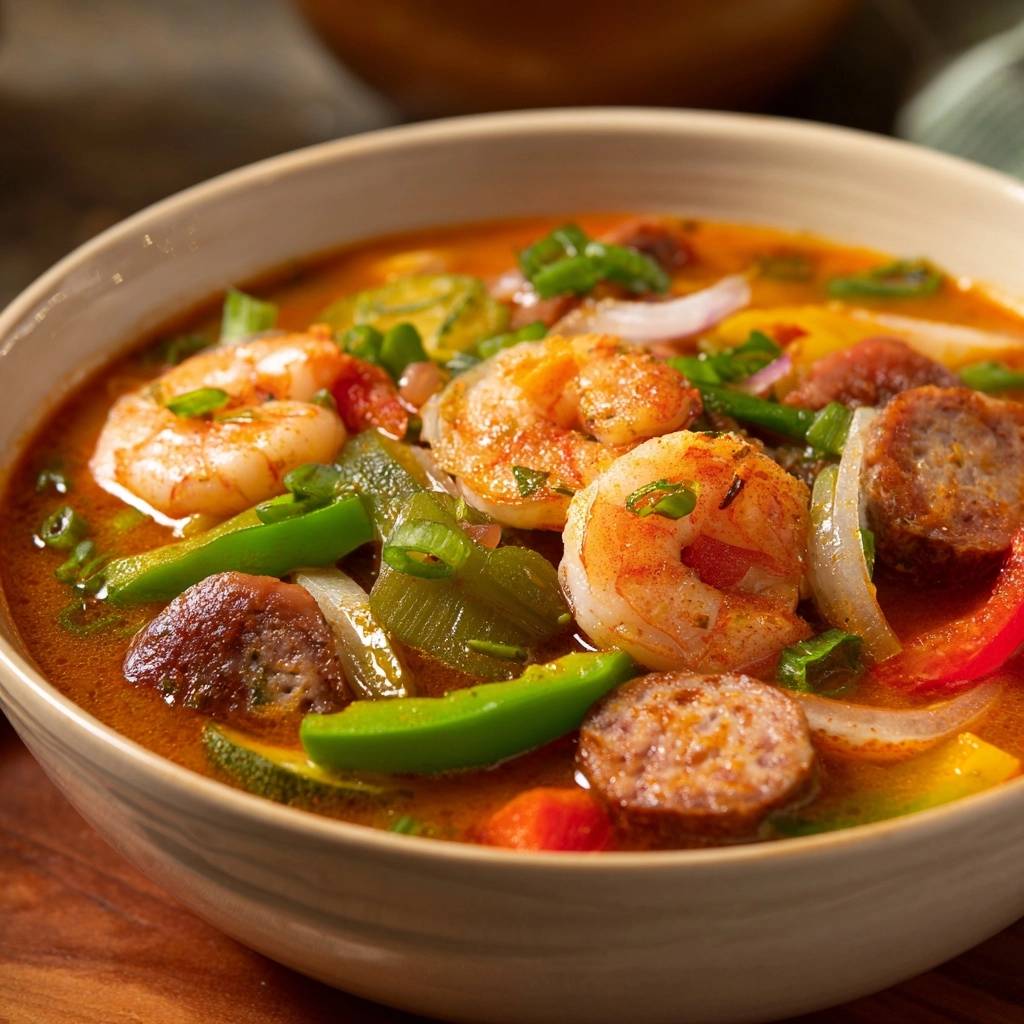
Essential Components for Cajun Shrimp and Sausage Gumbo
Quality ingredients are the backbone of a short-cook gumbo. I always recommend looking for “Large” or “Jumbo” shrimp, specifically the 16/20 count. These are big enough to get a gorgeous golden crust on the outside while remaining slightly translucent and raw in the very center during the initial sear. Smaller shrimp cook through too quickly and won’t survive the two-step process.
The choice of sausage dictates the “soul” of your broth. Smoked andouille is the gold standard for its spicy, garlicky kick and firm texture. However, a high-quality beef sausage works beautifully if you prefer a milder, richer flavor profile. Just ensure it’s a pre-cooked, smoked variety so it holds its shape during the sauté and simmer phases.
For a similar comforting meal, explore these Southern black eyed peas and sausage.
Then we have the “Holy Trinity” of Cajun cooking: bell peppers, celery, and onions. While yellow onions are standard, I prefer red onions for this specific recipe. They offer a subtle sweetness that balances the heat of the Cajun seasoning. Cutting the peppers and onions into thick wedges rather than a fine dice ensures they don’t turn into mush during the 30-minute cook time, providing a satisfying crunch in every spoonful.
Selecting and Preparing Your Seafood
When buying shrimp, “peeled and deveined” saves a massive amount of prep time, but don’t be afraid of the tails. Leaving the tails on during the sear and simmer adds an extra layer of savory depth to the broth. It’s like making a quick shrimp stock right inside your gumbo pot. If you prefer a mess-free eating experience, go ahead and remove them before seasoning.
For more shrimp ideas, consider this perfect shrimp white bean stew.
If you’re using frozen shrimp, the thawing process is vital. Never thaw them in warm water, as this ruins the texture. Instead, place them in a bowl of cold water for 15 minutes and pat them bone-dry with paper towels. Excess moisture is the enemy of a good sear; if the shrimp are wet, they will steam and turn grey instead of getting that beautiful golden-brown crust.
The Cajun Spice Profile
A great Cajun seasoning is a complex blend of paprika, cayenne, garlic powder, and dried herbs like oregano or thyme. However, the salt content varies wildly between brands. I always suggest tasting your seasoning blend first. If it’s very salty, use a low-sodium chicken broth to keep the final dish balanced. You can always add salt at the end, but you can’t take it out once it’s in the pot.
Phase One: Searing for Maximum Flavor Extraction
The first phase is all about high heat and speed. You want your pot screaming hot before the shrimp hit the oil. When you toss the shrimp in, they should sizzle loudly. Leave them alone for a full 60 seconds to develop that crust. When you flip them, they should look golden and opaque on the outside but still look a bit “glassy” or translucent in the middle. This is exactly what you want.
Once the shrimp are out, the sausage goes in. You aren’t just warming it up; you’re looking for crispy, dark edges. This rendering process releases the smoky fats that will eventually emulsify into your broth. If the pot looks a little dark or “burnt” at the bottom, don’t worry. That’s the flavor base that will lift off as soon as the vegetables and broth are added.
Phase Two: Building the Aromatic Broth
Now we drop in the vegetables. Because we want a “chunky” gumbo, we only sauté them for about five minutes. They should soften slightly and pick up the color from the sausage fat, but they shouldn’t lose their structural integrity. You want to see those vibrant reds and greens floating in your bowl later on, not a brown sludge.
For a truly rich flavor in your Cajun shrimp and sausage gumbo, a dark roux is key.
The most important part of this phase is “blooming” the garlic and tomato paste. Push the vegetables to the side and drop the paste directly onto the bottom of the pot for one minute. This toasts the sugars in the tomato, removing that “tinny” metallic taste and turning it into a deep, savory concentrate. Once the garlic becomes fragrant and the paste turns a shade darker, it’s time to pour in the broth.
Phase Three: The Residual Heat Finish
This is the critical moment where most home cooks go wrong. After simmering the broth to let the flavors meld, you must turn the heat off completely. The broth will be bubbling and hot, which is more than enough energy to finish the cooking process. If you keep the flame on, the shrimp will tighten up and become tough within seconds.
Return the seared shrimp and any juices that collected on the plate back into the pot. Cover it with a tight lid and walk away for five minutes. This is essentially a gentle poach. The residual heat penetrates the center of the shrimp slowly, allowing the proteins to set without squeezing out all their moisture. When you lift the lid, the shrimp will be perfectly pink, tender, and “snappy” to the bite.
Troubleshooting Common Gumbo Obstacles
If you find your broth is a bit thinner than you’d like, don’t panic. You can let it simmer for an extra five minutes before adding the shrimp back in to reduce the liquid. Alternatively, whisk a teaspoon of cornstarch with a tablespoon of cold water and stir it into the boiling broth. This provides an instant glossy thickness without changing the flavor profile.
If your shrimp do end up tough, it usually means the initial sear was too long or the pot stayed on the heat after they were added back. Next time, pull them off the heat even earlier. If the dish lacks a “kick,” don’t just dump in more Cajun seasoning, as that might make it too salty. Instead, add a few dashes of your favorite vinegar-based hot sauce to brighten the flavors and add heat simultaneously.
Sometimes the sausage can release a lot of oil, leaving a layer on top of the broth. If this happens, simply take a large spoon and gently skim the surface. However, a little bit of that red-tinted oil is traditional and carries a massive amount of the smoky flavor, so don’t feel the need to remove every single drop.
Optimal Side Dishes for Cajun Shrimp and Sausage Gumbo
While a scoop of fluffy white rice is the traditional bed for gumbo, there are plenty of ways to mix it up. For a lighter, low-carb option, cauliflower rice absorbs the spicy broth beautifully. If you want to go the ultra-traditional route, try the “scoop-in” method with a cold, creamy potato salad. The contrast between the hot, spicy broth and the cool, tangy potatoes is a revelation.
What to Serve Alongside Your Cajun Shrimp and Sausage Gumbo
To round out your Cajun Shrimp and Sausage Gumbo meal, consider these flavorful additions.
- For a touch of sweetness and tang, try balsamic glazed pearl onions, reminiscent of the savory notes in your gumbo.
- Complement the richness of the gumbo with bacon-wrapped asparagus bundles for a satisfying crunch.
Never underestimate the power of a good piece of bread. A crusty French baguette or toasted sourdough is essential for mopping up every last drop of that mahogany broth. If you’re feeling adventurous, a side of honey-drizzled cornbread provides a sweet counterpoint to the savory and spicy notes of the andouille sausage and Cajun spices.
Storage, Reheating, and Meal Prep Strategy
Seafood requires a bit of care when it comes to leftovers. You can store this gumbo in an airtight container in the fridge for up to two days. The broth actually tastes better the next day as the thyme and garlic continue to infuse. However, the shrimp will naturally firm up as they sit in the liquid, so keep that in mind for your texture expectations.
When reheating, avoid the microwave at all costs. It will turn your perfectly cooked shrimp into rubber in seconds. Instead, pour the gumbo into a small saucepan and heat it over medium-low on the stove. As soon as the broth starts to simmer and the shrimp are warmed through, pull it off the heat. If you’re meal prepping, I recommend freezing the broth and sausage base separately and adding fresh seared shrimp when you’re ready to eat.
Frequently Asked Questions
How should I store leftovers and does this freeze well?
Store leftovers in a shallow, airtight container in the refrigerator for no more than 48 hours. Because shrimp are delicate, they don’t hold their “buttery” texture well beyond that. You can freeze the broth, sausage, and vegetable base for up to three months. However, I strongly suggest leaving the shrimp out of the freezer. When you’re ready to eat the frozen portion, thaw the base, bring it to a simmer, and add freshly seared shrimp at the very end for the best quality.
Why is my shrimp tough even though I followed the timing?
The most common culprit is the pot itself. If you aren’t using a heavy-bottomed pot like a Dutch oven, the heat might dissipate too quickly, or conversely, a thin pot might have “hot spots” that overcook the shrimp during the sear. Also, ensure you are using “Large” shrimp. Small or medium shrimp cook almost instantly and cannot handle a two-step searing and steeping process without becoming overdone.
Can I use something other than chicken broth?
Absolutely. A high-quality seafood stock or shrimp stock will actually intensify the oceanic flavors of the dish. If you have the time, you can even simmer the shrimp shells in your chicken broth for 20 minutes before starting the recipe to create a quick “hybrid” stock. Avoid using plain water, as the dish relies heavily on the broth for its savory foundation.
What can I use if I can’t find Andouille sausage?
Andouille is known for its smoky, spicy profile. If it’s unavailable, a smoked Kielbasa or a firm Spanish Beef Chorizo (the cured kind, not the raw Mexican variety) are excellent substitutes. If you use a milder sausage like Kielbasa, you might want to add an extra pinch of cayenne pepper or a few dashes of hot sauce to the broth to maintain that signature Cajun heat.
Is there a way to make this thicker without a roux?
The tomato paste in this recipe already provides more body than a clear broth, but if you want a “stew-like” consistency, you can use a cornstarch slurry. Mix 1 tablespoon of cornstarch with 1 tablespoon of cold water and stir it into the boiling broth before you add the shrimp back in. Let it boil for one minute to activate the starch, and you’ll have a thick, glossy sauce that clings to the sausage and vegetables.
Can I add other vegetables like okra?
Yes, okra is a very traditional addition to gumbo and acts as a natural thickener. If you want to include it, add sliced okra at the same time as the bell peppers and onions. Sautéing the okra helps reduce the “slimy” texture that some people dislike. About one cup of sliced okra is perfect for this recipe size and will add a lovely earthy flavor to the final dish.
Cajun Shrimp and Sausage Gumbo
Course: Main CourseCuisine: AmericanDifficulty: easy4
servings15
minutes30
minutes410
kcal45
MinutesThis Cajun Shrimp and Sausage Gumbo focuses on texture and depth of flavor. By searing the shrimp first and finishing them in the residual heat of a mahogany-colored broth, you avoid the common pitfall of rubbery seafood. Combined with browned andouille sausage and chunky vegetables, it is a hearty and authentic meal.
Ingredients
1 pound large shrimp, peeled and deveined
12 ounces smoked andouille or beef sausage, sliced into rounds
2 large bell peppers (green and red), chopped into large chunks
1 large red onion, cut into thick wedges
3 cloves garlic, minced
1/2 cup celery, chopped
3 cups chicken broth
1 tablespoon tomato paste (for color and body)
2 tablespoons Cajun seasoning, divided
1 teaspoon dried thyme
3 tablespoons olive oil, divided
1/4 cup sliced green onions for garnish
Directions
- In a small bowl, toss the raw shrimp with 1 tablespoon of olive oil and 1 tablespoon of the Cajun seasoning.
- Heat a large heavy-bottomed pot or Dutch oven over high heat. Add the shrimp in a single layer. Sear for 60 seconds per side until they have a visible golden-brown crust but are still slightly translucent in the center. Remove shrimp from the pot and set aside on a plate.
- In the same pot, add the remaining olive oil and the sliced sausage. Sear for 3 to 4 minutes until the edges are browned and crispy.
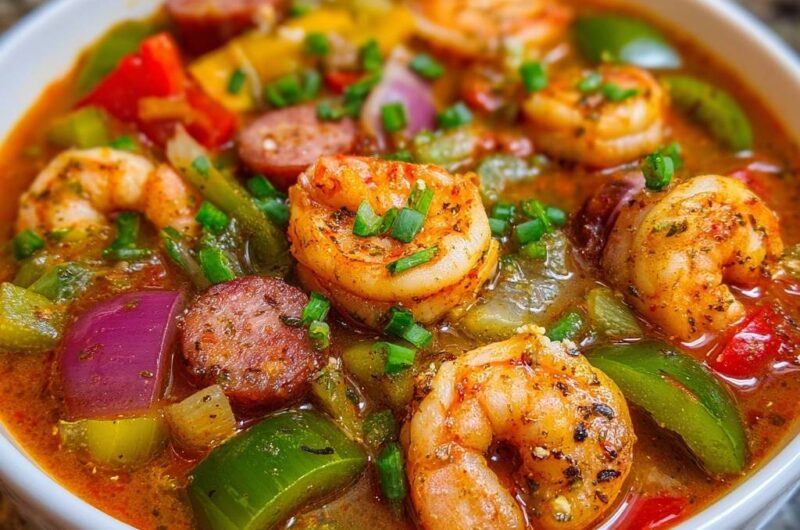
- Add the bell peppers, red onion, and celery. Saute for 5 minutes. The vegetables should be softened but still hold their chunky shape as seen in the image. Stir in the garlic and tomato paste, cooking for 1 minute until fragrant.
- Pour in the chicken broth, the remaining tablespoon of Cajun seasoning, and thyme. Bring to a boil, then reduce heat to medium-low. Simmer for 10-12 minutes to allow the broth to thicken slightly and the flavors to meld.
- Turn the heat off completely. Return the seared shrimp (and any juices from the plate) back into the pot. Cover with a tight-fitting lid.
- Let the pot sit undisturbed for 3 to 5 minutes. The residual heat will perfectly finish the centers of the shrimp without toughening the exterior.
- Stir gently to combine. Garnish heavily with fresh green onions and serve immediately in deep bowls.
Notes
- The sear-and-steep method is crucial for the shrimp texture. Ensure the heat is turned off before returning the shrimp to the pot to prevent overcooking.