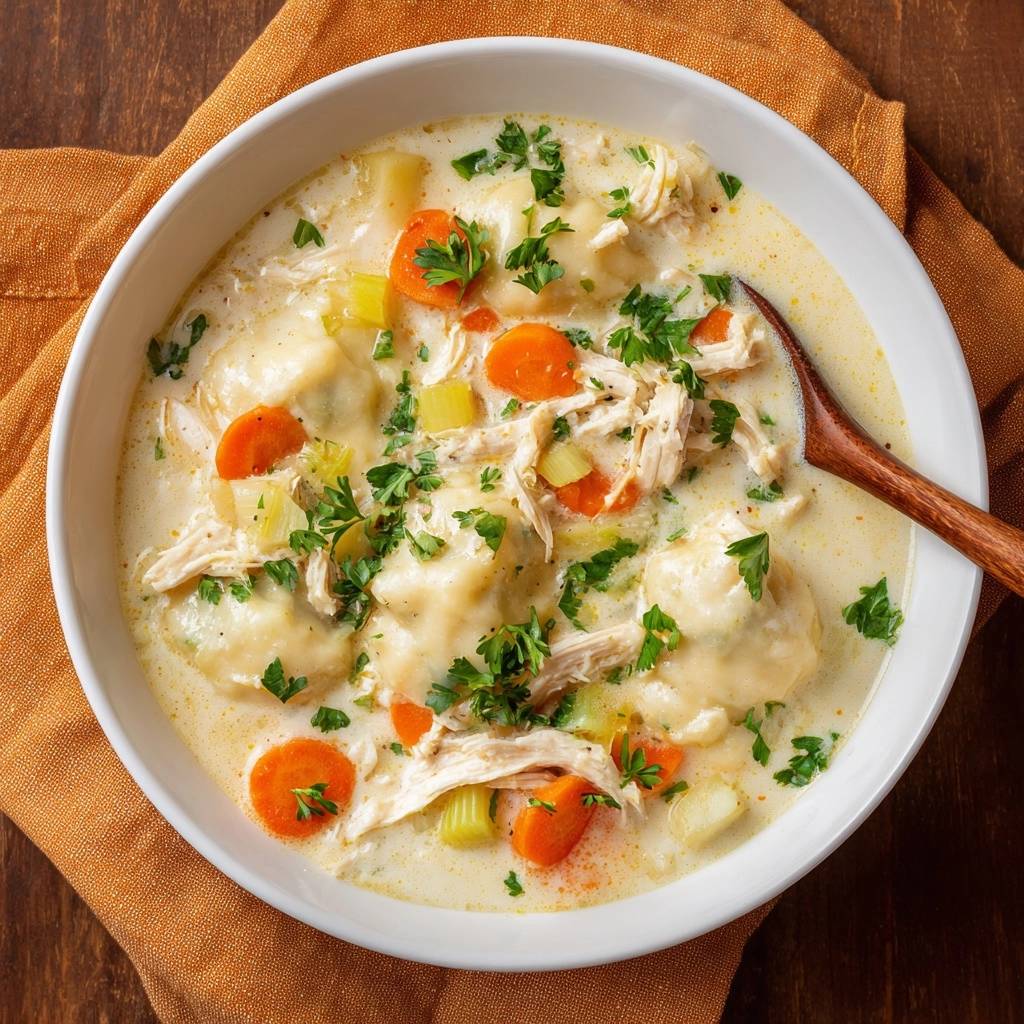
Imagine sinking your spoon into a bowl of velvety, golden broth only to pull up a dumpling that is perfectly puffed, airy, and light as a cloud. There is a specific kind of joy in that first bite where the dough melts away without any of the dreaded chewiness or raw, floury centers. When done right, this dish is the ultimate culinary hug, providing a warmth that sticks to your ribs and settles the soul.
However, many home cooks struggle with the “gummy” factor, where the dumplings either disintegrate into the soup or turn into rubbery balls. The secret to avoiding this isn’t just in the ingredients, but in the physics of the cook. By mastering the “Drop and Lock” method, you control the steam and temperature to ensure every single dumpling is cooked through while the broth remains rich and elegant.
For more on achieving that ideal texture, check out this guide to classic chicken and dumplings.
The real trick to success lies in the simmer. If your broth is boiling too hard, the agitation will tear the delicate dough apart before it has a chance to set. You want a gentle, lazy bubble that coaxes the dumplings into shape rather than a violent boil that washes them away. Let’s dive into how you can achieve that professional, pillowy texture every time.
The Anatomy of a Perfect Creamy Broth Base
A great bowl of chicken and dumplings starts with a solid foundation of flavor known as the mirepoix. By sautéing your carrots, celery, and onions in butter, you create a sweet, aromatic base that permeates the entire dish. Butter is essential here because its milk solids provide a depth of flavor that oil simply cannot replicate, laying the groundwork for a velvety mouthfeel.
Once your vegetables are soft and the onions look translucent, you’ll sprinkle in a small amount of flour. This creates a light roux right in the pot. This step is vital because it thickens the broth just enough to give it body without turning it into a heavy, gloppy gravy. You want the liquid to coat the back of a spoon, feeling luxurious but still fluid enough to soak into the dumplings.
Selecting and Preparing the Chicken Component
For this recipe, we use 1.5 lbs of shredded cooked chicken breast. Shredding the meat is a deliberate choice because the jagged edges of the chicken strands are much better at “trapping” the creamy sauce than smooth, cubed pieces. It ensures that every spoonful delivers a perfect ratio of meat to broth.
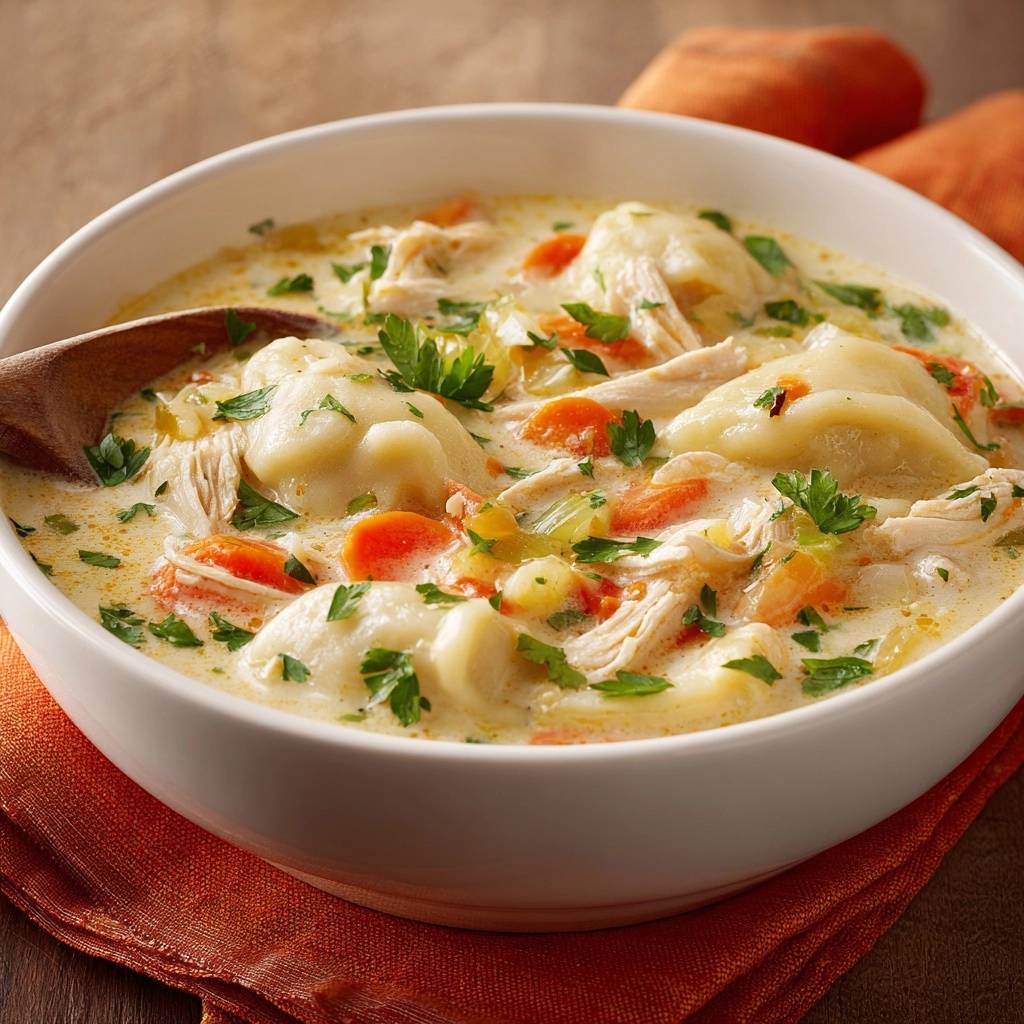
If you’re in a rush, a rotisserie chicken works beautifully and adds a hint of roasted flavor. However, if you have the time, poaching the breasts directly in the chicken broth before starting the recipe will give you a much more cohesive flavor profile. Whichever you choose, make sure the chicken is bite-sized so it doesn’t overwhelm the delicate dumplings.
The Role of Aromatics and Dried Herbs
Timing is everything when it comes to herbs. We add dried thyme during the initial simmer because it needs time to rehydrate and release its earthy, floral oils into the broth. Dried herbs are more potent and hardy, making them perfect for the long, slow heat of a simmering pot.
In contrast, fresh parsley is reserved for the very end. Its bright, grassy notes would be lost if cooked for 30 minutes. Additionally, the black pepper plays a chemical role here; its sharp bite cuts through the richness of the heavy cream, preventing the dish from feeling one-dimensional or overly fatty on the palate.
The Chemistry of Light and Airy Dumplings
The magic of a pillowy dumpling is all about leavening and gluten management. When the baking powder in the dough hits the hot liquid, it triggers a chemical reaction that releases carbon dioxide bubbles. These bubbles are what cause the dough to expand and “lift,” creating that sought-after airy internal structure.
The biggest mistake you can make is overmixing the dough. When you stir flour and milk together, gluten begins to develop. If you stir too much, those gluten strands become tight and tough, resulting in a rubbery dumpling. You should stop mixing the moment you no longer see streaks of dry flour; a few lumps are actually a good sign!
Fat Ratios: Why Melted Butter Trumps Shortening
While some traditional recipes call for shortening, melted butter is the superior choice for flavor and crumb. The water content in butter creates a small amount of steam inside the dough as it cooks, which helps with the rise. It produces a tender, biscuit-like interior that stays moist even after being submerged in hot broth.
Using melted butter also makes the dough easier to work with. It incorporates quickly into the dry ingredients, which helps you follow the “do not overmix” rule. The result is a rich, savory dough that tastes like a high-end pastry but has the structural integrity to withstand the steaming process.
The Hydration Balance: Achieving Tacky Dough
When you add the 3/4 cup of milk, you are looking for a specific texture: tacky. Tacky dough should feel slightly sticky to the touch but should still hold its shape when scooped. If the dough is too dry, the dumplings will be dense and hard; if it’s too wet, they will dissolve into the soup.
Keep in mind that humidity can affect your flour. On a rainy day, you might need a tablespoon less milk, while in a dry kitchen, you might need a splash more. Trust your hands and your eyes over the exact measurements. You want a soft, pillowy mass that looks slightly shaggy around the edges.
Step-by-Step: Executing the Drop and Lock Technique
The “Drop and Lock” technique is the definitive solution to gummy dumplings. It shifts the cooking method from boiling to steaming. By dropping the dough onto a gentle simmer and immediately sealing the pot, you create a pressurized environment where the steam cooks the center of the dumpling at the same rate as the outside.
Before you drop the first dumpling, check your heat. You should see small bubbles breaking the surface, but the liquid shouldn’t be splashing. A rolling boil is the enemy here. It creates too much physical movement, which will knock the air out of your dough and result in leaden, heavy dumplings.
Precision Sizing with the Cookie Scoop Method
Uniformity is the key to even cooking. If you have some large dumplings and some small ones, the small ones will become mushy by the time the large ones are cooked through. Using a small cookie scoop (about 1.5 to 2 tablespoons) ensures every dumpling finishes at the exact same moment.
When placing the dough, work quickly but gently. Space them out across the surface of the broth. They will expand significantly as they steam, so giving them a little “breathing room” prevents them from fusing together into one giant, undercooked mass of dough.
The 15-Minute Steam Lock: Why You Never Peek
This is the most difficult part of the recipe: you must leave the lid on. Every time you lift the lid to “check” on the progress, you release the built-up steam and drop the internal temperature of the pot. This causes the dumplings to collapse and results in a slimy, gummy exterior.
Set a timer for 15 minutes and walk away. The thermodynamics of a heavy pot will do the work for you. When the timer goes off and you finally lift the lid, you should see dumplings that have doubled in size, looking opaque and firm. A quick poke with a toothpick should come out clean, just like a cake.
Troubleshooting Common Texture and Consistency Issues
If you find your broth is too thin after the dumplings are done, don’t panic. You can remove the lid and let it simmer for an extra 2-3 minutes to reduce. However, be careful not to overdo it, as the dumplings will eventually start to break down if left in the heat for too long.
If your dumplings sink to the bottom and stay there, your broth wasn’t hot enough when you dropped them. They need that initial hit of heat to activate the baking powder and create the buoyancy required to float. Next time, ensure you have a steady, gentle simmer before the dough hits the liquid.
Essential Equipment for Consistent Results
A heavy-bottomed Dutch oven is the gold standard for this dish. The thick walls retain heat much better than a thin stainless steel pot, which is crucial during the 15-minute “lock” phase. It ensures the temperature remains constant even after you’ve turned the burner down to low.
If your pot lid doesn’t fit tightly, you can create a “foil seal.” Simply place a piece of aluminum foil over the top of the pot before pressing the lid down. This prevents steam from escaping through the gaps, ensuring your dumplings get the full benefit of the moisture-rich environment.
Flavor Variations and Dietary Adjustments
While the classic version is hard to beat, you can easily customize the flavor profile. A teaspoon of lemon juice stirred into the broth at the very end can brighten the entire dish, providing a hit of acidity that balances the heavy cream. It makes the flavors “pop” without changing the chemistry of the base.
If you want to swap the onions for leeks, go for it! Leeks offer a milder, more buttery onion flavor that pairs beautifully with chicken. Just be sure to wash them thoroughly, as they tend to trap sand in their layers. You can also toss in a handful of frozen peas in the last 2 minutes of cooking for a burst of color.
Vegetable-Forward Enhancements
For an earthier, more rustic version, try adding diced parsnips or sliced cremini mushrooms. These should be added during the initial sauté with the carrots and celery. Mushrooms, in particular, add a wonderful umami depth that complements the chicken broth and makes the dish feel even more substantial.
Adding these vegetables doesn’t just change the flavor; it changes the texture. The slight crunch of a parsnip or the chew of a mushroom provides a nice contrast to the soft, pillowy dumplings. Just ensure they are cut into small, uniform pieces so they soften at the same rate as the carrots.
Make-Ahead Strategies and Storage Logistics
Dumplings are best enjoyed immediately because they continue to absorb liquid as they sit. If you want to get ahead, you can prepare the creamy chicken and vegetable base up to 24 hours in advance. Store it in the fridge, then bring it back to a simmer on the stove when you’re ready to eat.
Only drop the fresh dumpling dough into the pot right before serving. This ensures the texture remains perfect. I do not recommend freezing the finished dish; the dumplings will lose their structural integrity and become grainy or mushy once thawed and reheated.
Reheating Without Losing the Creamy Texture
When reheating leftovers, avoid the microwave if possible. The intense, uneven heat can turn the dumplings into rubber. Instead, place the leftovers in a small saucepan over low heat. Add a splash of extra chicken broth or a tablespoon of milk to loosen the sauce, as it will have thickened significantly in the fridge.
Gently warm the dish, stirring carefully so you don’t break the dumplings. Once the broth is steaming and the dumplings are warmed through, it’s ready to serve. This slow method preserves the velvety texture of the cream and keeps the dough tender.
Expert Tips for a Professional Presentation
Presentation is all about contrast. The creamy broth and ivory dumplings can look a bit monochromatic, so use your fresh parsley to create visual interest. Stir half of the chopped parsley into the pot to distribute green flecks throughout the sauce, then save the rest to sprinkle on top of each individual bowl.
Serve this dish in wide, shallow bowls rather than deep mugs. This allows the dumplings to sit proudly on top of the broth rather than being buried. It showcases the height and fluffiness of your hard work, making the meal feel like a true centerpiece rather than just a simple stew.
Frequently Asked Questions
Can I use canned biscuits instead of homemade dough?
While you can use canned biscuits in a pinch, the texture will be significantly different. Canned dough is much denser and contains different fats and preservatives that don’t react the same way to the “Drop and Lock” method. Homemade dough has a higher hydration level and a specific leavening balance that creates the signature airy, melt-in-your-mouth quality that canned products can’t replicate.
Why did my dumplings turn out gummy despite covering the pot?
The most common culprit for gummy dumplings is a rolling boil. If the liquid is moving too much, it physically washes away the outer layer of flour before the steam has a chance to “set” the exterior. This creates a slimy coating. Ensure your broth is at a very gentle simmer—just a few bubbles—before you drop the dough and lock the lid.
Is it possible to overcook the dumplings?
Yes, dumplings can be overcooked. After about 20 minutes of steaming, the structure of the dough begins to break down as it absorbs too much moisture. They will transition from “fluffy” to “mushy” and may eventually start to fall apart into the broth. Stick to the 15-minute rule for the best results; they should be firm to the touch and opaque all the way through.
Can I substitute the heavy cream with a lower-fat alternative?
You can use whole milk or half-and-half, but you must be careful. Lower-fat milks are more prone to curdling when boiled. If you choose to substitute, do not let the broth reach a hard boil after the milk is added. You may also need to increase the initial flour amount to 4 tablespoons to compensate for the loss of thickness that heavy cream naturally provides.
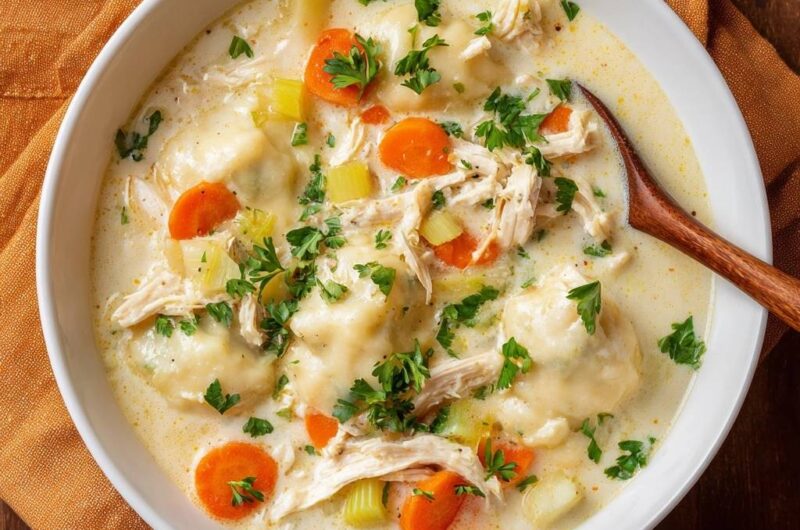
Chicken and Dumplings
Course: Main CourseCuisine: AmericanDifficulty: medium6
servings15
minutes35
minutes480
kcal50
MinutesThis recipe uses a specific steaming technique and a light roux-base to create a rich, velvety broth paired with perfectly cooked, non-gummy dumplings.
Ingredients
1.5 lbs shredded cooked chicken breast
5 cups low-sodium chicken broth
1 cup heavy cream
3 tablespoons all-purpose flour (for thickening the base)
2 tablespoons butter (for sautéing)
3 large carrots, sliced into rounds
2 stalks celery, chopped
1 medium onion, diced
2 cups all-purpose flour (for dumplings)
1 tablespoon baking powder
1 teaspoon salt
3/4 cup whole milk
4 tablespoons melted butter (for dumplings)
1/4 cup fresh parsley, chopped
1/2 teaspoon black pepper
1/2 teaspoon dried thyme
Directions
- In a large pot or Dutch oven, melt 2 tablespoons of butter over medium heat. Add the carrots, celery, and onion. Sauté for 5-7 minutes until the onions are translucent.
- Sprinkle 3 tablespoons of flour over the vegetables and stir for 1 minute to cook out the raw flour taste. Slowly whisk in the chicken broth to ensure no lumps form. Add the thyme and black pepper.
- Bring the mixture to a boil, then reduce heat and simmer for 10 minutes. Stir in the shredded chicken and heavy cream.
- While the base simmers, prepare the dumpling dough. In a medium bowl, whisk together the 2 cups of flour, baking powder, and salt. Stir in the milk and 4 tablespoons of melted butter until a soft, tacky dough forms. Do not overmix; stop as soon as the flour is incorporated to keep dumplings light.
- To solve the gummy dumpling problem, use the “Drop and Lock” technique. Ensure the liquid is at a very gentle simmer (not a rolling boil). Use a small cookie scoop or tablespoon to drop rounded mounds of dough directly onto the surface of the liquid.
- Immediately cover the pot with a tight-fitting lid. Do not lift the lid for 15 minutes. This traps the steam at a consistent temperature, which is the only way to cook the center of the dumpling through without the outside becoming slimy.
- After 15 minutes, remove the lid. The dumplings should be puffed, opaque, and firm to the touch.
- Garnish generously with fresh parsley, ensuring some is stirred into the creamy broth and some is sprinkled on top for the visual finish. Serve immediately in deep bowls.
Notes
- To avoid gummy dumplings, use the Drop and Lock technique by keeping the lid closed for a full 15 minutes to trap steam.