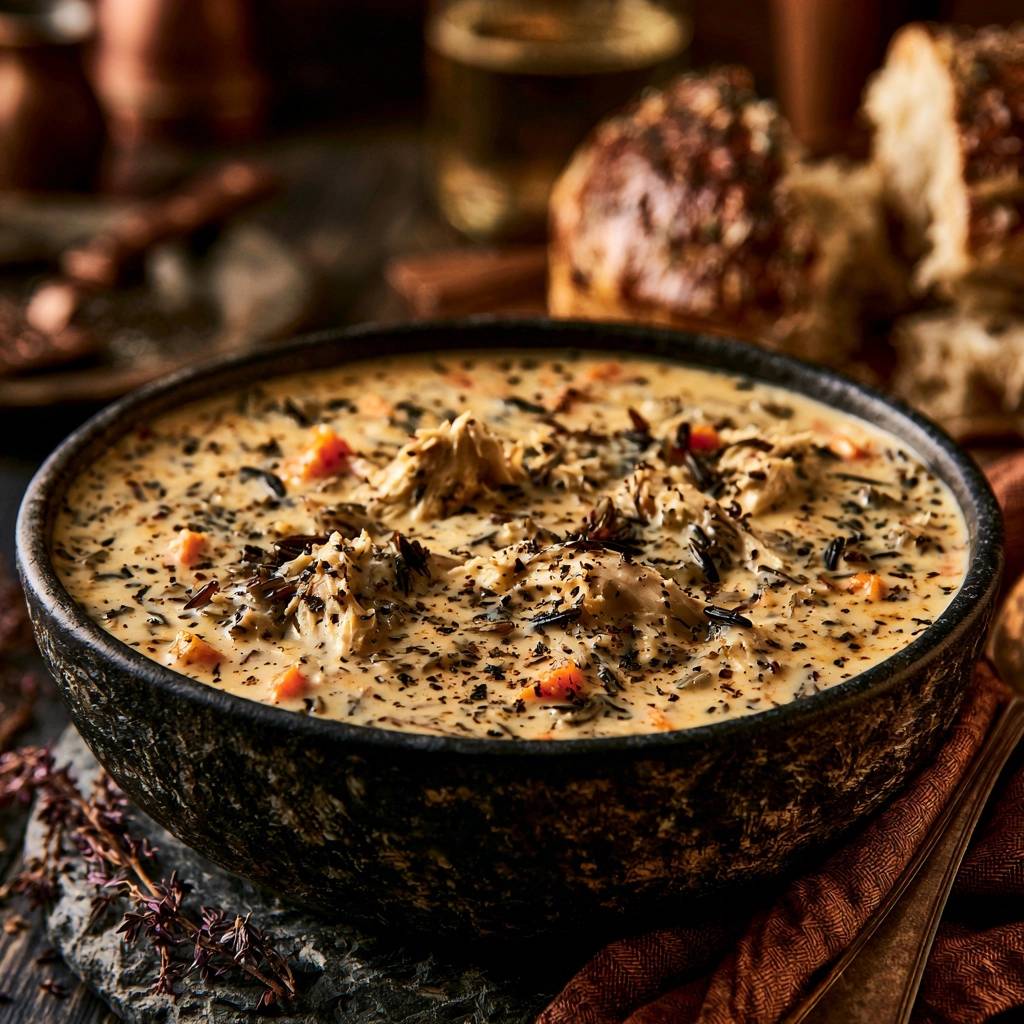
Most home cooks have experienced the disappointment of a watery wild rice soup. You expect a rich, velvet-like broth, but you end up with a thin liquid where the grains just sink to the bottom. This “Watery Soup Syndrome” usually happens because the cream is added directly to the broth without a proper binding agent.
The secret to achieving that iconic restaurant-quality texture is the “Bechamel-Integration” method. Instead of just pouring cream into the pot, you create a concentrated, seasoned gravy base separately. This technique ensures the soup stays thick and glossy, perfectly coating every grain of rice and piece of tender chicken.
I’ve found that the starch in wild rice behaves differently than white rice, requiring a specific emulsification process. By following this method, you’ll create a permanent bond between the fats and the liquids. The result is a deep, opaque consistency that feels incredibly luxurious on the palate without ever feeling heavy or greasy.
The Anatomy of 100% Wild Rice
True wild rice isn’t actually rice at all; it’s a long-grain marsh grass native to North America. It has a smoky, nutty flavor and a firm, chewy texture that stands up beautifully to long simmering. Unlike white rice, which can turn to mush, wild rice maintains its structural integrity even in a creamy base.
You’ll know the rice is perfectly cooked when you see the “bloom.” This is the specific moment the dark outer husk splits open to reveal a pale, tender interior. If you don’t see that little curl of white, the rice will likely be too crunchy and stick to your teeth.
Avoid using “quick-cook” or parboiled wild rice packets for this recipe. Those processed grains are designed to cook in ten minutes and will disintegrate during the 45-minute simmer required for the chicken. Stick to 100% wild rice or a high-quality blend for the best mouthfeel.
Essential Components for a Velvety Base
A great soup starts with a controlled foundation, which is why I always recommend low-sodium chicken broth. This allows you to manage the salt levels yourself, especially since the wild rice and the roux both require careful seasoning. If you use full-sodium broth, the final reduction might end up unpleasantly salty.
The aromatic foundation relies on a classic mirepoix: carrots, celery, and onion. These vegetables should be diced finely so they soften into the background, providing sweetness without distracting from the rice. Using whole chicken breasts rather than pre-cooked meat is a game-changer for moisture.
When you poach the chicken directly in the broth, it stays incredibly juicy. Pre-cooked rotisserie chicken often becomes dry and stringy when boiled a second time. By starting with raw poultry, you also infuse the cooking liquid with extra savory notes that you just can’t get from a carton of broth alone.
Selecting the Right Poultry and Produce
Boneless, skinless chicken breasts are the gold standard here because they shred into clean, chunky bites. They absorb the flavors of the thyme and rosemary while they simmer. Make sure your vegetable dice is uniform, roughly the size of a pea, so everything finishes cooking at the exact same time.
The Herb Profile: Thyme, Rosemary, and Poultry Seasoning
Dried herbs are actually preferred over fresh during the long simmer phase because their oils stand up better to heat. Thyme and rosemary provide an earthy, woodsy backbone that complements the smoky rice. However, the real “pro” move is the addition of poultry seasoning.
Poultry seasoning usually contains a blend of sage and marjoram, which adds a nostalgic, Sunday-dinner depth. It bridges the gap between the savory chicken and the rich cream. It’s that “hidden” flavor that makes people ask for your secret recipe.
Phase One: Simmering the Aromatic Broth
Start by combining your broth, rice, vegetables, and herbs in a large Dutch oven. Gently nestle the whole chicken breasts into the liquid. You want to bring this to a boil and then immediately drop the heat to a very low simmer.
Cooking the chicken “low and slow” is vital for the texture. If the liquid boils too vigorously, the muscle fibers in the chicken will tighten up and become rubbery. Keep the lid on tight to trap the steam, which helps the wild rice grains hydrate and eventually bloom.
After about 40 minutes, check the rice. You are looking for those split husks and a tender bite. Once the chicken reaches an internal temperature of 165°F, pull it out. Let it rest for a few minutes before shredding so the juices stay inside the meat.
The Bechamel-Integration: Achieving Restaurant-Quality Thickness
This is where the magic happens. While your soup base is simmering, melt your butter in a separate saucepan. Whisk in the flour to create a roux. You need to cook this for at least two minutes until it smells slightly nutty.
Cooking the flour is a non-negotiable step. If you skip this, your soup will have a raw, pasty aftertaste that coats the tongue unpleasantly. You aren’t looking for a dark brown color—just a pale gold that indicates the starch molecules are ready to thicken.
Tempering the Heavy Cream
Slowly whisk the heavy cream into your roux. It will look thick and clumpy at first, but keep whisking until it transforms into a smooth, heavy gravy. This is your “concentrated base.” Adding the cream this way prevents it from breaking or curdling when it hits the hot broth.
Don’t forget the Worcestershire sauce at this stage. It might seem like a strange addition to a cream soup, but it provides a massive umami boost. The acidity and fermented notes in the sauce cut right through the richness of the dairy, balancing the entire flavor profile.
Emulsifying the Soup for a Glossy Finish
Now, gradually pour that thick cream mixture into the main pot while stirring vigorously. You’ll see the broth transform from a clear brown to a deep, opaque cream color. The starches from the rice and the flour in the roux will bond together instantly.
Let the soup simmer uncovered for another five to ten minutes. This final rest allows the flavors to meld and the consistency to tighten up. You’ll notice a glossy sheen on the surface, which is the sign of a perfectly emulsified soup that won’t separate in the bowl.
Troubleshooting Common Texture Issues
If your soup looks too thick, don’t panic. Wild rice is incredibly thirsty and will continue to soak up liquid. Simply stir in an extra half-cup of warm broth until you reach your desired consistency. Always add liquid gradually so you don’t accidentally thin it out too much.
If the rice is still a bit crunchy after the allotted time, it might be due to the age of the grain. Older rice takes longer to hydrate. In this case, keep the lid on and let it sit off the heat for ten minutes; the residual heat often finishes the job without overcooking the vegetables.
Flavor Variations and Dietary Swaps
For a “Forest Floor” variation, you can sauté a cup of cremini or shiitake mushrooms in butter and add them along with the shredded chicken. The earthiness of the mushrooms is a natural partner for the wild rice. It adds a meaty texture that makes the soup feel even heartier.
If you need a gluten-free version, you can skip the flour roux and use a cornstarch slurry mixed with the heavy cream. However, keep in mind that cornstarch provides a more translucent, “jelly-like” thickness compared to the rich, opaque finish of a traditional flour roux.
Optimal Pairings for Creamy Chicken and Wild Rice Soup
Because this soup is so rich and savory, it pairs best with something that offers a bit of acidity. A simple arugula salad with a sharp lemon vinaigrette is the perfect palate cleanser. The peppery greens cut through the heavy cream beautifully.
Of course, you can’t go wrong with bread. A thick slice of toasted sourdough or a warm baguette is essential for swiping up every last drop of that velvet broth. The crunch of the crust provides a great contrast to the tender rice and chicken.
Storage, Reheating, and Freezing Protocols
This soup actually tastes better the next day as the herbs continue to infuse the broth. However, be aware that the rice will continue to absorb moisture in the fridge. When you go to reheat it, the soup will likely look like a thick porridge.
To restore the original texture, add a splash of broth or water before heating. Always reheat cream-based soups over low heat on the stove. Never let it reach a rolling boil during reheating, or the dairy might “split,” leaving you with a grainy texture and a layer of oil on top.
I don’t recommend freezing this soup. Dairy-heavy liquids often separate and become watery or grainy once thawed. The wild rice can also become unpleasantly mushy after the freezing and thawing process. It’s best enjoyed fresh or within three days from the fridge.
Expert Tips for Professional Presentation
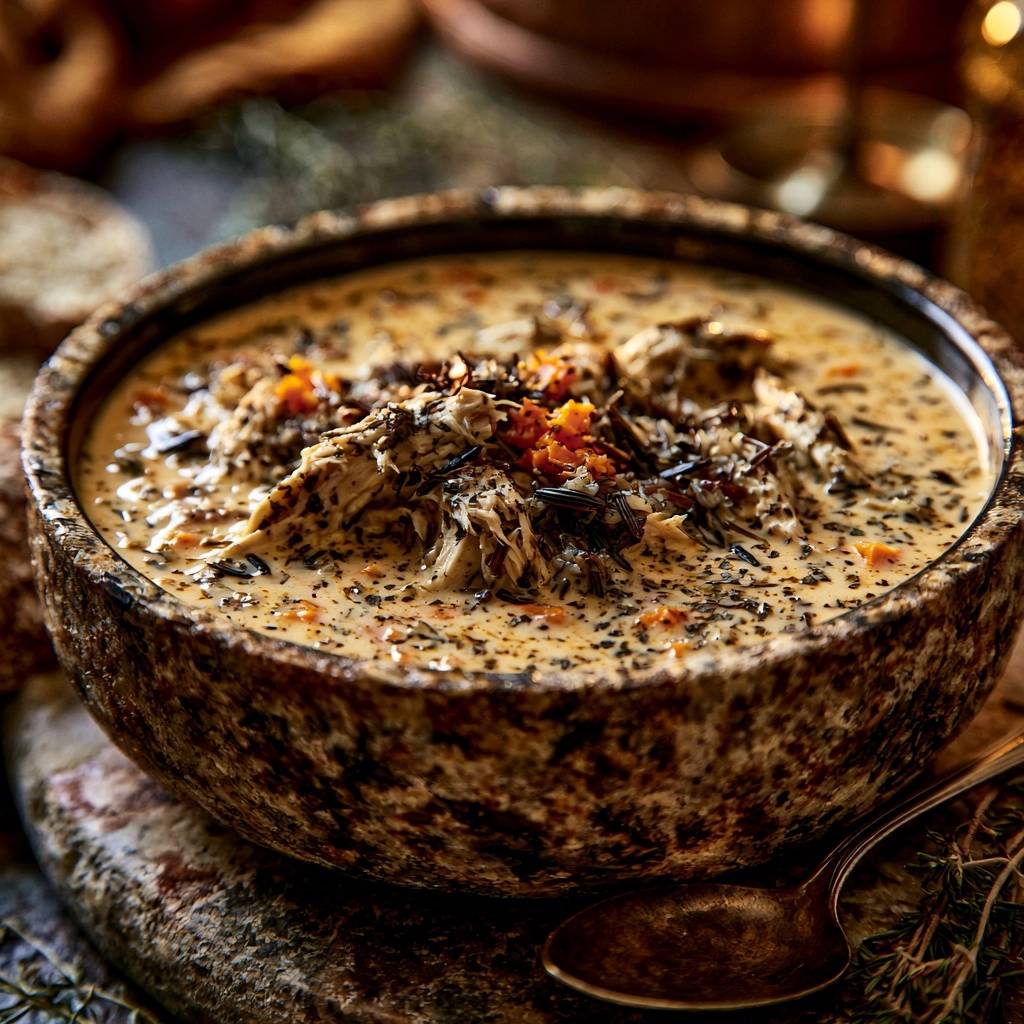
To make this look as good as it tastes, focus on visual contrast. Use wide, shallow bowls to show off the density of the ingredients. A heavy sprinkle of freshly cracked black pepper provides a sharp visual pop against the pale cream broth.
Finish each bowl with a pinch of fresh parsley or a few thyme leaves. The bright green color signals freshness and breaks up the monochromatic look of the soup. If you’re feeling fancy, a tiny drizzle of high-quality olive oil on top adds a beautiful shimmer.
Technical Troubleshooting and FAQ
Why is my wild rice still tough after 45 minutes?
Several factors can cause tough rice, including high altitude or very hard water. However, the most common culprit is the age of the rice. Older grains lose moisture and take much longer to soften. If your rice is stubborn, try soaking it in water for two hours before cooking, or simply extend the simmer time by 15 minutes before adding the cream base.
Can I use chicken thighs instead of breasts?
Yes, chicken thighs are a fantastic substitution. They have a higher fat content, which makes them even more flavorful and nearly impossible to overcook. If you use thighs, you might notice a bit more oil on the surface of the soup. You can easily skim this off with a spoon before you integrate the cream mixture.
How do I prevent a skin from forming on the soup?
A “skin” forms on dairy-based soups when proteins coagulate upon contact with air. To prevent this while serving, keep the lid on the pot between servings. If you are storing it in the fridge, you can press a piece of plastic wrap or parchment paper directly onto the surface of the soup before sealing the container to block out all air.
Is it possible to make this in a slow cooker?
You can definitely start this in a slow cooker by placing the broth, rice, chicken, and aromatics inside for 4 hours on high or 7 hours on low. However, you must still make the butter, flour, and cream mixture on the stovetop at the very end. Stir the stovetop “concentrated base” into the slow cooker for the last 20 minutes to ensure the texture is thick and velvety.
What is the best way to salt a rice-heavy soup?
Rice is a neutral starch that acts like a sponge for salt. If you season only at the beginning, the rice will absorb the salt and the broth will taste bland. The best approach is to season the broth lightly at the start, then do a final “aggressive” seasoning after the cream has been integrated. This ensures both the grains and the velvet broth are perfectly balanced.
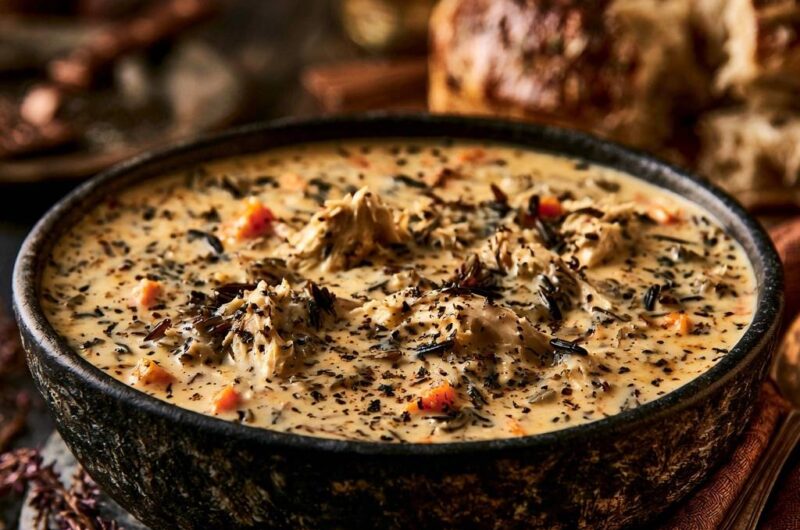
Creamy Chicken and Wild Rice Soup
Course: Main CourseCuisine: AmericanDifficulty: easy6
servings15
minutes55
minutes70
Minutes420
kcalAmerican
Ingredients
1 cup uncooked 100% wild rice (or a high-quality wild rice blend)
1.5 lbs boneless skinless chicken breasts
1 cup carrots, finely diced
1 cup celery, finely diced
1 medium onion, finely chopped
4 cloves garlic, minced
5 cups low-sodium chicken broth
1 teaspoon dried thyme
1 teaspoon dried rosemary
1/2 teaspoon poultry seasoning
1/2 cup unsalted butter
1/2 cup all-purpose flour
2 cups heavy cream
1 tablespoon Worcestershire sauce
Salt and cracked black pepper to taste
Fresh parsley and extra thyme for garnish
Directions
- Simmer the Base: In a large Dutch oven, combine the chicken broth, wild rice, carrots, celery, onion, garlic, thyme, rosemary, and poultry seasoning. Place the whole chicken breasts into the liquid. Bring to a boil, then immediately reduce heat to low. Cover and simmer for 35-45 minutes. The rice should be tender and “bloomed” (split open), and the chicken should be fully cooked.
- Shred the Chicken: Remove the chicken breasts from the pot and transfer to a cutting board. Use two forks to shred the meat into chunky, bite-sized pieces. Return the shredded chicken to the pot.
- Create the Thickening Base: While the soup is simmering, melt the butter in a separate medium saucepan over medium heat. Whisk in the flour and cook for 2-3 minutes until it smells slightly nutty but hasn’t browned deeply.
- Temper the Cream: Slowly pour the heavy cream into the flour/butter mixture, whisking constantly to avoid lumps. Add the Worcestershire sauce. Continue cooking and whisking over medium heat until the mixture becomes a very thick, smooth gravy. This “concentrated base” is what prevents the soup from becoming watery.
- Combine and Emulsify: Gradually pour the thick cream mixture into the main Dutch oven. Stir vigorously to incorporate. Let the soup simmer uncovered for an additional 5-10 minutes. The starch from the rice and the roux will bond, creating the deep, opaque, velvety consistency seen in the image.
- Final Seasoning: Taste the soup. Wild rice requires a significant amount of salt to bring out its earthy flavor. Season generously with salt and plenty of cracked black pepper.
- Serve: Ladle into deep bowls. Garnish with fresh herbs and serve with crusty, toasted bread to match the visual presentation.
Notes
- The secret to the texture is the Bechamel-Integration method. Wild rice requires a good amount of salt to highlight its earthy flavor, so do not skip the final seasoning step.