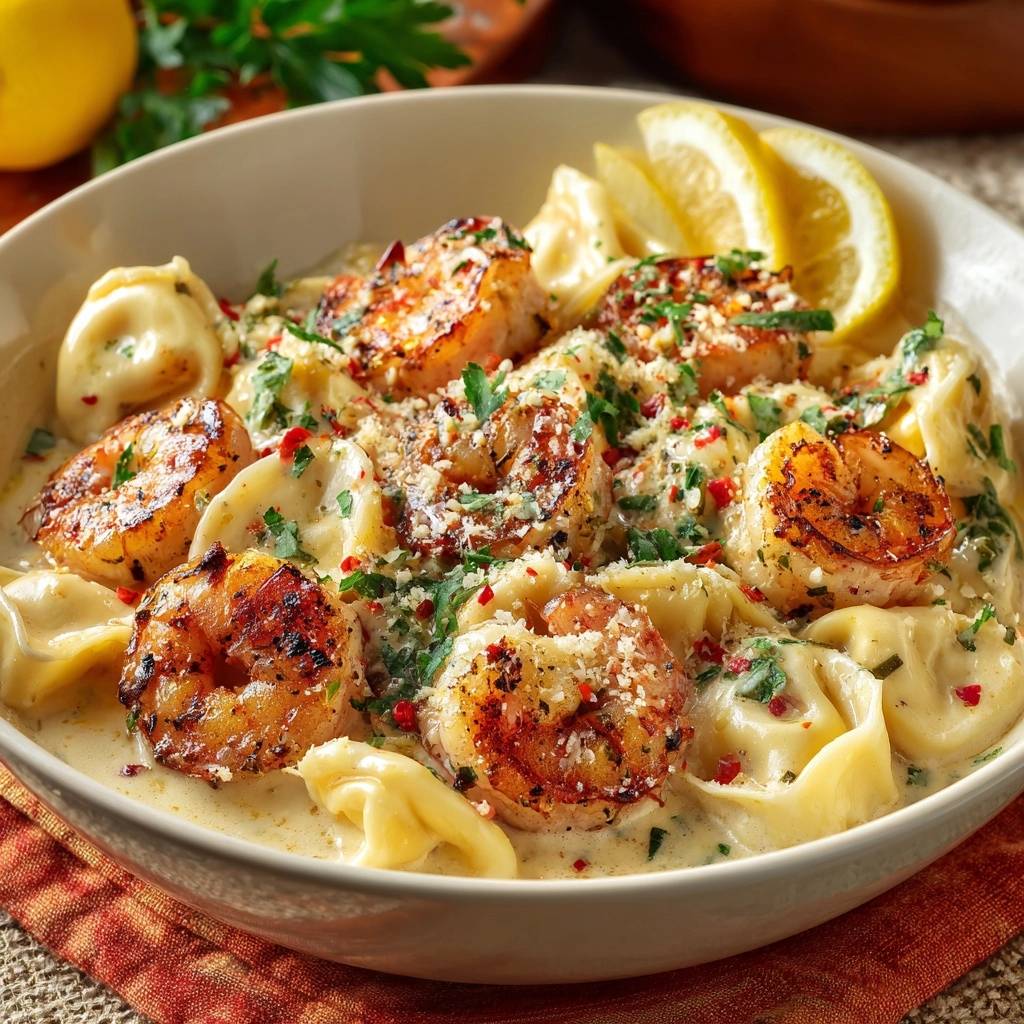
Few things are more disappointing than a homemade pasta dish that looks beautiful in the pan but leaves a watery puddle at the bottom of your bowl. You want a sauce that hugs the pasta, not one that runs away from it. This Creamy Garlic Shrimp Tortellini solves that problem by focusing on a restaurant-grade emulsion that stays thick and silky until the very last bite.
The sensory experience here is all about contrast. You get the snap of jumbo shrimp seared to a golden crisp against the pillowy, cheese-filled centers of the tortellini. Because this entire meal comes together in just 25 minutes, it’s the perfect solution for a busy weeknight when you still want something that feels like a splurge.
For a similar take on shrimp’s texture, check out this crispy garlic shrimp pasta.
The secret to this success lies in the starch. Most home cooks drain their pasta and rinse it, which is a huge mistake. By undercooking the tortellini slightly and finishing it directly in the simmering cream, the pasta releases its natural starches into the sauce. This creates a molecular bond that thickens the cream naturally without needing heavy flours or thickeners.
The Science of a Non-Watery Cream Sauce
Creating a stable cream sauce is more about chemistry than luck. When you sear the shrimp in butter and oil, they leave behind tiny brown bits known as “fond.” These bits are concentrated flavor bombs. When you pour in the heavy cream, you are deglazing the pan, lifting that fond into the liquid to create a complex, savory base.
Heavy cream is the ideal candidate for this sauce because it has a high fat content, which makes it resistant to curdling when heated. As the cream simmers, the water evaporates, concentrating the fats and proteins. However, the real stability comes from the addition of freshly grated Parmesan cheese. The proteins in the cheese act as an emulsifier, helping the fat and liquid stay joined together.
Finishing the pasta in the skillet is the final, non-negotiable step. As the tortellini finishes its last two minutes of cooking in the sauce, it acts like a sponge. It soaks up the flavored cream while simultaneously shedding starch. This exchange is what creates that glossy, velvet-like glaze that clings to every curve of the pasta.
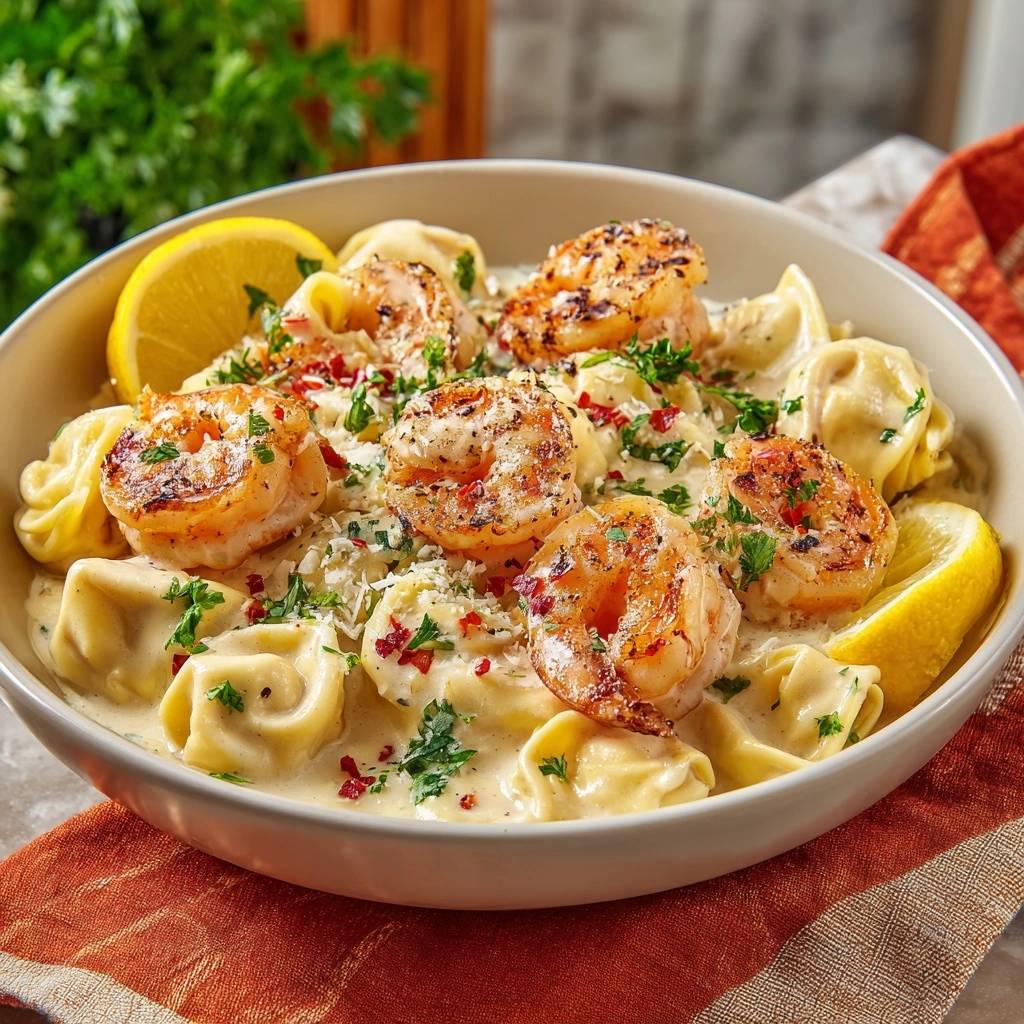
Essential Components for Creamy Garlic Shrimp Tortellini
Quality ingredients are the backbone of a simple dish like this. For the shrimp, I always recommend jumbo 16/20 count. These are large enough to get a deep, crusty sear on the outside without turning rubbery in the middle. If you use smaller shrimp, they often overcook before the pan can even develop a good sear.
When it comes to the tortellini, fresh or refrigerated versions usually offer a better texture than the dried, shelf-stable bags. Fresh tortellini only needs a few minutes in the water, which keeps the pasta delicate. If you use frozen, just be sure not to overcook them in the boiling water, as they will continue to soften once they hit the warm cream sauce.
The most important rule for the cheese is to buy a block of Parmesan and grate it yourself. Pre-shredded cheeses are coated in potato starch or cellulose to prevent clumping in the bag. While that’s great for storage, it’s terrible for melting. Those anti-clumping agents will make your sauce feel grainy or sandy rather than smooth.
Selecting and Preparing the Shrimp
To get that beautiful Maillard reaction—the browning that creates flavor—you must pat the shrimp bone-dry with paper towels. Any moisture on the surface of the shrimp will create steam, and steamed shrimp won’t get that golden-brown crust. I like to leave the tails on for a more elegant look, but feel free to remove them for easier eating.
The addition of paprika isn’t just for a hint of warmth. It acts as a natural pigment that helps the shrimp achieve a deep, sun-kissed hue very quickly. This ensures you get the visual appeal of a well-cooked protein without having to leave them in the pan so long that they become tough.
The Role of Starchy Pasta Water
Before you drain your pasta, always scoop out a cup of that cloudy, salty water. This “liquid gold” is a powerful tool for any pasta sauce. The starch molecules in the water act as a bridge between the fats in the butter and the liquids in the cream.
If your sauce ever looks like it’s separating or “breaking,” a splash of this water and a vigorous stir will usually bring it back together. It adds body and silkiness without diluting the flavor. It’s the difference between a sauce that sits on top of the pasta and one that truly becomes part of it.
Step-by-Step: Searing Shrimp and Reducing the Base
Start by heating your skillet over medium-high heat. You want the butter to be foaming but not turning brown. Once that foam subsides, drop your seasoned shrimp in. Don’t crowd the pan; if they are too close together, the temperature will drop and they’ll start to boil in their own juices. You’re looking for a vibrant pink color and a distinct golden crust after about two minutes per side.
Once the shrimp are done, pull them out immediately. If you leave them in while the sauce reduces, they will turn into little rubber balls. Lower the heat to medium before adding your garlic. Garlic burns in a heartbeat, so only let it dance in the butter for about 30 seconds until you can really smell it.
Pour in the heavy cream and use a wooden spoon to scrape the bottom of the pan. You’ll see the cream turn a light amber color as it picks up the shrimp fond. Let it simmer gently. You aren’t looking for a rolling boil, just a steady bubble. After about four minutes, the cream will have reduced slightly and thickened into a rich base.
The Finishing Technique: Achieving the Perfect Glaze
Now comes the marriage of the components. Your tortellini should be “al dente,” which means it still has a bit of a firm bite in the center. Drop the pasta into the simmering cream and add a splash of that reserved pasta water. This is where the magic happens.
Toss the pasta constantly for about two minutes. You will see the sauce transform from a thin liquid into a thick, glossy glaze. It should coat the back of a spoon and stay there. If it feels too thick or sticky, add another tablespoon of pasta water to loosen it up. The goal is a sauce that moves fluidly but stays attached to the tortellini.
Texture Enhancements: The Toasted Panko Secret
While the pasta is creamy and soft, adding a “crunch factor” takes this dish to another level. Most people associate a crunchy topping with baked pasta, but you can get that same effect on the stovetop. Take your panko breadcrumbs and toast them in a small, dry pan over medium heat for about three minutes.
Keep the crumbs moving constantly so they don’t burn. Once they are a deep golden brown, set them aside. Sprinkling these over the finished dish provides a necessary textural break from the richness of the cream. It mimics the crust of a gourmet mac and cheese and adds a professional, finished look to the plate.
Troubleshooting Common Cream Sauce Pitfalls
If you notice your sauce starting to look oily or separated, your heat is likely too high. A broken sauce happens when the fat separates from the solids. To fix this, remove the pan from the heat and whisk in a tablespoon of cold cream or pasta water until it re-emulsifies.
On the flip side, if the sauce becomes too thick and starts to look like a paste, don’t panic. This usually happens if the pasta sits in the pan too long and absorbs all the moisture. Simply stir in a little more pasta water or a splash of milk until the desired consistency returns.
Finally, if your shrimp feel tough, you likely overcooked them during the initial sear or left them in the sauce too long. Remember, they only need to return to the pan for the final 30 seconds just to warm through. They don’t need any more actual cooking time once the sauce is finished.
Flavor Variations and Ingredient Swaps
This recipe is a fantastic canvas for other flavors. If you want a bit of acidity to cut through the fat, stir in some chopped sun-dried tomatoes or a squeeze of extra lemon juice at the very end. For a pop of color and nutrition, a few handfuls of fresh baby spinach can be folded in during the last minute of simmering; it will wilt perfectly in the residual heat.
For a bright citrus twist on this pasta, explore our creamy lemon shrimp tortellini.
If you can’t find tortellini, this sauce works beautifully with lobster ravioli or even a sturdy penne pasta. For a lighter version, you can replace half of the heavy cream with a high-quality vegetable stock, though the sauce will be thinner and less velvety. Just ensure you keep the Parmesan cheese, as it provides the necessary salt and structure for the sauce.
Optimal Side Dishes for Rich Pasta
Because this dish is quite rich and decadent, you want side dishes that offer high acidity and a fresh crunch. A simple arugula salad dressed with nothing but lemon juice, olive oil, and a pinch of salt is the perfect companion. The peppery bite of the arugula cuts right through the heavy cream.
What to Serve Alongside
Round out your meal with these complementary dishes that share similar flavors or textures.
- For a touch of something green and crisp, consider these bacon-wrapped asparagus bundles, offering a satisfying crunch.
- Add some warm, cheesy bread to your table with these cheesy garlic pull-apart rolls, perfect for soaking up any extra sauce.
Roasted broccolini with a sprinkle of red pepper flakes or charred zucchini ribbons also work well. These green vegetables provide a visual and nutritional balance to the plate. Avoid heavy, buttery garlic bread; instead, opt for a crusty sourdough if you want something to mop up the extra sauce.
Expert Tips for Storage and Reheating
Cream-based pastas are notoriously tricky to reheat because the sauce tends to break and turn oily in the microwave. If you have leftovers, store them in an airtight container for up to two days. I do not recommend freezing this dish, as the cream will likely separate and the tortellini can become mushy upon thawing.
To reheat, the stovetop is your best friend. Place the pasta in a small skillet over low heat and add a splash of milk or water. Stir gently as it warms up. The extra liquid will help loosen the sauce and restore that creamy emulsion without making it greasy. If you must use a microwave, use 50% power and stir every 30 seconds.
Expert Troubleshooting
Can I use half-and-half instead of heavy cream?
You can, but you have to be very careful. Half-and-half has a much lower fat content, which means it is far more likely to curdle or “break” when it hits the heat or the acidic lemon juice. If you use it, keep the heat very low and do not let the sauce come to a hard boil. The resulting sauce will also be significantly thinner than one made with heavy cream.
How do I know when the shrimp are perfectly cooked?
Shrimp give you very clear visual cues. When they are raw, they are translucent and gray. As they cook, they turn opaque and pink. You want to pull them off the heat when they form a “C” shape. If they tightly curl into an “O” shape, they are overcooked and will likely be rubbery. The goal is a gentle curve with a nice golden crust from the paprika and sear.
Why is my cheese clumping instead of melting into the sauce?
This usually happens for two reasons: either you used pre-shredded cheese from a bag, or the sauce was too hot when you added the cheese. High heat can cause the proteins in the cheese to tighten up and clump together rather than melting smoothly. For the best results, turn the heat down to low before stirring in your freshly grated Parmesan.
Can I make this ahead of time for a dinner party?
This dish is best served immediately because the starch in the pasta will continue to soak up the sauce as it sits. However, you can prep the components in advance. Peel and season the shrimp, grate the cheese, and chop the parsley a few hours ahead. When your guests arrive, the actual cooking process only takes about 15 minutes, allowing you to serve a fresh, restaurant-quality meal with minimal stress.
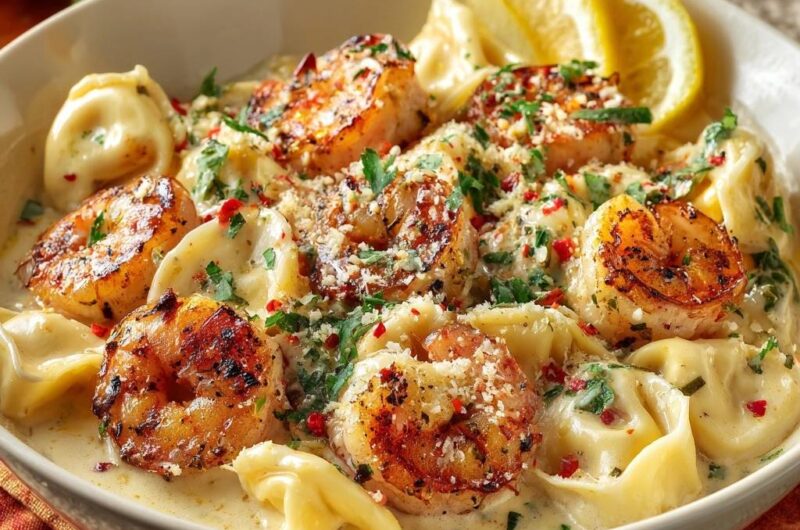
Shrimp Tortellini
Course: Main CourseCuisine: AmericanDifficulty: easy4
servings10
minutes15
minutes580
kcal25
MinutesA decadent pasta dish featuring cheese tortellini and jumbo shrimp tossed in a silky garlic cream sauce. The recipe uses a specific starch-binding method to ensure the sauce perfectly coats the pasta without leaving liquid at the bottom of the bowl.
Ingredients
1 pound cheese tortellini (fresh or frozen)
1 pound jumbo shrimp, peeled and deveined
2 tablespoons butter
1 tablespoon olive oil
1 teaspoon paprika
1/2 teaspoon garlic powder
4 cloves garlic, minced
1 cup heavy cream
1/2 cup freshly grated parmesan cheese (plus extra for garnish)
1/4 cup panko breadcrumbs (toasted for the visual “crust” garnish)
1/2 teaspoon red pepper flakes
1/4 cup fresh parsley, finely chopped
1 lemon, cut into wedges
Salt and black pepper to taste
Directions
- Bring a large pot of salted water to a boil. Cook the tortellini for 2 minutes less than the package directions suggest. Reserve 1/2 cup of the starchy pasta water before draining.
- While the water boils, pat the shrimp completely dry with paper towels. Season them with salt, pepper, paprika, and garlic powder.
- Heat the olive oil and 1 tablespoon of butter in a large skillet over medium-high heat. Once the butter is foaming, add the shrimp in a single layer. Sear for 2 minutes per side until deeply golden-brown and opaque. Remove shrimp from the pan and set aside.
- Lower the heat to medium. Add the remaining tablespoon of butter and the minced garlic. Cook for 30 seconds until fragrant. Pour in the heavy cream and bring to a gentle simmer. Let the cream reduce for 3 to 4 minutes, scraping up the browned bits (fond) from the shrimp to flavor the sauce.
- Stir in the parmesan cheese and red pepper flakes. Once the cheese is melted and the sauce is thick enough to coat the back of a spoon, add the undercooked tortellini.
- Add a splash of the reserved pasta water. Toss the pasta in the sauce for 2 minutes over medium heat. The starch will bind the cream and cheese to the pasta, creating a thick, non-watery glaze.
- Fold the seared shrimp back into the pan just to warm through.
- Plate the dish and top with a generous sprinkle of toasted panko breadcrumbs, extra parmesan, and fresh parsley to achieve the textured, golden finish shown in the image. Serve immediately with lemon wedges.
Notes
- To ensure a thick sauce, cook the pasta for 2 minutes less than the package directions and finish it directly in the cream sauce with a splash of reserved starchy pasta water. Always pat shrimp dry before searing to achieve a golden-brown crust.