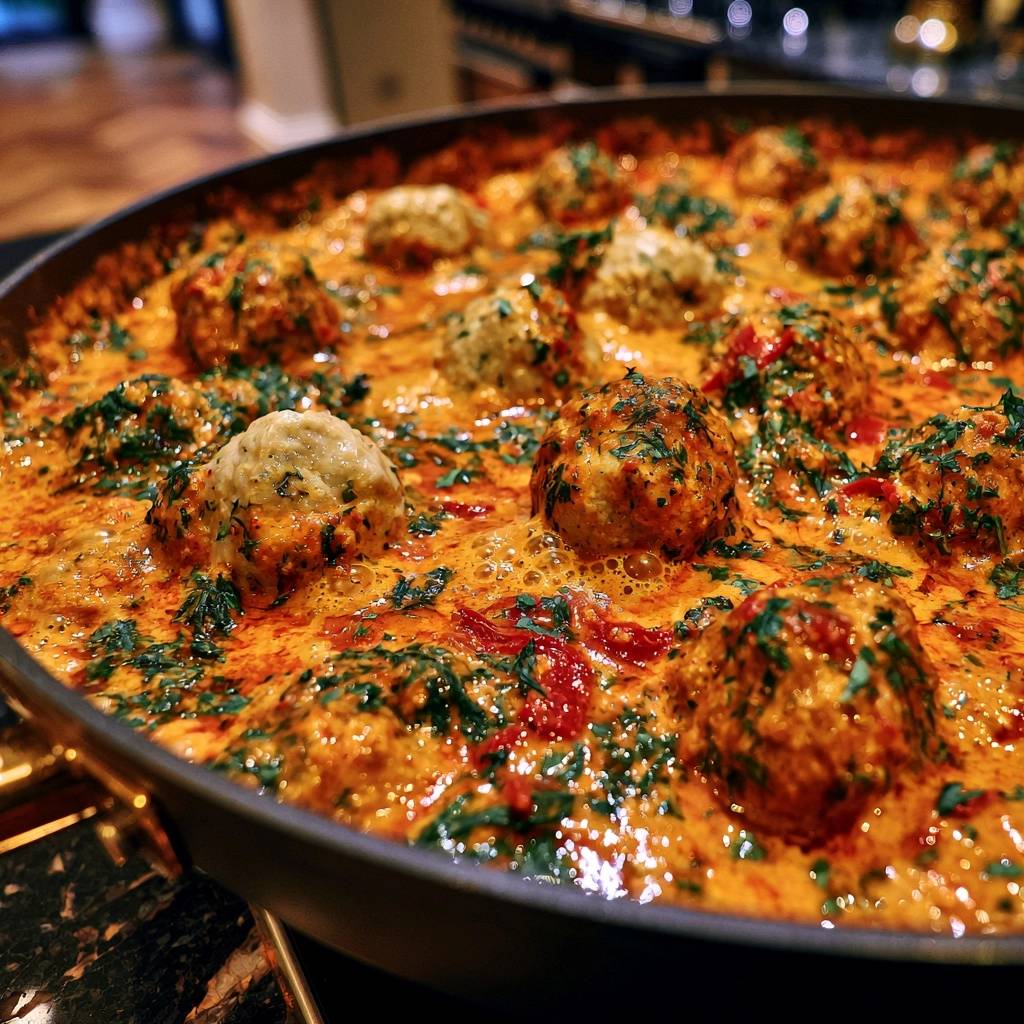
We have all been there. You bite into a meatball expecting a tender, juicy morsel, but instead, you get something with the texture of a rubber eraser. It is a common kitchen heartbreak, especially when working with lean meats like turkey or chicken. Most recipes tell you to sear the life out of the meat first, which often results in a tough, bouncy exterior that refuses to soak up any flavor.
These Creamy Roasted Red Pepper Meatballs change the game by leaning into a vibrant, orange-hued sauce and a gentle poaching method. By skipping the harsh pan-sear, you allow the meatballs to stay incredibly soft while they absorb the smoky sweetness of the peppers. It is a sophisticated, colorful dish that looks like it came from a high-end bistro but feels like the ultimate comfort food.
The secret to this success lies in the moisture-lock technique. Instead of just tossing breadcrumbs into the meat, we create a panade. This simple step ensures that even the leanest poultry stays succulent. When you combine that tenderness with a velvety cream sauce, you get a meal that is light yet deeply satisfying.
The Science of the Panade Moisture-Lock
If you want to avoid the dreaded “bouncy” meatball, you need to understand the panade. A panade is a mixture of starch and liquid, in this case, panko breadcrumbs and milk. When you let these sit for five minutes, the starch granules swell and create a paste-like gel. This gel acts as a physical barrier between the protein fibers in the meat.
When meat cooks, the proteins naturally want to knit together and tighten up, which squeezes out moisture. However, the panade gets in the way of that process. It keeps the meat fibers separated, ensuring the texture remains delicate rather than dense. If you use dry crumbs without soaking them first, they actually pull moisture out of the meat, leading to a dry result.
Using panko specifically provides a lighter structure than traditional fine breadcrumbs. Because panko has a larger, airier surface area, it creates more “pockets” for the milk to inhabit. This results in a meatball that feels airy and melts in your mouth. It is a small scientific tweak that makes a massive difference in the final bite.
Choosing Your Protein: Turkey vs. Chicken
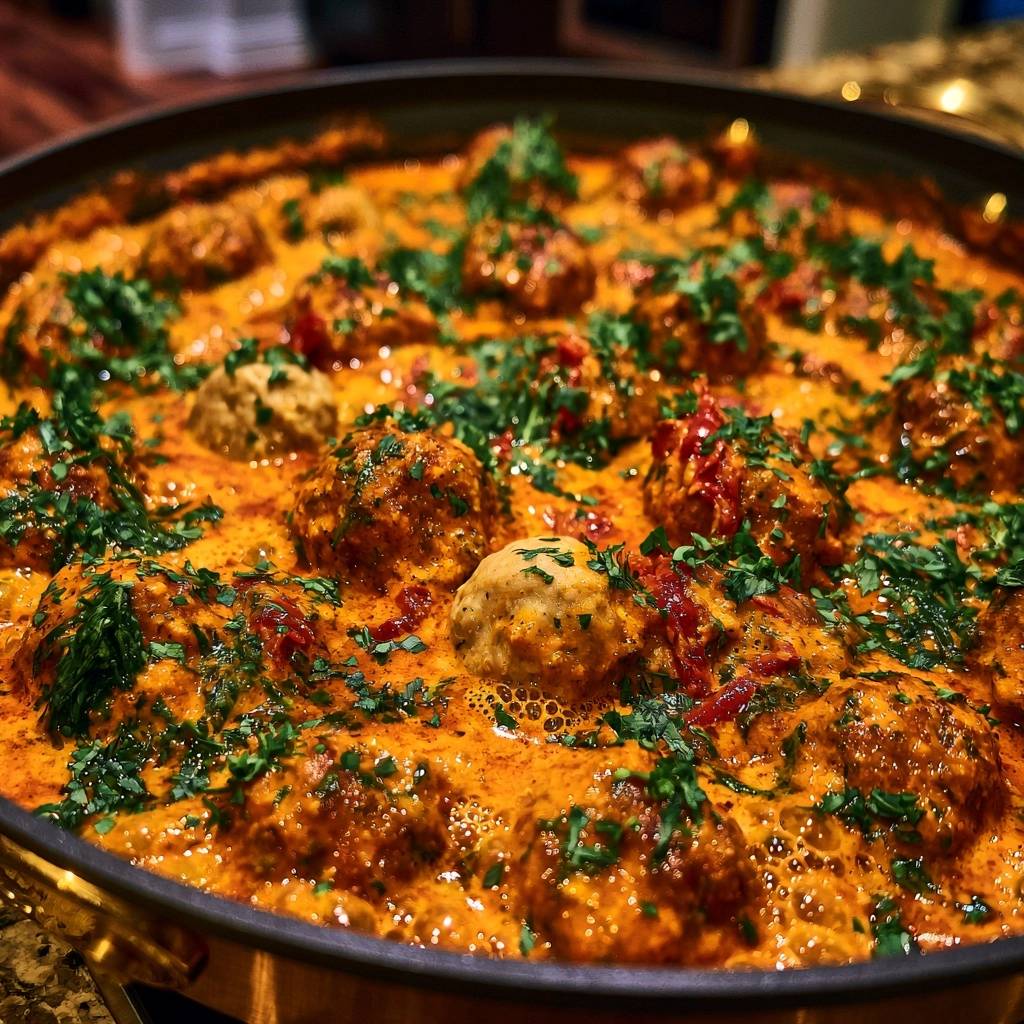
Lean white meats are the stars of this show because they provide a clean canvas for the roasted red pepper sauce. Ground turkey or chicken works beautifully here because their mild flavor doesn’t compete with the sweetness of the peppers. Additionally, the pale color of the meat creates a stunning visual contrast against the bright, sunset-orange sauce.
However, because these meats have very little fat compared to beef or lamb, they are much more prone to drying out. This is why the panade is non-negotiable for poultry. The lower fat content means you have less margin for error, so the added moisture from the milk and egg is what keeps the dish from feeling lean or bland.
Essential Components for the Pepper Cream Base
The sauce is the soul of this dish, and it starts with high-quality roasted red peppers. While you can roast your own over a gas flame, jarred roasted peppers are a fantastic shortcut because they sit in a light brine that adds a subtle tang. Just make sure to drain them well so you don’t water down your cream base.
Tomato paste plays a crucial supporting role here. You aren’t making a tomato sauce, but a single tablespoon of paste adds a “base note” of umami. It deepens the flavor of the peppers and gives the sauce a more complex, savory backbone. Without it, the sauce can sometimes taste a bit too one-dimensional and sweet.
Heavy cream is the final piece of the puzzle. It mellows out the acidity of the peppers and creates a luxurious, silky mouthfeel. When blended with the peppers and chicken broth, it forms a thick, pourable sauce that clings perfectly to the meatballs. The result is a sauce that feels rich but doesn’t weigh you down.
The Role of Fresh Herbs as a Primary Ingredient
In many recipes, herbs are just a garnish you sprinkle on at the end for a pop of color. Here, the parsley and dill are treated as primary ingredients. The “heavy herb garnish” provides a necessary grassy, fresh contrast to the richness of the heavy cream and the sweetness of the roasted peppers.
Dill, in particular, brings a unique brightness that pairs exceptionally well with cream-based sauces. It cuts through the fat and adds a layer of sophistication. Don’t be afraid to be generous with the herbs; you want them to coat the tops of the meatballs, adding texture and a burst of garden-fresh flavor to every forkful.
Step-by-Step: Preparing the Meatball Mixture
When it comes time to mix your ingredients, you must use a gentle hand. Over-mixing is the fastest way to ruin a meatball. If you work the meat too much, the proteins cross-link and become tough, resulting in a texture more like a sausage than a tender meatball. Use your hands and stop the moment everything looks evenly distributed.
Aim for a diameter of about 1.5 inches for each ball. This size is the “Goldilocks” zone for poaching. It is large enough to stay juicy in the center but small enough to cook through quickly in the simmering sauce. If they are too big, the outside might overcook before the middle is safe to eat.
As you roll them, try not to pack the meat too tightly. You want just enough pressure to hold the shape. If you squeeze them into hard spheres, you lose those little nooks and crannies that would otherwise trap the sauce. A light touch ensures the meatballs remain porous and tender.
The Poaching Technique: Why We Skip the Sear
Most cooks are taught that you must sear meat to “lock in juices,” but that is actually a myth. Searing creates a Maillard reaction, which adds flavor, but it also creates a hard, crusty exterior. For this specific recipe, a hard crust is the enemy of the velvety texture we are trying to achieve.
By dropping the raw meatballs directly into the simmering sauce, you are poaching them. This gentle heat cooks the meat evenly from the outside in without ever reaching the high temperatures that cause proteins to seize up. The meatballs stay incredibly soft, almost like a matzo ball or a delicate dumpling.
Furthermore, poaching allows for a flavor exchange. As the meatballs cook, they release a bit of their savory juices into the sauce, while simultaneously absorbing the smoky, creamy pepper liquid. This creates a cohesive dish where the meat and the sauce feel like they belong together rather than being two separate components.
Achieving the Perfect Sauce Consistency
To get the best texture in your sauce, use the “reserve and dice” method. Blend most of the peppers with the cream and broth until the mixture is completely smooth. This creates that beautiful, uniform orange base that looks so professional on the plate.
However, a completely smooth sauce can sometimes feel a bit flat. By dicing the remaining two peppers and stirring them in manually, you add little “jewels” of texture. These chunks provide a nice visual element and a concentrated burst of pepper flavor when you hit one with your spoon.
Troubleshooting Common Texture Issues
If you find your sauce is looking a bit thin after the meatballs have finished cooking, simply remove the lid and let it simmer for an extra two or three minutes. This allows some of the moisture to evaporate, concentrating the flavors and thickening the cream. Just keep an eye on it so it doesn’t reduce too much and become salty.
On the flip side, if the meatballs feel too soft or look like they might fall apart, don’t panic. This usually happens if the panade didn’t have enough time to rest or if the egg wasn’t fully incorporated. The egg is the “glue” that sets the structure as it heats up. Once they simmer for the full 12 minutes, the proteins will set enough to hold their shape perfectly.
Since we are using poultry, you want to ensure they are cooked through. You can check by gently pressing one with a spoon; it should feel firm but springy. If you are unsure, peek inside one meatball. It should be opaque all the way through with no pinkness, but still look moist and glistening.
Flavor Variations and Dairy-Free Swaps
If you want to take the flavor in a different direction, consider adding some heat. A spoonful of chopped Calabrian chilis or a teaspoon of smoked paprika can add a wonderful depth and a spicy kick that complements the sweetness of the peppers. It turns the dish into something a bit more bold and rustic.
For those avoiding dairy, you can still enjoy this velvety experience. Swap the milk in the panade for an unsweetened nut milk and use a thick coconut cream in the sauce. To mimic the savory punch of the Parmesan cheese, a tablespoon of nutritional yeast mixed into the meatball dough works wonders.
Optimal Pairings for Creamy Meatball Dishes
While spaghetti is the default for meatballs, this creamy sauce begs for something with more surface area. Pappardelle or wide egg noodles are fantastic because the sauce clings to the broad ribbons. If you want something even more comforting, serve these over a bed of creamy polenta or mashed potatoes.
Another great option is a thick slice of toasted sourdough bread. The crusty bread is the perfect vessel for mopping up every last drop of the pepper cream. To balance out the richness of the dish, I usually serve a simple side salad with a sharp lemon vinaigrette. The acidity of the dressing cleanses the palate between bites.
Make-Ahead Strategies and Storage Logistics
This is one of those rare dishes that actually tastes better the next day. As it sits in the fridge, the meatballs continue to absorb the flavors of the sauce. You can store leftovers in an airtight container for up to three days. When you are ready to eat, reheat them gently on the stove over low heat.
Avoid using the microwave if possible, as high heat can cause the cream sauce to “break” or separate into oil and solids. If the sauce looks too thick after being in the fridge, just add a splash of water or broth while reheating to loosen it back up. I don’t recommend freezing the cooked dish, as the cream texture can become grainy once thawed.
Expert Tips for Professional Presentation
To get that “restaurant look,” focus on the final garnish. Don’t just sprinkle the herbs; shower them. The contrast of the deep green parsley and dill against the bright orange sauce is what makes this dish visually stunning. It signals to your guests that the meal is fresh and vibrant.
When plating, place three or four meatballs in a shallow bowl and ladle a generous amount of sauce over the top. Make sure some of the diced pepper chunks are visible. If you saved a few red pepper flakes, a tiny pinch on top adds a nice “flecked” look that hints at the warmth within the dish.
Frequently Asked Questions
Can I use frozen meatballs for this recipe?
I wouldn’t recommend it. Frozen meatballs are already cooked and often have a very firm, processed texture. Using them would defeat the purpose of the poaching technique, which is designed to create an ultra-tender, fresh meatball. Plus, frozen versions won’t absorb the sauce nearly as well as fresh meat.
Why is my cream sauce separating or looking oily?
Sauce separation usually happens because the heat is too high. When heavy cream boils vigorously, the fat can separate from the liquid. Always keep the sauce at a gentle simmer. If it does start to separate, try whisking in a teaspoon of warm water very quickly to help emulsify it back together.
Can I use fresh bell peppers instead of jarred roasted ones?
You can, but you must roast and peel them first. Raw bell peppers have a much higher water content and a crunchier texture that won’t blend into a smooth, velvety sauce. Roasting them develops the sugars and provides that signature smoky flavor that defines this dish.
How do I keep the meatballs from falling apart in the sauce?
The key is the 5-minute rest for your panade. This allows the breadcrumbs to fully hydrate and create the “glue” needed to hold the meat together. Also, make sure your sauce is at a very gentle simmer before dropping the meatballs in. A violent boil will knock the delicate raw meatballs apart before they have a chance to set.
Creamy Roasted Red Pepper Meatballs
Course: Main CourseCuisine: AmericanDifficulty: easy4
servings15
minutes25
minutes40
Minutes415
kcalAmerican
Ingredients
1 pound ground turkey or ground chicken (for the light color shown)
1/2 cup panko breadcrumbs
1/4 cup milk
1 egg, beaten
1/4 cup grated Parmesan cheese
2 cloves garlic, minced
1 teaspoon dried oregano
1/2 teaspoon salt
1/4 teaspoon black pepper
1 jar (12 ounces) roasted red peppers, drained (reserve 2 peppers, dice the rest)
1/2 cup heavy cream
1/2 cup chicken broth
1 tablespoon tomato paste
1/2 cup fresh parsley and dill, finely chopped (for the heavy herb garnish shown)
Red pepper flakes (optional, for the visible red flecks)
Directions
- In a large bowl, combine the milk and breadcrumbs. Let them sit for 5 minutes to create a panade. This is the moisture-lock secret that prevents the meat from becoming rubbery.
- Add the ground meat, egg, Parmesan, garlic, oregano, salt, and pepper to the breadcrumb mixture. Mix gently with your hands until just combined. Do not overwork the meat, as over-mixing leads to a dense, tough texture.
- Shape the mixture into 1.5-inch balls.
- Prepare the sauce: In a blender, combine the majority of the roasted red peppers, the heavy cream, chicken broth, and tomato paste. Blend until smooth but still thick.
- Pour the blended sauce into a large, wide skillet over medium heat. Stir in the remaining diced roasted red peppers and a pinch of red pepper flakes. Bring to a very gentle simmer.
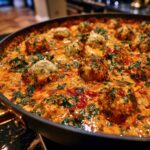
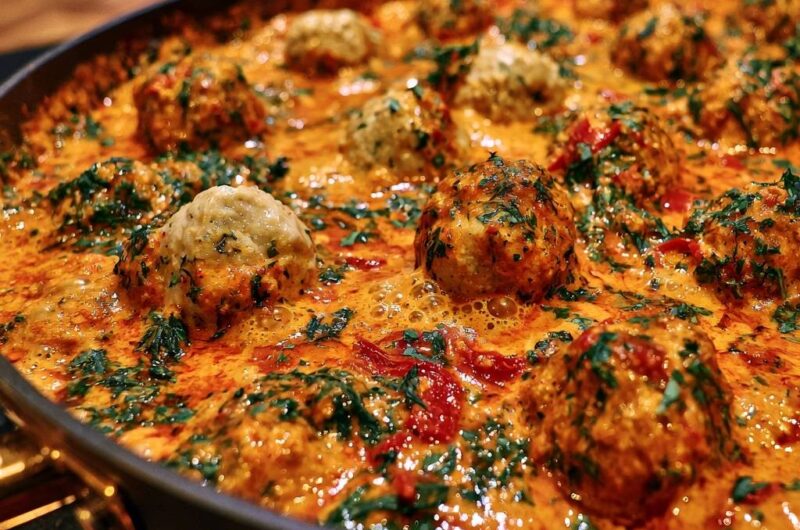
- Carefully drop the raw meatballs directly into the simmering sauce. (Note: The image shows poached meatballs without a dark fried crust, which keeps them incredibly tender).
- Cover the skillet with a lid and simmer on medium-low for 12-15 minutes. Halfway through, gently spoon the sauce over the meatballs to ensure they cook evenly. The chicken is done when it reaches 165°F (74°C) in the thickest part.
- Remove the lid. The sauce should be bubbling and thickened. Generously shower the entire pan with the chopped parsley and dill, ensuring the herbs coat the tops of the meatballs as seen in the image.
- Serve immediately while the sauce is velvety and the meatballs are perfectly tender.
Notes
- The secret to the tender texture is the panade (milk and breadcrumb mixture) and poaching the meatballs directly in the sauce rather than frying them. Do not over-mix the meat to avoid a dense result.